


I put off planting strawberries for years because I assumed they’d be high maintenance. And I prefer a laid-back gardening approach. But looking at the price of one pack of strawberries nowadays changed my mind very quickly. You can almost buy a whole strawberry plant for the same price as a week’s supply from a grocery store. And the ones from your garden taste way better, too.
Strawberries do need a bit of care at planting time, and there are a few details you need to keep track of. But the ongoing effort is minimal once the patch is established. The return you get from a handful of plants over several years is hard to match with any other fruit crop.
Plant strawberries in March, while the plants are still dormant. Follow these tricks, and you’ll find it as easy as any other edibles you’re growing.
Red and Yellow Wonder Blend Strawberry Seeds

Red and Yellow Wonder Blend Strawberry Seeds
Homegrown alpine strawberries are bushels above store-bought whose flavor can’t compare. Wonder Blend bears small red or light yellow, intensely fragrant fruits from late spring/early summer on, taking a break in hot weather. Plants don’t have runners, so they won’t meander, making them a tidy, delicious border or container contender.
Start With Bare Roots
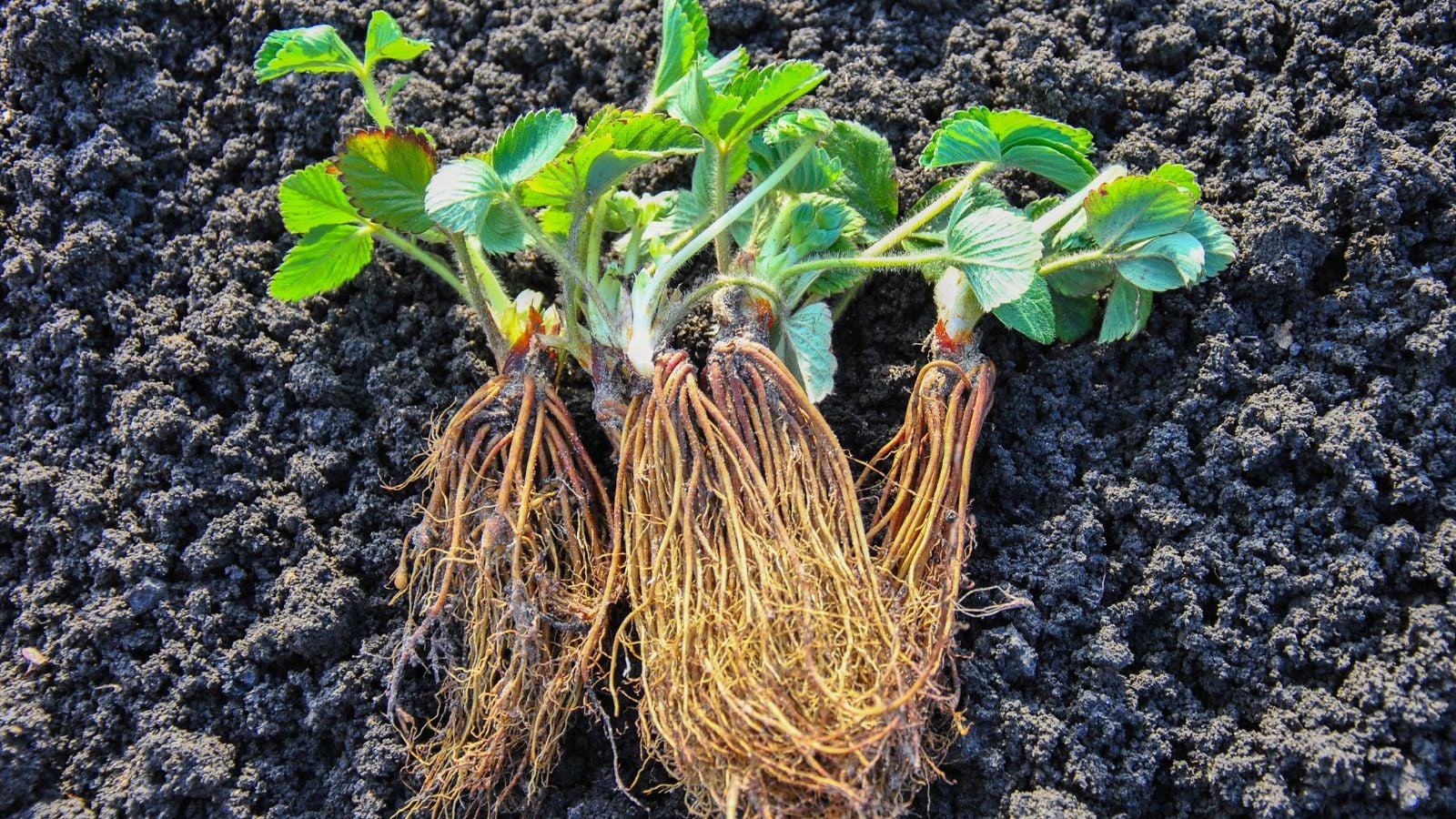
If you’re planning to plant more than a few strawberries in March, bare-root crowns are the way to go. They’re significantly cheaper than potted plants. Plus, they establish strong root systems quickly once they’re in the ground, since they’re already mature (but dormant) plants.
Bare roots are basically a tangle of roots attached to a small brown crown, usually with no foliage at all. Don’t let that put you off, because they’ll quickly perk up once they’re back in soil. Soak the roots in water for an hour or two before planting (no longer, and try to keep the crown itself above the waterline to reduce the risk of rot), then get them into prepared soil as soon as you can.
If you need to hold them for a few days, keep them in the fridge wrapped in a damp paper towel. Then, when you’re ready, plant bare-root strawberries in March.
Get the Crown Depth Right
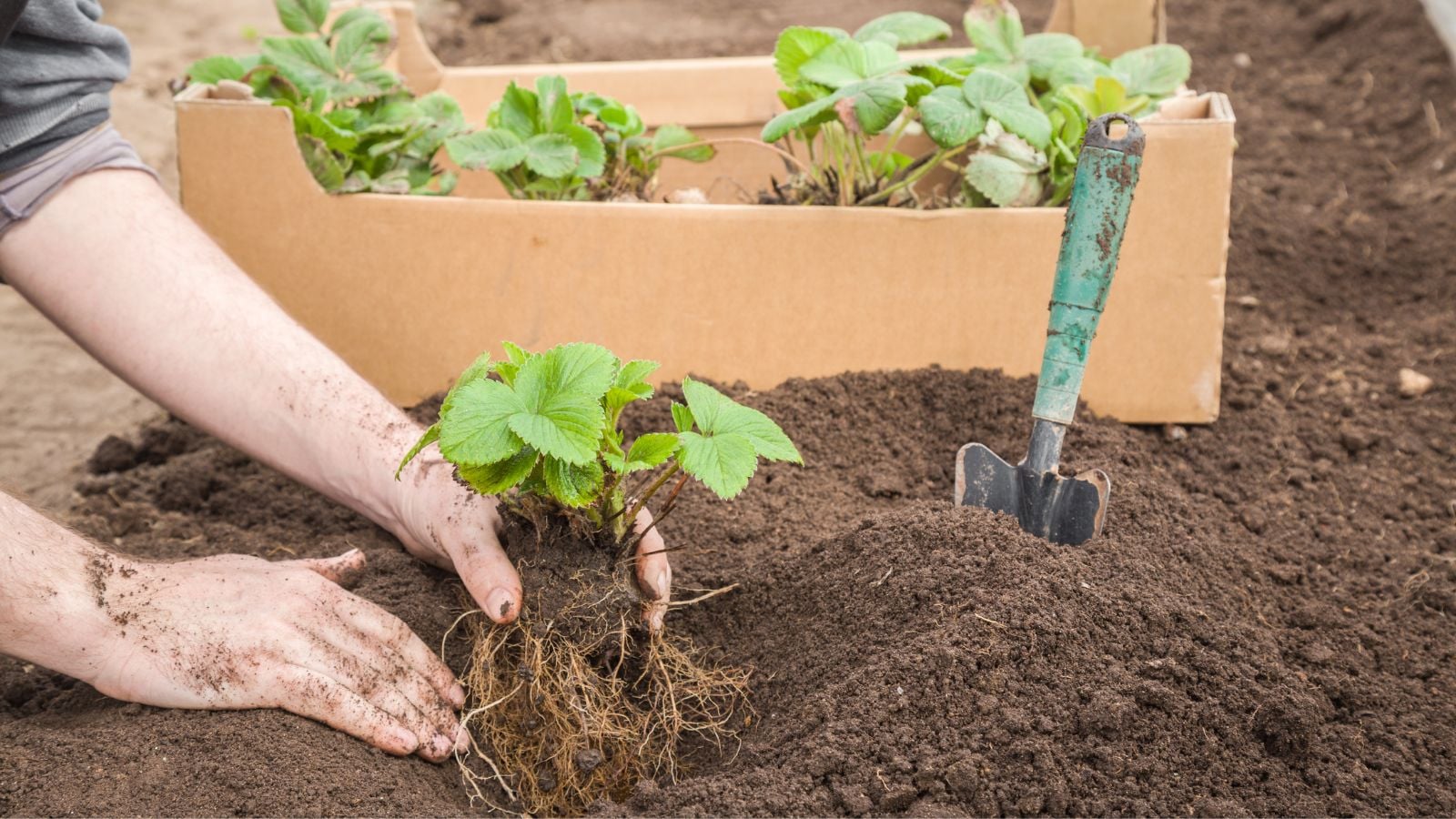
When you plant strawberries in March, the crown (that thickened bit where the roots meet the foliage) needs to sit exactly at the soil line. Not below it.
If you bury the crown, the plant is likely to rot. Also, if you leave it exposed above the soil, the roots dry out and the plant struggles to establish. After you firm the soil around the roots and water in, check the depth again. Watering often settles the soil and shifts things.
Give the crown a gentle tug upward if it’s sunk too deep, or add a bit more soil if the roots are showing. Double-checking here will pay off later in the season.
Trim the Roots Before Planting
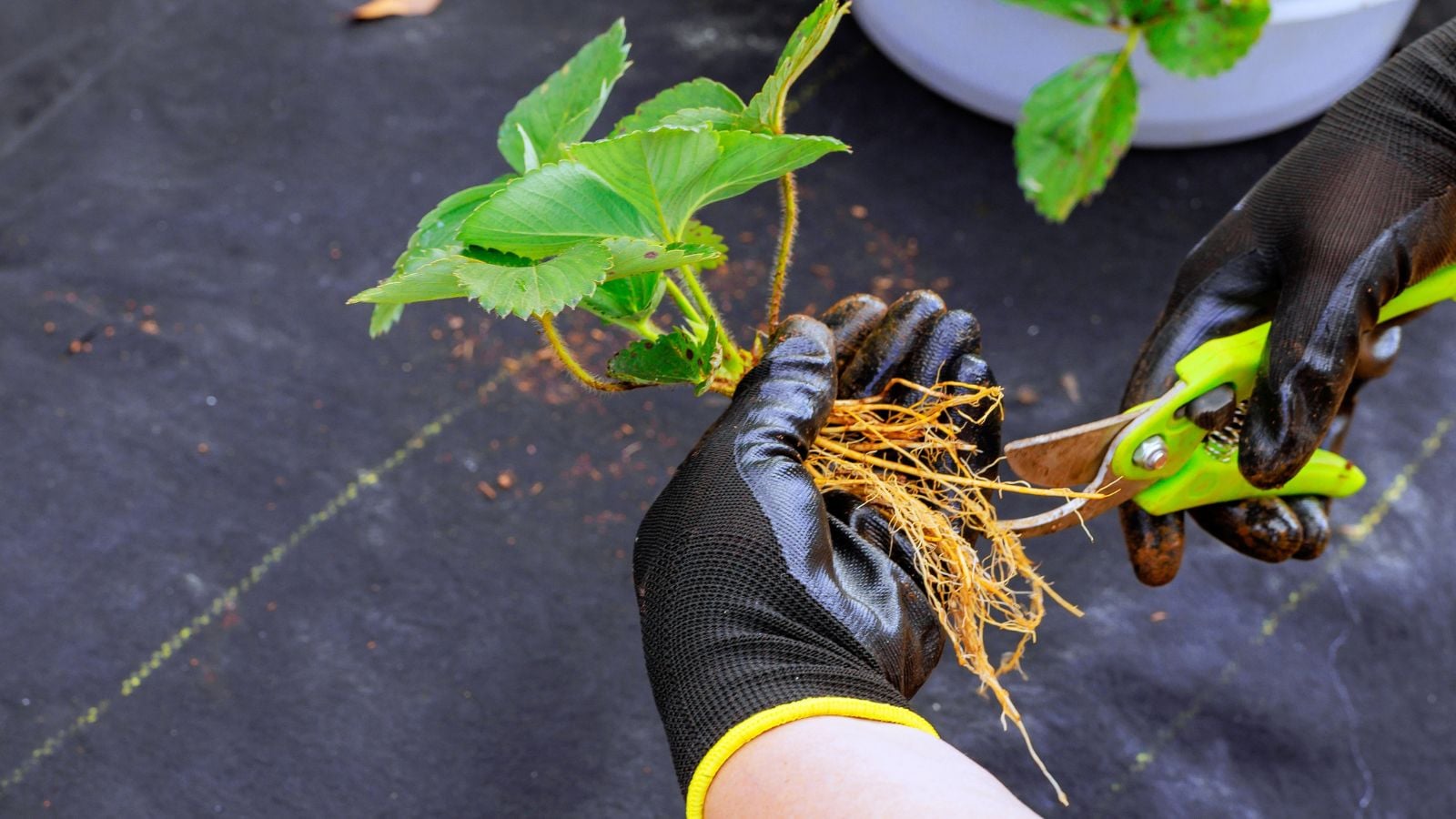
Bare-root strawberries arrive with long roots, usually more than you need and more than you want to try to fit into a planting hole (without bunching them up). Cut them back by about a third before planting. Trimming stimulates fresh root growth and makes it much easier to fan the roots out in the hole. They should be pointing downward rather than curling back on themselves.
Bunched or circling roots don’t establish well. They tend to stay tangled rather than spreading into the surrounding soil, which limits the plant’s ability to take up water and nutrients.
Remove the First Flowers

When your newly planted strawberries start producing flowers, it’s best to pinch them off early on. A plant that puts energy into producing fruit before its root system is properly established will be weaker and less productive. This won’t take long, but it is helpful to keep your young plants as healthy as possible.
Sacrificing that first round of berries gives you a much stronger harvest later on, and less risk of disease problems due to stress. The plants you’ll have by midsummer will have strong crowns and vigorous roots.
Plan for Runners

Some strawberry plants send out runners, and at the tip of each runner, a new baby plant forms. Left to their own devices, runners will fill every inch of available space. How you handle them depends on what kind of patch you want.
If you’re growing in raised beds or containers, remove all the runners as they appear. This directs the plant’s energy into crown development and fruit production rather than spreading. The trade-off is more labor throughout the season, but the berries are typically larger.
If you want your strawberries to slowly spread and cover a larger area over time (a more long-term outlook vs focusing on your harvest this season), you can leave the runners to spread, clearing overcrowded areas as needed.
Protect the Fruit From Birds
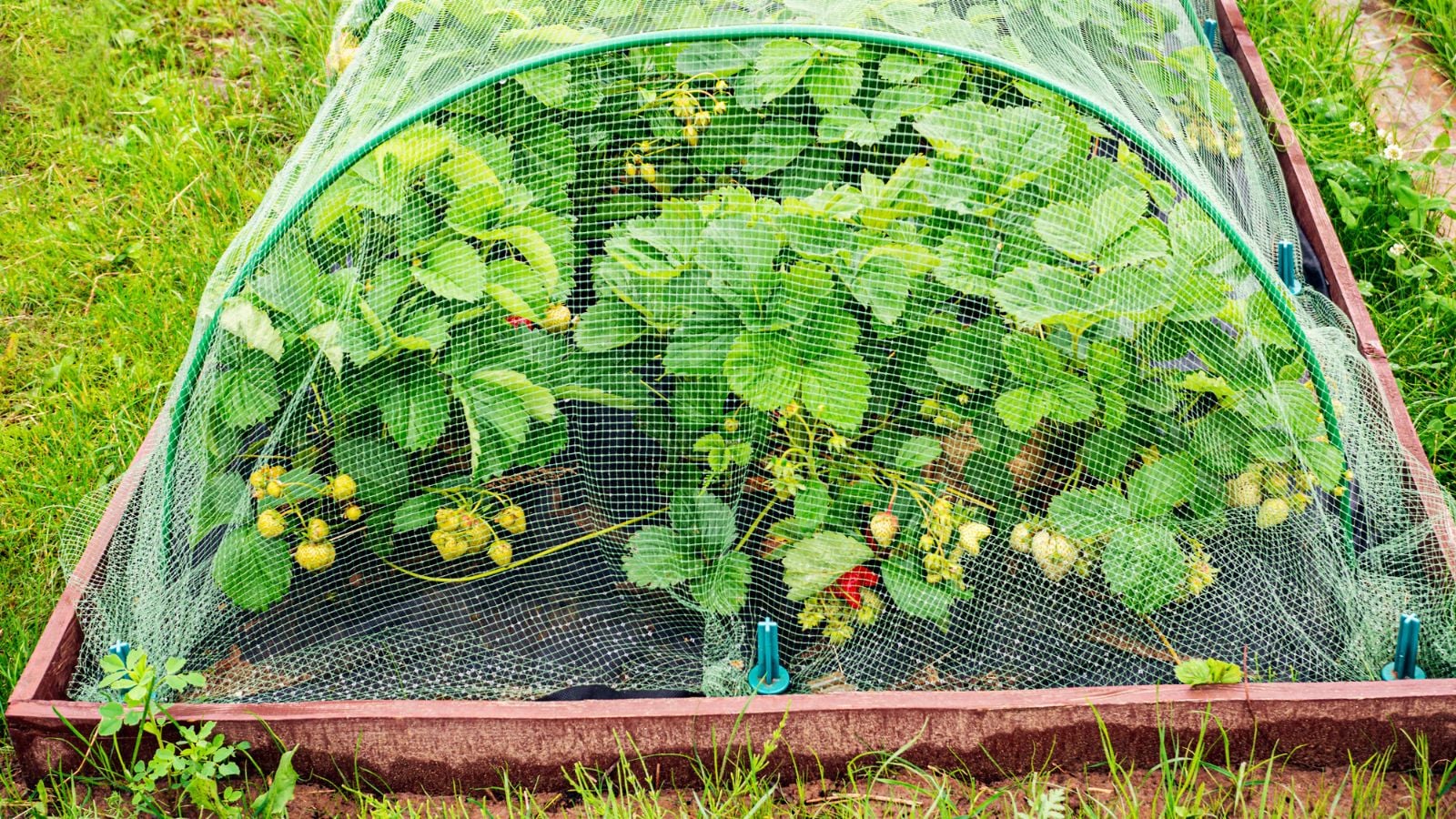
You will lose strawberries to birds. The question is how many. If you don’t take any precautions, the answer in many gardens is “all of them.”
Bird netting draped over a simple frame is the most reliable solution. PVC hoops or a low frame of timber all work as supports. The net needs to be held above the plants (not resting directly on the fruit) and secured at ground level so birds can’t sneak underneath.
After you plant strawberries in March, check regularly for any birds that have found their way in. You may want to only cover the bed during peak ripening rather than all season, which makes access easier for both you and pollinators.
Don’t Skip Renovation
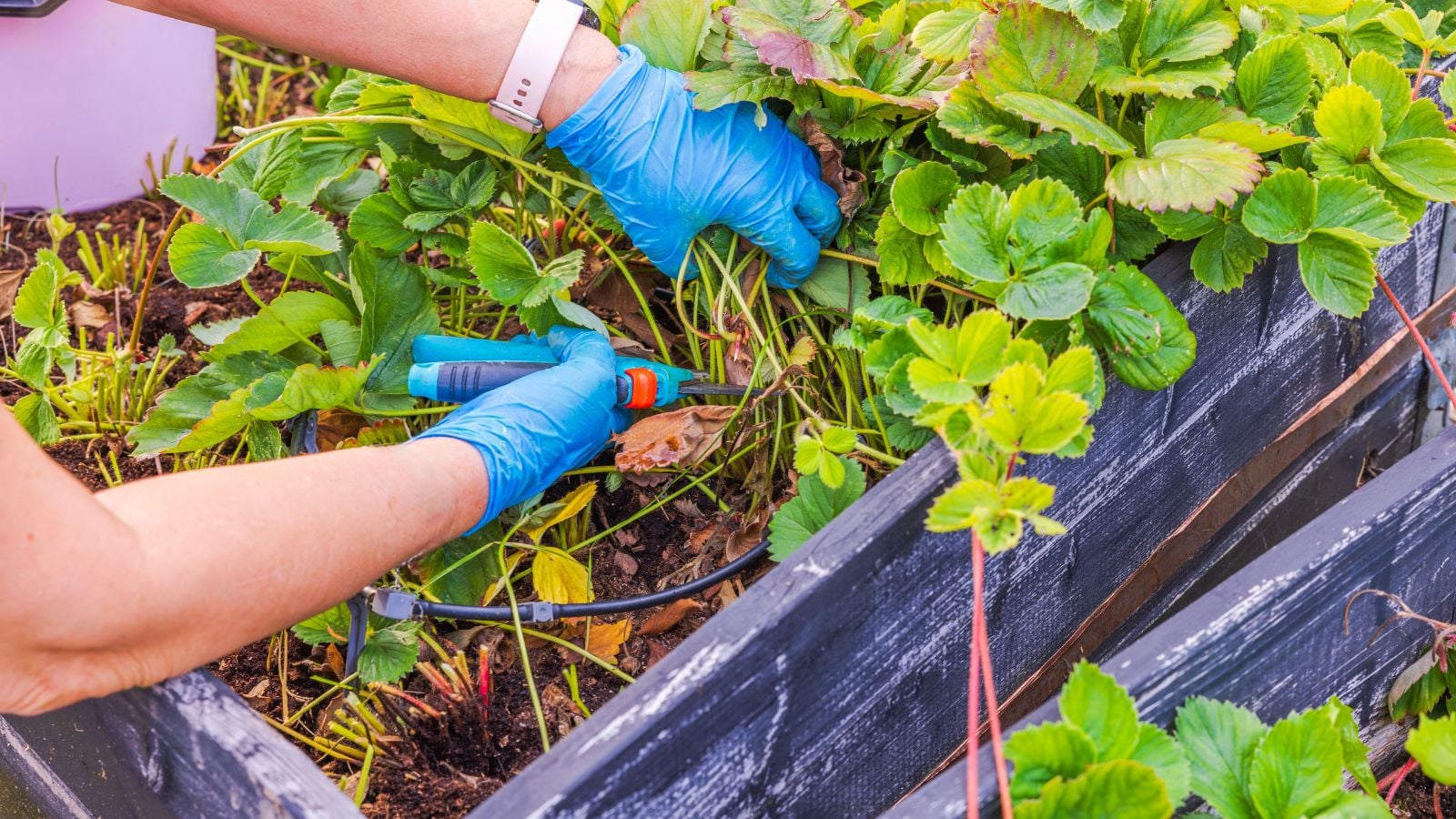
After your strawberries have finished fruiting (usually by early to midsummer, depending on type), the bed needs renovation. This means cutting the foliage back to about two inches above the crowns, thinning the plants so they’re not overcrowded, pulling weeds, and applying a light feed of fertilizer.
Renovation clears out old, disease-prone foliage, stimulates fresh growth, and keeps the bed productive. Without it, the patch gets increasingly crowded and the berries get smaller each season until the whole thing needs to be ripped out and started over.
A well-renovated bedwith the oldest mother plants removed and strong young plants kept, stays vigorous far longer than a neglected one.
