


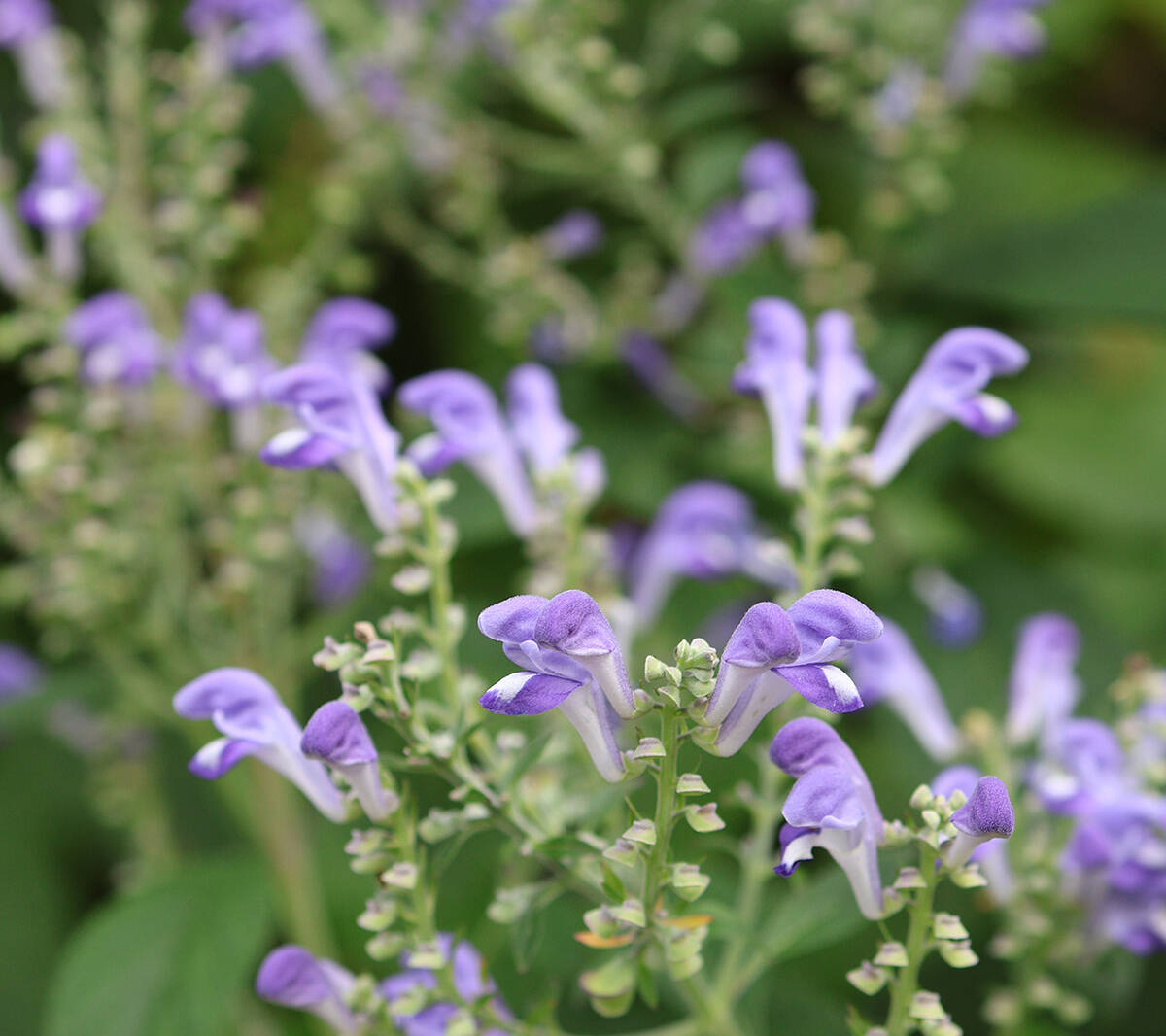
Downy Skullcap, Scutellaria Incana
The longer I garden, the more I want to grow perennials that bloom for as long as possible, and that ask for as little as possible in return. Within reason. While Agastache has long been at the top of my list of summer-to-fall-flowering, pollinator-supporting native perennials, a Scutellaria species is beginning to nip at its heels: Again and again I have seen the showy, blue, distinctively hooded flowers of downy skullcap—Scutellaria incana—standing tall in perennial borders and in wild planting that enjoy little regular maintenance. The plant is compelling.
Here’s why.
Photography by Marie Viljoen.

Also known commonly as hoary skullcap, Scutellaria incana is a native North American plant that checks the following boxes: It blooms for many weeks—even months—in late summer; it flowers in full sun as well as in shade; it attracts and supports pollinators and hummingbirds; it withstands periods of drought; and it is genuinely attractive, with myriad cerulean flowers.

Downy skullcap is a tall perennial, averaging around three feet. It begins to flower in late summer, and continues to bloom for many weeks. If it is deadheaded, those weeks extend to months. It is very effective in meadows or wild-at-heart borders combined with bee balms and milkweed, rudbeckias, helianthus and helenium, echinacea, obedient plant, agastache, and goldenrod.

Cheat Sheet
- There are hundreds of species of Scutellaria, worldwide.
- Downy skullcap is a wildflower native to the central and eastern United States.
- Scutellaria belong to the Lamiaceae (mint) family.
- The square stems of downy skullcap (Scutellaria incana) are finely hairy.
- Several species of Scutellaria are valued for their use in Traditional Chinese Medicine, as well as Native American and other folk medicines.
- While the flowers of downy skullcap are attractive to pollinators and hummingbirds, the bitter foliage is (usually!) deer-resistant.

Keep It Alive
- Downy skullcap is hardy from USDA zones 5 to 8.
- Plant it in full sun, semi-shade, or high shade.
- It is tolerant of a wide range of soils, except those that remain waterlogged.
- Deadhead after its first flush of blooms to encourage fresh growth and second flush.
See also:
(Visited 185 times, 183 visits today)
