


Happy Friday, GPODers!
As gardeners, we’re all stewards of the land, and we have a responsibility to take that position seriously. For some, that means doing no harm and adding beauty to our landscapes. But Adele Kush in South Bend, Indiana, takes that mission to the next level and builds naturalistic gardens teeming with native plants and mini ecosystems that help support our local wildlife and pollinators. We’ve seen Adele’s beautiful and beneficial landscape once before (A Naturalistic Garden in Indiana), and since then she has continued making updates and swapping in more native plants. Today, the space looks completely transformed.
Hello! These 10 photos were taken on the first day of fall. Our 1/3-acre property in a subdivision in South Bend, Indiana, was a blank slate when purchased in 1979. I began gardening for wildlife (birds, pollinators, mammals, amphibians) 30 years ago, and the yard is full of biodiversity.
Since joining our South Bend Wild Ones organization, I have learned about the incredible value of planting straight species trees, forbs, shrubs, grasses, and sedges that are native to northern Indiana. They benefit my wildlife habitat and entire ecosystem.
There is no grass in my sides and backyard. I continue to shrink the front lawn and have removed the majority of the invasive species I had planted 40 years ago, including English ivy, wintercreeper, periwinkle, daylilies, and lily of the valley. These have been replaced with common yarrow (Yarrow millefoliumZones 3–8), wild geranium (Geranium maculatumZones 3–8), beardtongue (Penstem digitalisZones 3–8), pussytoes (Antennaria plantaginifoliaZones 3–8), common violet (Viola sororiaZones 3–7) and native strawberry (Fragaria virginianaZones 5–9), American columbine (Aquilegia canadensisZones 3–8) as well as native sedges and grasses.
I encourage everyone to begin adding natives to your own yard and garden beds. If you have a local Wild Ones chapter, they will be happy to assist you, and the national Wild Ones website has free valuable education and ideas at wildones.org.
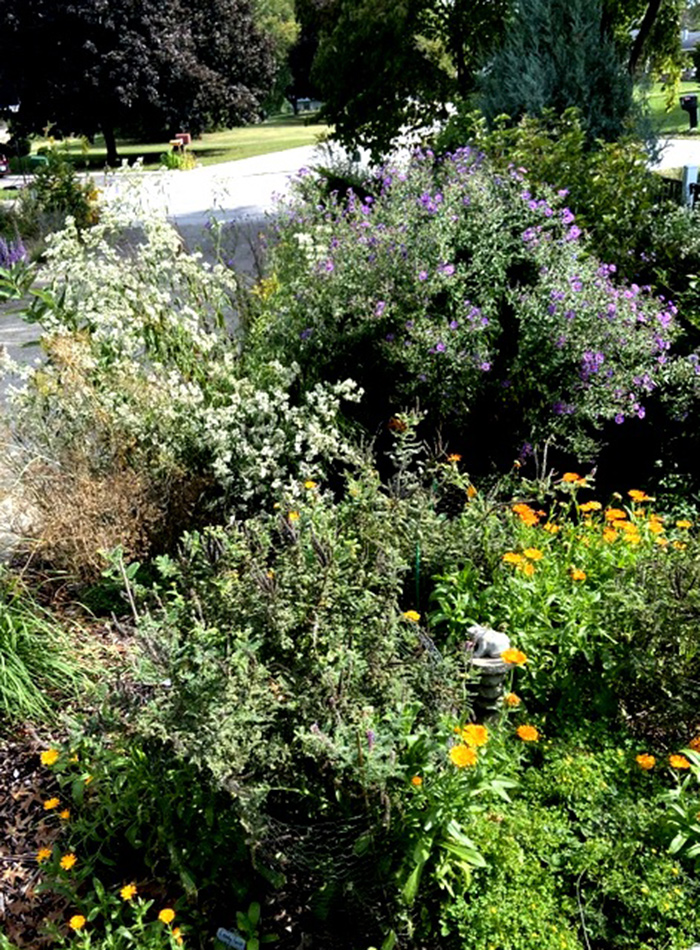 Three leadplants (Amorphous greyZones 3–8), boneset (Eupatorium perfoliatumZones 3–8), New England aster (Symphyotrichum new-englandZones 4–8), violets ground cover, and self-seeded calendulas
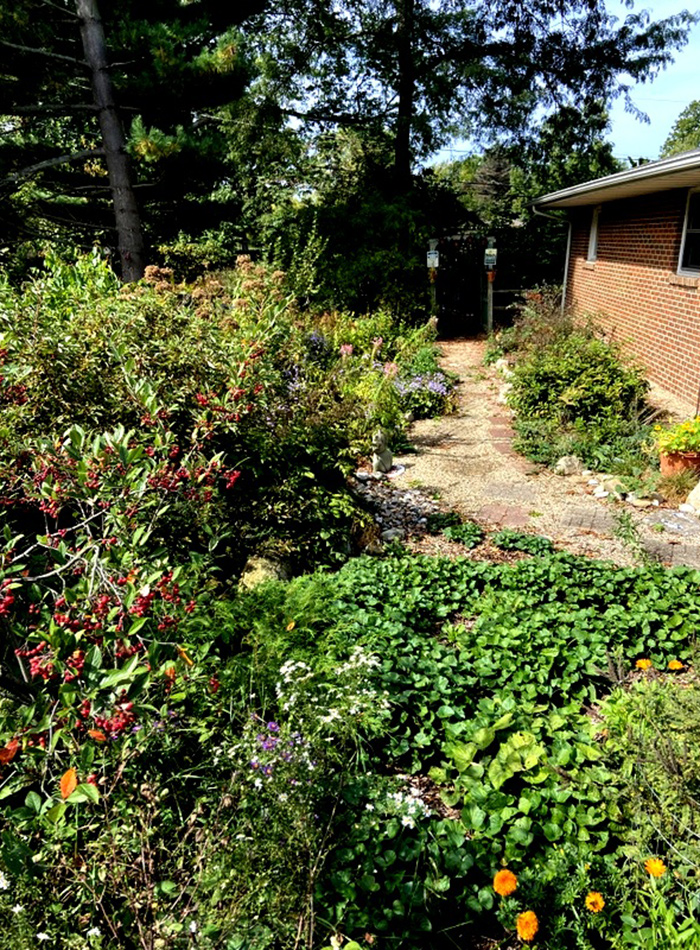 Blue mistflower (The heavenly conclaveZones 5–9), spotted Joe Pye weed (Eutrochium maculatumZones 3–8), red twig dogwood (Horn silkyZones 2–7), red chokeberry (Aronia arbutifoliaZones 3–9)
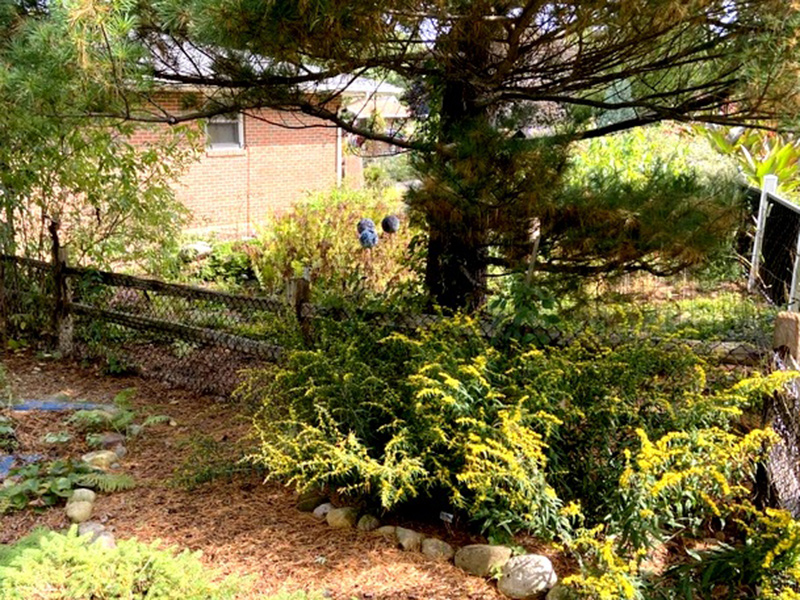 Blue-stemmed goldenrod (Solidago murderZones 4–8) grows in the shade of a white pine (Pinus strobeZones 3–7).
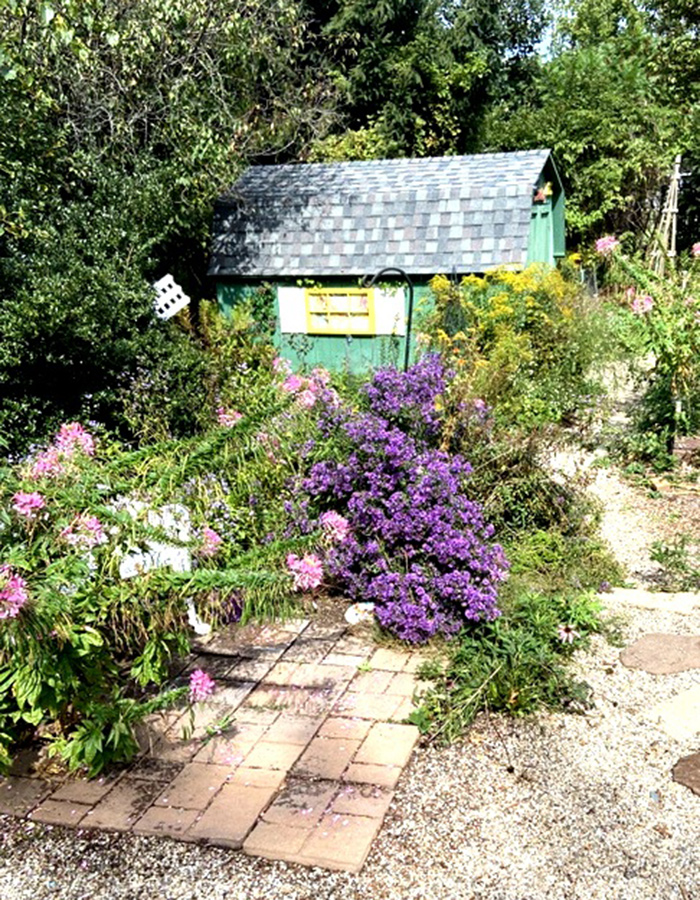 Self-sown annual pink cleome (Cleome houtteanaZones 10–11 or as an annual), purple New England aster, goldenrod
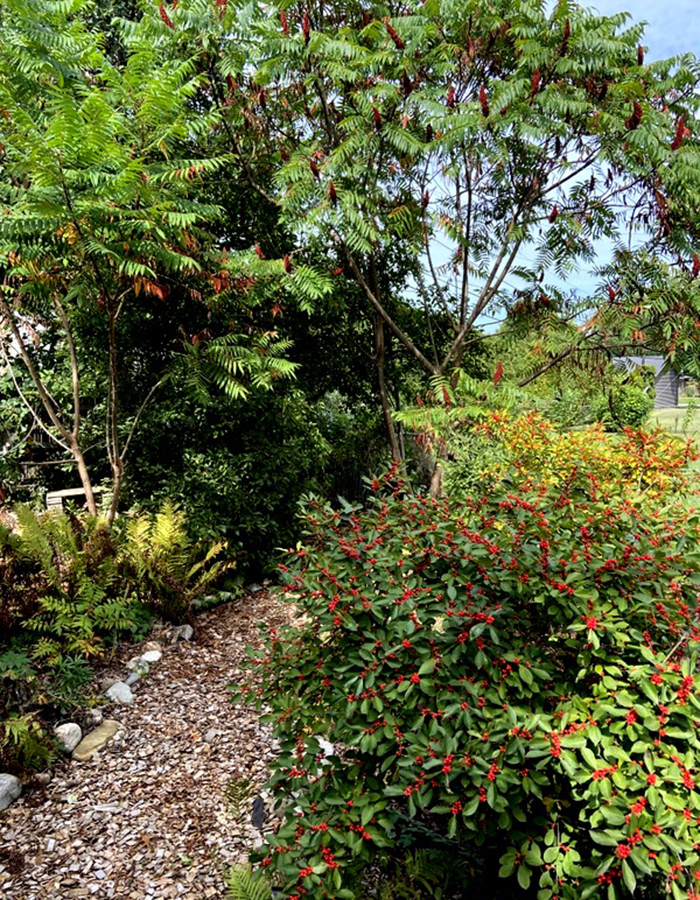 Winterberry shrubs (Ilex verticillataZones 3–9) and staghorn sumac (Rhus typhinaZones 3–9)
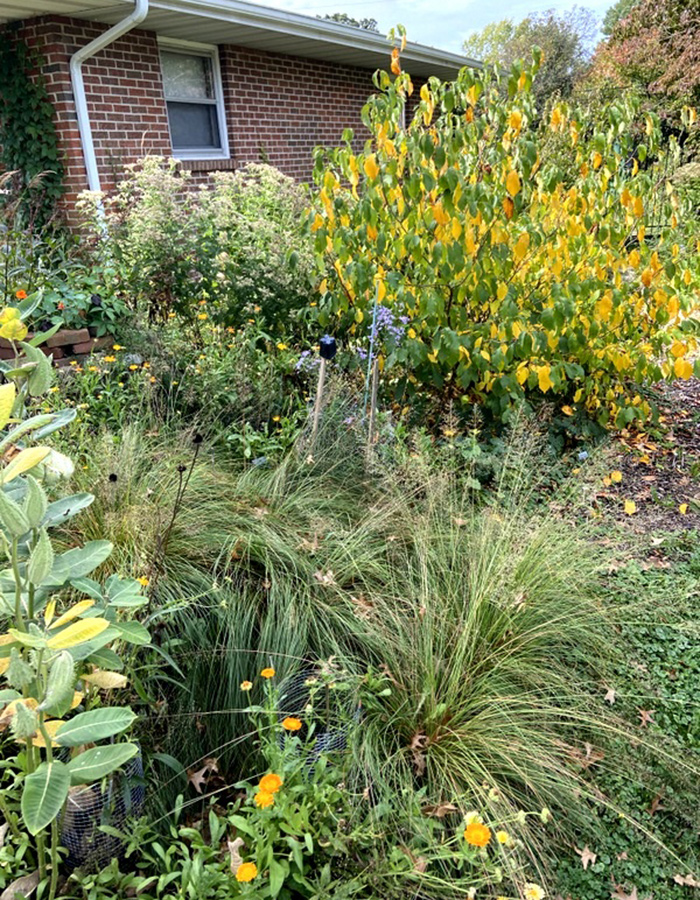 Common milkweed (Iste SyriacZones 3–9), boneset, spicebush (Lindera benzoinZones 4–9), prairie dropseed grass (Sporobolus heterolepisZones 3–9)
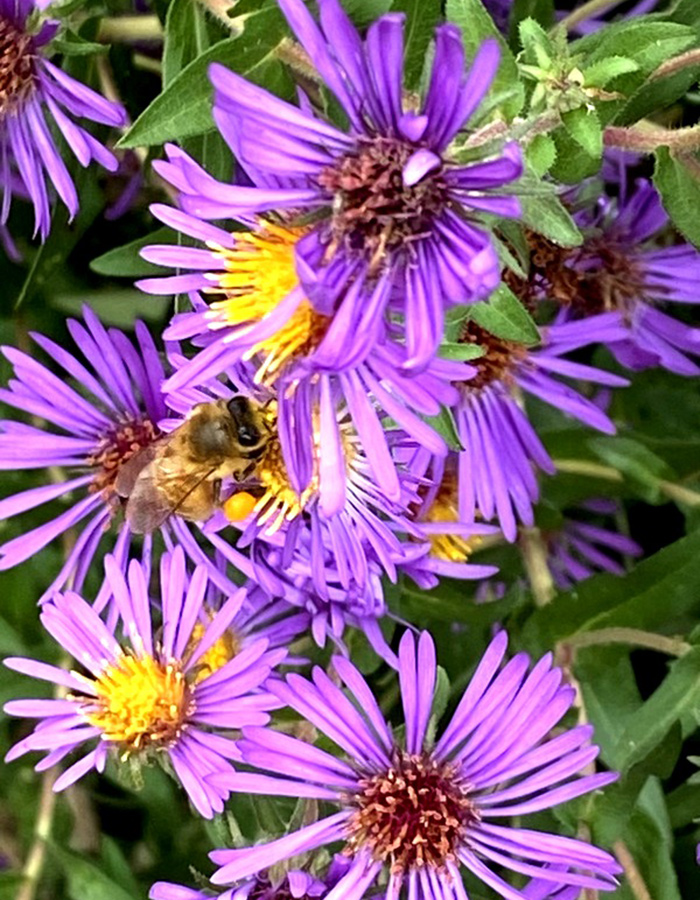 New England aster blooms buzz with bees.
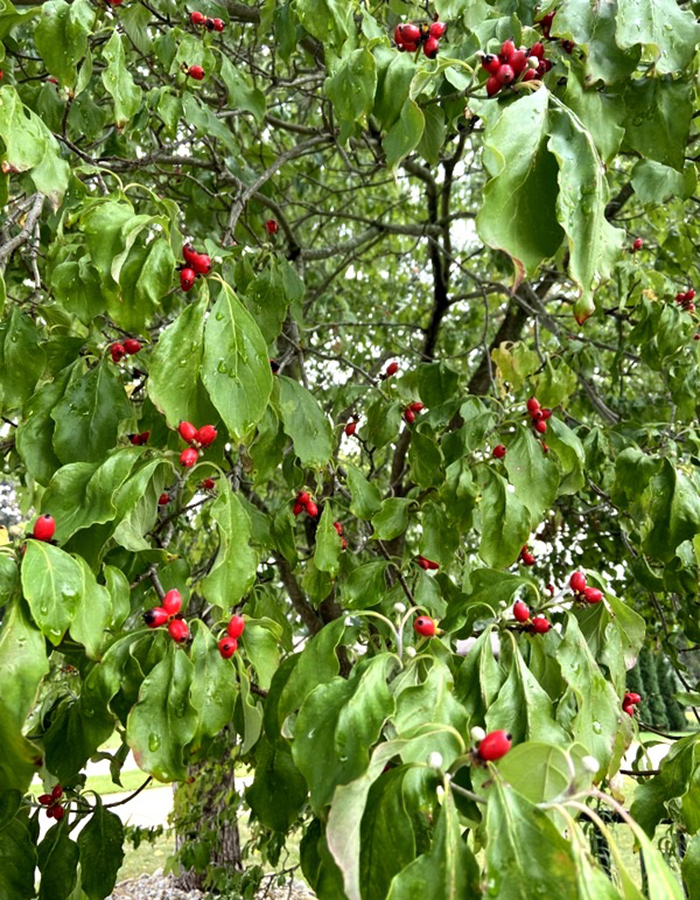 Flowering dogwood (Horn FloridaZones 5–9) drupes
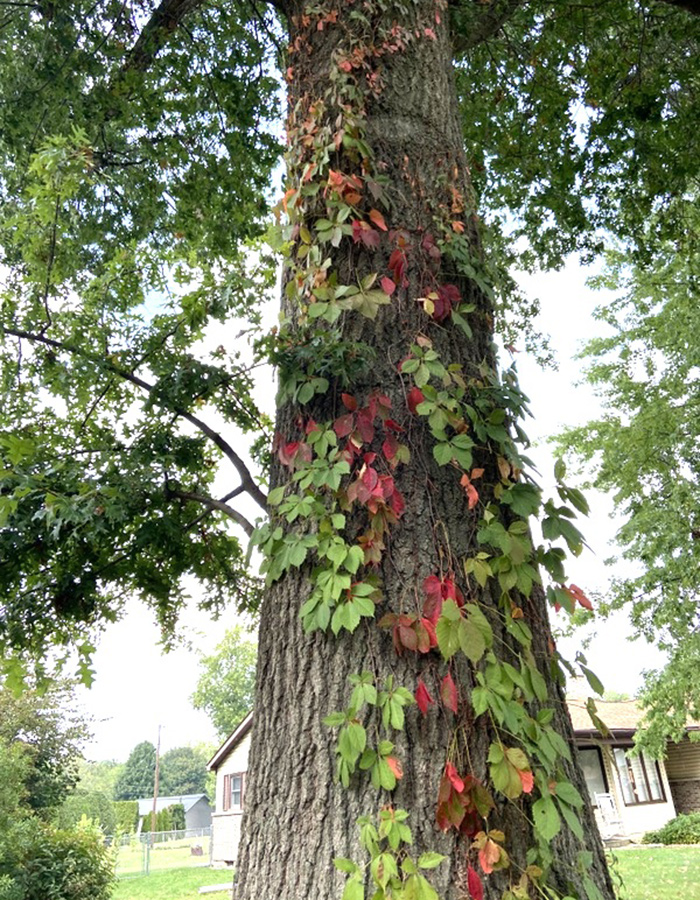 Virginia creeper (Parthenocissus quinquefoliaZones 3–9) turning fall color on the pin oak (Quercus palustrisZones 4–8)
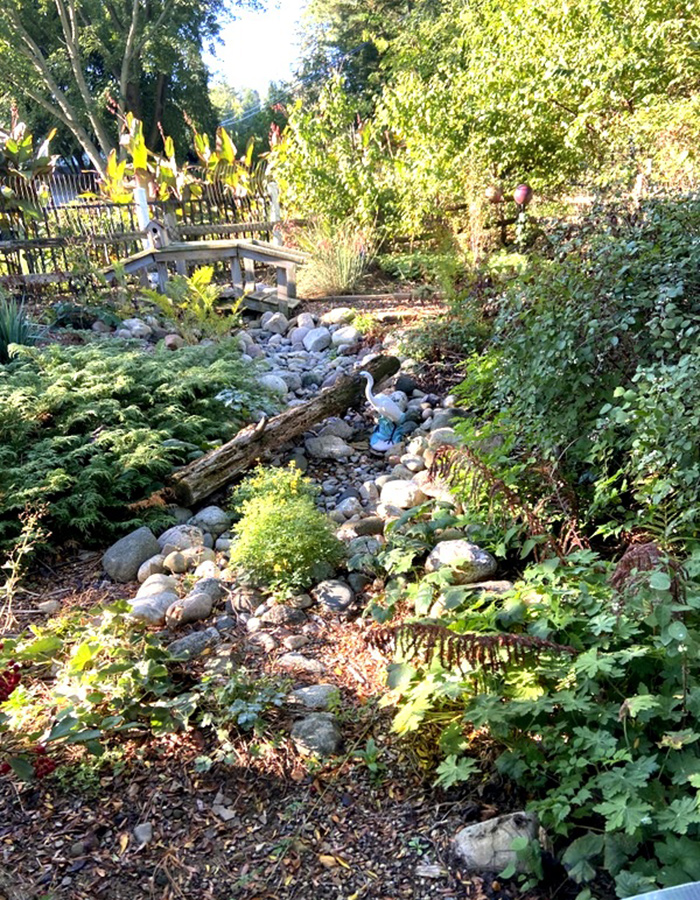 Dry creek bed bordered by snowberry bushes (Symphoricarpos albusZones 3–7)
Thank you so much for this fantastic update on your garden, Adele! It’s inspiring to see the changes you’ve made in order to better serve the environment, while still maintaining visual interest.
What garden practices have you adapted over the years to be more environmentally friendly? Whether you have a biodiverse haven like Adele, or planted a small pollinator garden to attract and support some beneficial bugs, we celebrate all gardens that are working toward a greater good and would love to have your space featured on Garden Photo of the Day. Follow the directions below to submit photos via email, or send me a DM on Instagram: @agirlherdogandtheroad.
We want to see YOUR garden!
Have photos to share? We’d love to see your garden, a particular collection of plants you love, or a wonderful garden you had the chance to visit!
To submit, send 5–10 photos to (email protected) along with some information about the plants in the pictures and where you took the photos. We’d love to hear where you are located, how long you’ve been gardening, successes you are proud of, failures you learned from, hopes for the future, favorite plants, or funny stories from your garden.
Have a mobile phone? Tag your photos on Facebook, Instagram, or Twitter with #FineGardening!
Do you receive the GPOD by email yet? Sign up here
Fine Gardening Recommended Products
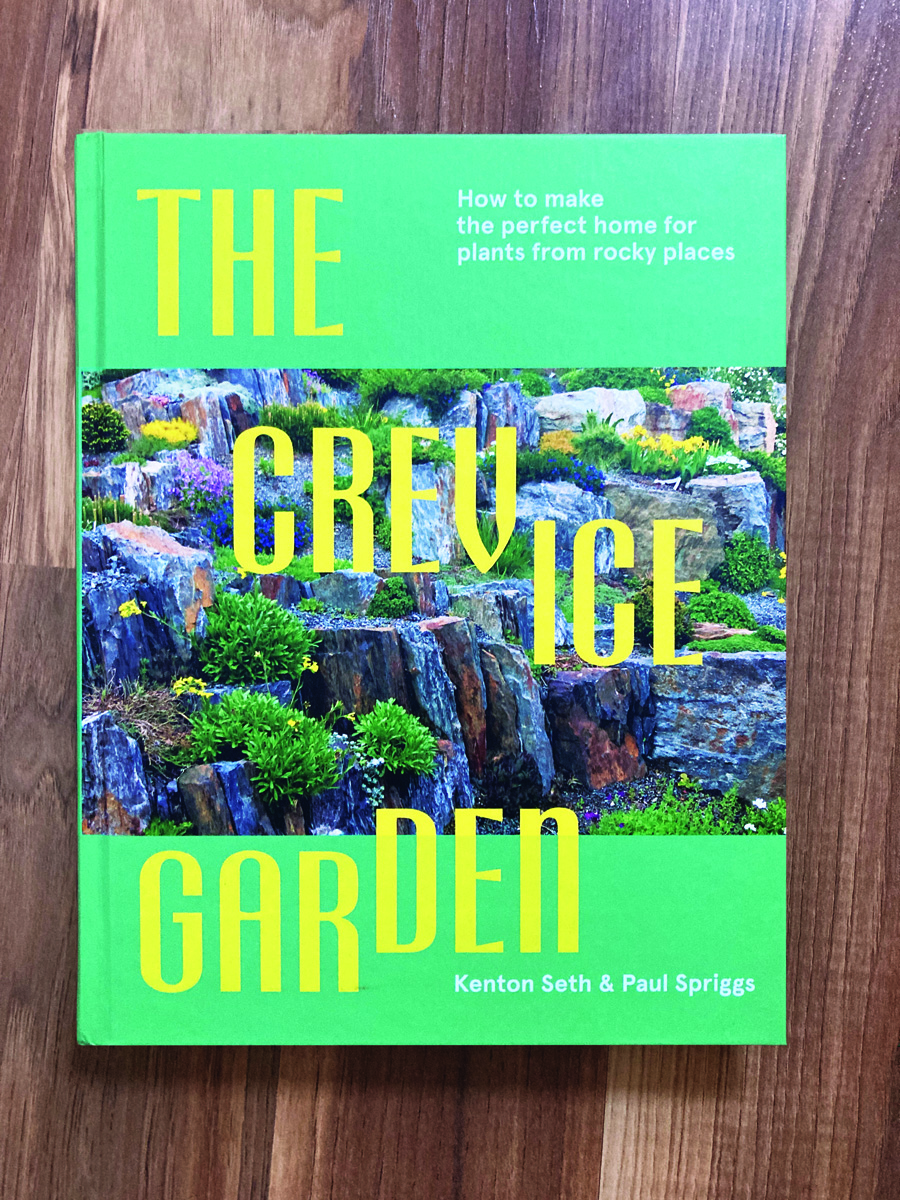
The Crevice Garden: How to make the perfect home for plants from rocky places
Fine Gardening receives a commission for items purchased through links on this site, including Amazon Associates and other affiliate advertising programs.
A crevice garden replicates the environmental conditions of mountain tops, deserts, coastlines, and other exposed or rocky places on earth. These striking garden features provide perfect conditions for the plants native to these far-off places, bringing the cultivation of these precious gems within everybody’s reach.

National Wildlife Federation®: Attracting Birds, Butterflies, and Other Backyard Wildlife, Expanded Second Edition (Creative Homeowner) 17 Projects & Step-by-Step Instructions to Give Back to Nature
Fine Gardening receives a commission for items purchased through links on this site, including Amazon Associates and other affiliate advertising programs.
From the National Wildlife Federation, the largest U.S. nonprofit conservation organization, with 6 million members and 51 state and territorial affiliated organizations. 17 step-by-step projects that everyone can do together make getting your family back to nature easy, educational, and fun. Over 200 color photos of backyard wildlife habitats and the wide variety of creatures they attract, plus step-by-step photos and illustrations for family projects. Learn wildlife-friendly practices for gardening, landscape design, supplemental feeders, birdbaths, nesting places, and more. Learn how to attract backyard pollinators, from bees and butterflies to beetles, bats, and hummingbirds
Get your garden certified by the National Wildlife Federation’s Garden for Wildlife(TM) program by following the included certification application checklist.
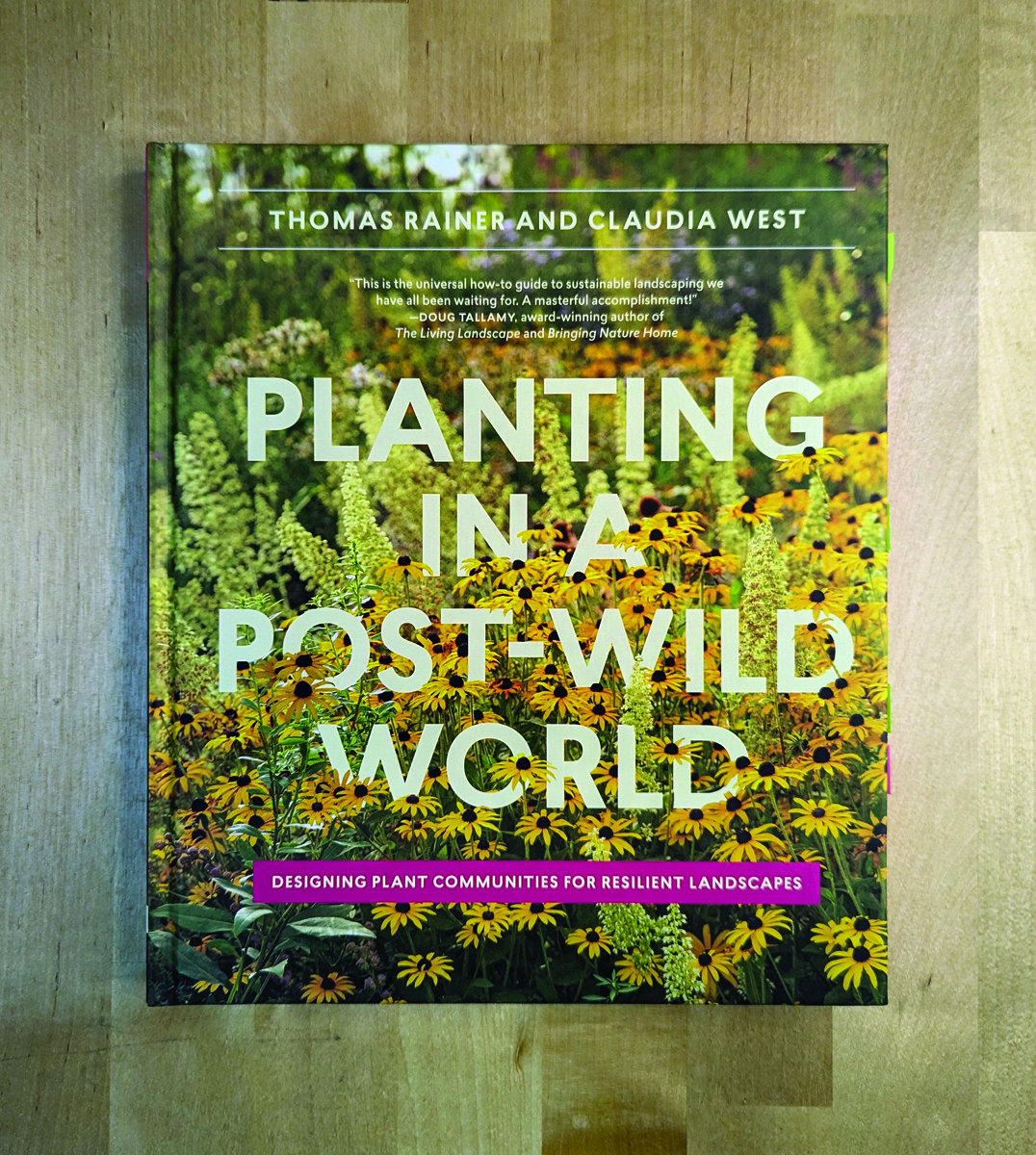
Planting in a Post-Wild World: Designing Plant Communities for Resilient Landscapes
Fine Gardening receives a commission for items purchased through links on this site, including Amazon Associates and other affiliate advertising programs.
Featuring gorgeous photography and advice for landscapers, Planting in a Post-Wild World by Thomas Rainer and Claudia West is dedicated to the idea of a new nature—a hybrid of both the wild and the cultivated—that can nourish in our cities and suburbs.
