


My attitude to sauerkraut may be a little different from most Western readers, as I’ve been enjoying this dish since early childhood. In fact, when thinking about sauerkraut one day, a faint memory from the early nineties popped into my head, when my cousins and I were subjected to child labour for the sake of sauerkraut.
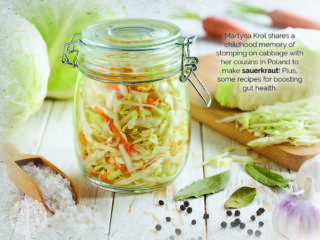
Growing up in post-communist Poland was a wild ride, but we weren’t often in a labour camp—and when we were, it was always at Babcia’s (Polish for Grandmother, sweetly)our Grandma Jasia’s house. Our little fingers were perfect for picking currants from the many bushes in her hundred-metre-long garden, our long limbs ideal for reaching apples while balancing on Uncle’s shoulders, and most importantly, we were still pure enough to be useful at making massive sauerkraut batches in one go. With our feet.
Yup! We probably all have the same feelings about feet in food, but this method was used for centuries. The key is using feet that haven’t been tortured by bad shoes and working life, but have merely run freely on grass or pebbly beaches. On sauerkraut-making day, our feet were inspected for cuts, thoroughly washed, and then we were put to work. Those who’ve tried making sauerkraut at home know the rather monotonous process of massaging salt into cabbage. When you have kilos to make in one go, it would take days and sabotage the sustainability of the Polish appetite for sauerkraut. So, into the big wooden barrel we went—shredded cabbage, carrot, caraway seeds, and rock salt, plus three kids with energy to burn, jumping and squeezing, pressing and stomping, doing little sprints in place and repeating it all until the mixture released its natural juices. Totally normal behaviour!
There isn’t only one reason why most of Central and Eastern Europe is obsessed with sauerkraut. Sauerkraut was the saving grace of many sailors, helping to cure vitamin C deficiencies when they were at sea for months at a time with no fresh food. The beneficial properties of fermented cabbage have been studied since the 18th century. With recently spiked interest in gut health and the microbiome, this humble salted vegetable is enjoying a revival.
One sauerkraut is not equal to another, so bear this in mind if you try something that doesn’t rock your boat. Find one with live cultures, maybe from a small producer, or best yet, make it at home—all the instructions are below. When I buy sauerkraut in the Polish shop nearby, I look for ‘Kapusta Kiszona’ and not ‘Kapusta Kwaszona’—the former is a live, fermented, and beneficial product; the latter is acidified with vinegar, so while tasty, it has fewer gut benefits than the live version. Another clue: watch for whether the packet states’ pasteurised’ (it’s dead) or ‘unpasteurised’/’ with live cultures’—no explanation needed.
The idea of a ‘live product’ may be novel to some readers. An easy way to remember what’s what is linking it to the famous ‘prebiotic’ and ‘probiotic’ terms. ‘Pre’ is the precursor to a well-functioning gut biome, so prebiotics are essentially food for our microbes—the ones already present in our large intestine. Imagine your gut as a farm, and prebiotics are the food supply for your livestock of bacteria and fungi living there. Prebiotics are rich in fibre, found in vegetables, fruit, many seeds, and grains.
Probiotics, on the other hand, are foods that have been pre-digested by bacteria (for example, during fermentation, such as our Kraut) and have grown a variety of beneficial microbes on their surface. When consumed, these increase the array and load of bacteria and fungi in your gut. Our farm (the gut) is so expansive that we can add more livestock (microbes), which in turn enriches our land with even more benefits—provided we give them prebiotics regularly.
So a ‘live product’ is essentially a combination of prebiotic (because sauerkraut contains fibre) and probiotic food, already in a more bioavailable form for the gut to absorb. This sounds like faff, but when you have ‘leaky gut,’ IBS, or just unexplained bloating and pain, indigestion or food intolerances, suddenly pre-digesting your food with bacteria becomes a life mission. Seven years working in hospitality damaged my gut, and I started avoiding gluten, dairy, and eggs; essentially, changing plasters on a bleeding wound. I finally arrived at the real solution: repairing the gut via food. For me, it was kombucha at first, but the benefits of LAB (Lactic Acid Bacteria) are broad and present in many fermented foods, including the sauerkraut I started making about five years ago.
Lactic Acid Bacteria is a term often used in fermentation, interchangeably with lacto-fermentation, which I prefer for ease of use.
The science of lacto-fermentation is pretty simple: bacteria from the Lactobacillus family thrive in low-pH environments. In Kraut, this is created by salt applied to shredded cabbage. As the cabbage is massaged and cell walls are crushed, natural juices with enzymes start oozing out, further drawn by the salt. While Lactobacillus thrives in this environment and feasts on all the enzymes from the cabbage, many other bacteria and fungi, like moulds, can’t handle it if the environment stays fairly anaerobic. When these unwanted guests receive oxygen and the salt doesn’t sufficiently inhibit their growth, they’ll capitalise on available food and create islands of fluffy mould patches, which render our ferment inedible—no debate here, folks. Mycotoxins are not to be taken lightly, especially when combined with our delicate gut microbiomes, so any ferment showing signs of spoilage goes straight down the toilet.
Explaining lacto-fermentation may bring unwanted chemistry class memories, but knowing the basics for safety is wise. The actual process is lots of fun, including listening to bacteria farting and having a delicious product at the end.

Ingredients and Equipment
During workshops, I often get asked about special equipment. What equipment do you think my great-grandmother had? She certainly didn’t have glass weights, self-burping Kilner jars, or those fancy American airlock fermentation jars. She had a clay barrel, a plate, and a stone. While modern equipment is cool and airlock lids can be helpful with trickier ferments, you don’t need them.
Jars: I like fermenting in simple glass jars with lids. Anything between 530ml and 750ml is sufficient for a portion that will feed you for several dinners without getting boring, unlike a 5-litre jar. These are great for long-term storage in cellars or cupboards.
Kilner jars with rubber bands and clip-tops are self-burping and best for short-term ferments. If stored long-term, air may get inside and spoil the ferment. I use these for my rotation of ferments we eat on the go, simply storing them in the fridge until empty.
Clay pots shaped like small to medium barrels, as well as wooden barrels, were used in the past for larger batches. My mum had a brown clay barrel, about a foot in diameter, filled with gherkins and brine, with a plate weighing the veg down.
Cabbage: White cabbage is widely used across Eastern Europe for its size and tenderness. Older leaves are picked and discarded; a few bigger ones are kept as ‘the lid’ to place on top of the jar, preventing shredded pieces from floating and teasing mould. Generally, young spring cabbage is best for salads and fresh use, while mid-season and autumnal varieties are ideal for long-term storage. Fewer sugars mean less stormy fermentation and better storage qualities. However, a cabbage is a cabbage, so you can make Kraut with Brussels sprouts, cavolo nero, or other types. The famous Napa cabbage is used for kimchi—an Asian version of sauerkraut with added spices and fish sauce, resulting in a more pungent flavour than our humble European Kraut.
While cabbage is the main ingredient due to its texture, shredded carrot or apple cubes are often added to boost sugars in the fermentation process and soften the flavour with sweetness. When I spoke to my Babcia the other day and mentioned some people add apple (my mum added carrot), she told me her grandma used to put whole apples in her barrel of cabbage. Tastes can change and resurface with different generations.
Caraway seeds add a unique smoky flavour and are natural antimicrobials. Compounds like carvone and limonene help suppress harmful bacteria while allowing LAB to thrive. This was particularly crucial in pre-refrigeration times when controlling spoilage was essential for winter food security. The seeds support fermentation themselves while adding digestive properties—helping break down cabbage and reduce gas-producing compounds that can make Sauerkraut difficult to digest.
Salt: The key component without which no food would be preserved by humanity. Sandor Katz, world-renowned fermentation expert, writes in “The Art of Fermentation” that “salt slows the fermentation process, inhibits other bacteria and moulds, and slows the enzymes that digest pectins and make vegetables go soft.”
In Poland, we have many salt mines and take pride in their excellent mineral quality. We ferment with rock salt, although sea salt is also widely used. Avoid iodised salt, which prevents lumping and is full of impurities. It will ferment, but if you’re going through the hassle, do it right and get good-quality salt. I use ‘Sól Kłodawska’ or ‘Sól z Wieliczki’ from one of the world’s oldest continuously operating salt mines, which has been in operation since the 13th century. It was among the first UNESCO World Heritage Sites, where you can find salt chambers, including a ballroom with salt chandeliers 327 metres below ground, salt sculptures, and underground boat trips along old excavation shafts. We take our salt seriously.
Lastly, you’ll need a little tray or a plastic zip-lock bag. As your cabbage ferments, juices may leak through the lid and puddle at the base. Once fermentation slows, you can press the contents below the remaining brine, tighten the lid, and store it in the fridge for months. Well-made ferments won’t spoil even at room temperature. I’ve tested this over the years and still have jars from at least four years ago that show no signs of spoilage and taste perfectly fine. For novices, make small batches and store them in the fridge.
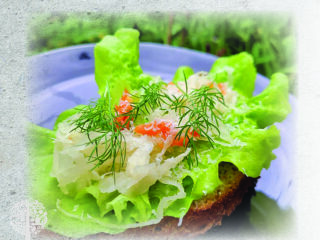
Classic Polish Sauerkraut
It’s a classic; tangy, sour, addictive. Your gut bacteria will scream for more.
Makes a 1.5 or 2 litre jar.
- 1 white cabbage, about 1 kg when shredded
- 1 tbsp caraway seeds
- 1 medium-sized carrot
- 20g fine rock salt
- Peel and discard the outer layers of the cabbage, remove the core and finely shred the head. Peel and grate the carrot.
- Add salt to the cabbage and carrot mix. Massage the salt for 5 minutes, then leave it to rest for 30 minutes.
- Once the cabbage has released the brine, add caraway seeds and mix again. Fill the jar, pressing any air out and making sure all cabbage is covered with brine.
- Leave the jar for 5-14 days. If your kitchen is warm, the fermentation process will be faster. Once you taste the cabbage and the flavour is not too salty and tangy, clean the jar if any brine comes up over the lid, and store it in the fridge.
Spiced Winter Red Kraut
An absolute banger and must-have for those wintery stews, as a side dish or on a sandwich—YUM!
Makes a 1 or 1.5 litre jar
- 1 red cabbage, about 750g when shredded
- 1 apple, quartered, peeled and coarsely chopped
- 2 tsp caraway seeds
- 1 tbsp juniper berries, crushed
- 20g fine rock salt
- Remove the outer two to three leaves, quarter and remove the core and shred the cabbage finely by hand or in a food processor.
- Layer the cabbage with the salt and massage for 5 minutes. Leave it to rest for 5 minutes and massage again for 3 minutes. You should have a reduced volume with briny juices.
- Add the apple, caraway seeds and juniper berries. Mix thoroughly and pack the mixture into the jar, ensuring the top is covered with brine.
- Leave at room temperature and taste after 7 days. The taste should be aromatic and tangy, but not too salty. If it’s too salty, leave it for a few more days, then store it in the fridge. As it ferments, it will rise, so press the contents daily with a clean fork, so that all the pieces are submerged under brine.
Sauerkraut can be enjoyed as a side dish, mixed with roasted or boiled potatoes, served as a topping on a sandwich, mixed with chicken salad or turned into a fantastic Polish soup with roasted sausage, AKA Kwaśnica.
