


Grow tough but flashy fireweed
Following catastrophe, it is human nature to look to our natural environment for small but life-affirming signs of hope: birdsong, sunlight breaking through the clouds, or a small seedling sprouting amid rubble. Where these indications offer glimpses of better things to come, fireweed ushers a groundswell. This aptly named plant is typically one of the first species to colonize the landscape succeeding moments of epic disturbance. After the London Blitz from 1940 to 1941 and the eruption of Mount St. Helens in 1980, carpets of fireweed emerged following the initial destruction, and the plant regularly appears after major forest fires.
The presence of this wonder is hard to miss. Tall, mauve, candelabra-like inflorescences appear throughout summer, borne in a stately fashion on stems up to 6 feet tall and complemented by thin, willowy leaves. Its impressive spread is facilitated by rhizomes, but its prolific seed production (each plant can produce up to 80,000 seeds per year) is the prime reason it has achieved pioneer species status, in addition to its ability to adapt to a wide range of soil types and environments.
Keeping fireweed in check
I love this plant for its brash charisma and showiness. Although it is typically associated with restoration, it evokes the same exuberant mood as garden phlox (Phlox paniculata and cvs., Zones 4–8). It has earned somewhat of a reputation for thuggishness, but it can be slowed down with regular deadheading. This will encourage repeat blooms and discourage seeding. Additional precautions can be taken to limit its rhizomatous spread by holding back on soil amendments in the surrounding areas.
Tips for growing fireweed
Given its size and flashiness, I like to treat this plant as a focal point, surrounding it with companions such as little bluestem (Schizachyrium scoparium and cvs., Zones 3–9), hairy penstemon (Penstemon shaggyZones 3–9), or white sagebrush (Artemisia ludoviciana and cvs., Zones 4–9), which all go well with fireweed’s stature and do not compete with the form of the blooms.
On larger sites, such as open meadows where space is not at a premium, I am content to let this plant run wild for a spell, as more competitive plants will eventually take its place. That said, I’m not convinced that there can ever be too much of this unique species in my garden; it’s proven to be quite beneficial to pollinators such as bees and butterflies.
Learn more: Let’s Argue About Plants Podcast Episode—Best Pollinator Plants
The fibers, seeds, and stem leaves have myriad uses, as demonstrated by the traditions of indigenous peoples of North America. If you’d like to add this show-stopper to your garden, fire away. Sow seeds in late fall, or in early spring after cold stratification in a low-nutrient, well-drained soil medium. Alternatively, you can take cuttings from live plants in early spring, prioritizing growth tips that do not have flowers on them.
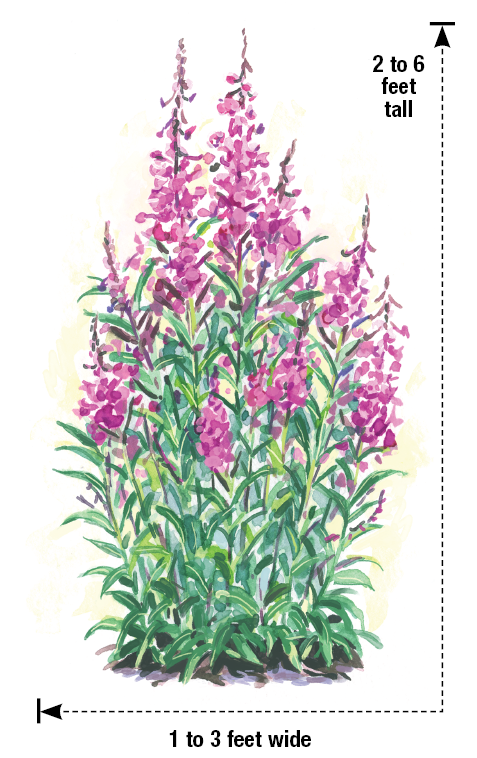
Fireweed
Chamerion angustifolium
Zones: 2–7
Conditions: Full sun to partial shade; average to damp to poor, rocky soil
Native Range: Temperate Northern Hemisphere
Fireweed Plant Sources:
Marissa Angell is an award-winning licensed landscape architect and founder of Angell Landscape Architecturebased in New York.
Fireweed photo courtesy of gapphotos.com/Jonathan Buckley. Illustration by Elara Tanguy.
Learn More:
See More Super Cool Plants
Check Out Our Podcast: Let’s Argue About Plants
Watch Our Gardening Videos on YouTube
Fine Gardening Recommended Products
Johnny’s Selected Seeds Connecta® Cultivation Kit
Fine Gardening receives a commission for items purchased through links on this site, including Amazon Associates and other affiliate advertising programs.
Choose the right tool head for the job and switch out quickly with a simple push-button release. Includes the Connecta receiver, Connecta Collinear 4 head, Connecta Collinear 7 head, Connecta Contour Wire 4 head, Connecta Contour Wire 6 head, a sustainably harvested oiled ashwood handle, and a stainless-steel carrying clip.
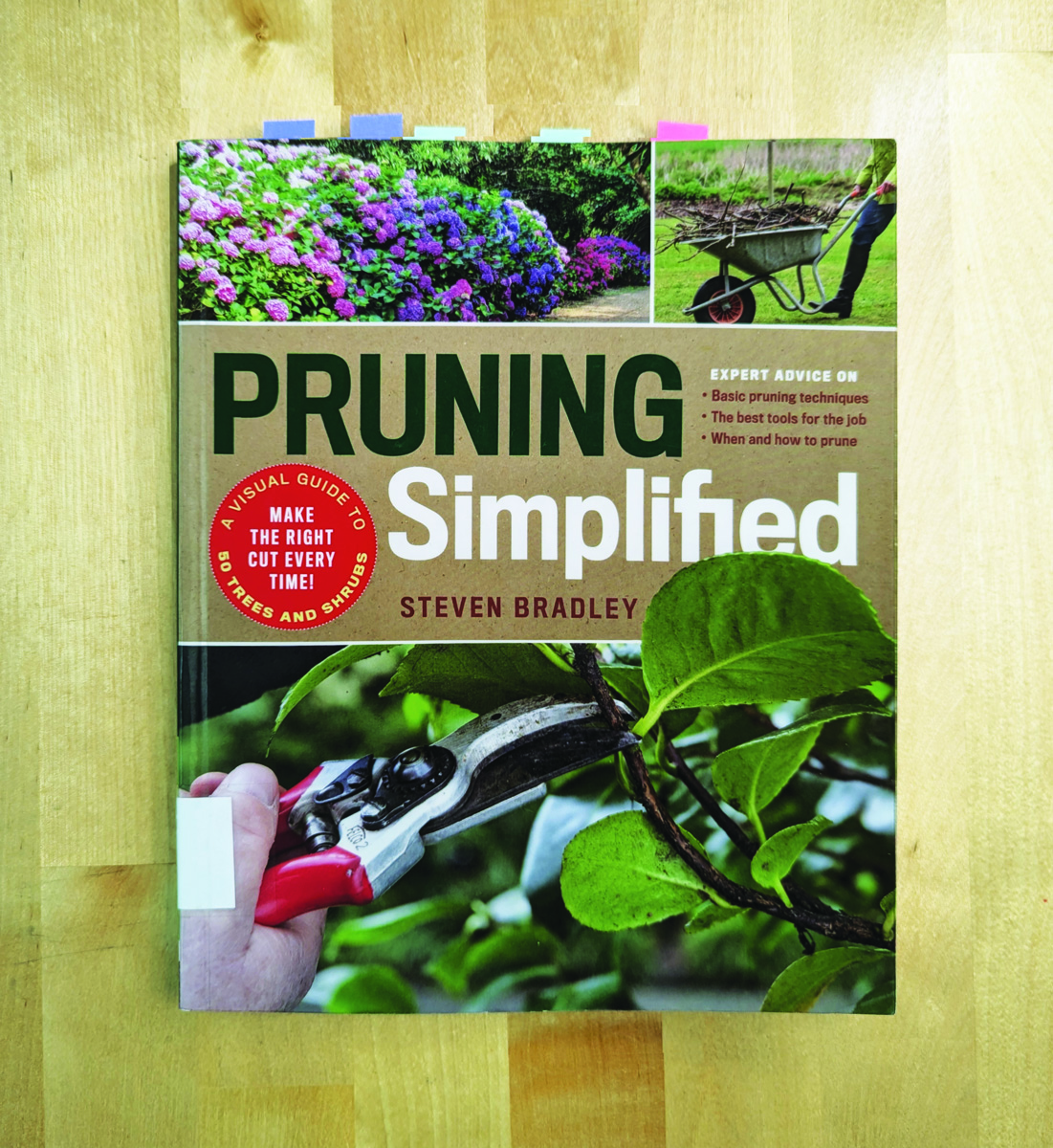
Pruning Simplified: A Step-by-Step Guide to 50 Popular Trees and Shrubs
Fine Gardening receives a commission for items purchased through links on this site, including Amazon Associates and other affiliate advertising programs.
Pruning Simplified shows you exactly how to do it. This must-have guide offers expert advice on the best tools for the job, specific details on when to prune, and clear instructions on how to prune. Profiles of the 50 most popular trees and shrubs—including azaleas, camellias, clematis, hydrangeas, and more—include illustrated, easy-to-follow instructions that will ensure you make the right cut the first time.
Rain Bird PATIOKIT Drip Irrigation Patio Watering Kit
Fine Gardening receives a commission for items purchased through links on this site, including Amazon Associates and other affiliate advertising programs.
– Complete 42-piece drip irrigation kit eliminates watering by hand
– Provides drip irrigation for up to 6 planters
– Easy to assemble: just attach to faucet, cut tubing and connect watering devices
– Attaches easily to your outdoor faucet or hose
