


Azaleas are generally healthy plants when they’re growing in conditions they like, which include acidic soil, good drainage, dappled light, and reasonable moisture.
Most of the azalea diseases are fungal, and most fungal problems show up when something about those conditions is off. Too much moisture on the leaves, too little air circulation, soil that stays too wet, or a plant weakened by drought or sun stress.
That pattern is worth keeping in mind as you read through this list, because the prevention advice for nearly every disease below comes back to the same handful of principles:
- Water at the base, not overhead.
- Give your plants enough space for air to move between them.
- Keep the soil well-drained but not dry.
- And clean up fallen debris regularly.
If you get those things right, you’ll avoid the majority of problems azaleas face.
Petal Blight
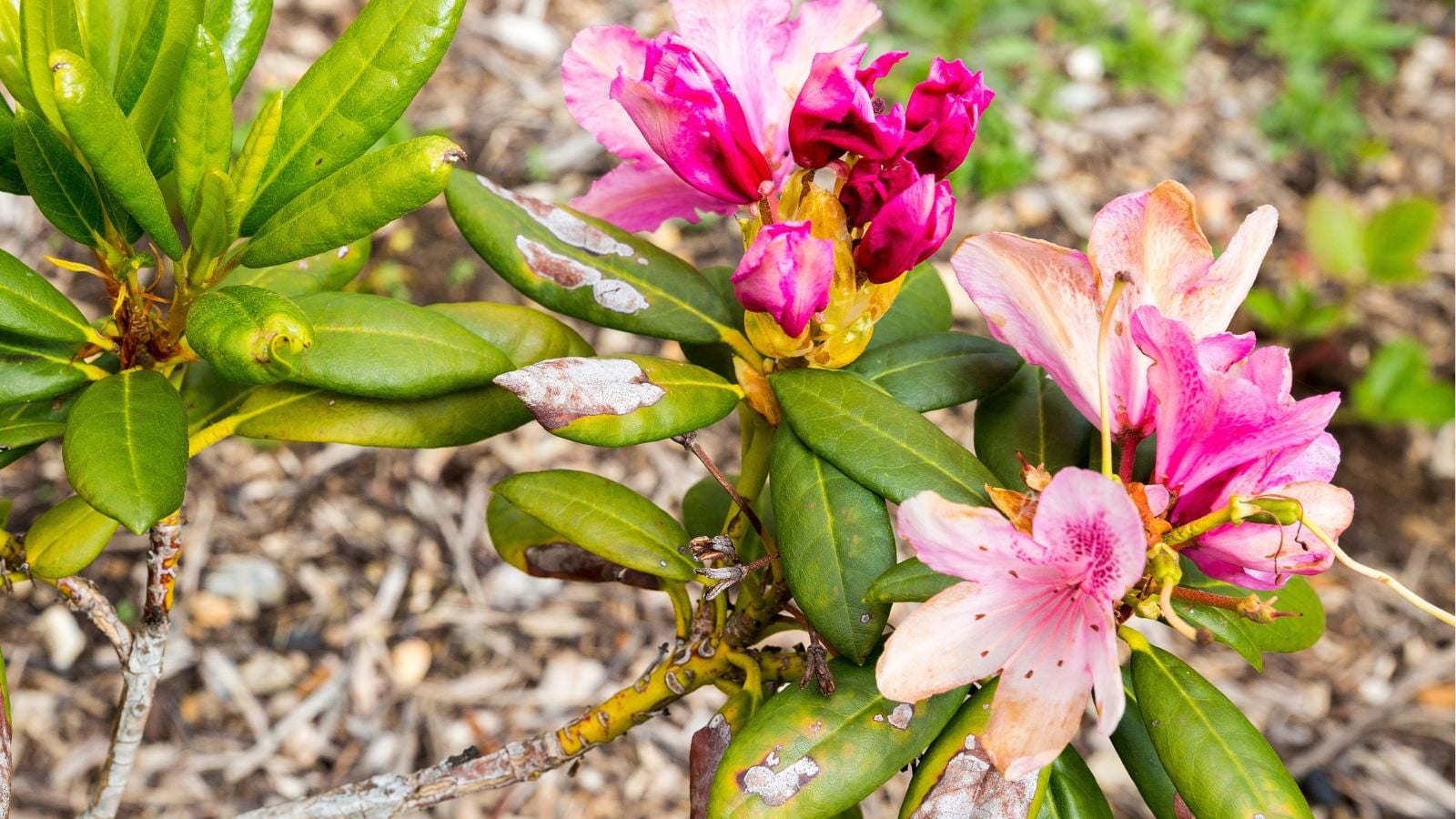
Petal blight only affects the flowersbut it can ruin what’s supposed to be the main event of the entire year for an azalea. It’s caused by the fungus Ovulinia azaleae and leads to tiny spots on the petals. On colored flowers, the spots are white. On white flowers, they’re brown. Within a couple of days, the spots spread and the entire flower turns soft, slimy, and collapses.
This azalea disease overwinters in the soil on old infected petals that have fallen around the base of the plant. The following spring, it produces spores that land on fresh blooms and start the cycle again. Wet weather during flowering makes it worse.
Remove and dispose of any infected flowers as soon as you see them, and don’t let spent blooms accumulate on the ground. Replacing the top layer of mulch around the base of the plant each spring helps bury the overwintering spores. Avoid wetting the flowers when you water.
If petal blight has been a recurring issue, early and late-blooming varieties tend to escape the worst of it because the fungus is most active during the peak bloom window.
Leaf Gall
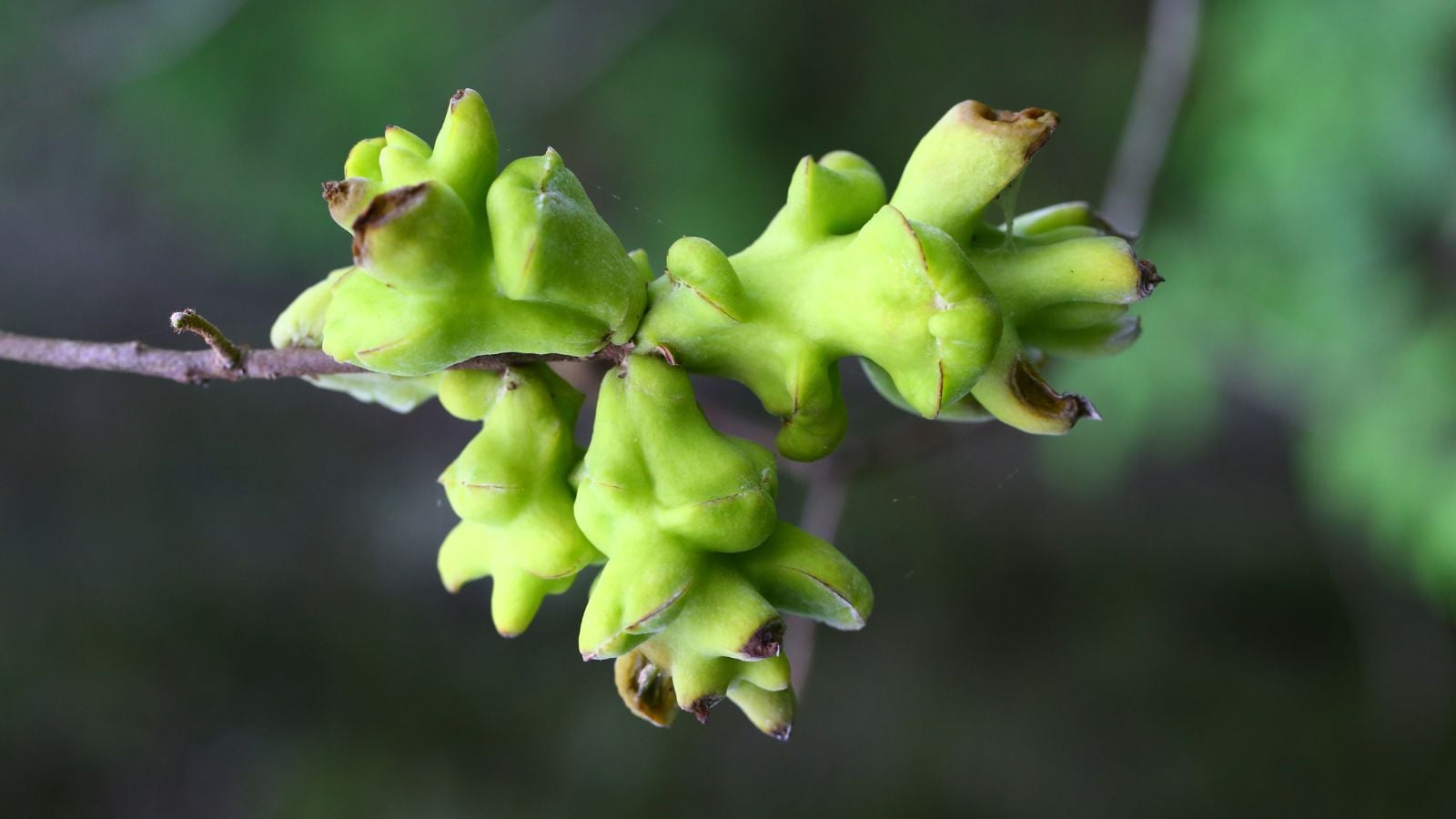
Leaf gall looks alarming but is one of the least harmful diseases on this list. It’s caused by the fungus Exobasidium vaccinii and appears in spring as swollen, distorted leaves that turn pale green or white. The galls are fleshy at first, then develop a white powdery coating as the spores form on the surface. Eventually, they turn brown and hard.
The key is to pick the galls off before they reach that white powdery stage, because that’s when they’re releasing spores that will cause new infections of this azalea disease the following year. If you catch them while they’re still green and fleshy, you’ve interrupted the cycle.
This disease rarely causes serious damage. If your azalea gets a few galls in spring, remove them and move on. Fungicides are generally not necessary.
Root Rot

Root rot is harder to detect and harder to fix than most of the other problems on this list. It’s caused by Phytophthora species, which are soil-borne pathogens that attack the roots in waterlogged conditions. The plant wilts despite the soil being wet (which often leads people to water more, making things worse). Leaves yellow, growth slows, and eventually the plant declines and dies.
By the time you notice above-ground symptoms, the root system is usually already compromised. There’s no effective chemical treatment once the azalea disease has taken hold.
Prevention is the only reliable approach. Azaleas need well-drained soil. If yours sits in heavy clay or a low spot where water collects, the risk is high. Raised beds or amending the planting area with organic matter to improve drainage helps. Don’t plant too deeply, and avoid piling mulch up against the base of the trunk.
Powdery Mildew
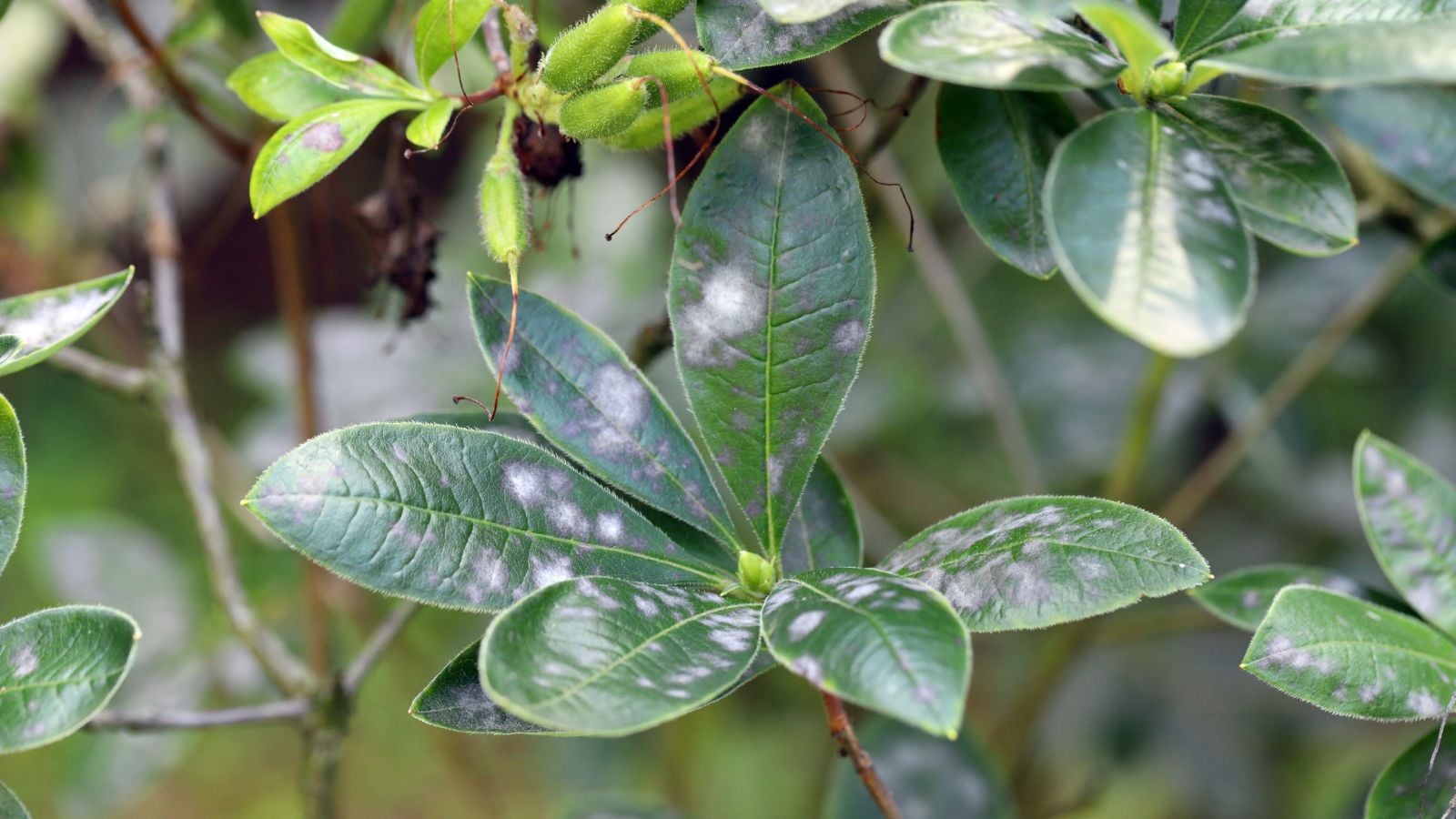
Powdery mildew produces a white, powdery coating on the surface of leaves. It’s most common on deciduous azaleas and tends to appear in fall when the weather is cool and damp. Young plants grown in shady conditions are particularly susceptible.
Unlike some fungal diseases, powdery mildew doesn’t need standing water on the leaves to spread. It thrives in humid air with poor circulation, which is why crowded plantings and shady spots see more of it. Adequate spacing between plants is the single best preventive measure.
If this azalea disease does show up, it’s mostly a cosmetic issue. Badly affected leaves may drop early, but the plant usually recovers. Neem oil can help manage it, but correcting the conditions that allowed it to develop in the first place is the better long-term approach.
Leaf Spot
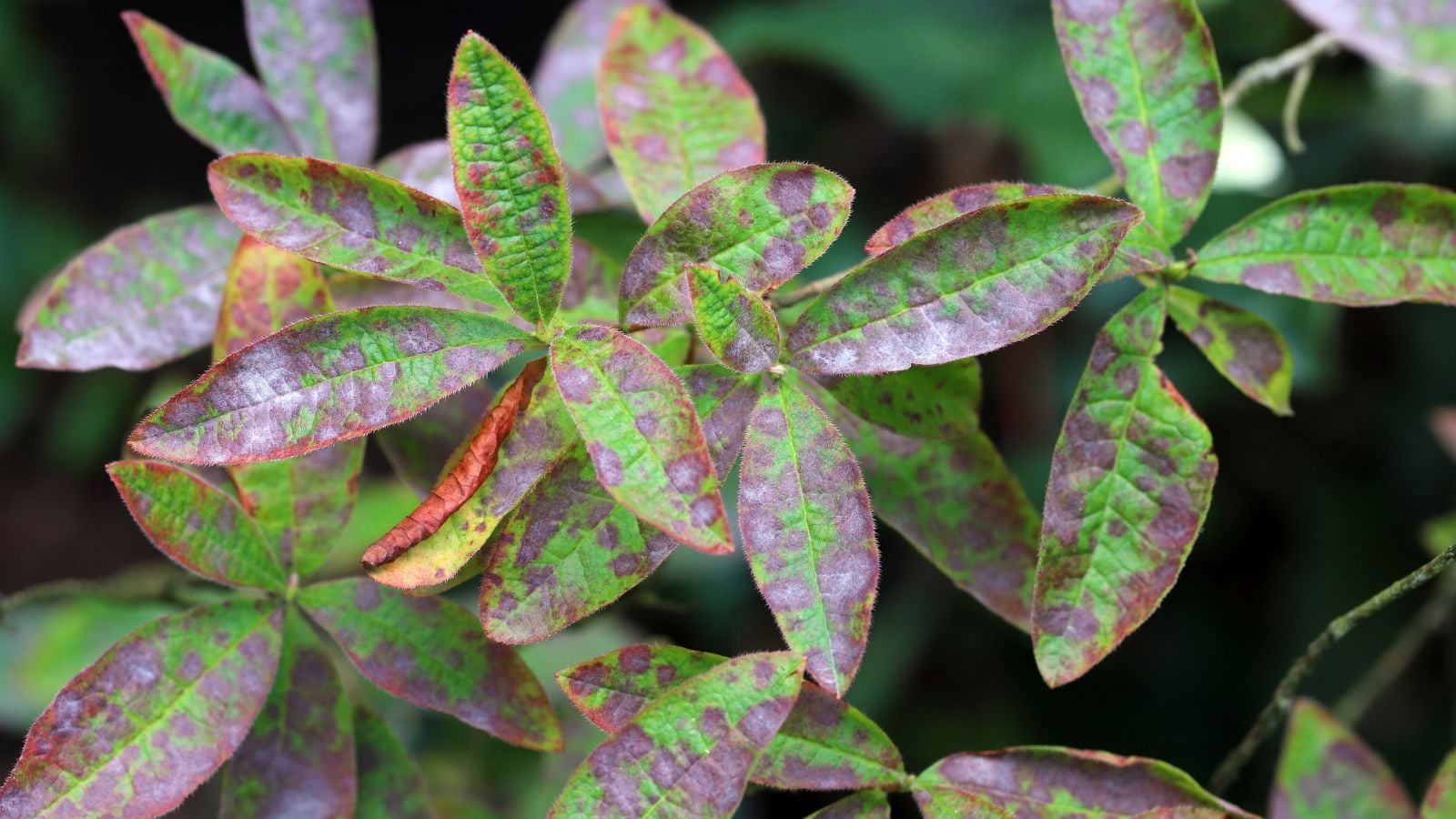
Several different fungi cause leaf spots on azaleasincluding Cercospora, Septoriaand Colletotrichum species. The spots vary in color (brown, black, yellow, or purple) and size depending on which fungus is responsible, but the pattern is similar. They tend to start on older leaves lower on the plant and work upward.
Leaf spot is rarely serious enough to threaten the plant’s life. It’s an aesthetic problem that becomes worse in wet conditions, especially when overhead watering splashes spores from leaf to leaf.
Clean up fallen leaves from around the base of the plant, since the spores overwinter on debris. Avoid overhead watering. If the azalea disease is severe or recurring, fungicides can help, but for most home gardeners, good sanitation and watering habits are enough to keep it manageable.
Rust
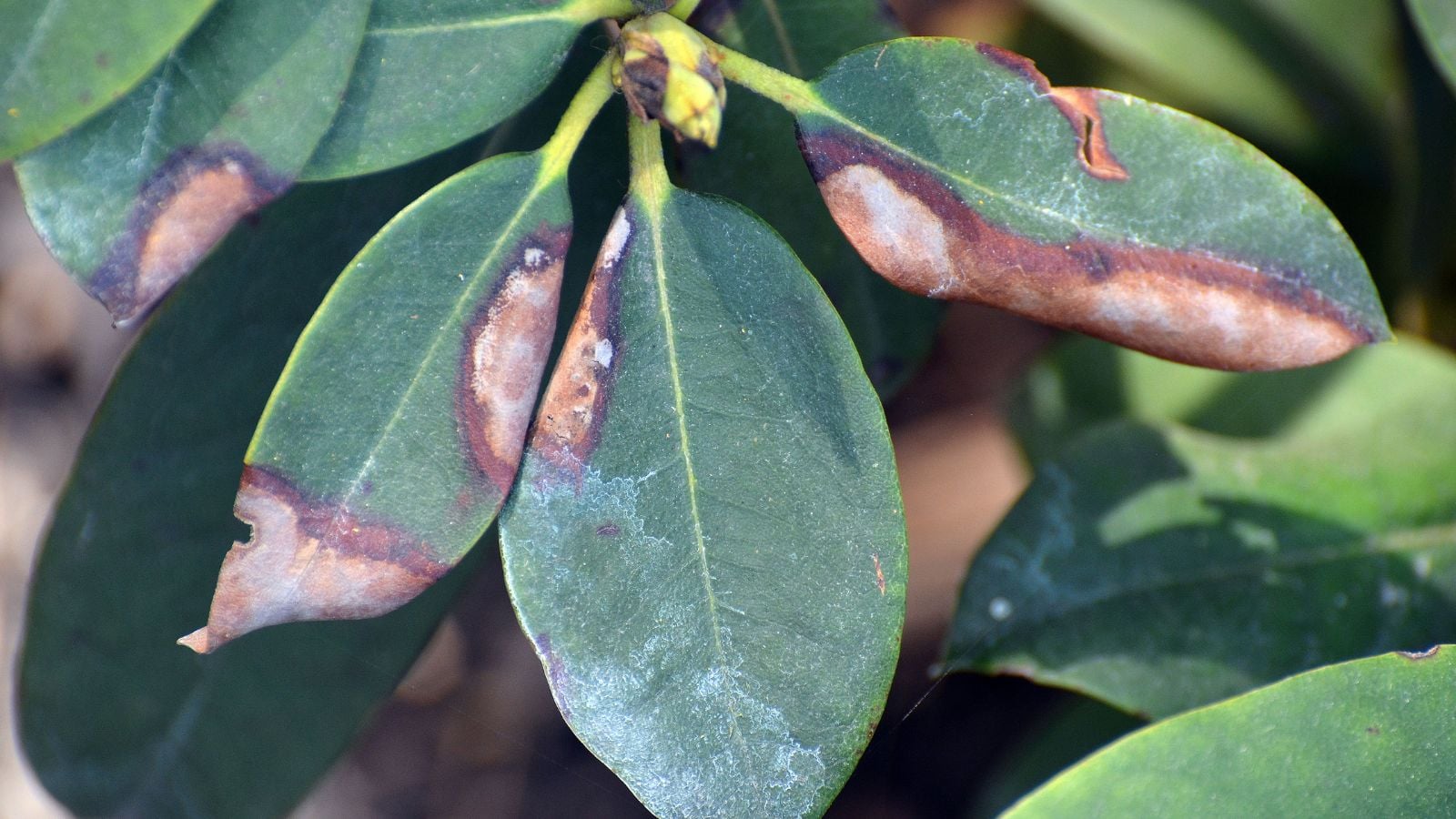
Rust is most common on deciduous azaleas. You’ll see it as orange or red-brown spore masses on the undersides of leaves, with corresponding discolored patches on the upper surface. In bad cases, leaves can be almost entirely covered in spores and will drop early.
This is another disease where air circulation and watering habits make the biggest difference. Space plants to allow airflow, water at the base rather than from above, and remove any infected leaves promptly. Don’t compost them or add them to a leaf mold pile, as the spores survive and can reinfect.
There are azalea cultivars that show good resistance to rust, so if it’s been a persistent problem in your garden, choosing resistant varieties when you add new plants is a practical long-term solution.
Dieback
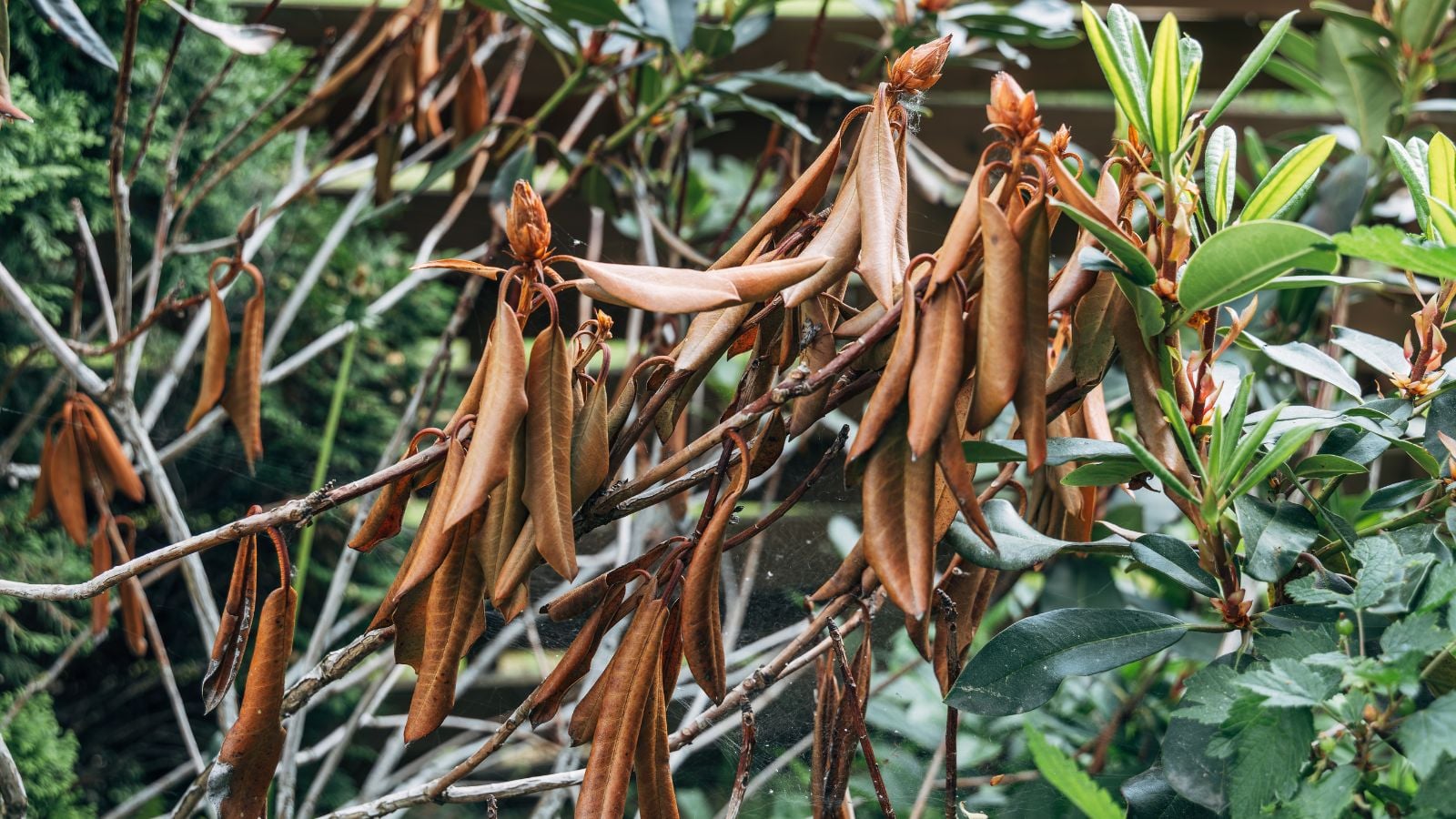
Dieback is caused by Botryosphaeria and Phomopsis fungi, and it shows up as individual branches dying while the rest of the plant looks healthy. The leaves on the affected branch wilt, turn brown, and hang on rather than dropping. If you scrape back the bark on a dying branch, you’ll see red-brown discoloration in the wood underneath.
Plants that are stressed by drought, heat, or freeze damage are more vulnerable to this azalea disease. This is one of those diseases where keeping the plant healthy and unstressed is the most effective form of prevention.
Prune infected branches well below the discolored wood and dispose of the cuttings. Clean your pruning tools between cuts with rubbing alcohol or a dilute bleach solution (one part bleach to nine parts water) to avoid spreading the fungus to healthy wood. There are no effective chemical controls for dieback, so removal of affected branches is the main treatment.
