


Organic liquid feeds are a slow burn. Learn the grower’s secret: feed the soil food web (not the plant) and discover 5 game-changing tips for massive container yields.
The Truth about Liquid Organic Fertilizer
Right, confession time.
Years ago, I was trying to grow some giant beefsteak tomatoes in containers using a light, peat-based potting mix and all-organic liquid feeds. I was patting myself on the back because, in my eyes at least, I was providing them with a veritable paradise of goodies—the feed itself, fish hydrolysate, molasses, a drop of seaweed extract, L-aminos, fulvics, humics … the whole buffet. There were children in my village who weren’t nearly as well cared for, or so I thought.
Let’s just say that the initial growth rates didn’t match my high expectations. In fact, the plants kind of moped around like call center workers on a cigarette break, giving me absolutely no sign they’d received the memo that it was time to get busy.
Panicking, I doubled the dose—of everything. It turned out, like in many scenarios when you’re waiting for effects to kick in, that was a bad idea.
After a few weeks, one pot began to smell really bad and developed a grey fuzz on the soil surface. Eventually, the plant dropped all its lower leaves as if resigning from life. Clearly, I’d overdone it.
Allow me to skip forward to the key lesson: liquid organic feeds aren’t like mineral nutrients. They don’t hit fast. They hit later. But when they do—if you’ve played your cards right, plants go nuts.
First of All—What Are Liquid Organic Fertilizers?
Let’s be honest: if you’ve ever opened a bottle of fish hydrolysate in July, you’ll know they’re not exactly glamorous. They are thick and sludgy, and they often smell like an old people’s home.
But—unlike geriatrics—these feeds are alive (or at least full of stuff that feeds life). It’s not about feeding the plant directly—they’re a full meal deal for your potting mix. Humic acids, enzymes, vitamins, amino acids, maybe even dormant microbes—all swirling around in those bottles of gloop.
But My Plants Look Hungry?!
Here’s the kicker: your plant isn’t ignoring you—it’s just waiting for dinner to be cooked and served. Organic nutrients need to be pre-chewedso to speak, by microbes. Your liquid feed is feeding the soil food web first—bacteria, fungi, protozoa—who then kindly digest it into bite-sized ions your plant can absorb.
So, yes, there’s a lag. And that lag is your microbes getting busy, doing a bit of digestion, and plating up nitrogen and phosphorus with a flourish—or squeezing them out in the restroom—or … let’s move on.
Containers Are a Different Beast
If you’re growing in pots, you’ve got to be clever. Think of it like managing a miniature ecosystem in a bucketwith a much-reduced margin for error compared to growing in regular outdoor beds. Unlike the garden, your potting mix has no subsoil, no worms sneaking in from next door, no reservoir of life—it’s just you, your bagged mix, and what you add to it. So, if you’re using organic liquid fertilizers, you’re both feeding and managing an entire underground economy.
Small pots dry out faster—which is terrible news for microbes—so you’ve got to be extra diligent about keeping your potting mix moist. They heat up and cool down more. The microbial population swings wildly. You’ve got to work harder to keep things steady—and that starts with feeding both the microbes and the plant before there’s a crisis.
Timing: Anticipation Is Everything
This bit’s important, so read it like your yield depends on it (because it kind of does).
Start Early—but Gently
Even when your plant looks happy and healthy, start slipping in small amounts of liquid feed—¼ strength like you’re trying not to spook the microbes. You’re priming the pump, keeping the soil food web ticking so that when demand spikes, there’s already a buffet laid out.
Don’t Wait for Yellow Leaves
By the time you see yellowing, your plant is already giving you the horticultural middle finger. Look for subtler cues: slightly slower growth, a fade in leaf sheen, that green looking just a touch less perky. Start adjusting before the panic sets in.
Build the Microbial Bank
Think of every feed as a deposit. You’re not just feeding for today—you’re building credit. Keep feeding regularly (even lightly) to build up microbial life and partially digested nutrients. When demand spikes, you’ll already have nutrients in motionnot stuck in processing.
Feeding Strategies: It’s Not Just What, It’s How
Front-Load Before Flower
If you know your plant’s going to go into beast mode in, say, week 5, don’t wait until week 5 to feed. Start ramping up in weeks 3 and 4, so by the time flowers start forming, there’s already plentiful supplies of available phosphorus and potassium in the root zone.
Don’t Drop the Grow!
Here’s another rookie move I see all the time—and yep, I’ve done it too: the minute those first flowers appear, people stop using their grow formula and switch entirely to bloom.
Big mistake.
In organic systems, your grow feed typically isn’t just a source of nitrogen. It’s often packed with simple sugars and amino acids that feed your microbial workforce. Ditching it cold turkey can cause your soil biology to stall right when you need it most.
The trick is to use both your grow and bloom during flowering. That’s right, keep your grow feed going right through flowering, combined with the bloom feed. You’re maintaining a steady stream of microbial fuel while layering in extra phosphorus and potassium from your bloom feed.
Secret Weapons: Five Organic Game-Changers
Alright, here’s the good stuff. These tricks take your organic game from meh to magnificent:
- Ditch the Chlorine
Tap water often has chlorine or chloramine. Microbe killers. Let it sit for 24 hours (for chlorine), or use a neutralizer product like Ecothrive’s Neutralise for instant peace of mind. RO water or rainwater? Even better.
- Add Life – Regularly
One bottle of mycorrhizae at transplant isn’t enough. Keep the party going with inoculants—Bacillus, Trichodermaall the gang. Add every 2–4 weeks to keep your microbial workforce sharp and diverse.
- Feed the Feeders
Fish hydrolysate, humic and fulvic acids, coconut water powder, aloe extract… they’re not just buzzwords. They supercharge the microbes, stimulate roots, and unlock nutrients. Use sparingly but strategically.
- Foliar Feeding = Fast Fix
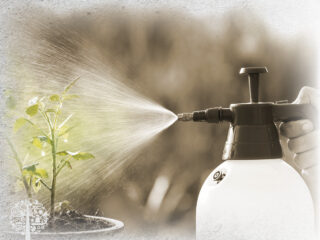
Need a quick pick-me-up? Diluted fish or seaweed sprays (¼ strength or less) applied to the underside of leaves work wonders. Think of it as a cheeky espresso shot while the soil microbes are still making dinner.
- Instant Microbial Teas
Forget the 48-hour brew-fests. Products like Biosys make instant microbial teas you can whip up and deploy every week or so.
It’s Slow… Until It’s Not
Liquid organic fertilizers are a slow burn. But once that microbial engine’s running, it’s glorious. Your plants will hum. Growth will surge. And you’ll be sitting there, grinning like a proud (and responsible) parent, wondering why you ever doubted it.
So yes—be patient. Feed early. Increment doses gradually. And most importantly, never underestimate the power of a good stink (looking at you, fish hydrolysate) when it comes to growing the best plants of your life.
