


The best cottage gardens look like they planted themselves. They didn’t, of course. But the design principles they follow are simple.
The English invented the cottage garden, probably in the 1400s when even the humblest plots of land were pressed into service to produce food for families. Every inch of earth counted—with herbs, fruit trees, and flowers (which attracted bees to pollinate crops) jammed close together. Aside from being practical, the effect was charming.
Today’s modern cottage gardens look just as lovely—a spill of color as edible and ornamental plants mingle and flop over the edge of a walkway. Roses engulf a trellis. Hollyhocks lean casually against a brick wall. Here are 10 ideas to steal from English cottage gardens.
Crash Course: Gertrude Jekyll 101

English gardener Gertrude Jekyll (1843–1932) is the patron saint of modern cottage gardens, having popularized the informal, blowsy herbaceous borders we associate with country houses (in England) and picket fences (in the US).
In reaction to the fussy, formal plantings the Victorians championed, she advocated a more natural look, with plants arranged by color, height, and flowering season. For more of Jekyll’s ideas and advice, see Gertrude Jekyll and the Country House Garden.
Breach Boundaries

To create the quintessential cottage garden, plant flowers at the edge of garden beds and allow them to spill over onto paths. Bonus points for fragrant flowers that brush against visitors’ ankles as they pass by.
Add Arbors
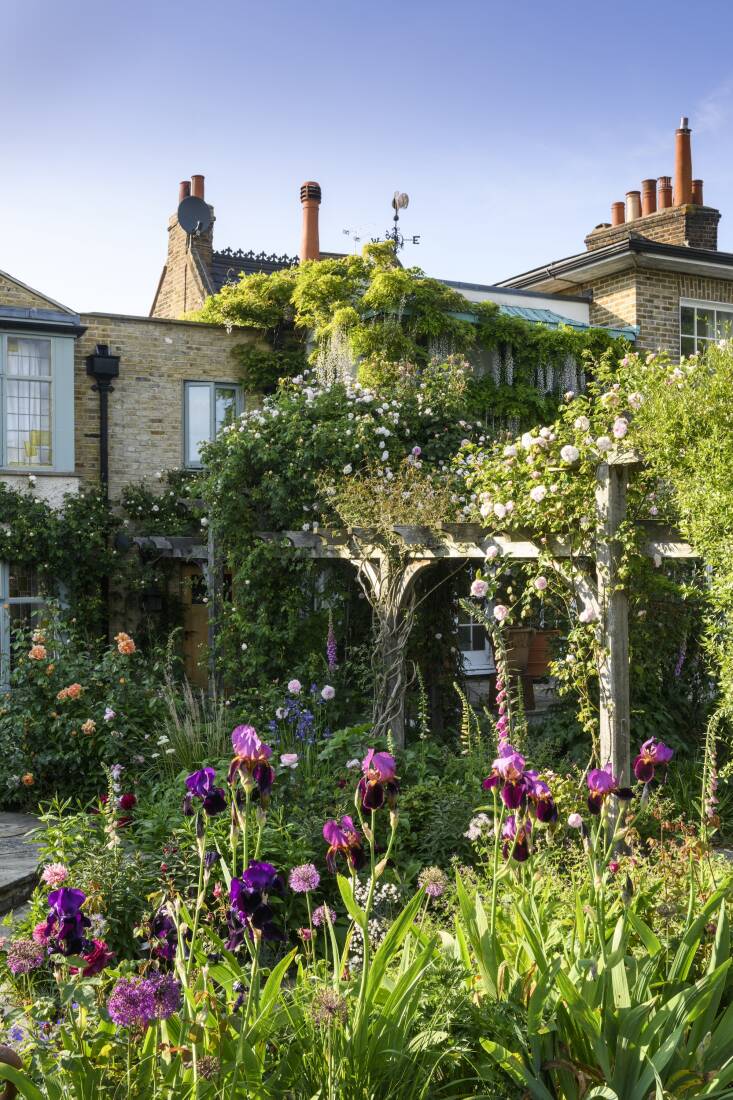
Install sturdy arbors and trellises so you can train vines and climbers (particularly fragrant roses) to grow into billowy shapes against walls, next to gates, and above doorways.
Bench Logic

