


Knowing when and how to repot a houseplant can save you and the plant a lot of unnecessary anxiety.
Signs it’s Time to Repot a Houseplant
Plants are excellent communicators; you just have to understand their language to know when to repot them! For houseplants, this usually means when:
- The plant’s roots are growing out of the pot’s drainage holes
- Water runs straight through the pot (in healthy plants, this usually means the root system is too dense for the water to be absorbed)
- The plant has stopped growing
Timing also matters. The best time to re-pot a houseplant is during its active season – spring and summer. This is optimal because, after re-potting, it gives the plant time to benefit from both the light and warmth of the sun and to re-acclimatize itself to a new home.
Houseplants and Pot Choice
Choose a new pot with good drainage, one or two inches wider in diameter than the current one. Moving your plant into a pot that’s too large can actually harm its roots and lead to overwatering.
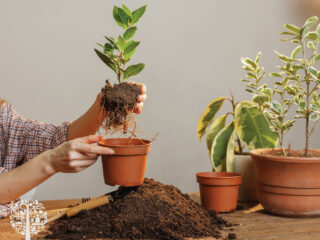
Preparing a Houseplant for Repotting
A little preparation goes a long way to making the repotting process comfortable for the plant and you!
- Water the plant well about 24 hours before you plan to re-pot it. This allows time for the soil and roots to soften, making it much easier to lift the plant out of the pot.
- Make sure to have a bucket of fresh potting mix suitable for your plant’s needs. Some prefer sandier soil, while others prefer soil that has more nutrients. Know your plant!
- Grab some garden gloves, a trowel or spoon, and some old newspapers to catch any mess.
A Step-by-Step Guide to Repotting a Houseplant
- Tug gently on the base of the stem, not the leaves, and squeeze or tap the sides of the pot. If the plant won’t budge, use a butter knife around the inner edge of the pot to loosen roots.
- Remove the plant by gently tipping the pot sideways while supporting its base.
- Once out of the pot, it’s time to inspect the plant roots. Healthy roots are white or light tan and firm, while dead roots look brown, mushy, or dry. Snip off these bits. If the roots are entangled, gently tease them apart with your fingers.
- Before plopping the plant into its new home, add fresh potting mix to the bottom of the new pot (about one-third full). Place your plant in the center at the same depth it was growing before, then fill around the roots with more soil, pressing gently to eliminate air pockets. Don’t fill it to the brim of the pot; leave about an inch of space for easy watering.
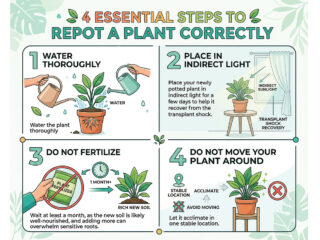
Repotting Houseplants: Aftercare Plan
- Water the plant thoroughly until water drains from the bottom.
- Place your newly potted plant in indirect light for a few days to help it recover from the transplant shock.
- Do not fertilize. Wait at least a month, as the new soil is likely well-nourished, and adding more can overwhelm sensitive roots.
- Do not move your plant around —let it acclimate in one stable location.
