


A more natural approach to spring planters using forced bulbs, clipped branches, moss, and garden materials.
Spring containers are fleeting things. Tulips bloom, temperatures shift, and within a few weeks the whole arrangement is ready to come apart again.
That short lifespan is exactly why I like them.
Unlike summer containers — which often need to perform for months — spring pots can be experimental, improvised, and a little loose around the edges. I treat them almost like floral arrangements made from whatever the garden is offering at the moment — forced tulips, clipped branches, moss, stones, old seedheads, even fallen lichen from the woods.
The result feels less formal and much more connected to the season itself.
Editor’s note: I first created these spring containers years ago, but the approach still feels more relevant than ever — especially as gardeners move away from overly formal seasonal pots toward arrangements that feel more connected to the surrounding landscape.

By Danita Delimont
Leave Forced Tulips in Their Nursery Pots
If you haven’t planted the bulbs in the fallthen you are going to have to buy potted bulbs that have been forced in the spring. When creating your container arrangement, don’t bother to take the bulbs out of their container. This is a waste of time when you are planting it up and it makes the mess of dismantling it more difficult as well. You are going to take this apart in just a few short weeks anyway so you may as well help yourself out. Get a couple of containers for each planter and really jam them in. You may want to cut the top inch or two of the container off (with sharp scissors) to get them really close.
Use Branches and Garden Clippings Like Floral Material
I got my bulbs from Lowes but the rest of the materials came from my garden. Everything has possibility and since these container gardens are so short lived, you can approach it as floral arrangement. Forced stems are my favorite. Cuttings from any spring flowering tree or shrub can be jammed into the soil and will live as long as your bulbs bloom. Take cuttings from branches that have the tightest buds to increase the lifespan. By using what you have in your garden you instantly tie together your over all garden design.

By Danita Delimont
Raise the Soil Level for Fuller, More Layered Containers
With some extra potting soil, I raise the dirt height from last season (this will go to good use when I re-plant for summer). Make tge height just right so that when you set the bulb pots in the container the tops are a couple inches above the height of the container. It is my preference to let the full plant show — it helps with scale and it gives lots of opportunity to add other elements around the base.
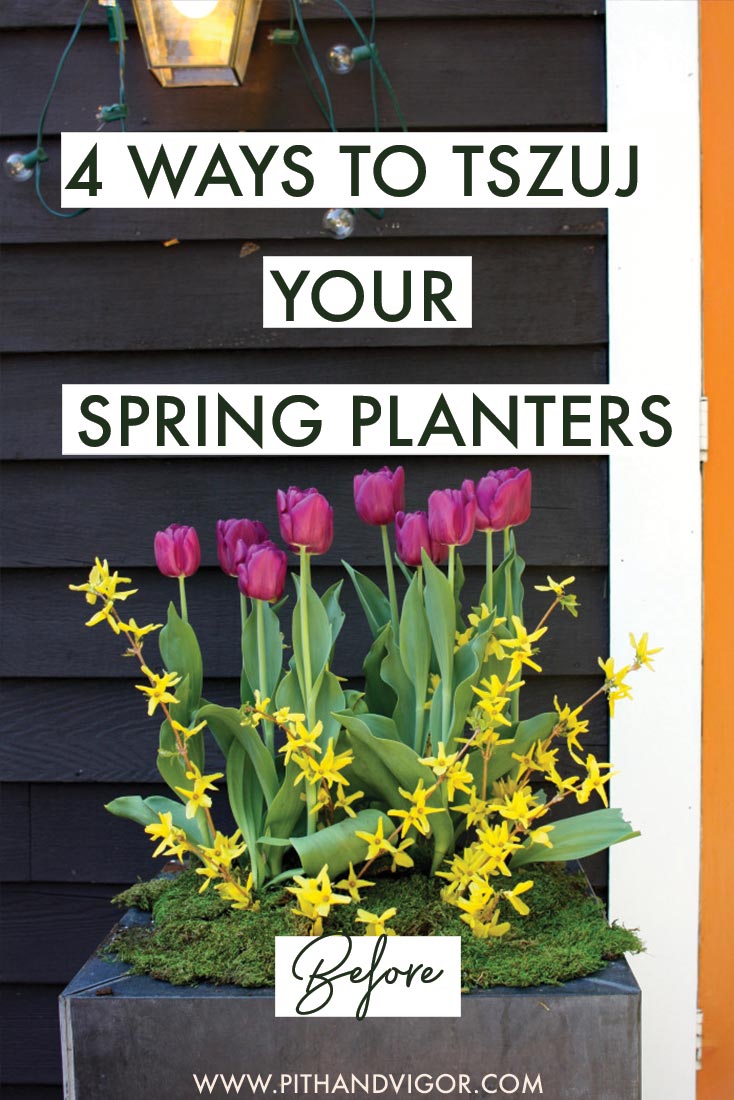
Once the bulb containers were in place fill around them with potting soil (mounding it over the pots) and cover it with moss or lichen (I gathered from the woods). Pour water over it to wet the moss and secure it into place. That way it will secure the dirt below and the moss together. This is what it looked like (apologies for not taking pictures before — I got ahead of myself — but I think you can figure out how to get here).
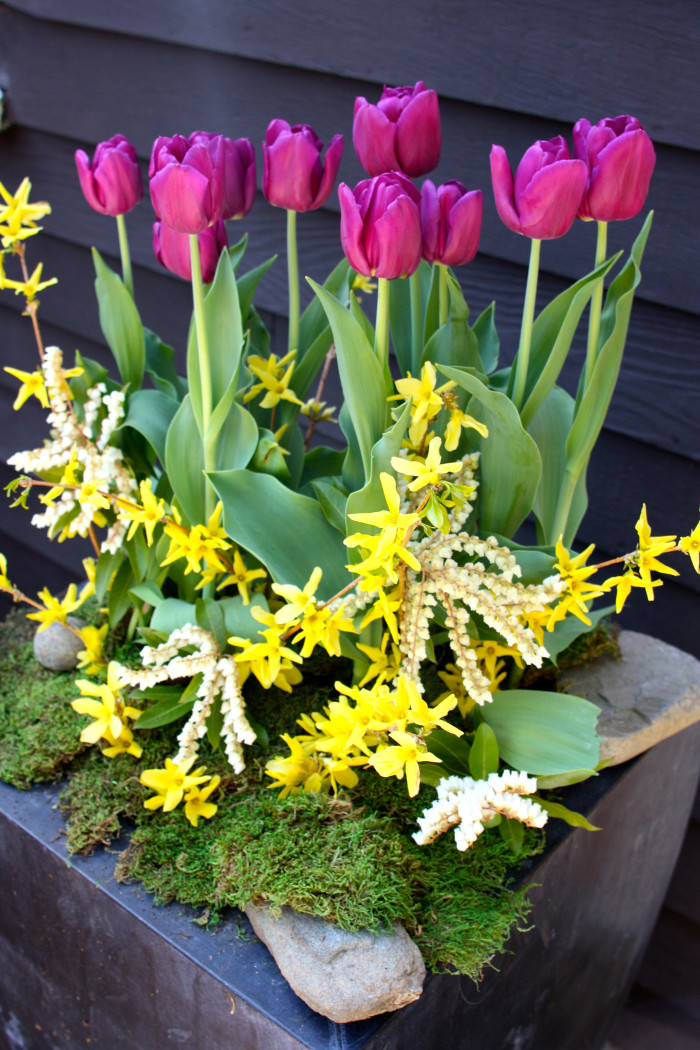
Use Moss, Stones, and Seedheads to Make Containers Feel Settled
I grabbed a few rocks laying in the garden to give a little more relief….layering them under the moss. My Pieris (andromeda) is also in full bloom so I clipped a few sprays of blooms to add a new texture, and I just shoved them into the damp soil through the moss. They will keep for as long as the tulips last (and if not, it takes 20 seconds to clip some fresh blooms and refresh – or change it up with something else that has come into flower). You can also play around with creating scenes (maybe with toys, or consider moving some other decorative or sculptural garden item into the display)
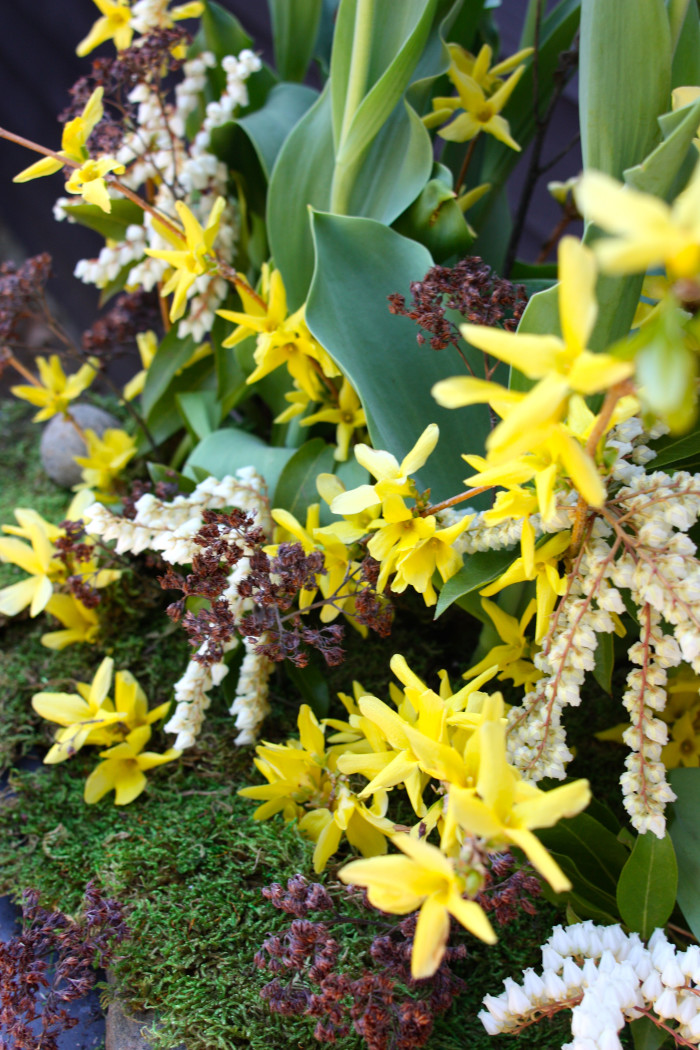
You may disagree, but I think it still needed a little something more, so I took another walk through the garden. I have a bed that hasn’t yet received its spring cleaning and there are a few patches of Sedum ‘Autumn Joy’ still standing with their dried flower heads. That they are a similar color to the tulips and a perfect addition to my arrangement.
The after is an easy mix of garden clippings and potted tulips. When dressing up you containers, ask yourself: What do you have blooming or looking interesting in your garden that might pair nicely with spring bulbs?
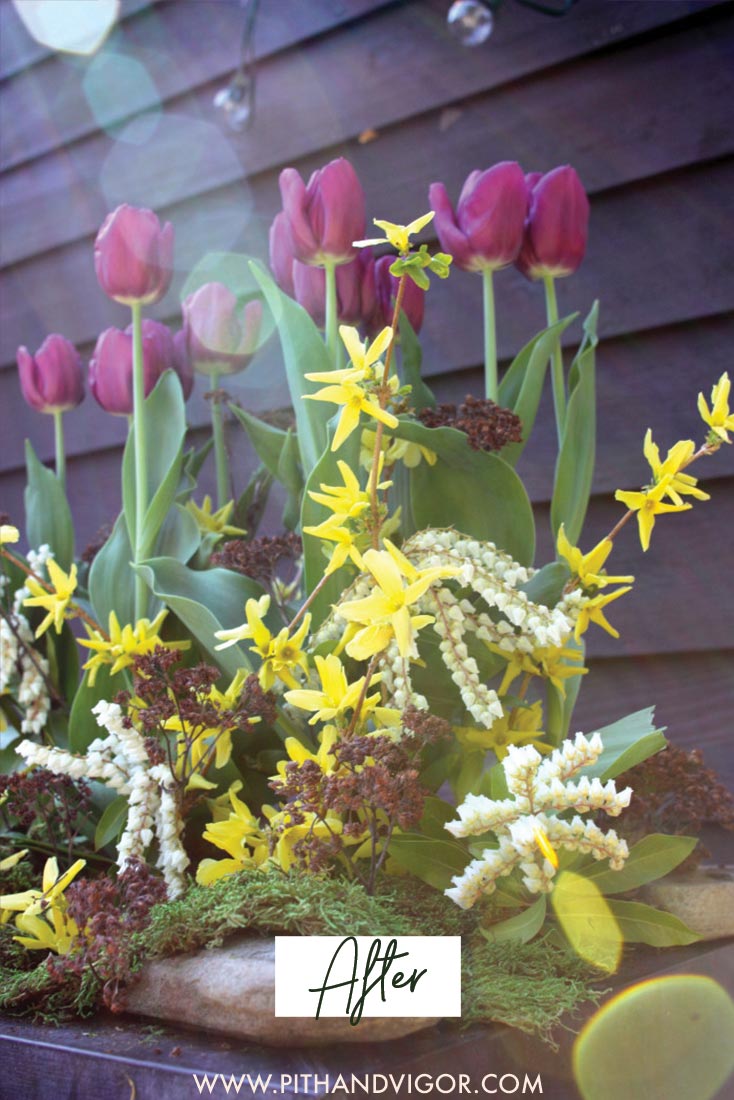
The most successful spring containers often feel like extensions of the garden itself rather than separate decorative objects.
Look around your landscape before heading to the garden center. Seedheads, branches, moss, stones, emerging perennials, and forced bulbs can all become part of the composition.
And don’t forget — plant the bulbs in your garden when you take this apart. It isn’t true that forced bulbs will never bloom again. They may need a year or two to recover and get back into their natural groove, but they will come back — I have a garden full of daffodils discarded from commercial projects to prove it! Just plant them as you would in the fall and be patient.
Images: Rochelle Greayer
If you want to see more, check out last month’s project – DIY Terracotta Plant Markers.
