


As autumn whispers into our days and nights, olives, somewhere, are ripening. And that makes my mouth water in anticipation. Oil-cured olives await. My olive-curing adventures began this cold January, when I was gifted a tiny, fresh crop of ripe black olives by Rachel Prince, a talented professional gardener and friend who lives two blocks west of us in Brooklyn. Rachel grows her little olive trees in pots that overwinter indoors in our USDA growing zone 7b (-ish). I had always wanted to make oil-cured—versus brined—olives, whose meaty, concentrated flavor can be addictively good, for anyone who loves savory flavors. The results, a couple of weeks later, were surprisingly delicious, and the process could not have been easier.
All you need to make oil-cured olives are salt, olives, and time. And maybe a pillow slip.
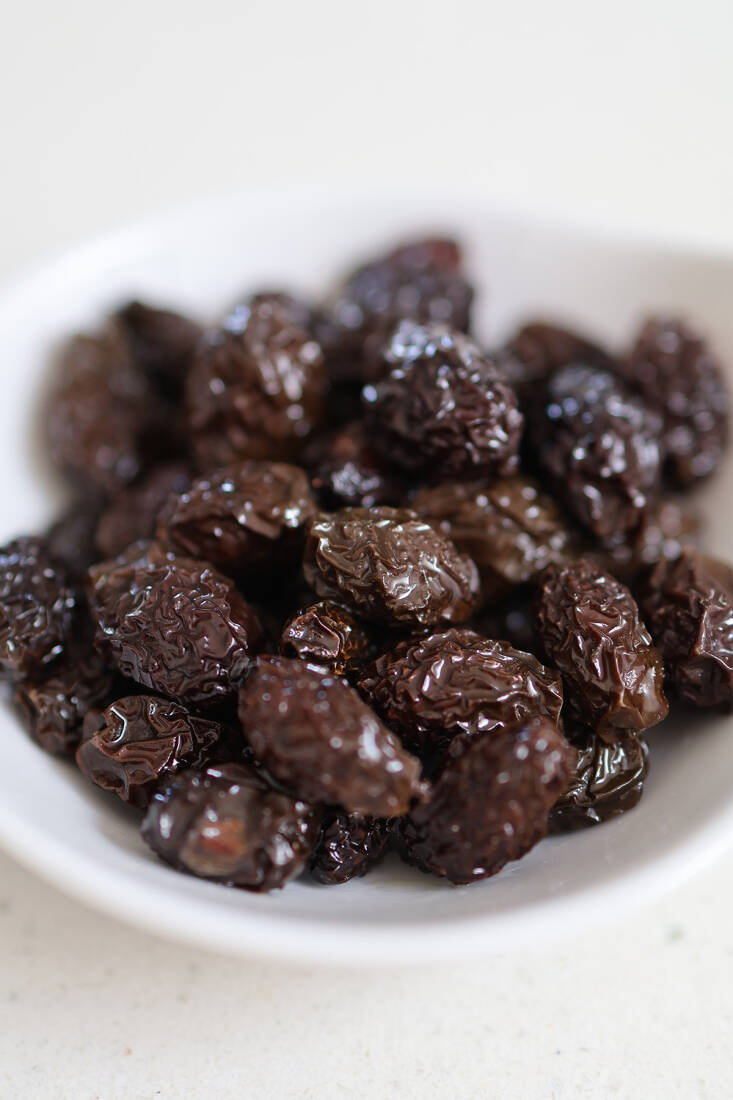
As I read about how to make oil-cured olives (starting with this delightful tutorial) I learned quickly that the term “oil-cured” is a misnomer—no oil is involved in the curing process. It’s more accurate to describe these wizened treats as dry-cured, or salt-cured. But the description seems to stick.
Rachel’s little cold-bletted olives were less bitter than most, but I still soaked them overnight, then mixed them with an equal weight of sea salt before hanging them in a cloth from the ceiling (right beside the Annual), to cure. Snow fell on the skylight above. After a week, I tasted one. Still mildly bitter. But just one week more and the tiny olives were ready. I was delighted to discover that they tasted—at least to me—exactly as oil-cured olives should: savory and succulent, in a wrinkled way.
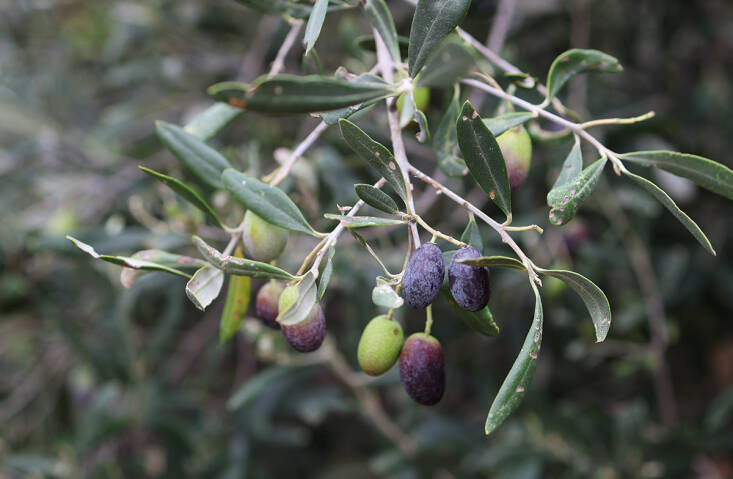
A few months later, in April and a hemisphere away, I found myself outside Nieuwoudtville, South Africa, standing awed beside three 12-foot olive trees whose silver-leafed branches were weighed down with plump green and black fruit. They were planted around our accommodations, a 200-year-old farmstead that was our base for a once-in-a-lifetime trip to see the annual and breathtaking autumn display of Brunsvigia flowers in the veld around the town. Pomegranate trees grew beside the olives, their ripe-to-bursting fruit splitting to expose juicy red gems. Rosemary in bloom clambered over a stone wall. In a word, heaven.
I remembered those dead-easy oil-cured olives in wintery Brooklyn, and I began to pick.

Oil-cured olives recall two formative meals. One, where, as an impressionable 20-year old waiting for a waiter-friend to finish his shift in a Turkish restaurant in Cape Town, I found myself the surprised recipient of two plates, sent from the kitchen to me by the intimidating chef. On a small plate was a slab of unadorned sheeps’ milk feta. The second plate contained nothing but glossy, oil-cured olives. I had never seen any before. A diminutive carafe of red wine arrived. It seemed shockingly austere, and I have never forgotten it (the chef went on to become a friend and food mentor; now 85, he lives in Istanbul).
The other indelible memory is from Café Gitane, an indefatigable restaurant in Manhattan’s Nolita, where, ten years after that light night snack, I ate for lunch a startling salad of orange segments, oil-cured olives, and chile. It was served with a hunk of baguette, whose purpose was to sop up the complicated-tasting and soupy juice at the bottom of the bowl. I have made that salad ever since, recently with shatta as well as some mint, from our little terrace. The addition of house-cured olives makes it an even more satisfying pleasure.
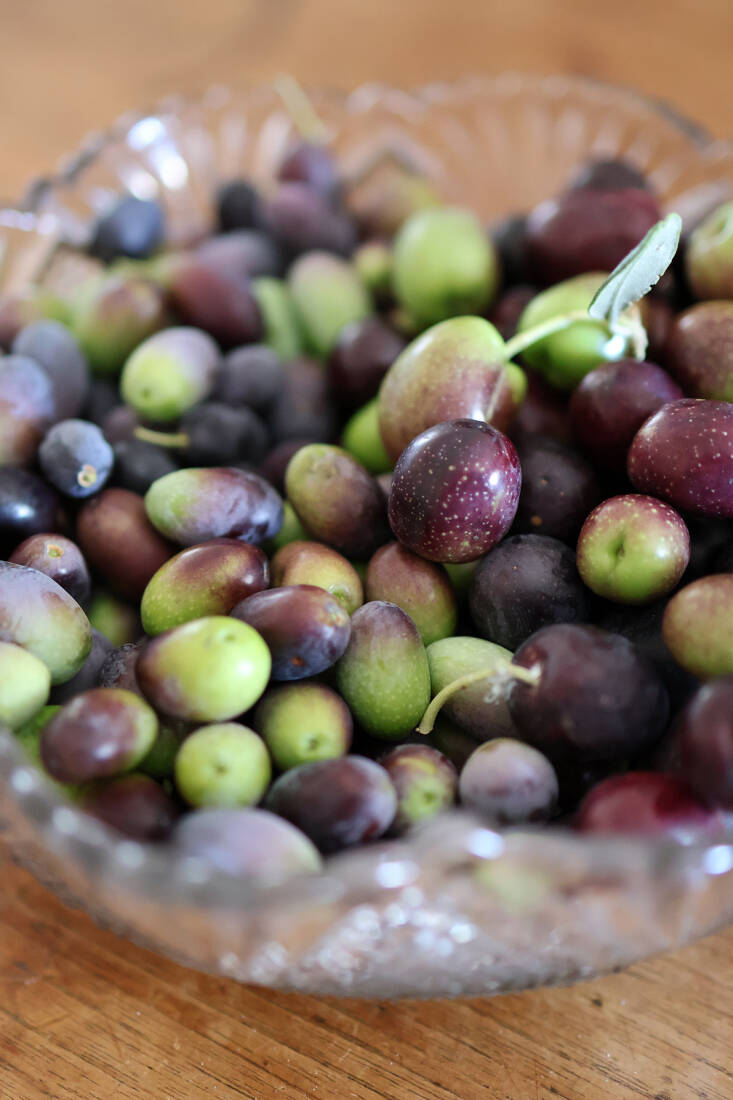
Those plump Niewoudtville olives travelled. First, back to our Cape Town base, where I hung them in a pillow slip from an iron café table on the little terrace where we were staying. Then back to New York, in a ziplock, salt and all. At home, in Brooklyn, they were switched to a cotton kitchen cloth and hung for another week until no more moisture could be detected. On the 29th day of their cure, finding that they tasted wonderful, I rinsed them, let them dry, and then packed them in jars with—finally!—a tablespoon of olive oil to gloss them up. I ate one a few moments before writing these words, and they are as delicious as ever. Bold, succulent, slightly chewy, and umami-ly compelling.
