


Hi GPODers!
We’re back in Bellevue, Washington today to complete our seasonal tour of Cleo Raulerson’s incredible garden. Over the past year we’ve been enjoying her sensational space during the peak of each season, with new combinations and sources of interest evolving with the change of weather. (Check out her previous submissions here: Late October in Cleo’s Back Garden; moved to Cleo’s Washington Garden in Winterand Cleo’s Spring Garden in Washington). Her garden has a truly year-round design and delights in every season, but some might say she saved the best for last. We’re finally diving into the vibrant colors and lush growth of her summer garden.
Welcome to my Summer garden! My garden is alive with the colors of more than 750 varieties of flowering plants, designed so that something is in bloom every day of the year. It truly bursts into color and movement in the summer. These photos were taken just prior to my participation in the Northwest Perennial Alliance Open Garden Tour of member gardens—65 people toured my garden on July 27th. This is my 37th year in this garden. I now do naturalistic gardening—it evolved from a planned design and my love of self-seeders. I edit to what pleases me and enjoy how plants weave themselves together. Textures and color combinations have become more important. Enjoy seeing Cleo’s Seattle area garden at its mid-summer peak!
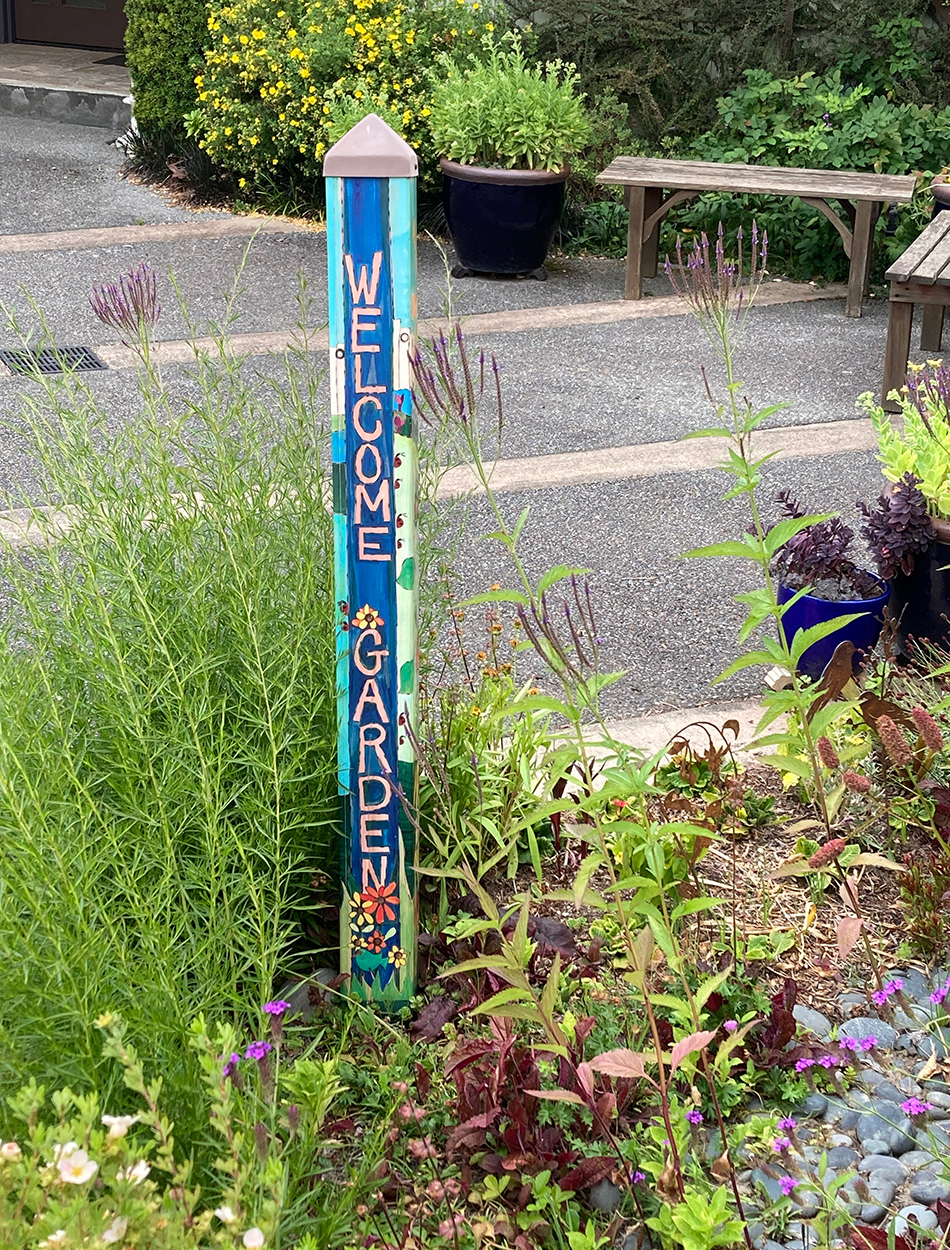 “Welcome Garden” peace pole by Stephanie Burgess with an aster (Symphyotrichum ‘Cape Cod’, Zones 4–9) to the left which will later have small white flowers. Yellow flower shrub in back is shrubby cinquefoil (Dasiphora frososo ‘Goldfinger’, Zones 3–7).
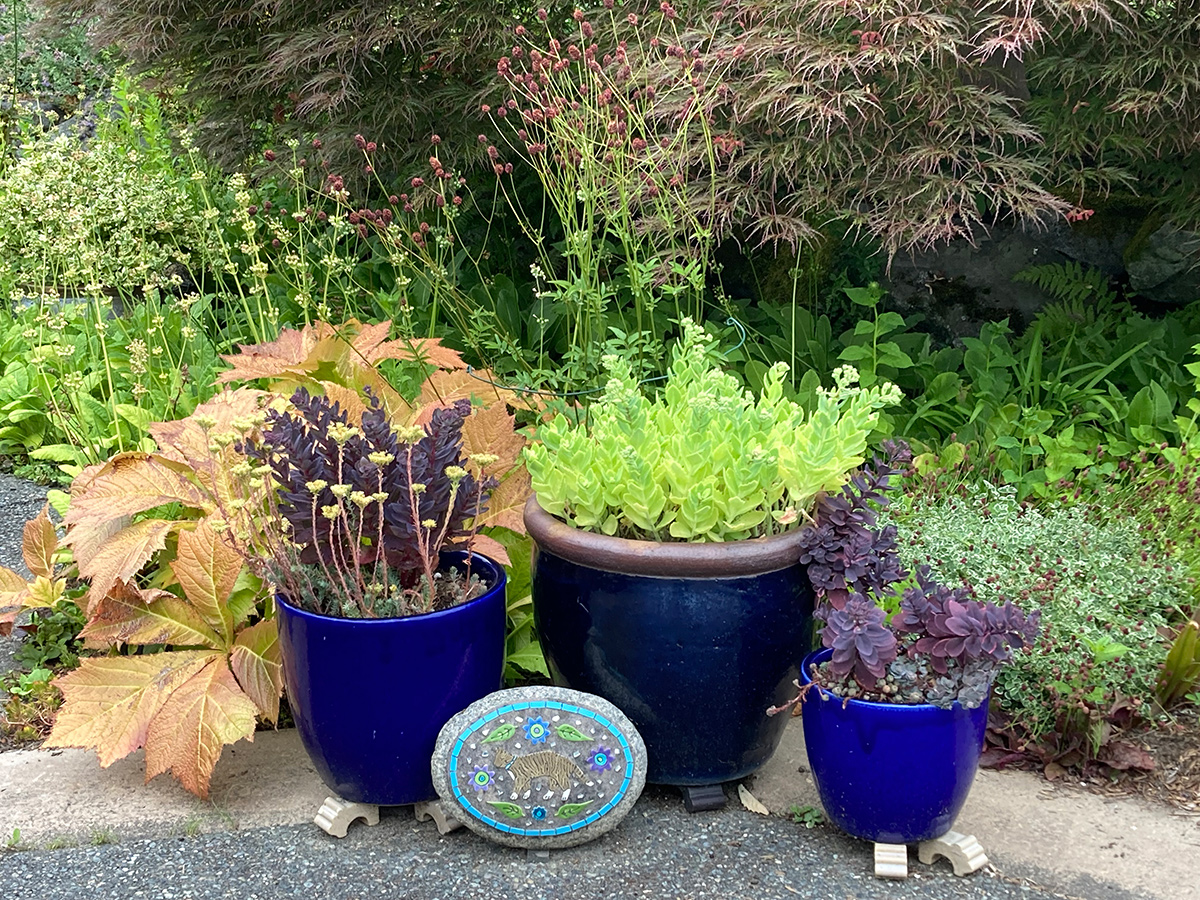 Three blue pots planted with various sedums. Redleaf roger’s flower (Rodgersia podophylla ‘Rotlaub’, Zones 6–9) is behind left pot, and a large Japanese lace-leaf maple (Acer palmatum our. Severe atropurpureum ‘Ever Red’, Zones 5–9) is in the background. Stone mosaic is by Clare Dohna.
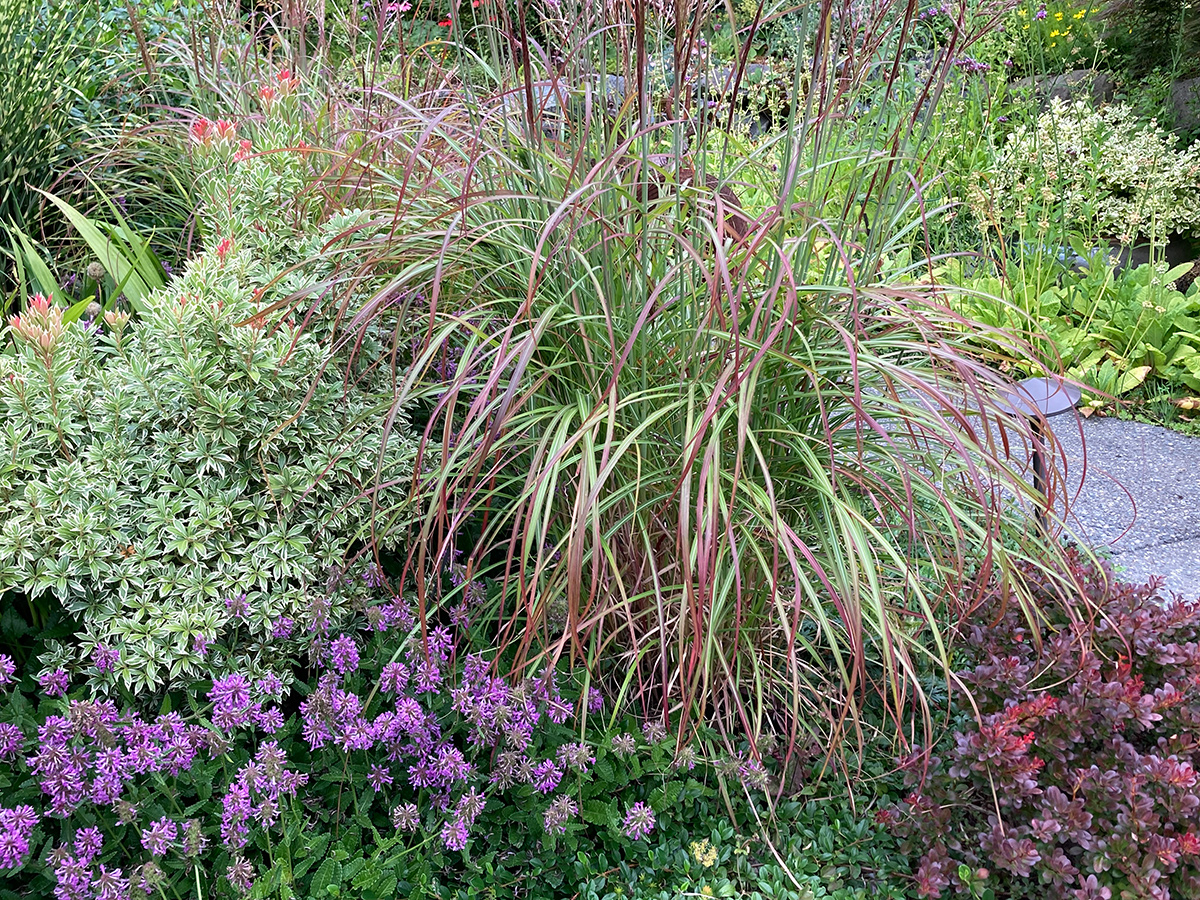 Grasses are accents throughout the garden. This composition is left to right: lily-of-the-valley shrub (Pieris japonica ‘Little Heath’, Zones 5–9), maiden grass (Miscanthus sinensis ‘Little Miss’, Zones 5–9), concrete (Stachys officinalis, Zones 4–8), and barberry (Berber thunbergii ‘Crimson Pygmy’, Zones 4–9).
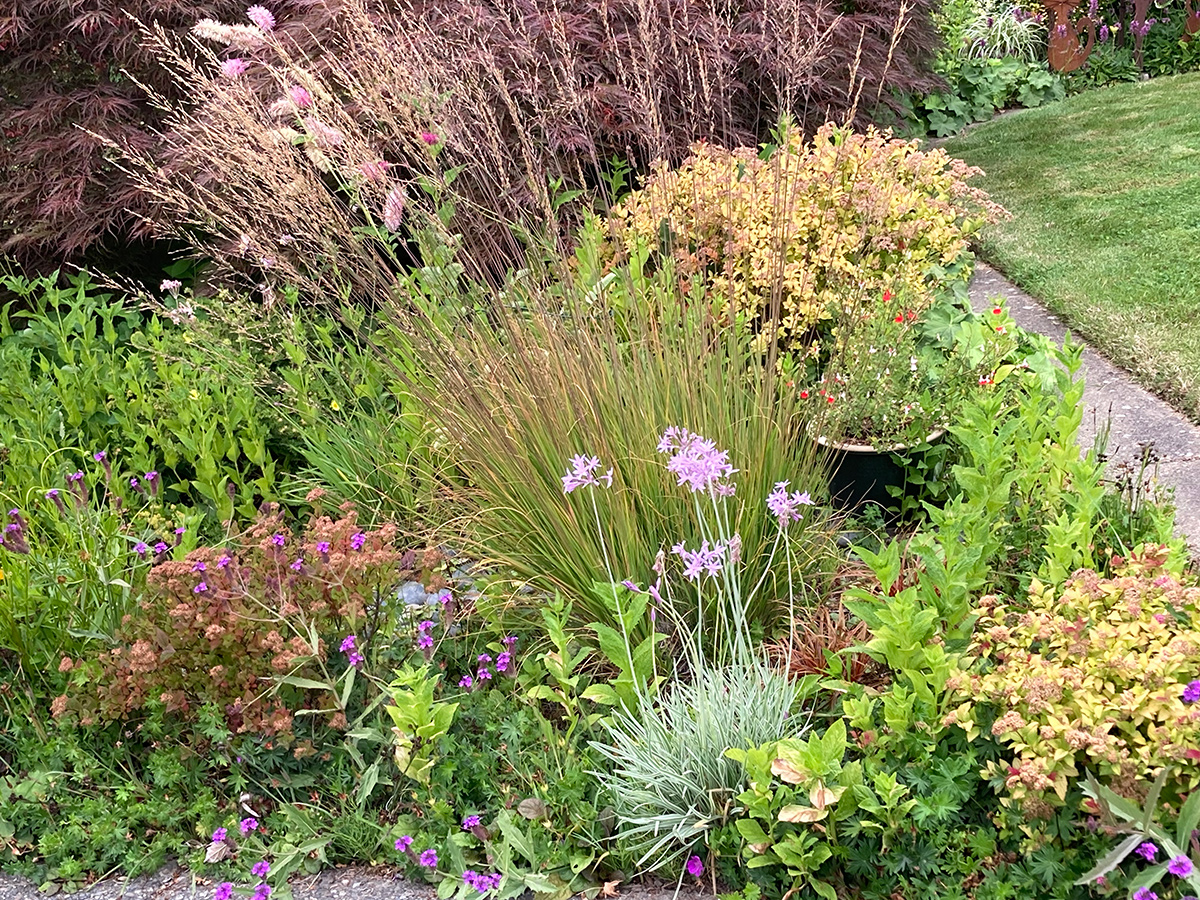 I have a Mexican pebble stone stream running down this bed that is currently hidden by: multiple varieties of past-bloom spirea, purple moor grass (Molinia blue ‘Moorflamme’, Zones 4–9), society garlic (Tulbaghia purple ‘Tricolor’, Zones 7–11), and other perennials.
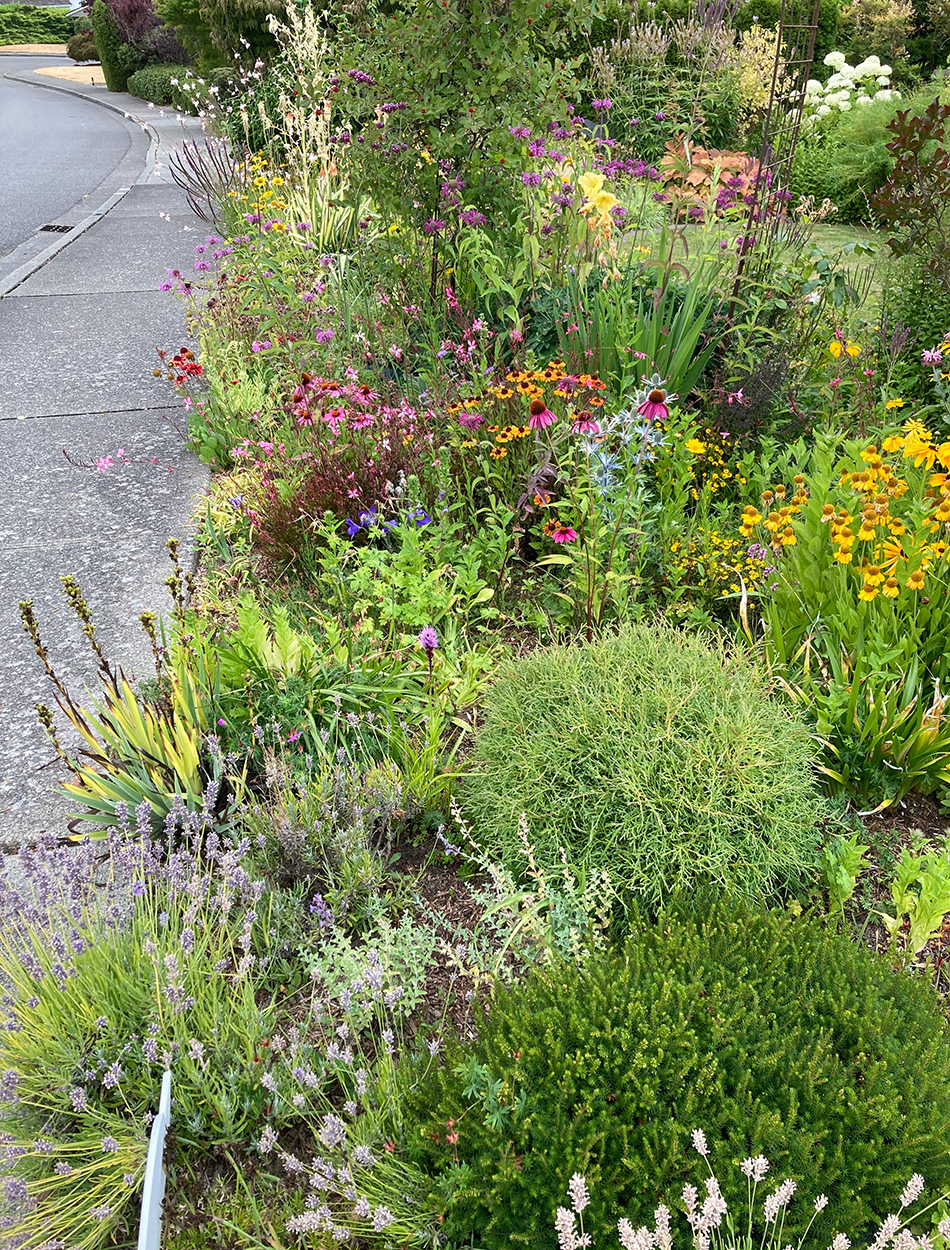 This fast-draining front bed is filled with mid-summer color including: Mr Bowling Ball arborvitae (Thuja occidentalis ‘Bobozam’, Zones 3–8), multiple varieties of holeconeflower, Helenium, Rudbeckkiaand many other plants.
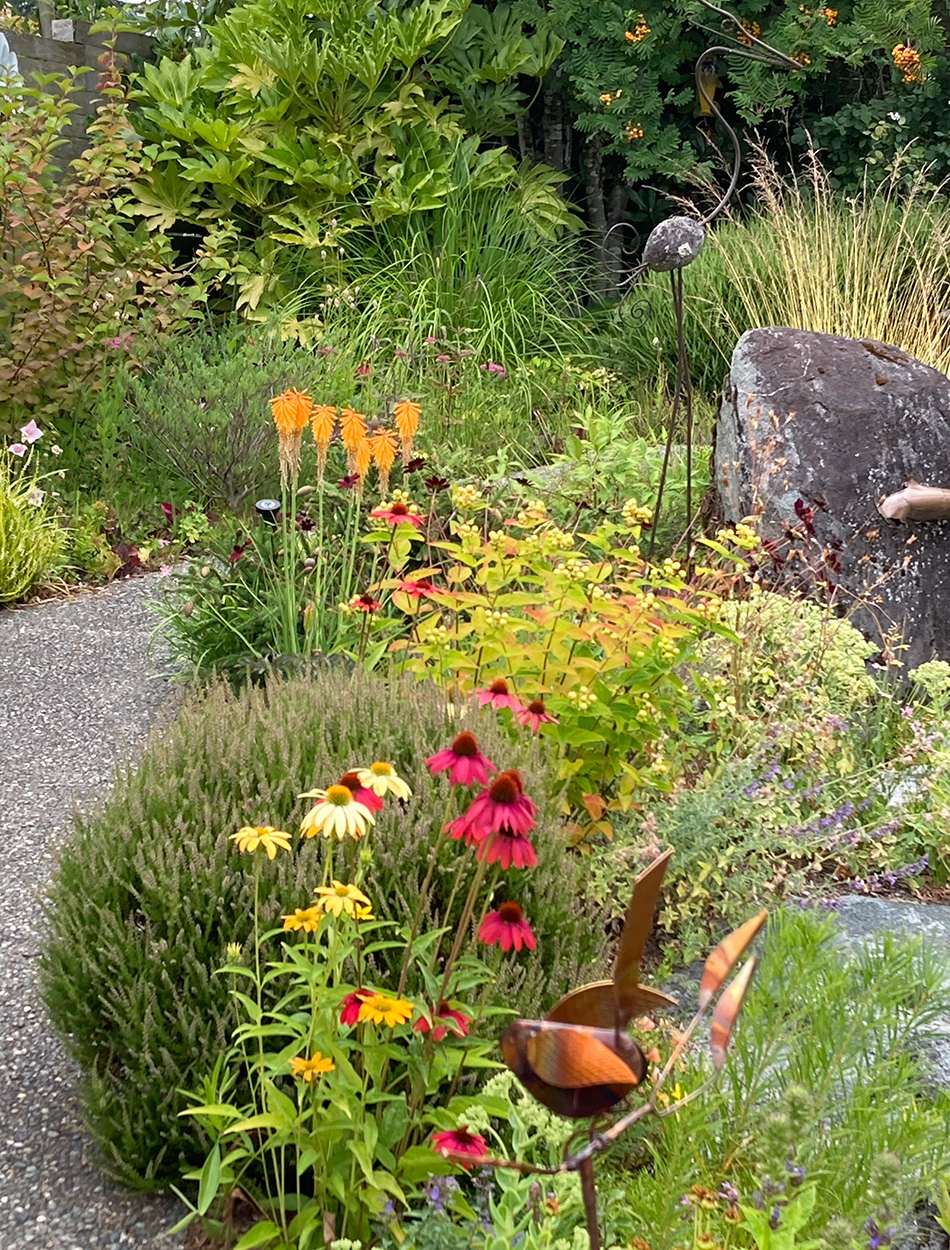 A metal song bird by Haw Creek Forge guards the back bed edging the waterfall. This bed shows off coneflower—’Cheyenne Spirit’ (Echinacea ‘Cheyenne Spirit’, Zones 4–9) started from seed by the grower, red hot poker (Kniphofia ‘Mango Popsicle’, Zones 6–8), Scotch heather (Calluna vulgaris ‘Dark Beauty’, Zones 4–8) not yet in bloom, and chocolate cosmos (Cosmos atrosanguineus ‘Choca Mocha’, Zones 7–11).
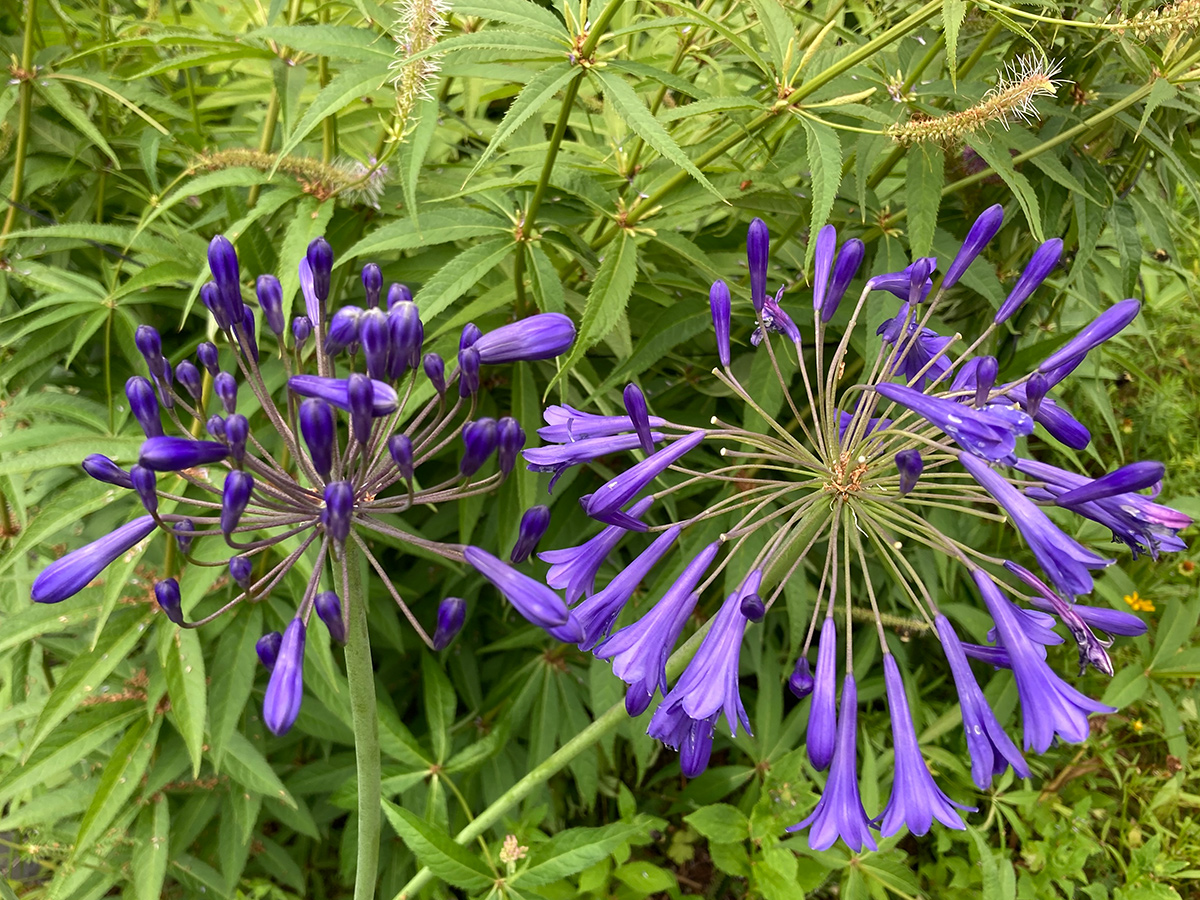
Plant explorer And Hinkley hybridized a series of agapanthus which he named after some of his favorite gardening friends. This is ‘Lucy Hardiman’ #26 (Agapanthus ‘Lucy Hardiman’, Zones 7–10), named after one of my favorite Portland garden spirits and designers, who is sadly now deceased.
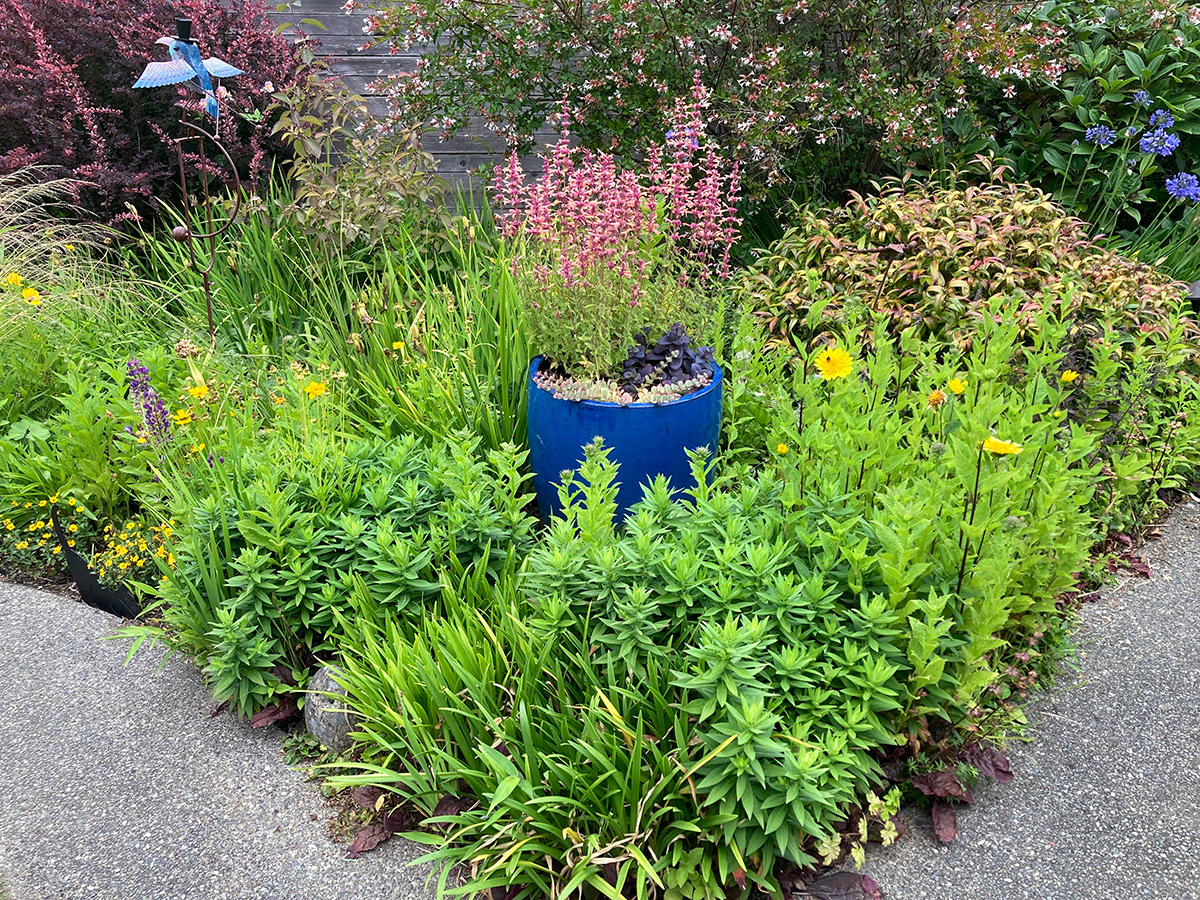 This blue pot—somewhat hidden in summer by asters (Asotrichum new-England ‘Purple Dome’, Zones 5–8)—accents the center of my back garden. It is filled with sedums and hyssop (Agapanthus ‘Cotton Candy’, Zones 6–10).
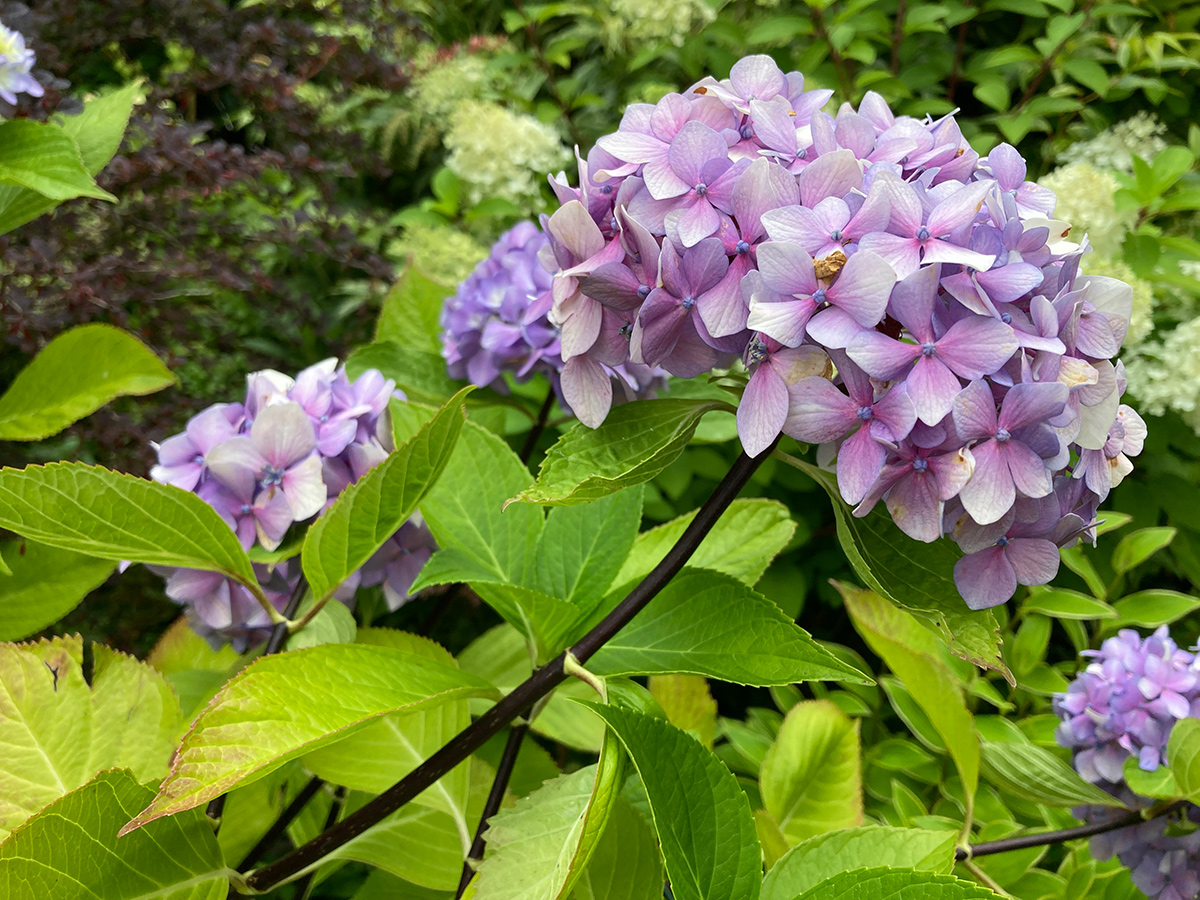 Black-stemmed bigleaf hydrangea (Hydrangea macrophylla ‘Nigra’, Zones 6–9), flowers faded to a soft violet after starting true-blue. Bobo® panicle hydrangea (Hydrangea paniculata ‘Ilvob’, Zones 3–9) is in the background.
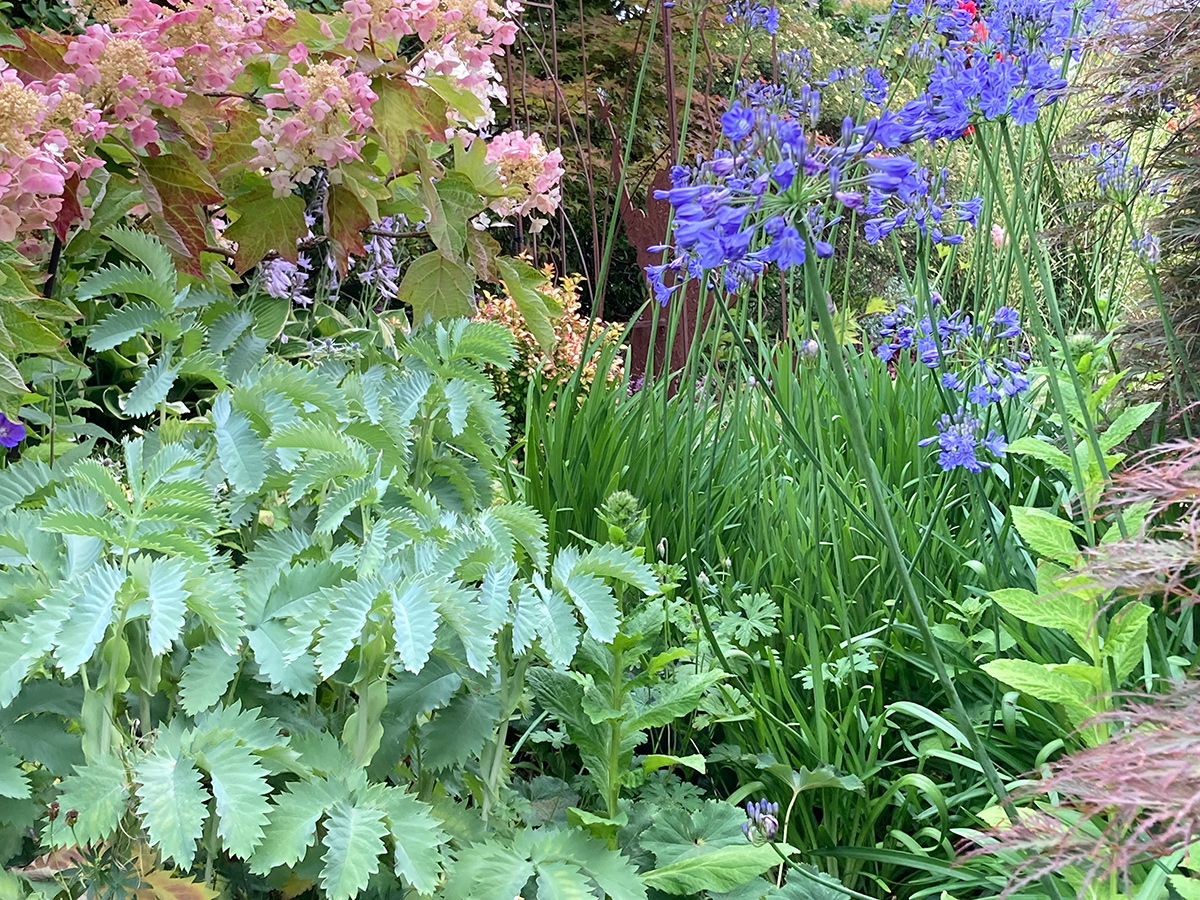 One of the plants I work to keep in my garden is ‘Antonow’s Blue’ honeybush (Melianthus major ‘Antonow’s Blue’, Zones 4–9) which was named after the late, great Seattle gardener Steve Antonow who grew it in his garden. I was privileged to visit his wonderful garden several times and having this plant in my garden reminds me of him and other great local gardens I have visited. Behind it is ‘Snowflake’ oaklef hydrangea (Hydrangea quartifolia ‘Snowflake’, Zones 5–9), with blue agapanthus (likely straight species: Agapanthus praecox Zones 8–11) to the right.
Thank you so much for sharing your spectacular garden with us, Cleo! There is endless enjoyment and inspiration to find in the photos you’ve shared over the past year, and while this series is over I sincerely hope that this is not the last update we’ll receive from your garden.
Can you believe that Cleo followed Garden Photo of the Day for years before sharing her incredible garden? While this may surprise some, I know there are a lot more gardeners with amazing talent and wow-worthy spaces that are silent members of the community. There is no pressure to participate, but if you’ve ever thought about sharing your garden with the blog but hesitated, please consider making 2025 the year to finally send those photos in. Follow the directions below to submit photos via email, or send me a DM on Instagram: @agirlherdogandtheroad.
We want to see YOUR garden!
Have photos to share? We’d love to see your garden, a particular collection of plants you love, or a wonderful garden you had the chance to visit!
To submit, send 5–10 photos to (email protected) along with some information about the plants in the pictures and where you took the photos. We’d love to hear where you are located, how long you’ve been gardening, successes you are proud of, failures you learned from, hopes for the future, favorite plants, or funny stories from your garden.
Have a mobile phone? Tag your photos on Facebook, Instagram, or Twitter with #FineGardening!
Do you receive the GPOD by email yet? Sign up here
Fine Gardening Recommended Products

National Wildlife Federation®: Attracting Birds, Butterflies, and Other Backyard Wildlife, Expanded Second Edition (Creative Homeowner) 17 Projects & Step-by-Step Instructions to Give Back to Nature
Fine Gardening receives a commission for items purchased through links on this site, including Amazon Associates and other affiliate advertising programs.
From the National Wildlife Federation, the largest U.S. nonprofit conservation organization, with 6 million members and 51 state and territorial affiliated organizations. 17 step-by-step projects that everyone can do together make getting your family back to nature easy, educational, and fun. Over 200 color photos of backyard wildlife habitats and the wide variety of creatures they attract, plus step-by-step photos and illustrations for family projects. Learn wildlife-friendly practices for gardening, landscape design, supplemental feeders, birdbaths, nesting places, and more. Learn how to attract backyard pollinators, from bees and butterflies to beetles, bats, and hummingbirds
Get your garden certified by the National Wildlife Federation’s Garden for Wildlife(TM) program by following the included certification application checklist.
Razor-Back Potato/Refuse Hook
Fine Gardening receives a commission for items purchased through links on this site, including Amazon Associates and other affiliate advertising programs.
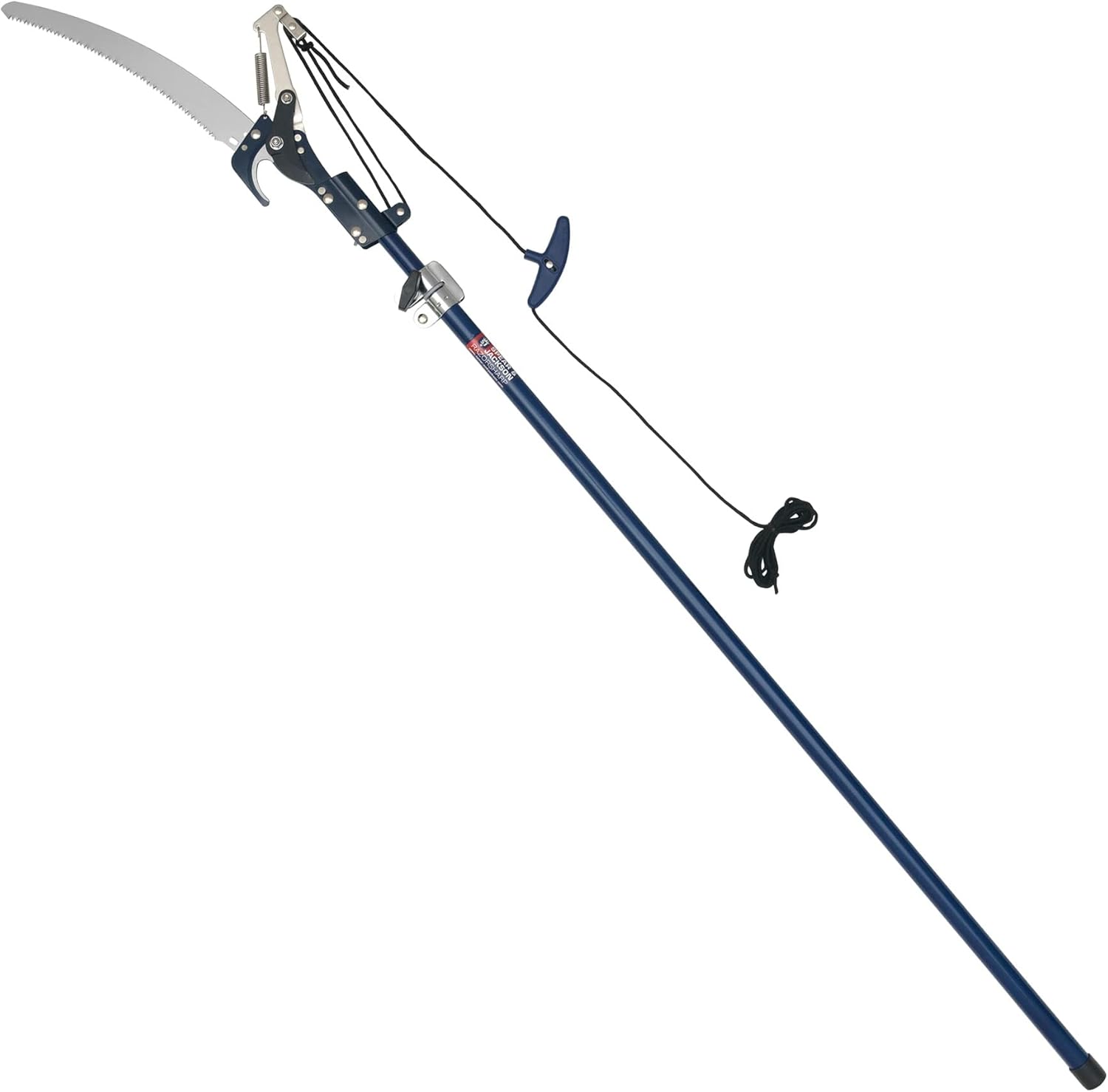
Spear & Jackson 4930FZ Razorsharp Telescopic Tree Pruner
Fine Gardening receives a commission for items purchased through links on this site, including Amazon Associates and other affiliate advertising programs.
Telescopic tree pruner with SK5 carbon steel blade which stays sharper for longer. Variable length telescopic handle extends up to 92 Inch (2340mm). Lopper for cutting branches up to 1.2″ (30mm). 13 inch (330mm) saw is ideal for cutting thicker branches. Supplied with a long cord and pull-action handle. Part of the Razorsharp Advantage collection, the obvious choice for gardeners who demand and expect precise, powerful performance. “Grow Your Own” Great British Growing 2020 Award Winners.
