


Over the years, I’ve come to understand that many of the frustrations people feel around gardens—whether as designers, clients, or homeowners—don’t actually stem from plants, budgets, or even design disagreements.
They come from a quieter mismatch. One that often goes unnamed.
Some people want a landscape.
Others want a garden.
These are not the same thing.
Garden Makers vs Landscape Clients

Landscaping is outcome-driven. It’s about solving problems, achieving a look, maintaining order. It treats the outdoor space as a finished object—something to be installed, managed, and kept from getting out of hand.
A garden, on the other hand, is a practice. It’s participatory, unfinished by nature, and shaped over time through attention, failure, and adjustment. It assumes involvement. Not constant labor, necessarily—but presence. Curiosity. Care.
Neither approach is morally superior. But confusing them creates friction on all sides.
I’ve worked with many commercial and institutional clients who are very clear about what they need. They want landscapes that perform, read well, and hold up. The expectations are explicit, and the work succeeds because of that clarity.
Residential projects are more complicated.
Because gardens are attached to homes, we tend to assume they will be personal. That once a beautiful landscape is installed, people will naturally step into a deeper relationship with it—that they’ll notice changes, experiment, adapt, maybe even grow into gardeners themselves.
Sometimes that happens. Often, it doesn’t.
What I eventually realized is that this isn’t a failure of imagination or commitment. It’s a difference in orientation.
Some people want to own a garden.
Others want to author one.
Ownership is about stewardship from a distance. Authorship requires engagement. It means accepting that a garden will change—and that you will, too.
This distinction shows up culturally as well. In much of the UK, many clients already see themselves as gardeners, or at least as people who intend to be. Design is something they enlist in service of a longer, hands-on relationship with the land.
In the US, gardens are more often treated like amenities—closer to kitchens or bathrooms than to creative practices. They’re expected to function smoothly, quietly, and without asking too much in return.
Again, neither stance is wrong. But they lead to very different kinds of spaces—and very different kinds of satisfaction.
Where things go awry is when we expect one to turn into the other. When a landscape is meant to inspire care but is approached as a commodity. Or when a garden is designed for participation but handed off like a finished product.

Over time, I’ve stopped assuming that a beautiful landscape will transform someone into a garden maker. And I’ve stopped trying to design for a relationship that the owner doesn’t actually want.
What I look for now—whether in clients, collaborators, or projects—is alignment around authorship.
Not everyone wants to get their hands dirty. But people who do—even a little—tend to approach other parts of life the same way. They experiment. They tolerate uncertainty. They understand that meaningful things aren’t static.
Gardens, it turns out, are very good at revealing this.
They expose how we relate to care versus convenience. To patience versus control. To participation versus consumption.
Design can’t resolve those differences. But it can make them visible.
And once they’re visible, expectations can finally fall into place.
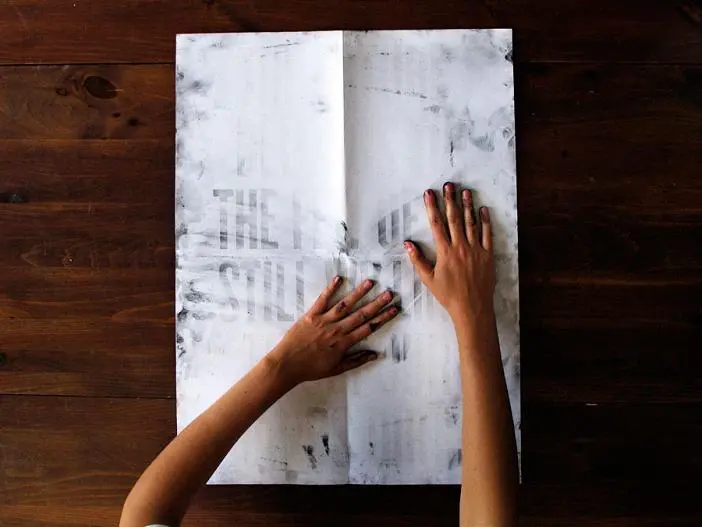
A three-part poster by Brooklyn-based designer Roland Tiangcoactivated through touch. The message only appears once you engage with the surface.
keywords:
- garden makers
- landscape vs garden
- garden design philosophy
- garden culture
- landscape design values
- lifestyle landscapes
- residential garden design
- garden authorship
- participatory design
