


If there has been soil erosion, you may need to supply more to secure and cover the roots.
Once spring comes, there’s usually rain. But if there isn’t at least an inch per week, provide supplemental irrigation.
Cold-stressed flora benefits from consistent moisture for recovery. Just don’t overdo it – no soggy soil.
It’s a good idea to promote lush foliar growth by fertilizing recovering bushes in the spring. Use an all-purpose, slow-release granular product per package instructions.
Never fertilize at the end of the growing season, or you’ll end up with soft, weak stems that don’t have time to build strength and harden off before winter.
Shrubs that are stressed by adverse weather conditions are more vulnerable to pests and diseases than healthy ones, so it’s wise to rehabilitate ASAP.
Preventative Methods
In addition to knowing the signs of injury and how to restore affected foliage, there are proactive steps you can take to give your shrubs a leg up on weathering the worst.
Here are five:
- Plant in locations with shelter from wind, such as near building foundations and fences.
- Before the first frost of fall, water deeply at the soil level to allow stems to take up water and essential nutrients just prior to dormancy.
- Fertilize in spring with a well-balanced, slow-release fertilizer to stimulate healthy foliar growth.
- As summer draws to a close, place a two-inch layer of mulch over the roots to help minimize ground soil temperature fluctuations, inhibit heaving, and aid in moisture retention.
- Wrap dormant shrubs in burlap for added protection.
Burlap is an excellent protective fabric because it allows for good airflow, which is still essential, even in chilly weather. With poor circulation, foliage is more susceptible to fungal diseases.
Cover small bushes entirely and wrap the bundle with twine.
For larger ones, create a shelter using tall, sturdy stakes with burlap wrapped around them.
The top branches will likely be exposed, but even so, the overall warmth and wind resistance will be greater with perimeter coverage.
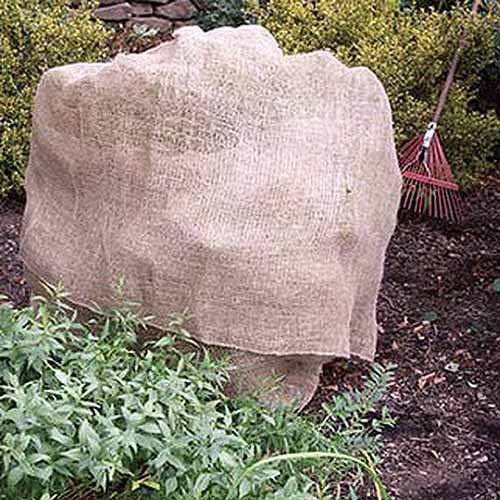
Biodegradable Natural Burlap from Burpee
Find biodegradable natural burlap from Burpee in three-by-24-foot rolls.
A Good Prognosis
Temperatures that plunge suddenly, fluctuate wildly, and remain low for prolonged periods can cause harm that ranges from mild setbacks with snapped twigs and fewer blooms, to devastating cases of fatal winter kill.

Sometimes one shrub fails to survive a rough winter, while another sails through unscathed. This can happen because no two plants or their locations are exactly alike.
A host of differences may exist, such as:
Overall, hardy forsythia that is grown in the appropriate zones is resilient and more likely to weather cold blasts than it is to fall victim to them.
How do you protect your forsythia from the winter chill? Let us know in the comments section below!
And for more information about growing forsythia in your gardenyou may want to read these guides next:
