


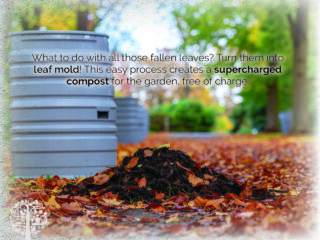
Leaf mold is formed from decomposed leavesnaturally occurring as they break down over time. It’s super easy to make; all you need is a place to put gathered leaves in the fall, a cover, water, and patience. Here’s how to compost leaves for nutrient-rich garden amendment!
Compost Leaves: What are the Benefits of Leaf Mold?
Leaf mold boosts the soil’s water-holding capacity by up to 50%, acting like a sponge that absorbs excess water and releases it slowly during dry periods. This reduces the need for frequent watering in hot weather. In winter, leaf mold can be used alongside a regular leaf mulch to create an insulating blanket for plants throughout the winter, preventing soil erosion.
Leaf mold has a high carbon content, essential for healthy soil. It enhances the soil’s ecosystem by providing a habitat for beneficial organisms, such as earthworms, fungi, and bacteria. These organisms play a crucial role in breaking down organic matter and making nutrients available to plants. Therefore, it’s a much-needed soil amendment for garden beds and pots. This fall, try composting leaves as a no-brainer sustainable garden amendment.
How to Make Leaf Mold
- Collect fallen leaves in autumn.
- Shredded leaves will decompose faster, so as you are collecting the leaves, use a rake, lawn mower, or leaf blower to cut them down in size.
- Pile the shredded leaves in a shaded corner of your backyard or keep them contained using wire fencing. Make sure to cover the pile with a tarp so the leaves don’t blow away. If you don’t have room for a large leaf pile, use a garbage bag with tiny holes poked in the side for air flow.
- Once the leaves are piled or put into the bag, dampen them thoroughly.
- Every few weeks, check moisture levels, and if the pile starts to dry out, moisten it. This is also the time to give the leaves a fluff or stir to increase air circulation.
How Long Does it Take to Make Leaf Mold?
It will take a while for the leaves to break down, typically between six months and a year. You will know your leaf mold is ready to use when it is a brown/black colour, soft and crumbles in your hands, and has a strong earthy smell.

Adding Leaf Mold to Your Garden
Leaf mold can be used anytime in the garden. Similar to leaf mulch, spread it one to three inches thick over the top of garden beds or container soil. If you have plants prone to fungal infections, such as powdery mildew, leave space between the stem and the mulch when applying. This is because leaf mold absorbs water, which, when pressed against sensitive stems for an extended period, can cause abrasions or wet spots.
Although beneficial to all plants, some love it more than others, especially those that grow better when their roots are continually wet, including azaleas, camellias, and rhododendrons. Edible plants such as blueberries, cranberries, and strawberries are also fond of a top layer of leaf mold.
