


A lasagna made with spring bulbs maximizes space and brings pops of pollinator-loving colors throughout the spring. This method doesn’t require a lot of garden space and can even be done in a container!
Lasagna Bulb Gardens: An Innovative Gardening Technique
On a cool fall day, I carefully lay out my spring bulbs: alliums, daffodils, crocus, and tulips, meticulously arranging them in the order they bloom. Snowdrops are first, followed by daffodils and tulips. To ensure an ongoing succession of color, I have a group of snowdrops with a cluster of daffodils nearby. The problem with this method is that it takes up a lot of real estate in the garden, especially if you have a small space.
Layered bulb planting, or lasagna bulb plantingchanges everything. Several layers of bulbs can be planted, one on top of another, in a container or garden bed so that as one layer finishes, the next begins. This method ensures a succession of blooms and maximizes space.
Before Planting A Lasagna Bulb Garden
Before planting, there are a few things to keep in mind. A good rule of thumb is to limit what you plant to a maximum of three types of bulbs per container or garden hole. You want to give the bulbs space to develop roots and not compete with each other for water or nutrients.
Always plant the bulbs that bloom last in the season at the bottom of the lasagna. For example, alliums bloom in late April or early May, daffodils in March, and crocus in late February. Alliums go at the bottom of the lasagna.
To create a succession of blooms so that early-rising pollinators are well-fed, plant bulbs that have at least a three-week gap between blooming times. Snowdrops and crocus bloom around the same time, but snowdrops and tulips have at least a month between bloom times. There are dozens of bulbs to choose from: hyacinths, tulips, muscari, iris, and daffodils that all bloom at various times throughout the spring. Be creative!
Making the Bulb Lasagna
In a container:
- Choose a large pot at least 16 inches wide in diameter and depth.
- Next, fill it halfway with a mix of garden soil and compost.
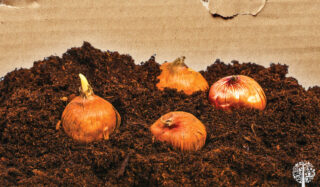
- Place the first group of bulbs on top of the soil. It is generally recommended to space bulbs between four and six inches apart, depending on their size, and in a bulb lasagna, this is even more important. It gives the bulbs space to develop below ground and spread out once they break soil in spring.
- Next, cover the first bulbs with soil, exposing their tips.
- Lay down the second layer, spacing them evenly between the spaces of the first layer. Cover and leave their tips showing, and repeat for the third layer.
- Cover this layer entirely with soil. Water and place the container in a bright location.
In the ground:
- Dig down ten to eight inches, ensuring the hole is the same diameter as its depth.
- Follow the same method as for the container lasagna.
- When finished cover completely with a two to three-inch layer of soil.
After The Bulb Lasagna Blooms
Once the spring bulbs have bloomed, lift them from the container and store them in a dry, cool place, or replant them in the garden for next year. The same lasagna method can be used for summer bulb planting. Plant lilies, gladiolas, Peruvian daffodils, peacock orchards, or crocosmia in a layered lasagna like you did spring bulbs.
Check out this video: Layering Spring Bulbs in a Container (Video) | BBC Gardeners World Magazine
