


Plant spacing is one of the most important parts of garden design. And it’s also one of the most misunderstood.
A lot of people assume their garden struggles because they picked the wrong plants. But in many cases, the real issue has nothing to do with the plants themselves.
It comes down to how those plants were spaced when they were first put into the ground.
This is why a garden can look beautiful when you first plant it… and then feel crowded, messy and frustrating just a couple of years later.
Plant spacing is usually the reason why.
If you’re not sure exactly what’s going wrong in your space, check out my full list of over 70 common landscape design mistakes.
Why Plant Spacing Matters More Than You Think

When you’re planting a garden, it’s really easy to focus on how everything looks right now.
You place your plants. You step back. And if the bed looks full and finished, it feels like you did it right.
But plant spacing isn’t about how your garden looks today. It’s about how it will function and feel in the future.

When plants don’t have enough space, they start to grow into each other. You lose the shape of each plant and everything blends together into one mass. That’s when a garden starts to feel messy instead of intentional.
It also affects the health of your plants. Tightly packed plants don’t get enough airflow, which can lead to disease or weak growth. Below the soil, their roots are competing for space, water and nutrients. Some plants won’t grow to their full size. Others may struggle just to survive.
And then there’s the overall balance of the garden. Even if you chose beautiful plants, spacing them too closely throws everything off. The scale feels wrong. The structure disappears. And the whole space can start to feel chaotic.
The 4-Season Garden Gap Audit

Get a clear, season-by-season look at how your garden is really performing. This free audit guides you through simple observations that reveal when your garden works, where it breaks down and why those gaps keep showing up year after year.
No plant lists. No guesswork. Just clarity.
The Most Common Plant Spacing Mistake
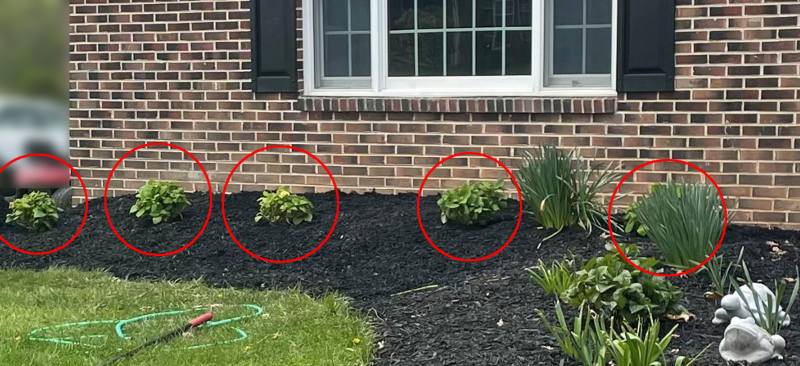
The biggest mistake I see is simple: planting too close together.
And honestly, it makes total sense why this happens.
You’re working with small plants. The bed looks empty. It feels wrong to leave that much space between them. So your instinct is to fill it in.
At first, it looks amazing. Full, lush and finished.
But that “finished” look is temporary.
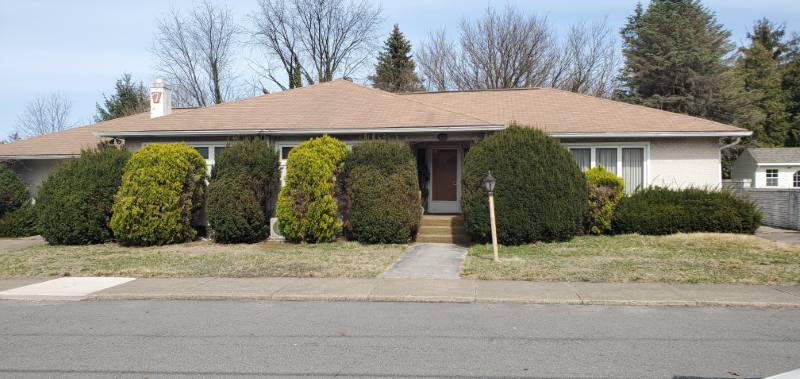
As those plants grow, they start to compete for space. They push into each other. They lose their shape. And suddenly, the garden that looked so good in the beginning becomes harder to manage and less enjoyable to look at.
The One Rule That Fixes Most Plant Spacing Problems
If you take away one thing from this guide, let it be this:
Always space your plants based on their mature size.
Not the size they are when you buy them.
Every plant tag gives you a range for how tall and wide that plant will grow. That number is what you should be using when you decide where to place it.
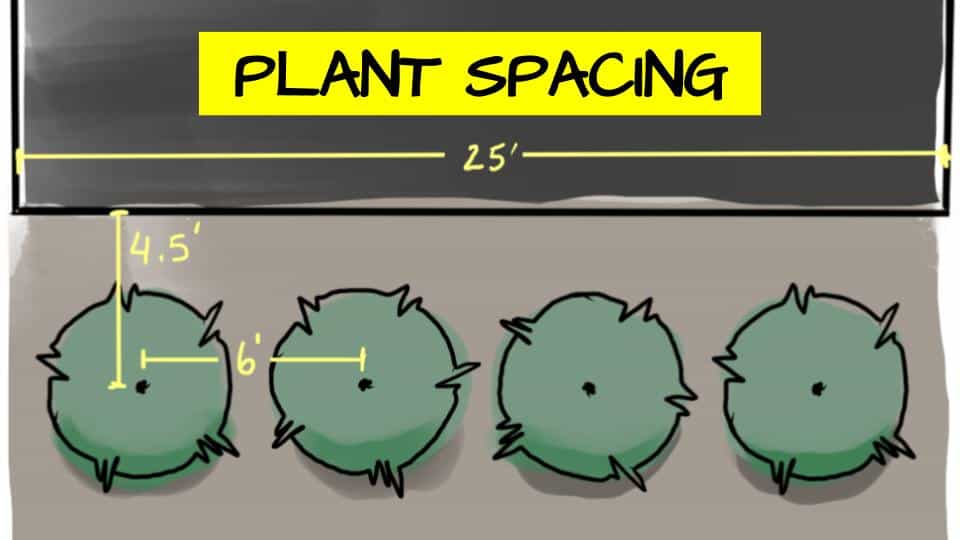
A simple way to think about this is to imagine each plant as a circle.

The center of the circle is where you plant it. The edge of the circle is how far it will spread when it reaches its full size. Your job is to make sure those circles have enough room to grow without crowding into each other.
It can feel strange at first, especially when your garden looks a little sparse. But this is exactly what creates a balanced, professional-looking garden over time.
How to Space Plants the Right Way
Once you understand the idea of mature size, the actual plant spacing becomes much simpler.
Start by looking at the width listed on the plant tag. The width tells you how much horizontal space the plant needs.
Then divide that number in half. This gives you the distance from the center of the plant to its outer edge.
For example, if a plant grows 4 feet wide, it needs about 2 feet of space on each side from the center.
When you’re planting multiple plants, you measure from center to center. So two plants that each grow 4 feet wide should be spaced about 4 feet apart. This allows them to grow until they just touch, without overcrowding each other.

If you prefer a little more separation between plants, you can add extra space. If you want a fuller look where plants connect, you can stick right to the spacing on the tag.
How to Space Plants Near Your House
Spacing becomes even more important when you’re planting near your home.
This is where I see a lot of costly mistakes. Shrubs are often planted too close to the foundation, which can lead to blocked windows, difficult maintenance and plants that outgrow their space much faster than expected.
To avoid this, you need to account for both the plant’s mature size and a little extra breathing room.
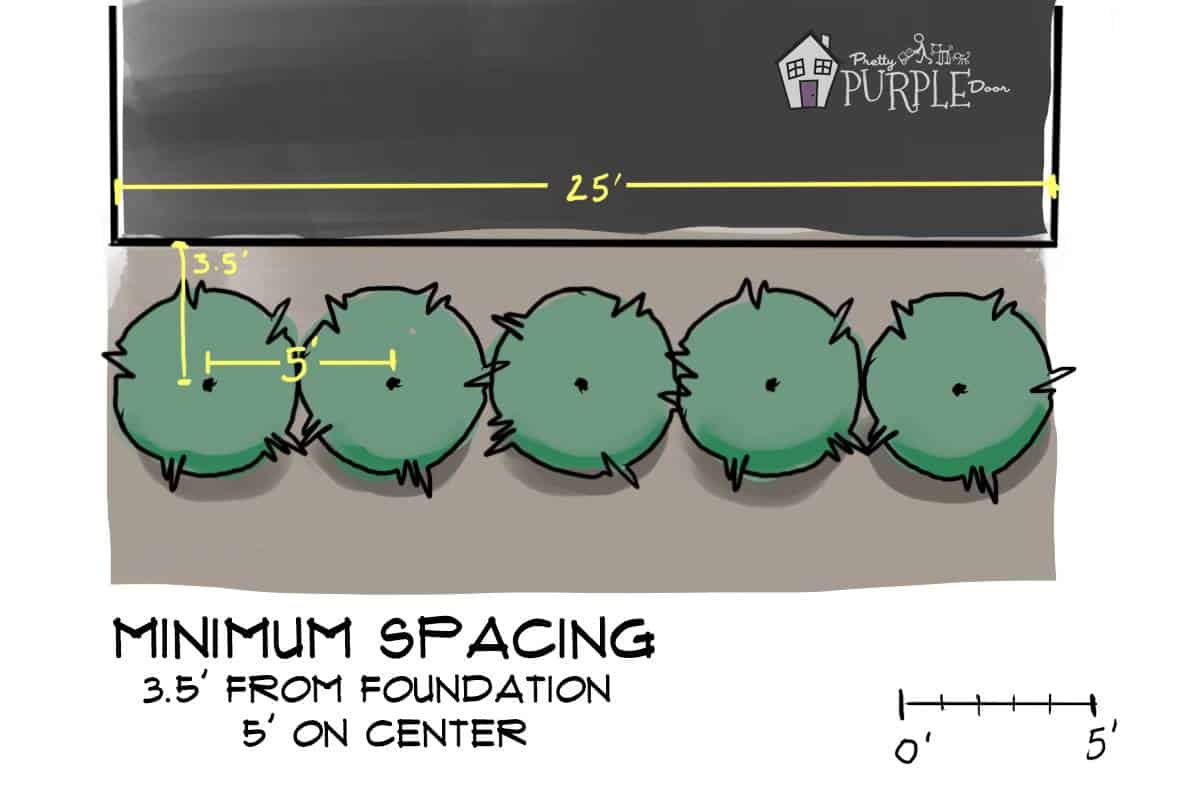
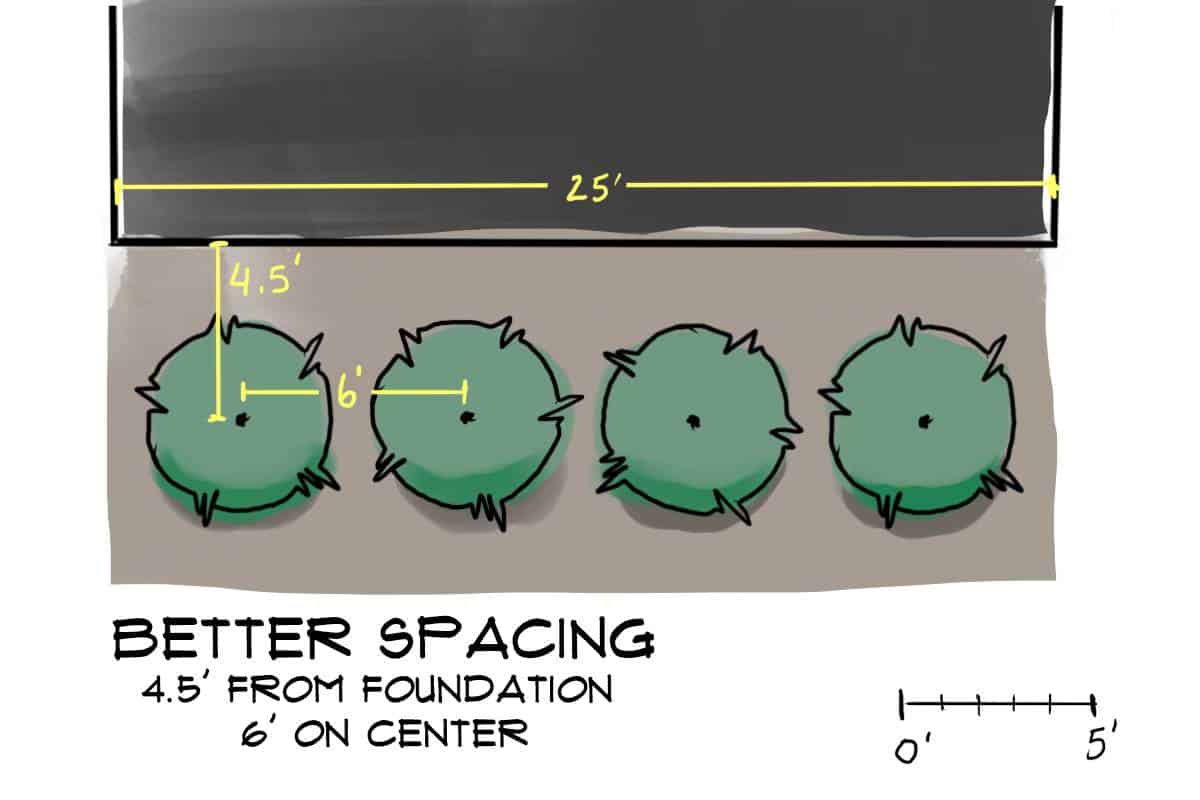
Take the mature width of the plant and divide it in half to get the radius. Then add an extra foot or two between the plant and your house.
So if a shrub grows 5 feet wide, its radius is 2.5 feet. Adding extra space means the center of that plant should be planted about 3.5 to 4.5 feet away from your foundation.
This gives the plant room to grow without pressing against your home and makes it easier to maintain the space over time.
How to Choose the Right Size Plants for the Corners of Your House
Spacing isn’t just about how far apart your plants are.
It’s also about choosing plants that are the right size for the space.
This matters most at the corners of your house. These are the spots that visually “anchor” your foundation planting. If the plants are too small, the house can feel top-heavy. If they’re too big, they can overwhelm the space.
A simple way to get this right is to use what I call the 2/3 rule.
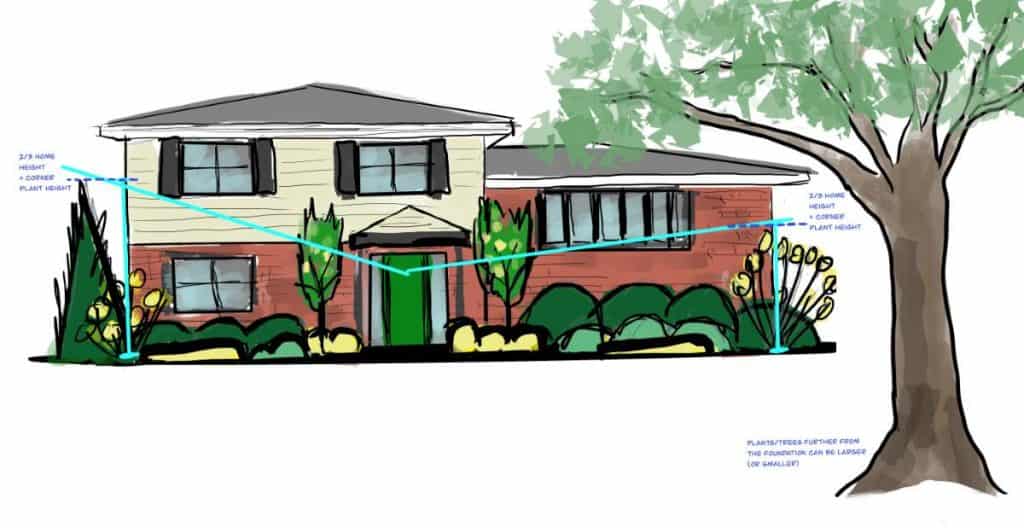
Look at the height of your house. Then imagine a line from your front door up to about two-thirds of that height. That’s a good target for how tall your corner plants should be when they’re fully grown.
This isn’t a strict rule. It’s just a guideline to help you choose something that feels balanced.
And just like spacing, this is based on the plant’s mature sizenot how it looks when you buy it.
Learn more about balance in the landscape here.
What If the Plant Tag Gives a Range?
Sometimes plant tags give you a range instead of a single number, like 3 to 5 feet wide.
This can feel confusing, but it really comes down to your growing conditions.
- If your plant is getting full sun, good soil and the right amount of water, it will likely grow closer to the larger end of that range.
- If conditions aren’t ideal, it may stay closer to the smaller size.
- If you’re unsure, choosing the middle of the range is usually a safe and balanced approach.
What About Groundcovers and Spreading Plants?
Groundcovers don’t behave the same way as shrubs or perennials.
They don’t stay in a neat circle. They spread and fill in over time.
Instead of spacing them evenly like individual plants, it’s often easier to think in terms of areas. You can map out a section where you want that ground cover to grow, then place a few plants within that space and let them spread naturally.

The key here is understanding how aggressively that plant spreads. Some will slowly fill in. Others can take over quickly if you’re not careful.
What to Do About Empty Space (and Weeds)
One of the biggest concerns people have with proper plant spacing is the empty space it creates in the beginning.
And yes, if you leave bare soil, weeds will show up. That’s just how nature works.
But you have a few simple ways to manage that while your plants are growing in.
You can use mulch to suppress weeds and protect the soil. You can add groundcovers to act as a living layer that fills in over time. Or you can plant annuals for the first season to add quick color and coverage while your permanent plants get established.
All of these options help you bridge that gap between “just planted” and “fully grown.”
A Simple Trick to Make Spacing Easier
If you’re ever unsure about spacing, try this.
Place your plant where you think it should go. Then use your foot, a shovel or even a stick to draw a circle around it based on its mature size.
Seeing that circle on the ground makes a huge difference. It helps you visualize how much space the plant will actually take up and makes it easier to adjust before you start digging.
Liked what you read? Dive deeper with: 70+ Shockingly Common Landscape Design Mistakes (& How to Fix Them)
Wrapping Up

A well-designed garden doesn’t look perfect the day you plant it.
It grows into its design.
That empty space you see at the beginning isn’t a mistake. It’s part of the process.
When you understand plant spacing and plan for mature size, everything starts to work better. Your plants have room to grow, your garden keeps its structure, and you avoid a lot of the crowding and maintenance issues that show up later.
If you remember anything from this guide, let it be this:
- space plants based on how big they will get
- expect your garden to look a little sparse at first
- trust that it will fill in over time
That’s how you go from a garden that feels messy and frustrating… to one that feels balanced, full and easy to maintain.
And that’s really the goal.
