


Hi GPODers!
This week is kicking off with some master classes in landscape design. Yesterday we saw a stunning front garden transformation designed by Bas Suharto in Ottawa, Ontario (Bas Designs a Front Yard Garden in Ottawa), and today we’re heading to Manteno, Illinois to get inspired by the the home garden of John and Lee Algozzini. John is a recently retired garden designer of 44 years, and the winner of multiple design and construction awards. He has crafted countless gardens for his clients, but today he is showcasing the thoughtful and serene scenes that he created at home.
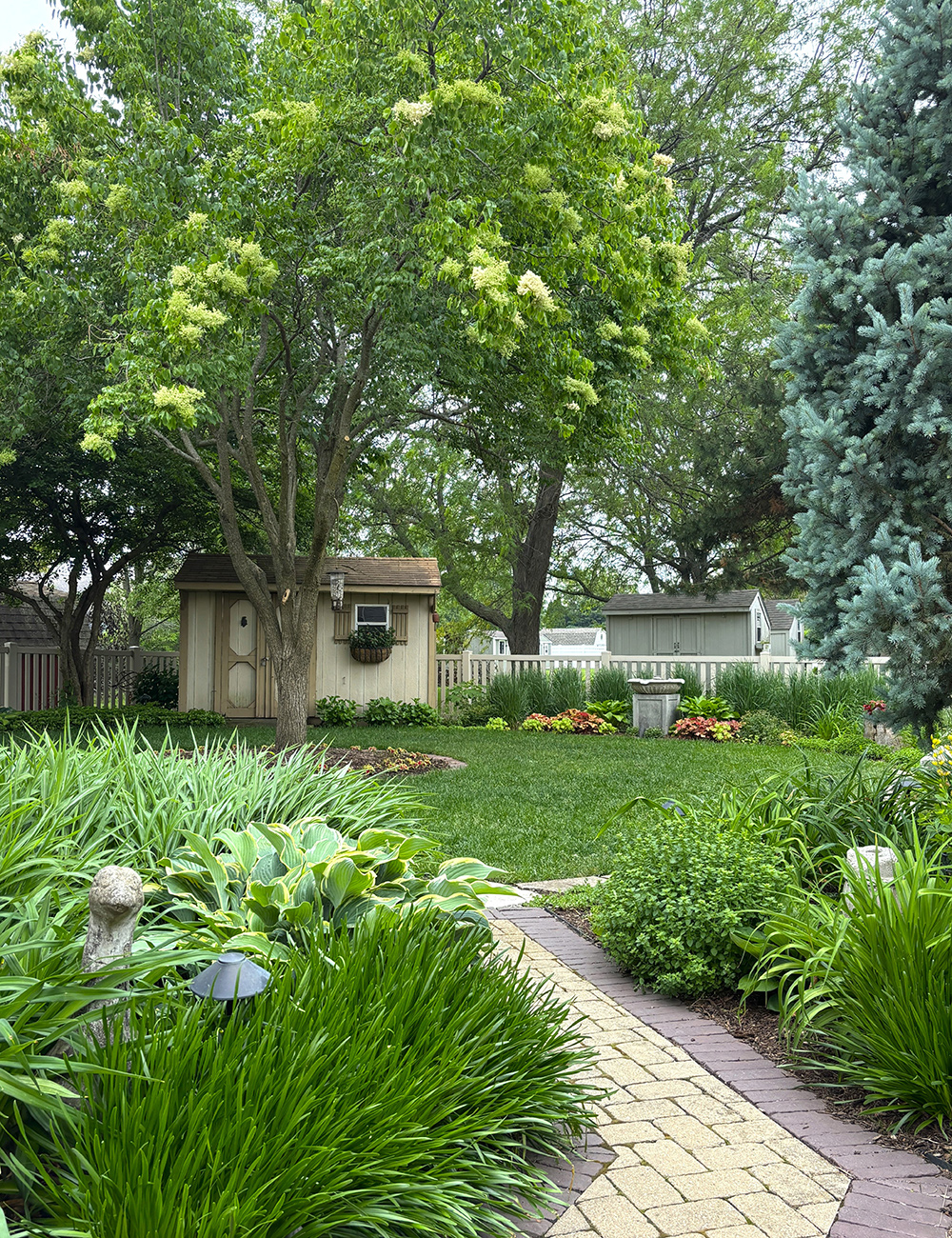 John has selected a sensational palette of plants with a wide range of interest, but has also composed a design that is calming and cohesive. A continuous, curved border around the backyard fence creates an easy path for the eye to follow, but a stunning Summer Charm® Chinese lilac (Syringe pekinensis ‘DTR 124’, Zone 3–7) stands out as the central focal point.
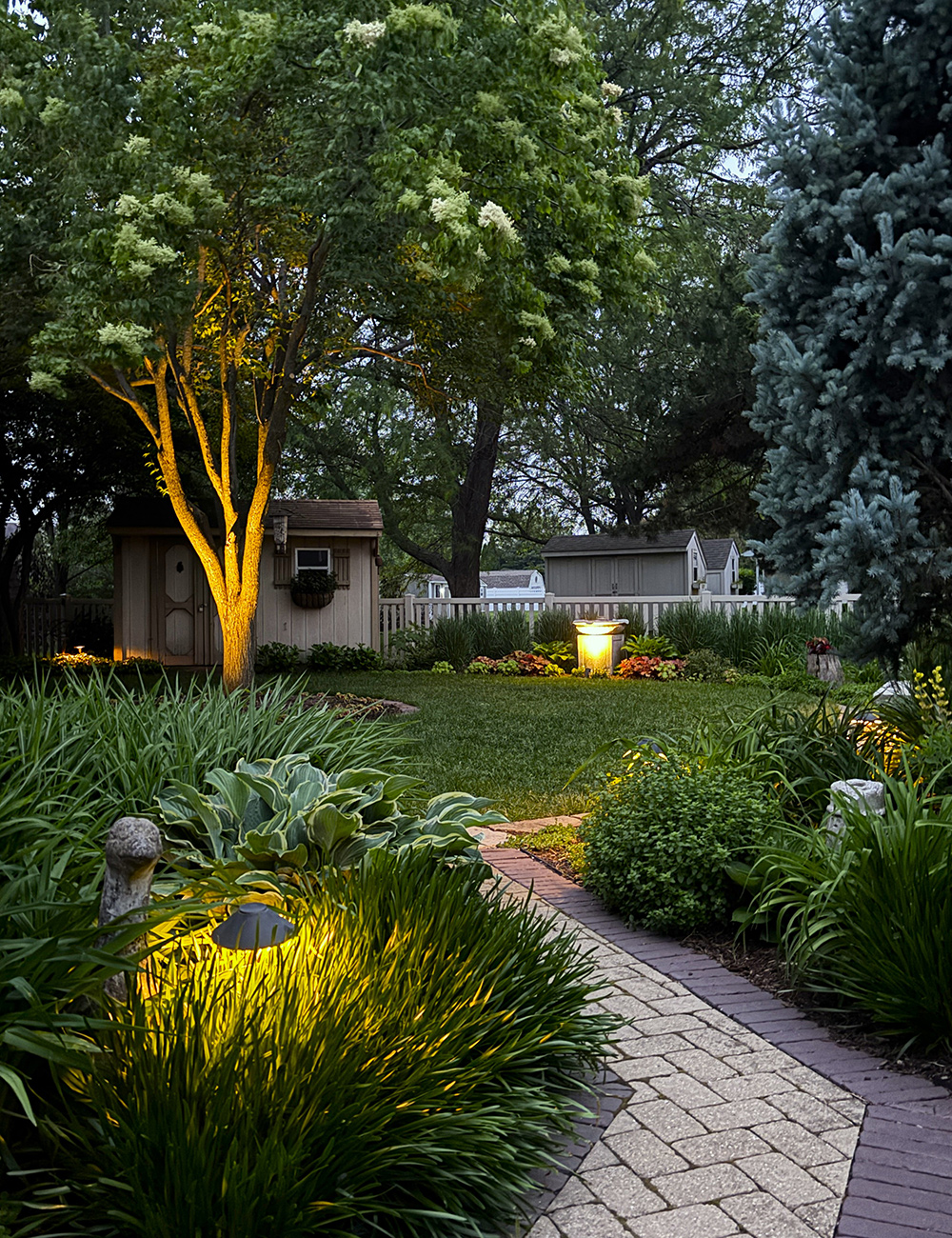 At dusk the landscape becomes even more magical as lights scattered throughout the garden cast certain vignettes in a warm glow.
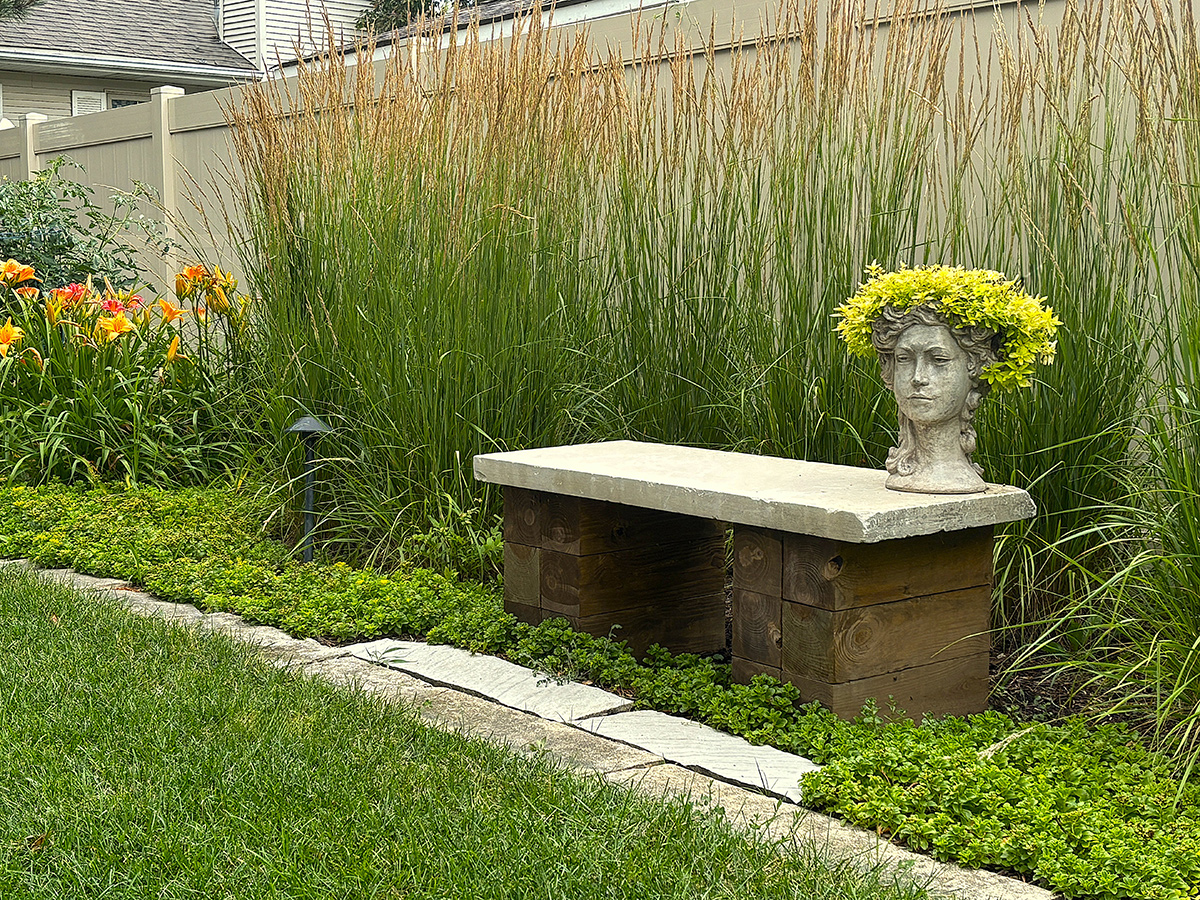 While the overall feel of the garden is calm and controlled, there are still moments of whimsy and fun. ‘Karl Foerster’ feather reed grass (Calamagrostis × acutiflora ‘Karl Foerster’, Zone 5–9) is always a striking backdrop and Russian stonecrop (Sedum kamtschaticumZone 3–10) creates a lush carpet of green, but the planter head with a pop of chartreuse easily steals attention.
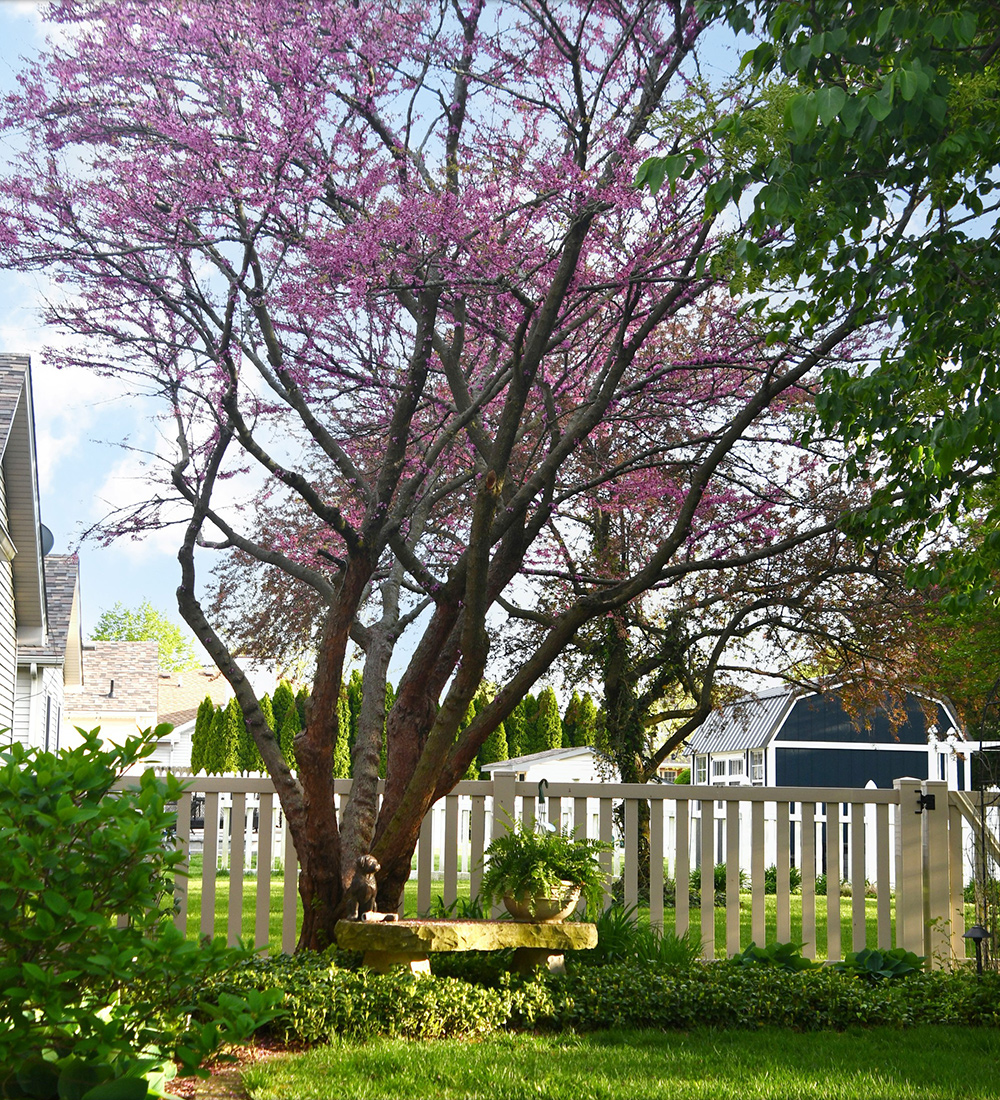 In the spring, an eastern redbud (Cercis canadensisZone 4–8) brings a pop of pink to this shady green border.
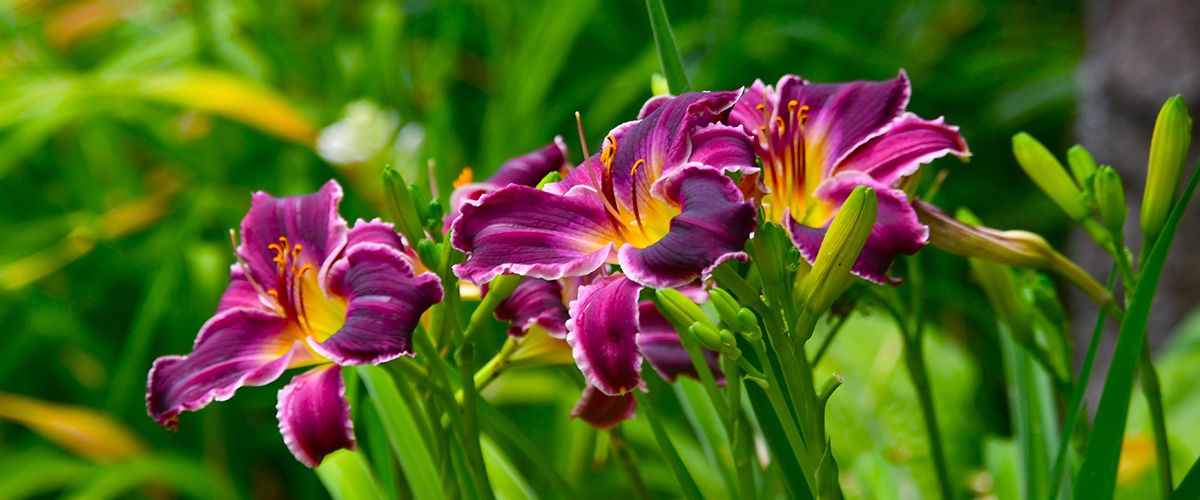 More berry shades arrive in summer. John has planted a wonderful collection of daylilies, including the vibrant purple cultivar ‘Indian Giver’ (Hemerocallis ‘Indian Giver’, Zone 3–9).
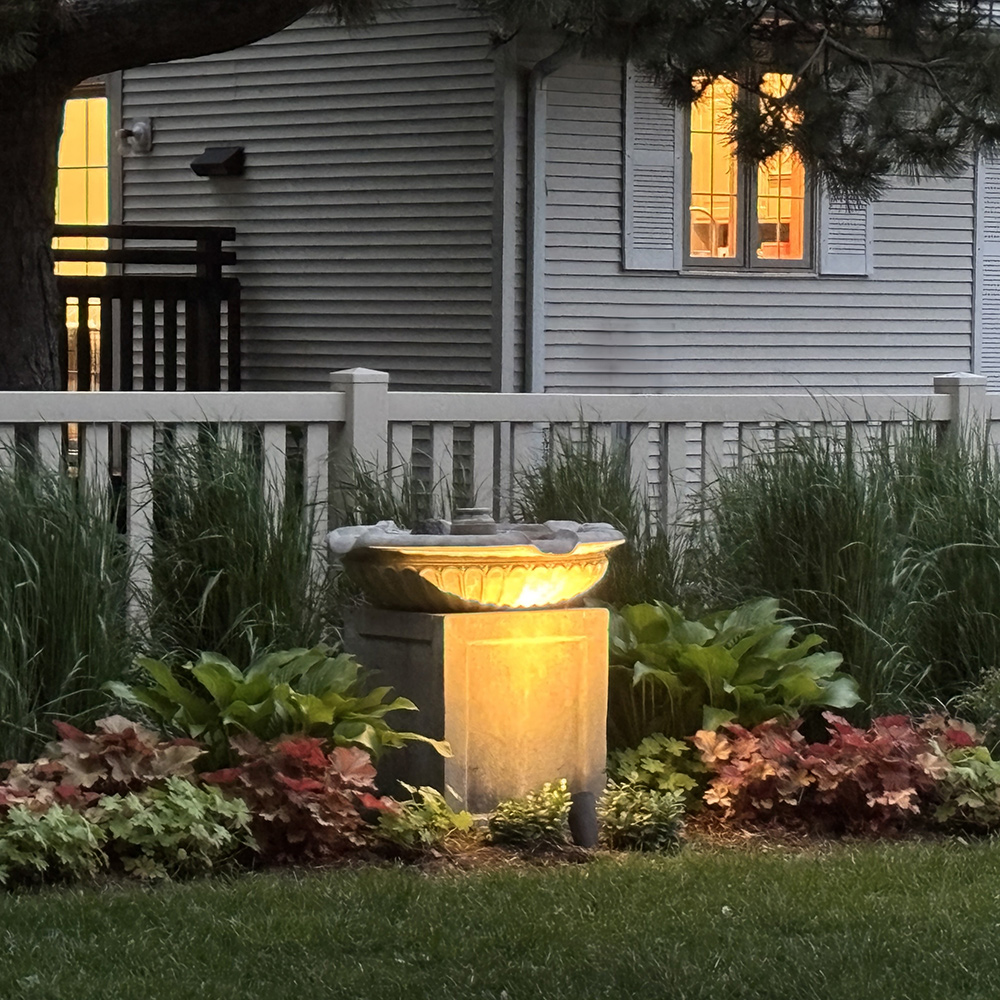 Another photo at dusk shows off how carefully placed color make John’s plantings dazzling. The peachy hues of Caramel coral bells (Heuchera ‘Caramel’, Zone 4–9) around this big limestone bird bath make this vignette of diverse foliage even more dynamic.
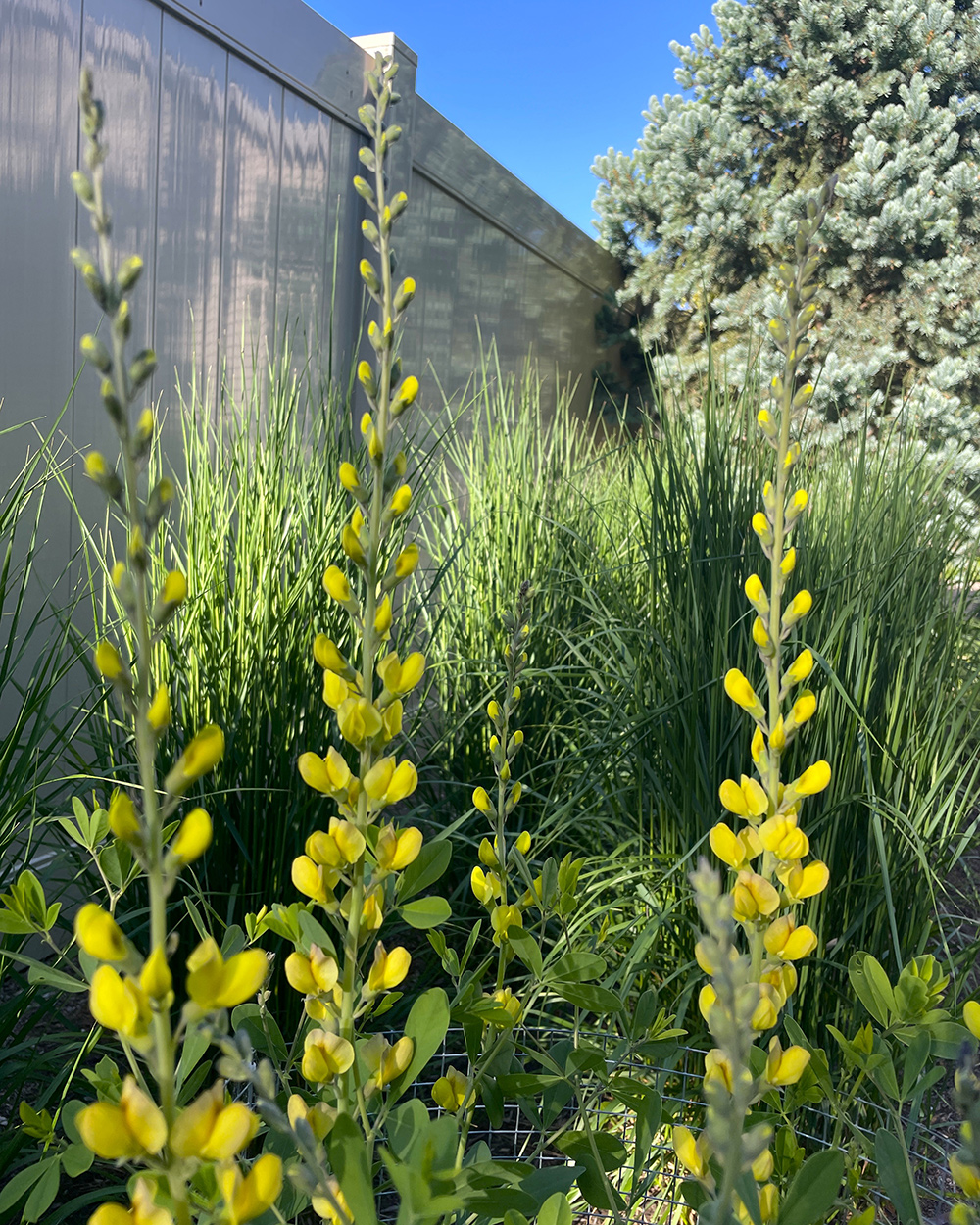 There is, of course, plenty of floral color, too. ‘Solar Flare’ baptisia (Baptisia ‘Solar Flare’, Zone 4–9) adds some warmth and pairs well with the ‘Blue Totem’ Colorado spruce (Picea of the scrotum ‘Blue Totem’, Zone 4–8) behind.
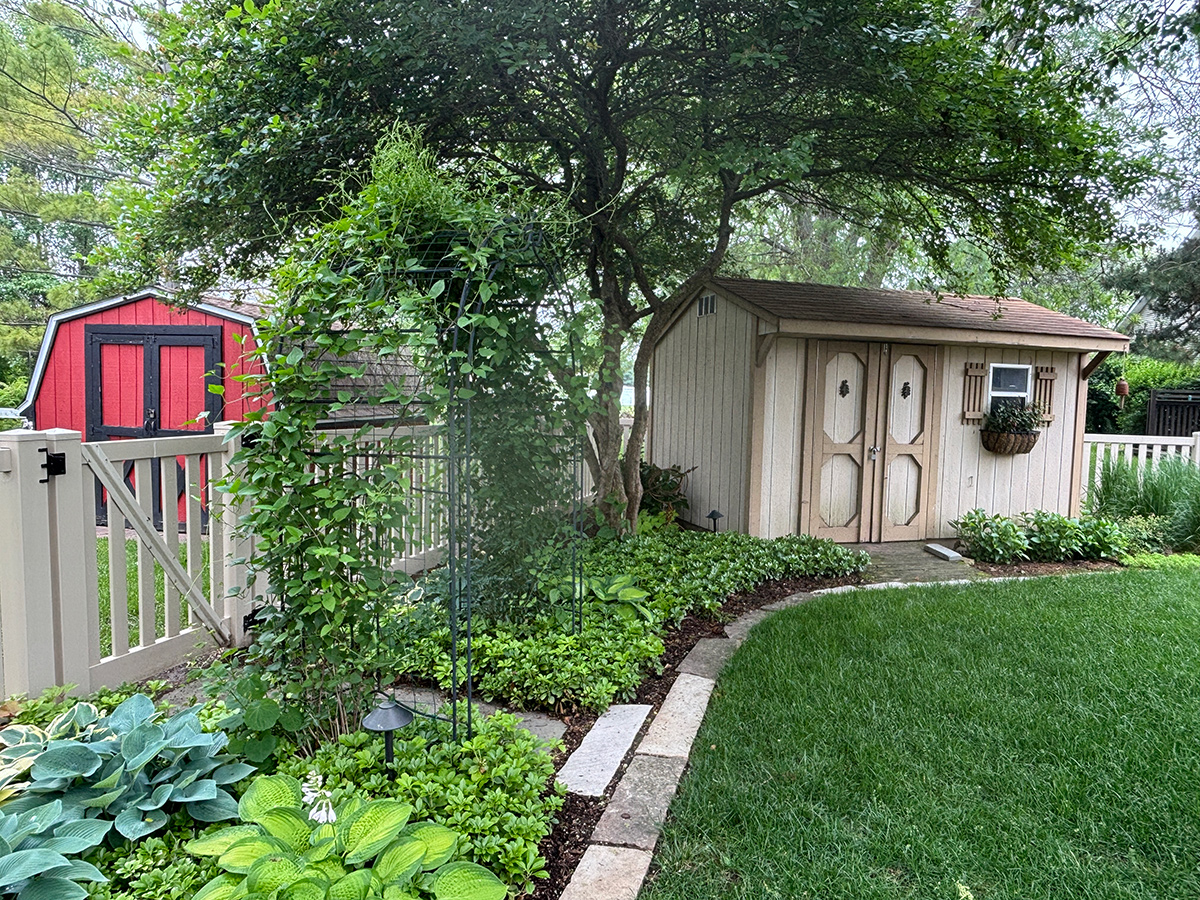 However, the areas where green reigns supreme are anything but boring. A range of foliage shapes and textures make the subtle changes in color more exciting, and limestone bed edging ties into the many other limestone elements in the garden.
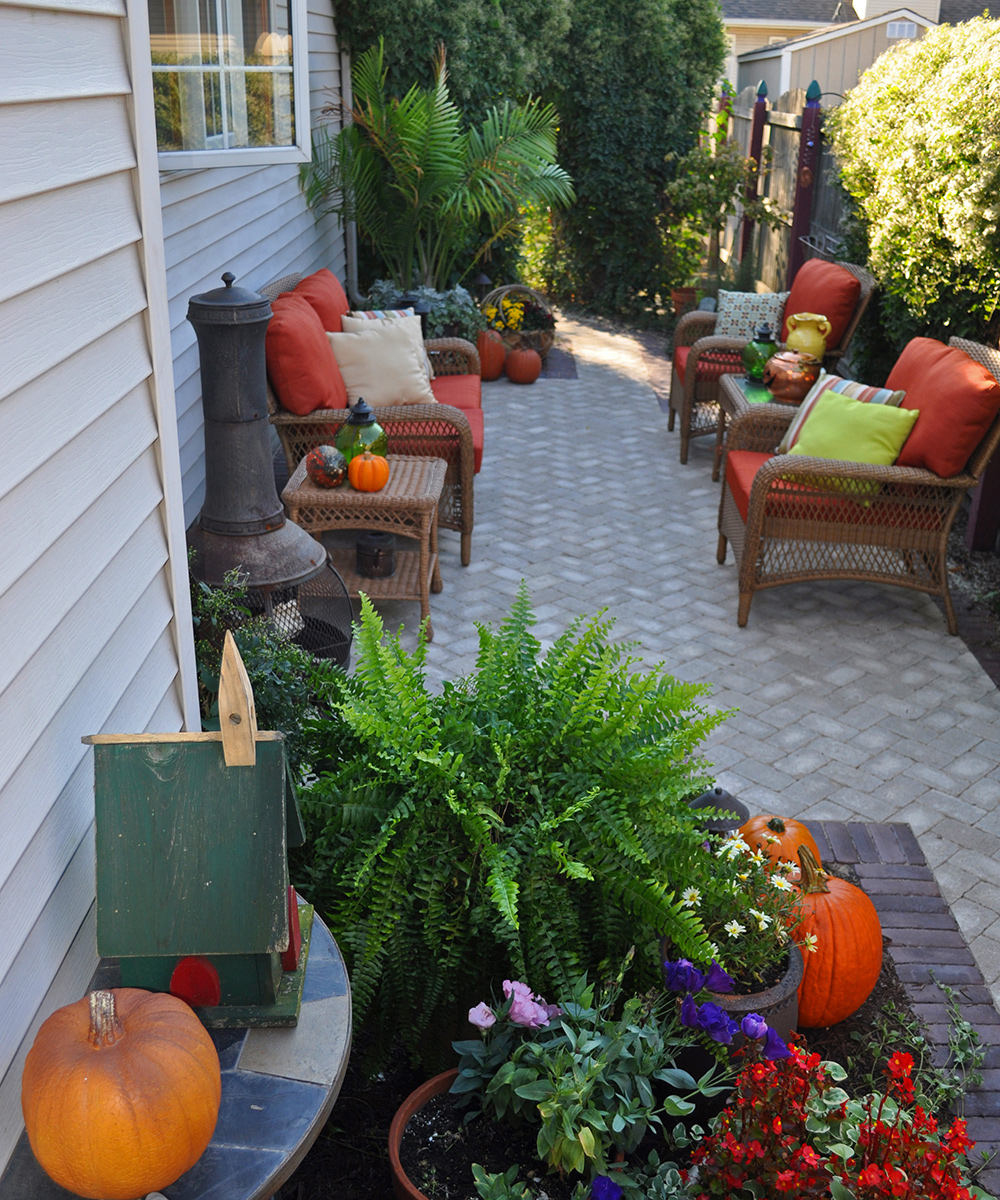 It’s no surprise that the patio is equally stylish and colorful. In fall, annual flowers and bold foliage plants get an autumnal twist with many bright orange pumpkins added to the container displays.
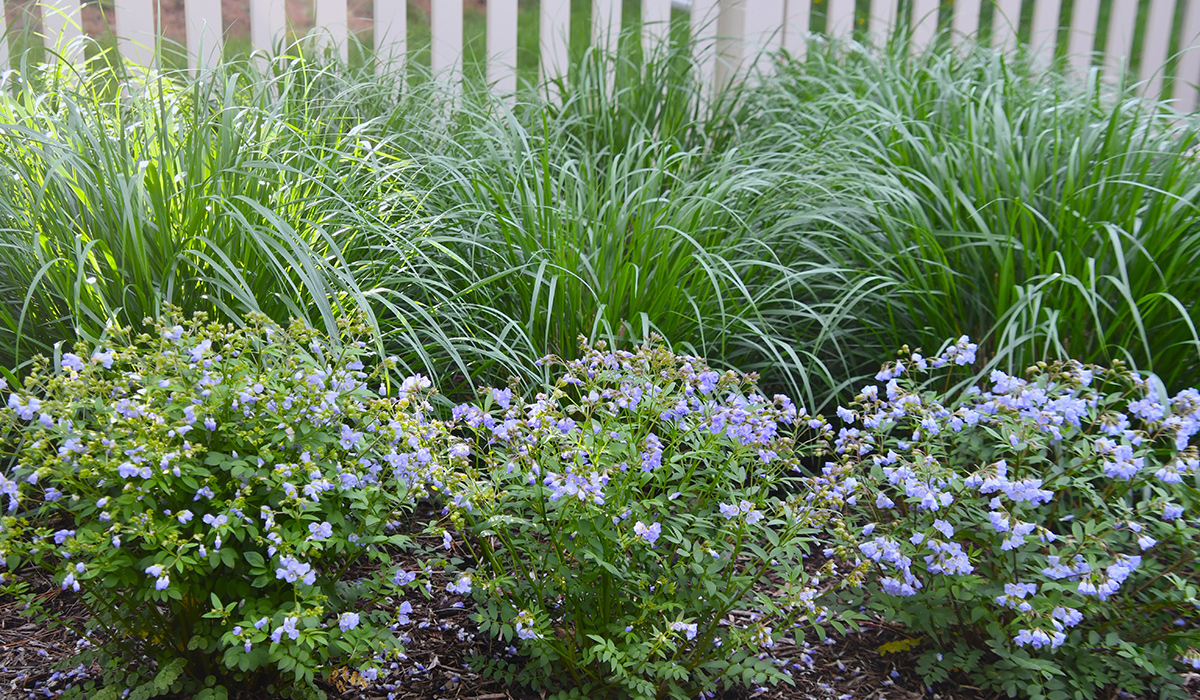 Lastly, John has created another calming, but captivating combination of Jacob’s ladder (Baptisia ‘Solar Flare’, Zone 3–8) and Korean feather reed grass (Calamagrostis brachytrichaZone 4–9). The blooms of Jacob’s later provide color for the earlier part of the growing season, while the Korean reed grass will take its turn to shine when plumes emerge in late summer.
John shared so many spectacular photos of his garden that we will be returning to Illinois tomorrow to enjoy more of his incredible designs and show-stopping plant selections.
Keep an eye out for GPOD in your inbox tomorrow, and consider sharing your photos to get your garden featured. Follow the NEW directions below to submit your photos to Garden Photo of the Day!
We want to see YOUR garden!
Have photos to share? We’d love to see your garden, a particular collection of plants you love, or a wonderful garden you had the chance to visit!
To submit, fill out the Garden Photo of the Day Submission Form.
You can also send 5–10 photos to (email protected) along with some information about the plants in the pictures and where you took the photos. We’d love to hear where you are located, how long you’ve been gardening, successes you are proud of, failures you learned from, hopes for the future, favorite plants, or funny stories from your garden.
Do you receive the GPOD by email yet? Sign up here
Fine Gardening Recommended Products
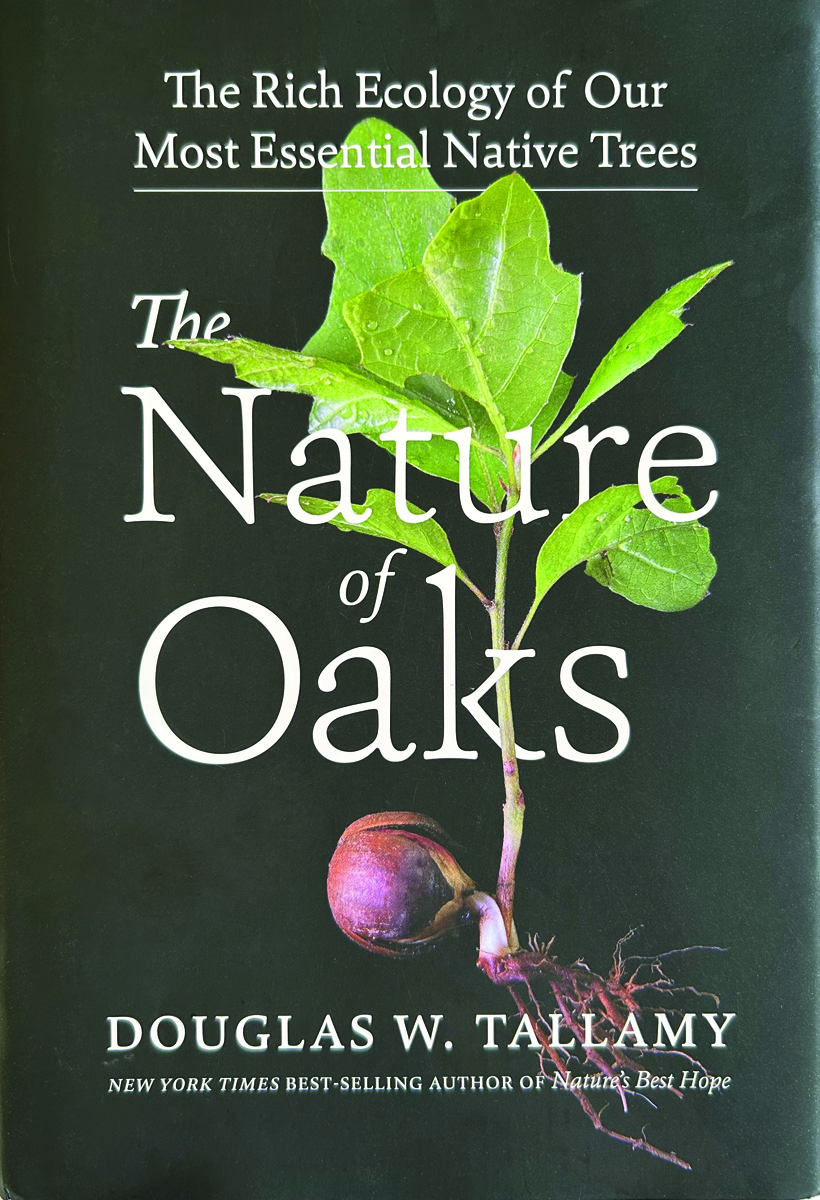
The Nature of Oaks: The Rich Ecology of Our Most Essential Native Trees
Fine Gardening receives a commission for items purchased through links on this site, including Amazon Associates and other affiliate advertising programs.
The Nature of Oaks reveals what is going on in oak trees month by month, highlighting the seasonal cycles of life, death, and renewal. From woodpeckers who collect and store hundreds of acorns for sustenance to the beauty of jewel caterpillars, Doug Tallamy illuminates and celebrates the wonders that occur right in our own backyards. He also shares practical advice about how to plant and care for an oak, along with information about the best oak species for your area.
ARS Telescoping Long Reach Pruner
Fine Gardening receives a commission for items purchased through links on this site, including Amazon Associates and other affiliate advertising programs.
Telescopes from 4 to 7′. Cut and Hold (160) Blades. Drop forged blades for unsurpassed long lasting sharpness. Lightweight, 2.3 lbs., for continued use. Perfectly balanced for easy pruning.

National Wildlife Federation®: Attracting Birds, Butterflies, and Other Backyard Wildlife, Expanded Second Edition (Creative Homeowner) 17 Projects & Step-by-Step Instructions to Give Back to Nature
Fine Gardening receives a commission for items purchased through links on this site, including Amazon Associates and other affiliate advertising programs.
From the National Wildlife Federation, the largest U.S. nonprofit conservation organization, with 6 million members and 51 state and territorial affiliated organizations. 17 step-by-step projects that everyone can do together make getting your family back to nature easy, educational, and fun. Over 200 color photos of backyard wildlife habitats and the wide variety of creatures they attract, plus step-by-step photos and illustrations for family projects. Learn wildlife-friendly practices for gardening, landscape design, supplemental feeders, birdbaths, nesting places, and more. Learn how to attract backyard pollinators, from bees and butterflies to beetles, bats, and hummingbirds
Get your garden certified by the National Wildlife Federation’s Garden for Wildlife(TM) program by following the included certification application checklist.
