


Hi GPODers!
It has been a little while since we’ve heard from friend-of-the-blog Carla Zambelli Mudry in Malvern, Pennsylvania. However, with the arrival of spring I knew we could expect Carla’s incredible collection of early bloomers to make an appearance (Check out some of her previous spring submissions: Celebrating Spring With Carla, Early Spring Flowers in Carla’s Garden, April in Carla’s Gardenand High Spring in Carla’s Garden). Like clockwork—despite wild temperature fluctuations and rogue, late-season snow flurries—Carla’s woodland garden is absolutely alive with late-winter and early-spring flowers as well as the buds and growth that signal more color to come.
Hi GPOD!
It’s officially spring except I think we should say that with a question mark. We’ve had a handful of unseasonably warm days where temperatures plummet at night, reminding us that the calendar might say we’re headed in the right direction, but we’re not there yet. We even had snow flurries again a week or so ago.
In the garden, it has been galanthus and hellebores followed by some early crocuses and the early daffodils. A couple of shrubs are showing their early spring selves off. The giant Chinese pussy willows are working their way through their catkin season, and you can start to see the fuzzy greenness of the leaves that will follow. The witch hazel were fabulous while they lasted, and since the deer don’t like them and have decimated my camellias this winter, in spite of spraying, I might be adding more witch hazels to my repertoire.
I look forward to digging in literally, but I will have to temper those desires while I wait to have tree work done.
March came in like a lion and I think she’s going to leave that way too!
Carla Zambelli Mudry
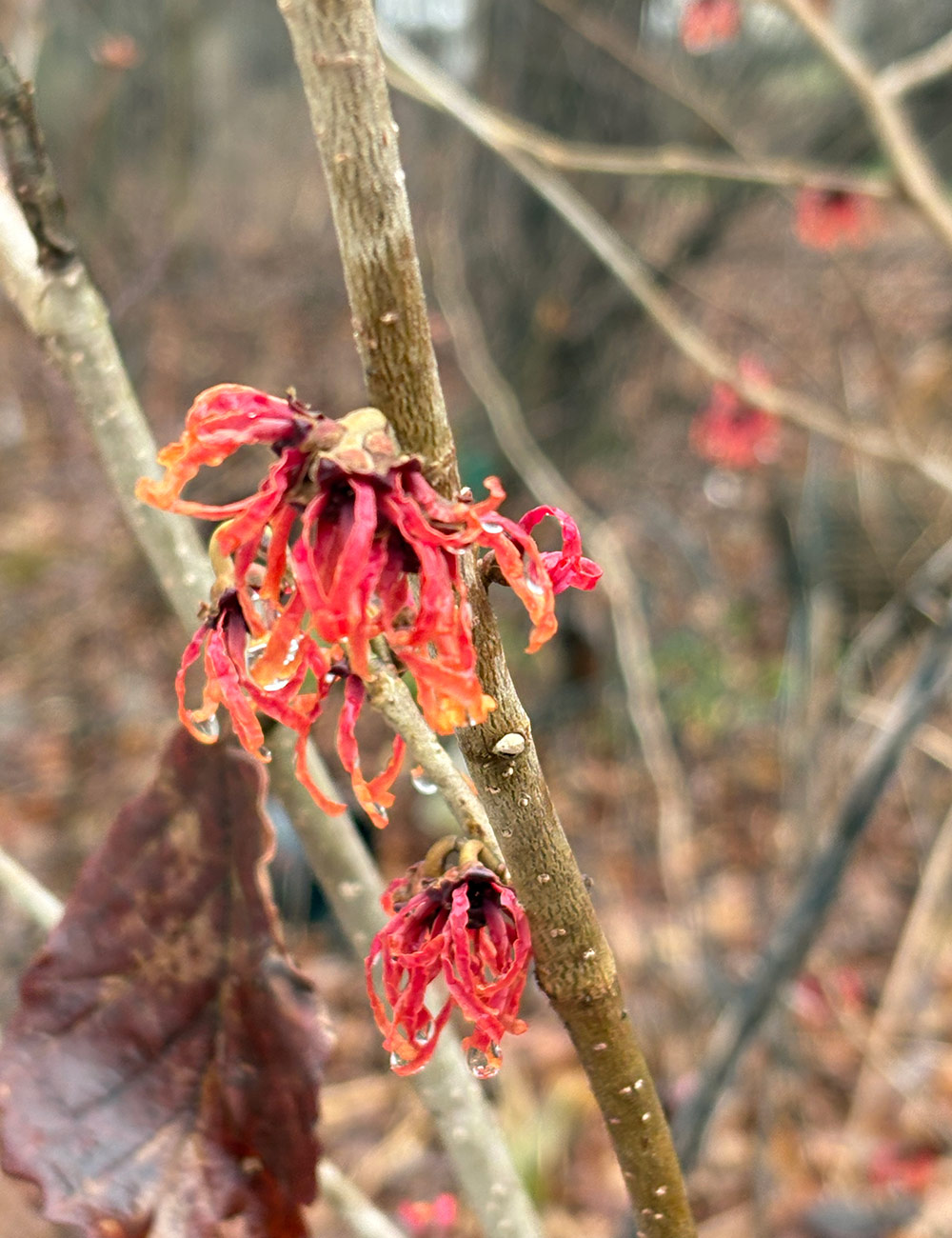 I’ve always felt that witch hazels don’t get nearly enough attention and admiration, so it’s great to hear that Carla is looking to add more to her garden. But it is no surprise that the varieties she already has are real show-stoppers, like the incredible orange to red blooms of the ‘Diane’ cultivar (Hamamelis x intermedia ‘Diane’, Zones 5–9).
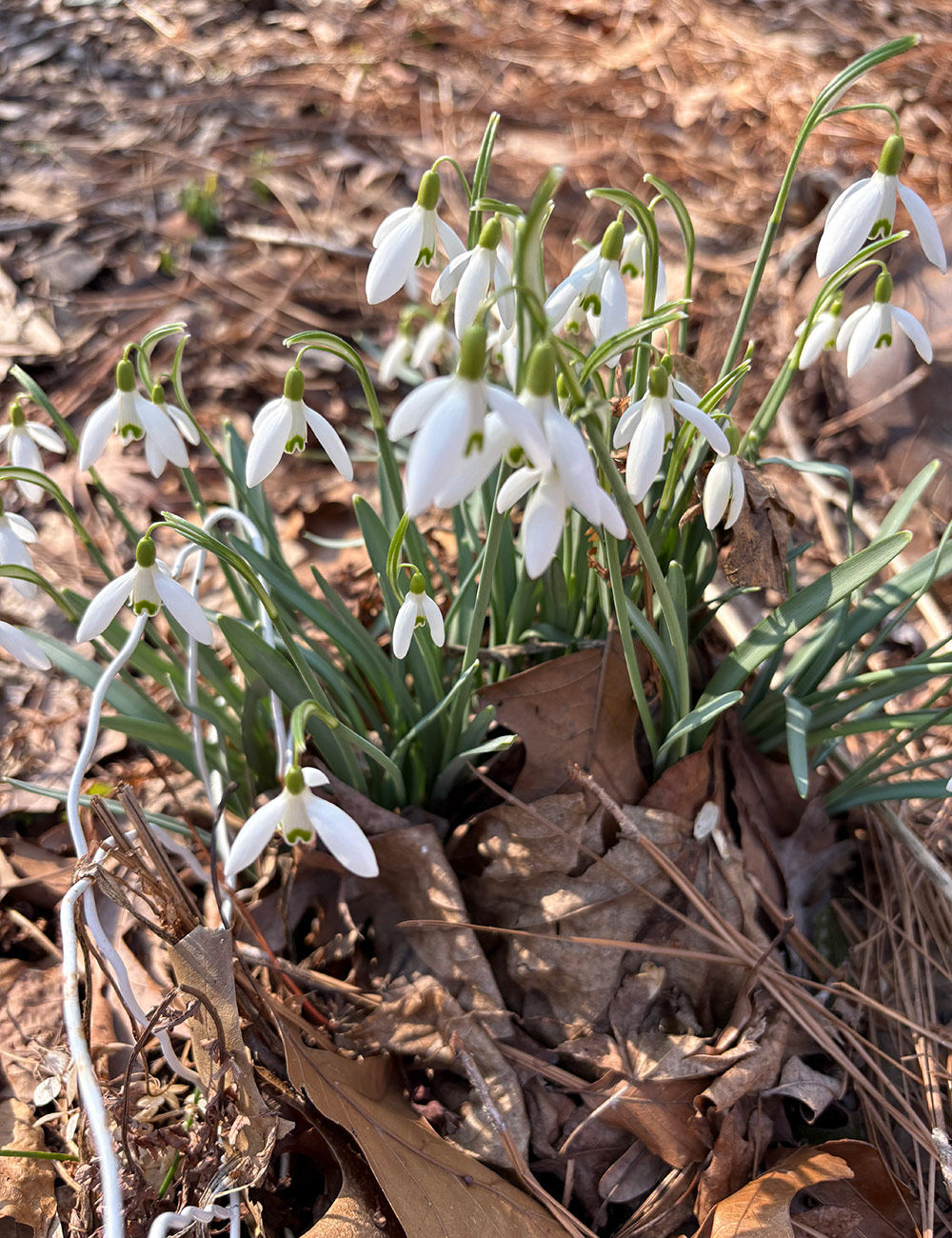 Snowdrops are a favorite sign that winter is winding down and spring is around the corner. Variations in snowdrop varieties can be very subtle and some species and cultivars can look like the same plant to the uninitiated, but there is surprising amount of diversity in the genus. I am certainly no galanthophile, but this looks like a lovely clump of common snowdrops (Galanthus you snowedZones 3–7).
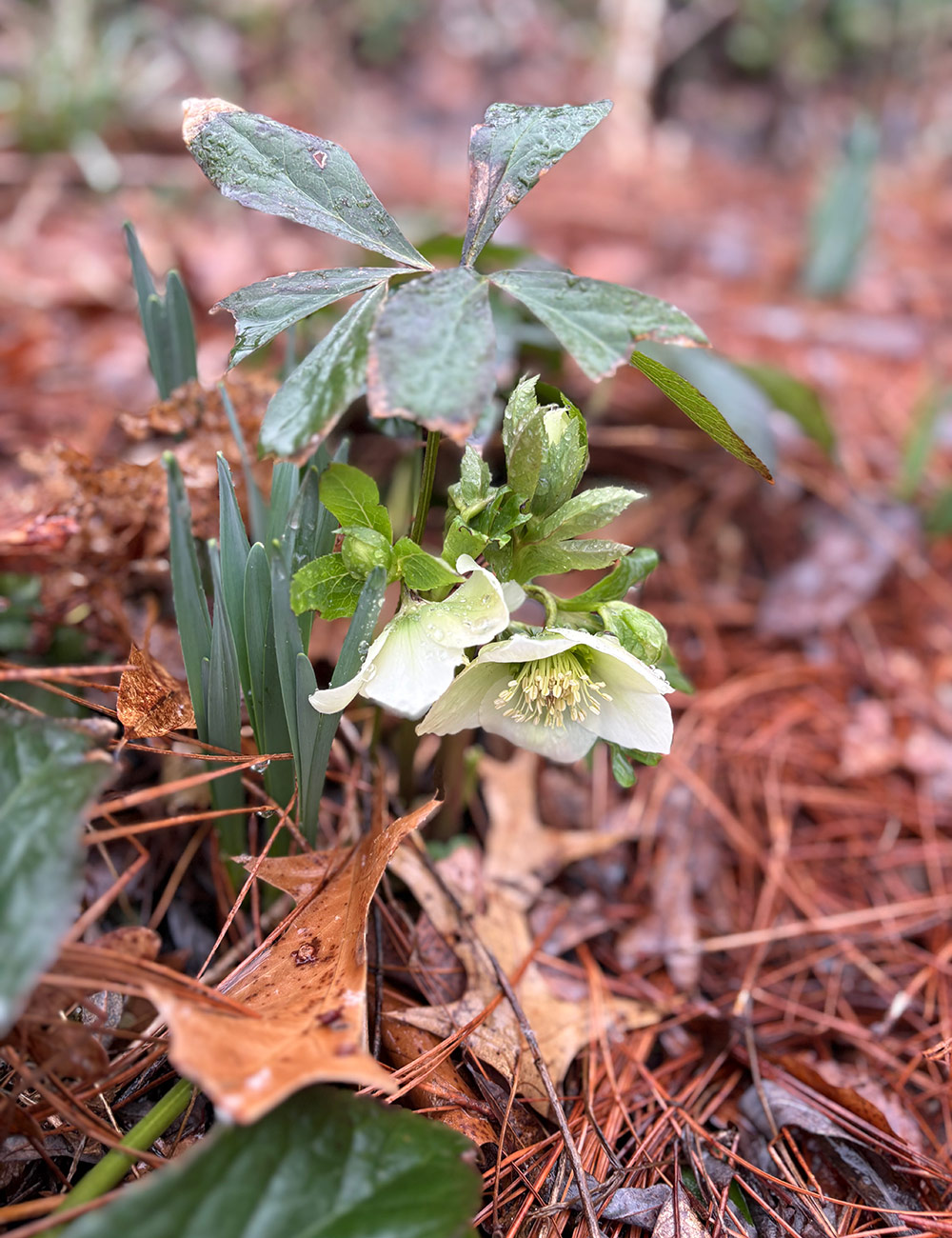 The nodding blooms of hellebores usually require an up-close look to be able to really appreciate their beauty, but as one of the first flowers to emerge in the year it’s still always a much-welcomed pop of color.
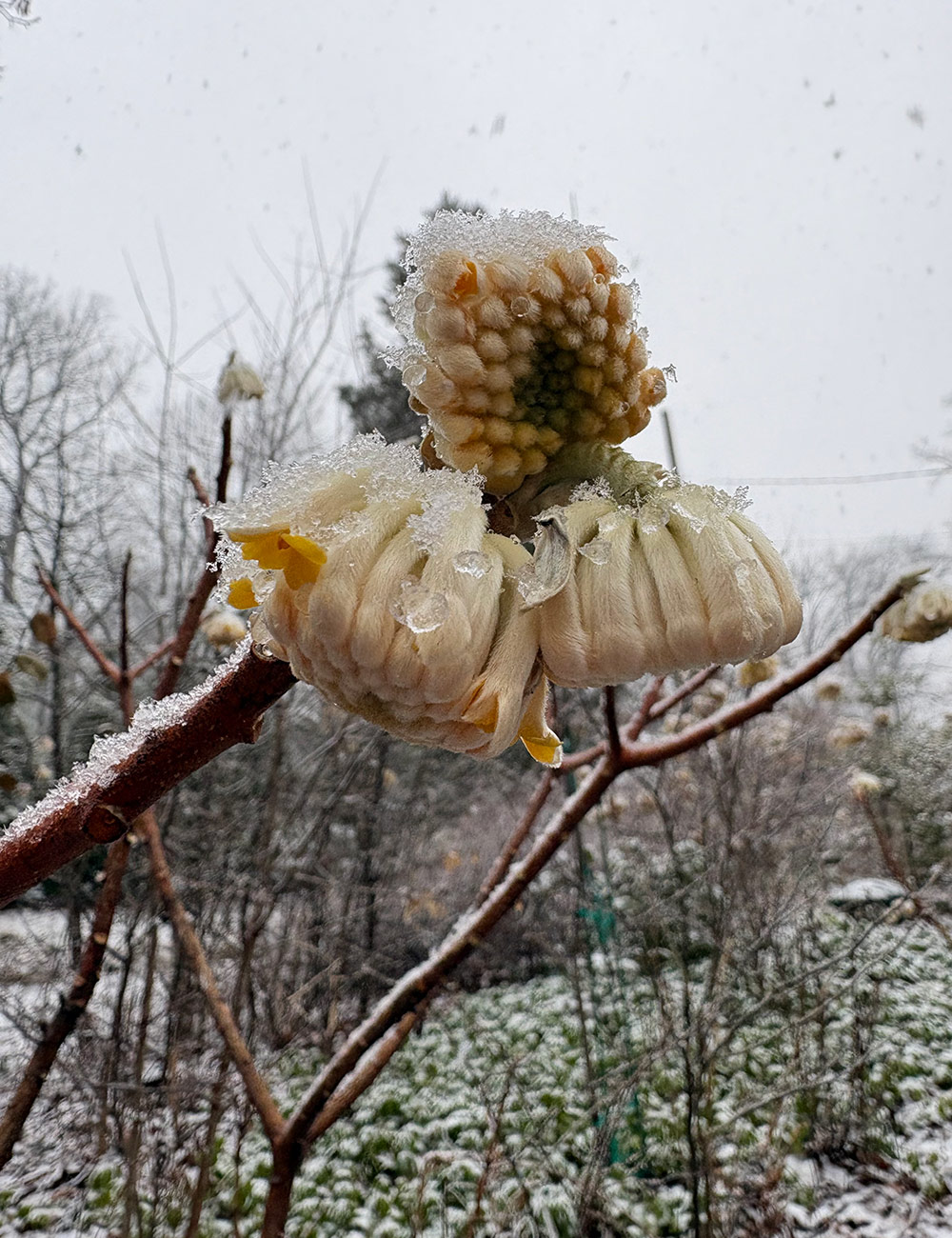 Another underrated shrub for late winter color is the paperbush (Edgeworthia chrysanthaZones 7–10). These little clusters of buds are interesting additions to the winter garden, and even a late-season snow fall won’t stop the tiny golden blooms from emerging before most other flowers.
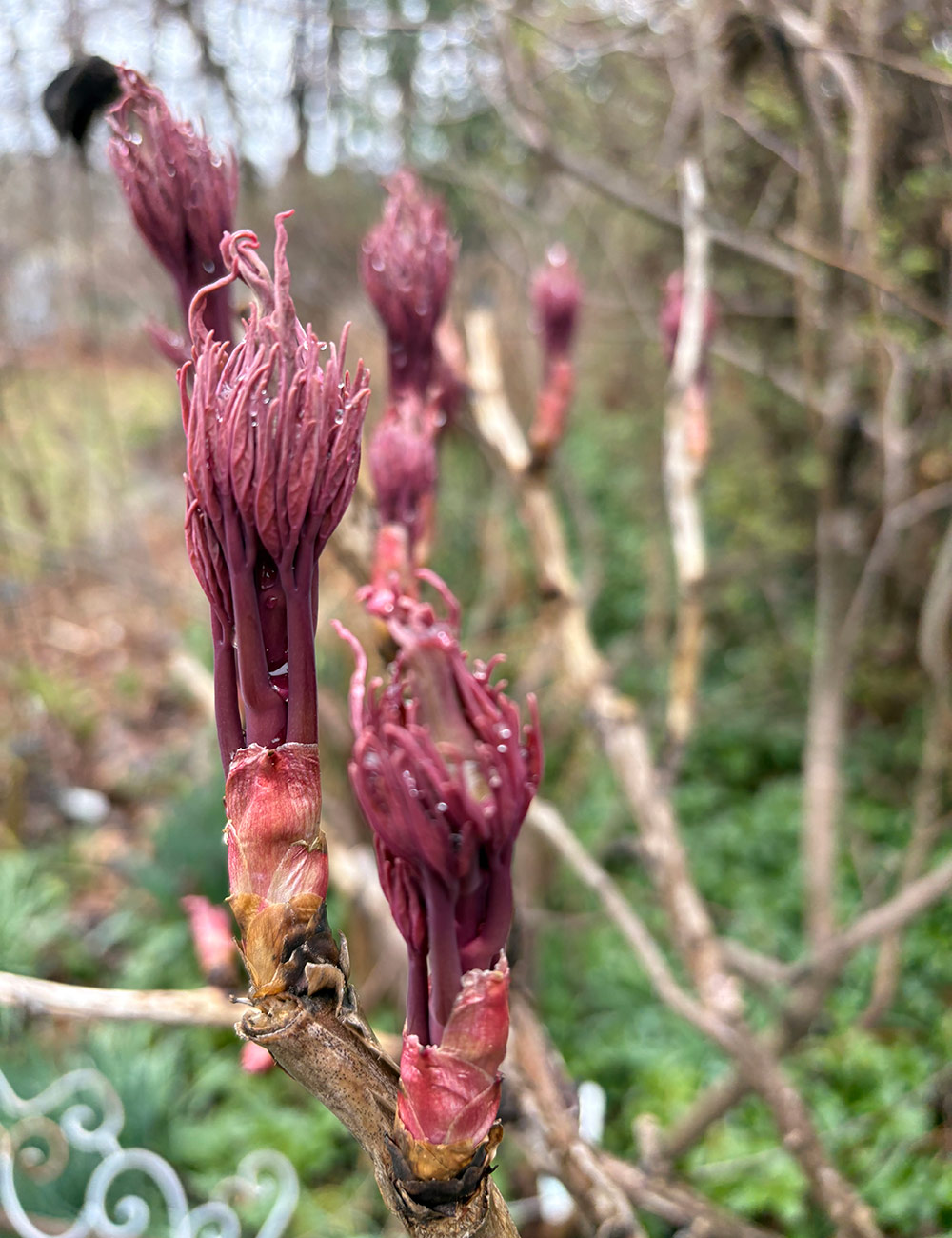 As I alluded to in the introduction, buds and early signs of growth can be just as exciting this time of year as the flowers that emerge, and Carla always makes a point to capture these magical moments. Peony shoots are interesting little forms in their own right, but are even more fascinating for the foliage and eventual flower buds they will bring.
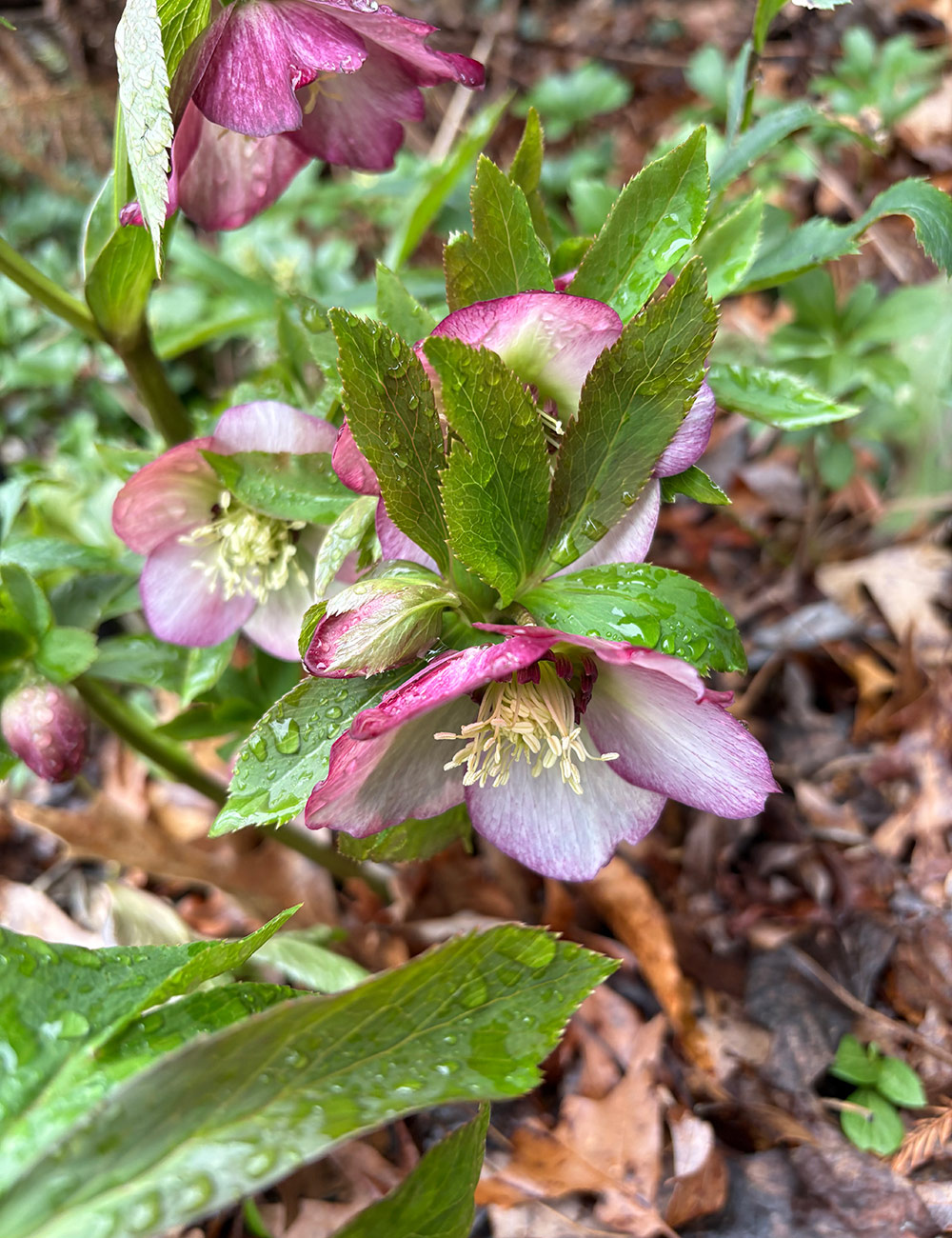 Another stunning hellebore adds a touch of dusty rose romance. These blooms look to be a bit perkier than the nodding white variety we saw above, so they might be the Ice N’ Roses® Rose cultivar (Helleborus x glandorfensis ‘COSEH 4200’, Zones 5–9), which is known to be sturdy and often has outward-facing flowers.
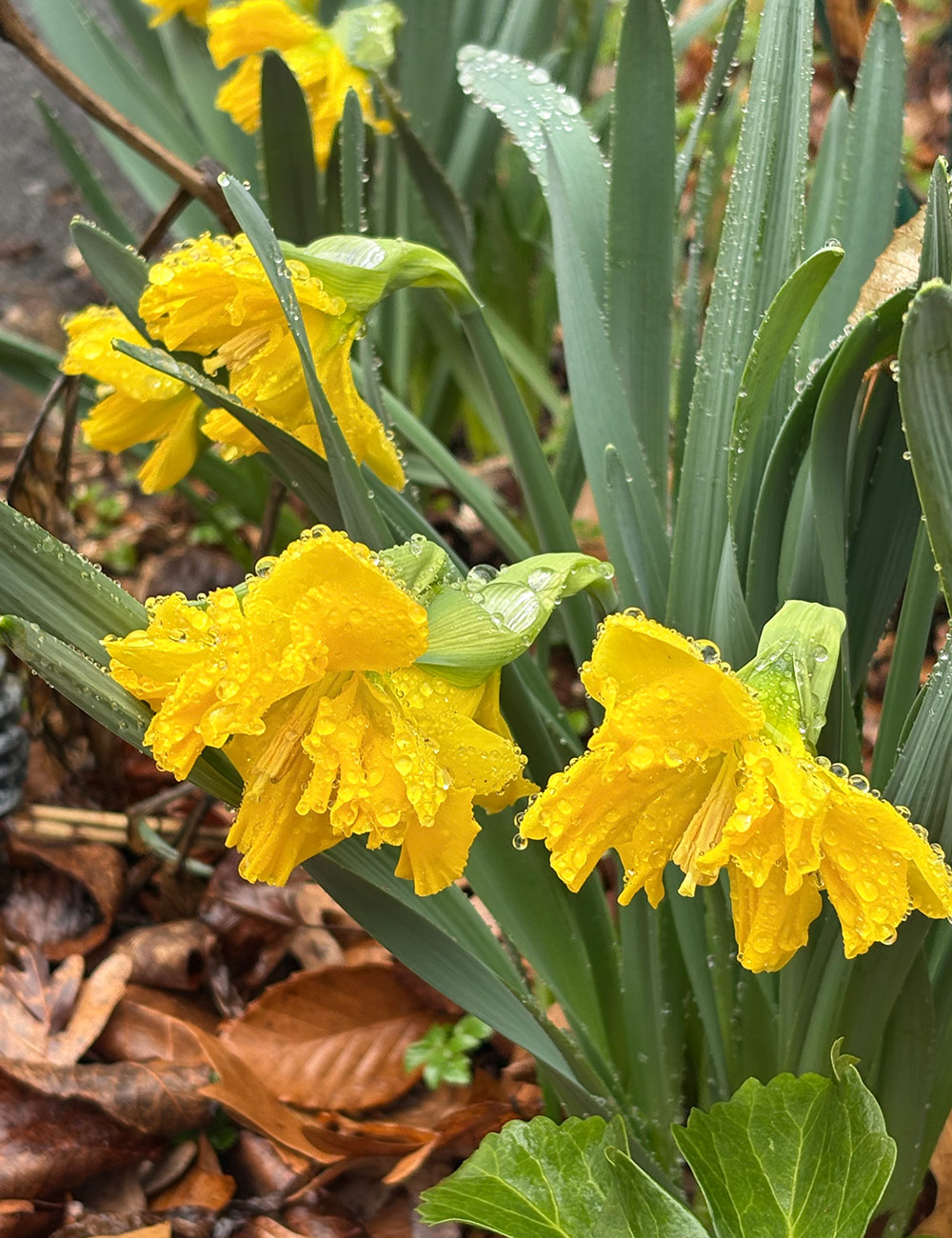 Lastly, a little taste of Carla’s immense daffodil collection. Available in so many interesting forms, daffodils are far more exciting than the classic yellow cups that are standard fare. This bright yellow variety with split coronas (the trumpet part of the bloom) provides a completely different texture for the garden.
Carla’s diverse garden is always too bountiful to fit into one post on GPOD, so we will be back in Pennsylvania tomorrow to see even more bulbs, shrubs, and buds that are harbingers of the spring season.
And we want to see your spring flowers! If signs of the season are waking up in your beds and borders, please consider sharing photos with the blog. Follow the directions below to submit your photos to Garden Photo of the Day!
We want to see YOUR garden!
Have photos to share? We’d love to see your garden, a particular collection of plants you love, or a wonderful garden you had the chance to visit!
To submit, fill out the Garden Photo of the Day Submission Form.
You can also send 5–10 photos to (email protected) along with some information about the plants in the pictures and where you took the photos. We’d love to hear where you are located, how long you’ve been gardening, successes you are proud of, failures you learned from, hopes for the future, favorite plants, or funny stories from your garden.
Do you receive the GPOD by email yet? Sign up here
Fine Gardening Recommended Products
Bee Watering Station with Vivid Flower Design
Fine Gardening receives a commission for items purchased through links on this site, including Amazon Associates and other affiliate advertising programs.
Thoughtful Combo: You will receive a bee feeder and 30 glass marbles. This thoughtful combo can provide clean water for the bees, you just need to put the marbles into the bee watering station, add water (note: the water level should not exceed the height of the marbles) and hang them in the right place. The round, colored marbles can provide a place for the bees to stand and prevent them from falling into the water, effectively keeping the bees safe. Fine Material: This exquisite bee bath is made of high quality iron material, smooth surface, rust and weather resistant, not easy to fade, sturdy and reliable. Bee cups for garden can well meet the drinking water needs of lovely bees, and it can also provide food for bees, such as sugar water, nectar, etc., attracting more bees to your outdoor area and making your garden full of vitality. Perfect Size: The butterfly watering station has an overall height of 13.4 inches, a bowl diameter of 9.4 inches, and a weight of 0.44 pounds. The bee cup serves the needs of the bees well without plunging them into dangerously deep water or taking up unnecessary space in your garden, and this compact and efficient design makes it a practical addition to any outdoor space. Elegant Design: Our bee watering cups are designed in unique flower shapes with vibrant and realistic colours to attract lovely bees to your garden and patio, bee feeders for outside are not only functional but can also be used as a landscaping element, their vibrant floral patterns enhance the beauty of your garden. Multicolored Decoration: Colorful bee water stations look like flowers in a garden, flower bed or pot and attract bees and butterflies. They can drink or bathe in bee feeders, which are highly decorative and practical.
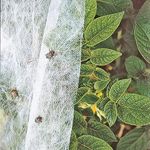
Gardener’s Supply Company Summerweight Fabric Plant Cover
Fine Gardening receives a commission for items purchased through links on this site, including Amazon Associates and other affiliate advertising programs.
Ideal for summertime pest control, this garden cover effectively screens out Japanese beetles, potato beetles, cabbage worms, leaf miners, carrot flies and most vine borers. It transmits 97.6% of the light to your plants without allowing heat build-up, and it provides cold protection down to 41° F, to extend your growing season.
