


Hi GPODers!
As promised, we’re enjoying more photos from Wendy Quereau’s garden in Wayne, Pennsylvania, today (be sure to check out Part 1 if you missed it yesterday). Wendy has been cultivating her collection of plants for 47 years, but, as she mentioned yesterday, this doesn’t mean there is ever any less to get done in the garden. However, her years of tending have resulted in gorgeous, mature plants and an eye for the most interesting aspects of a garden.
My garden is on one overplanted acre, which contains both sun and shade. Now, in August, my little woodland has gone quiet, and I rely on sun perennials to provide a bit of pizazz to see me through until the blaze of fall color arrives. I always keep low maintenance in mind as I move toward adding shrubs for color and texture to replace the work of perennial and annual flowers.
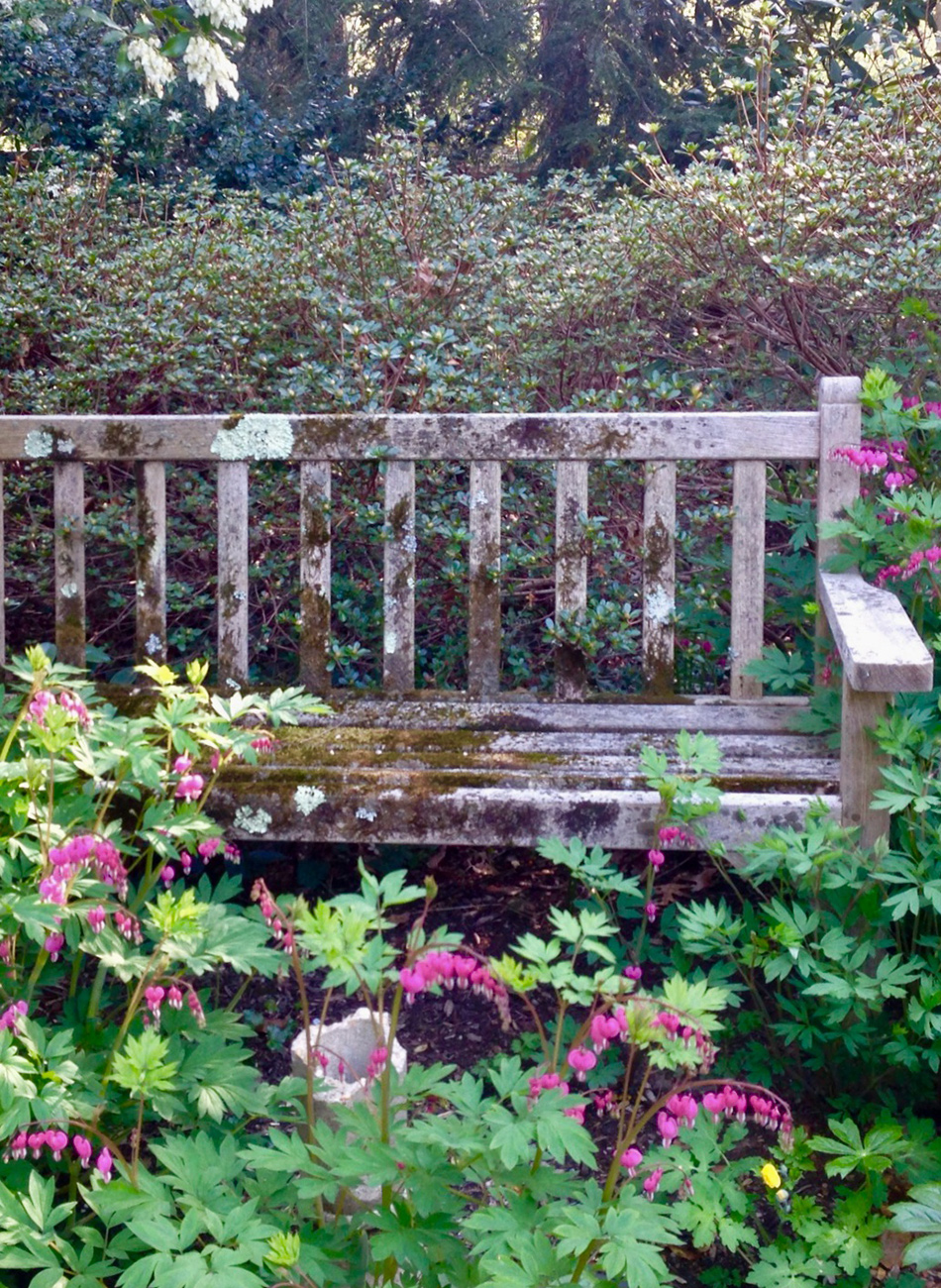 Try placing a teak bench in the shade to introduce a feeling of almost instant age into your garden.
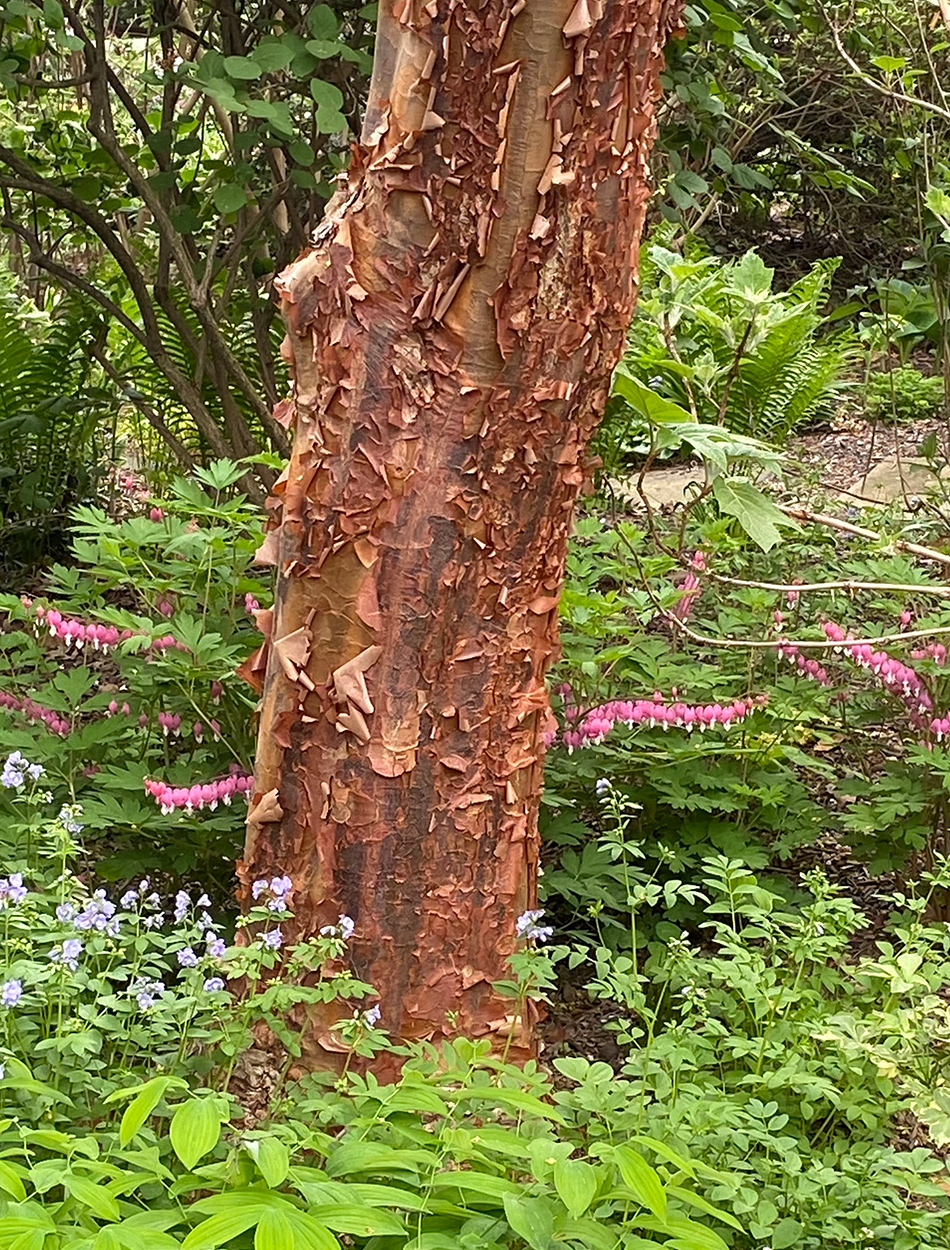 A perk of growing old along with the same garden is benefitting from the beauty of a tree’s characteristics that require time to develop. This is the touted exfoliating bark of a forty-year-old paperbark maple (Acer griseumZones 4–8) with bleeding heart (Lamprocapnos attractivenessZones 3–9) at its feet.
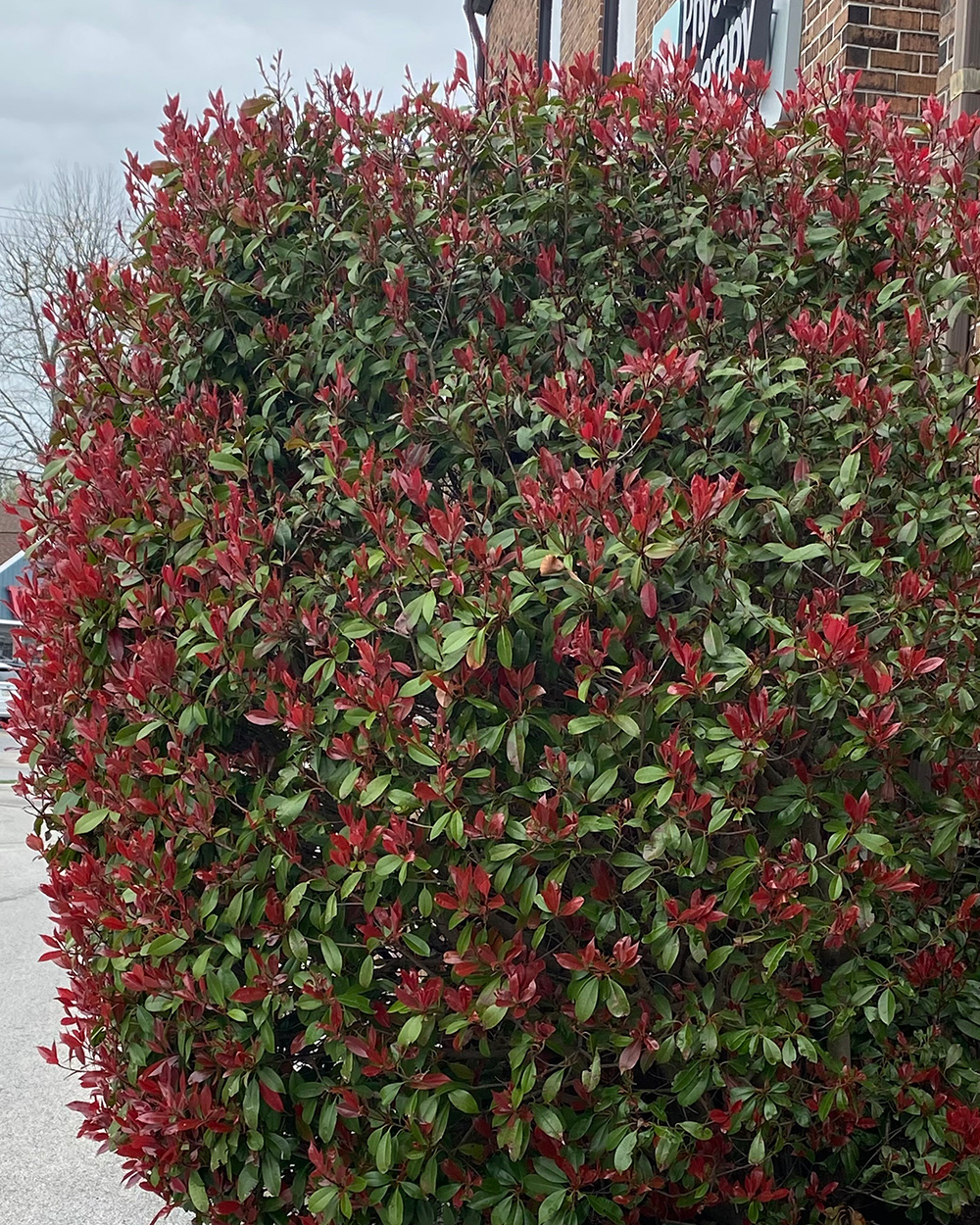 Check out the bright red new growth of this red tip photinia (Photinia × fraseriZones 7–9). This is planted against the wall of a commercial gym, in a 2-foot-wide bed bordered by an asphalt parking lot. Eye-catching!
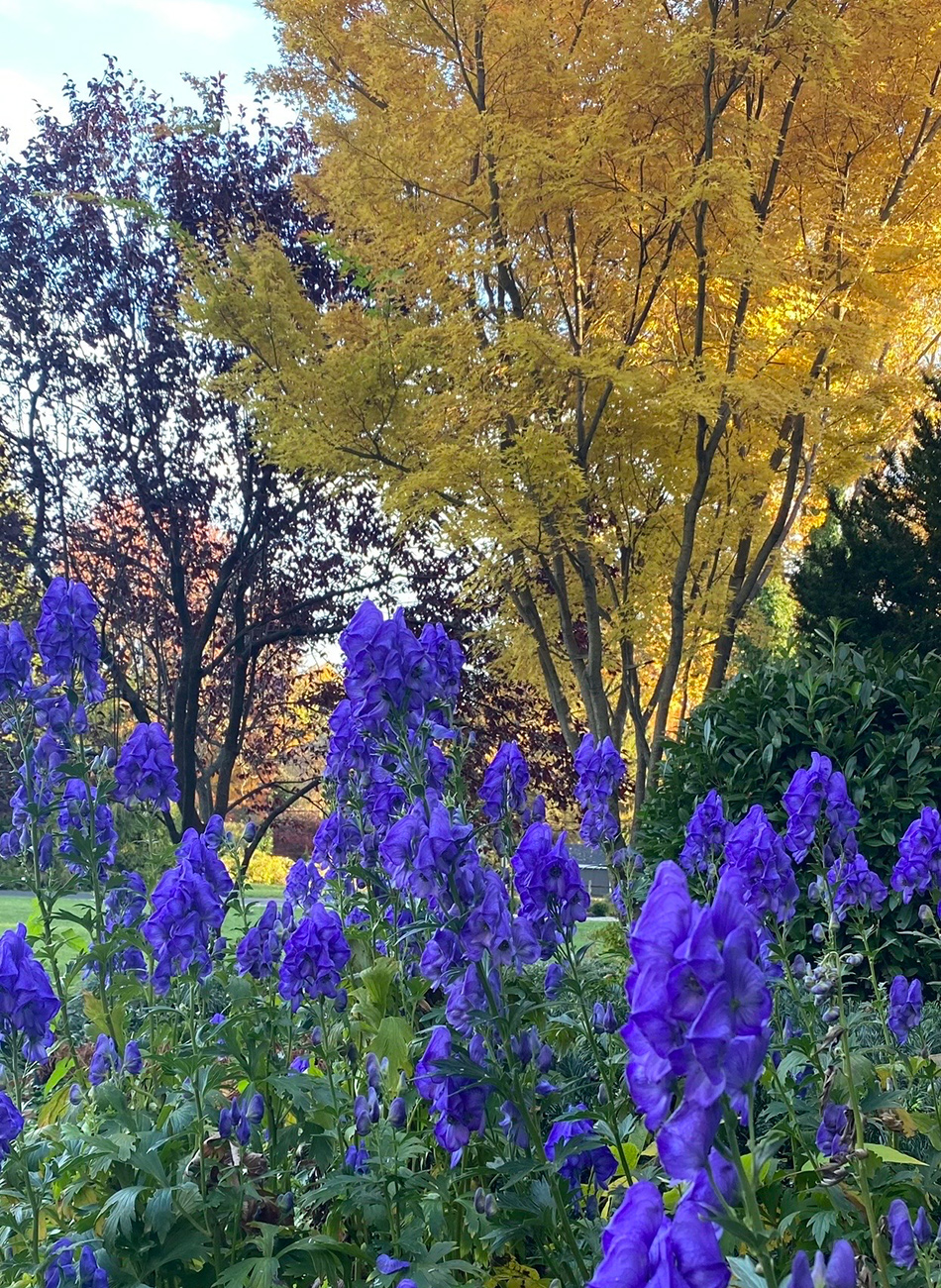 The intense blue in October of the poisonous perennial azure monkshood (Aconitum carmichaelii ‘Arendsii’Zones 3–7) with the yellow foliage of coral bark Japanese maple (Acer palmatum ‘Sango stiff’Zones 5–8): Only the young branches of this coral bark maple will retain the coral color. Because I don’t cut older branches to the ground, they are no longer coral. But the fall color is striking, and the form of the tree is relatively narrow—good for a small space!
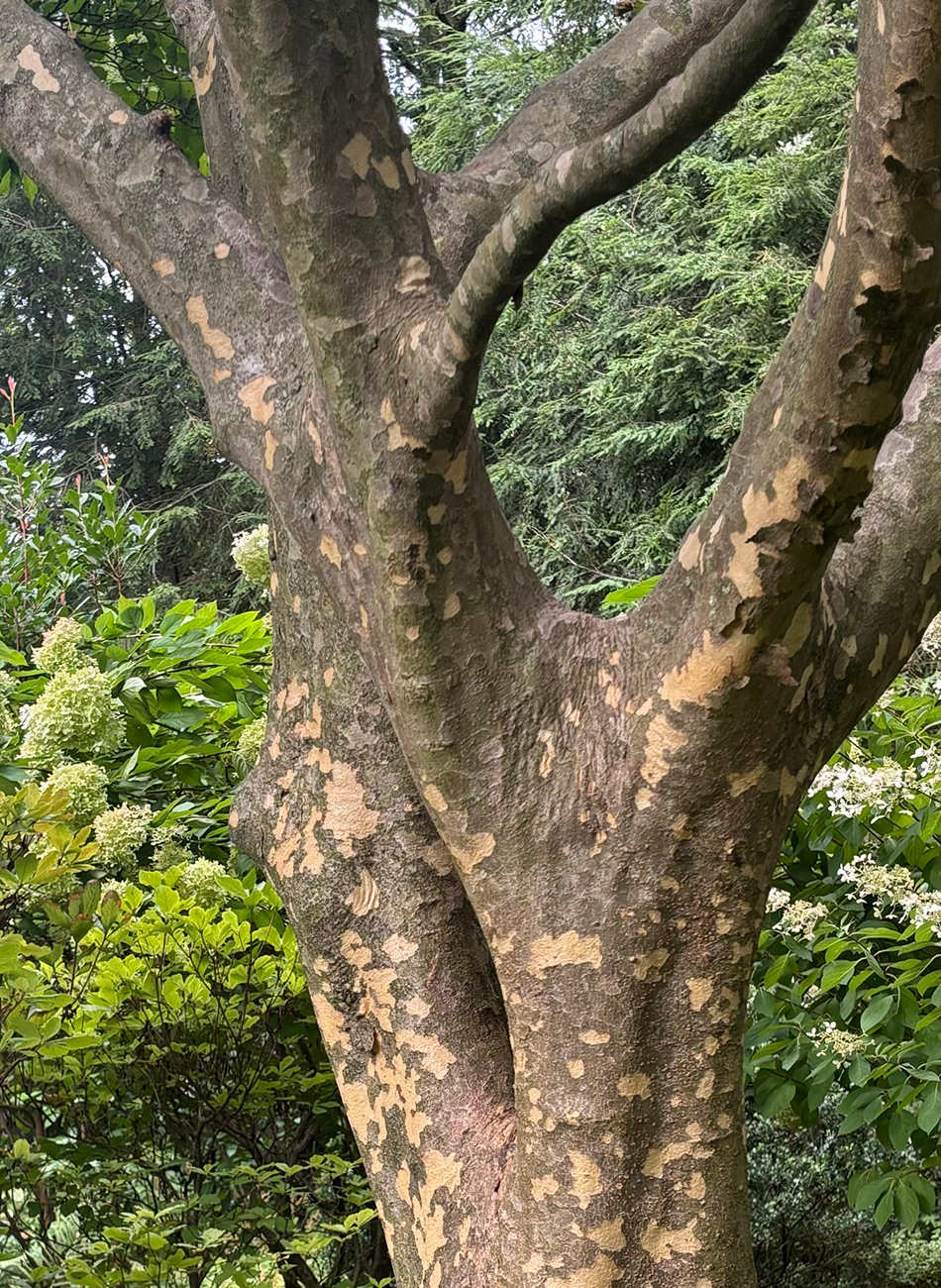 The common Kousa dogwood (Horn kousaZones 5–8) has beautiful mottled bark, which intensifies as the tree ages. This was planted in 1978—a birthday present.
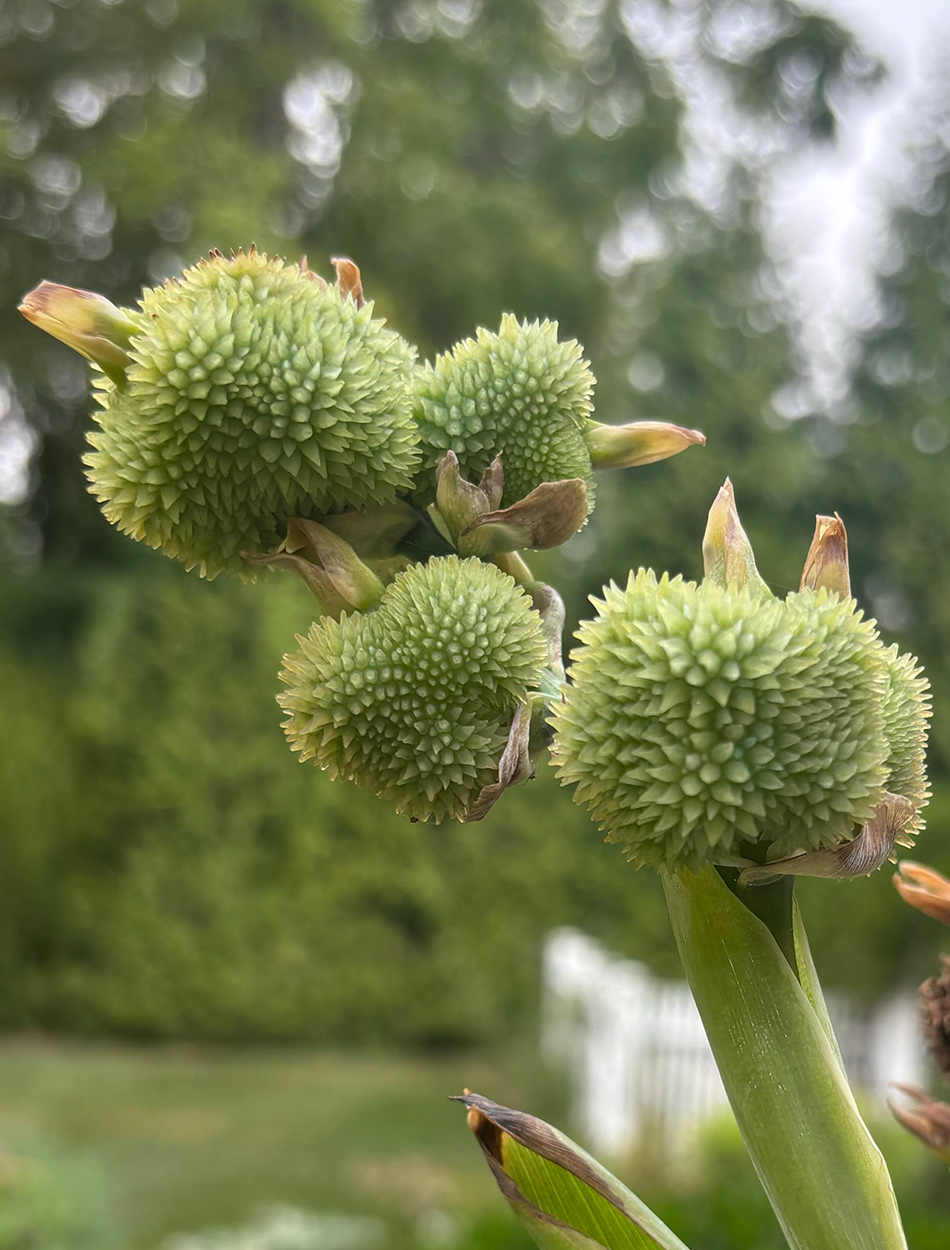 The interesting seed heads of canna add to its appeal, while other stalks on the same plant continue blooming when deadheaded.
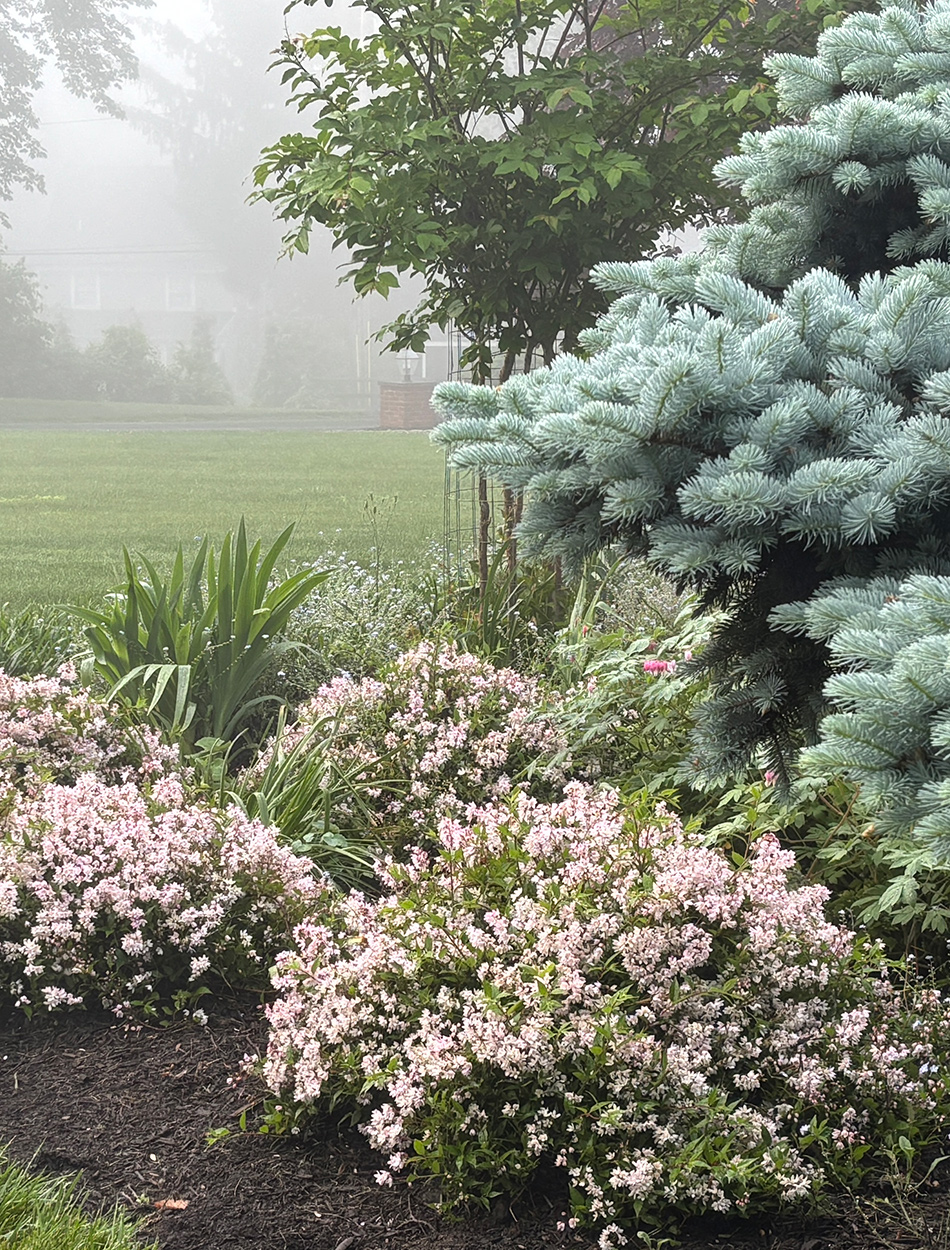 On a foggy June morning: Here’s the dwarf pink blooming ‘Yuki Cherry Blossom’ deutzia (Call ‘Ncdx2’, Zones 5–8), along with a newly planted white crepe myrtle (Lagerstroemia spp. and cvs., Zones 6–10) to replace a mature ash tree destroyed by emerald ash borers. The cage around the trunk protects the bark from the rubbing of male deer to remove the itchy felt from their antlers.
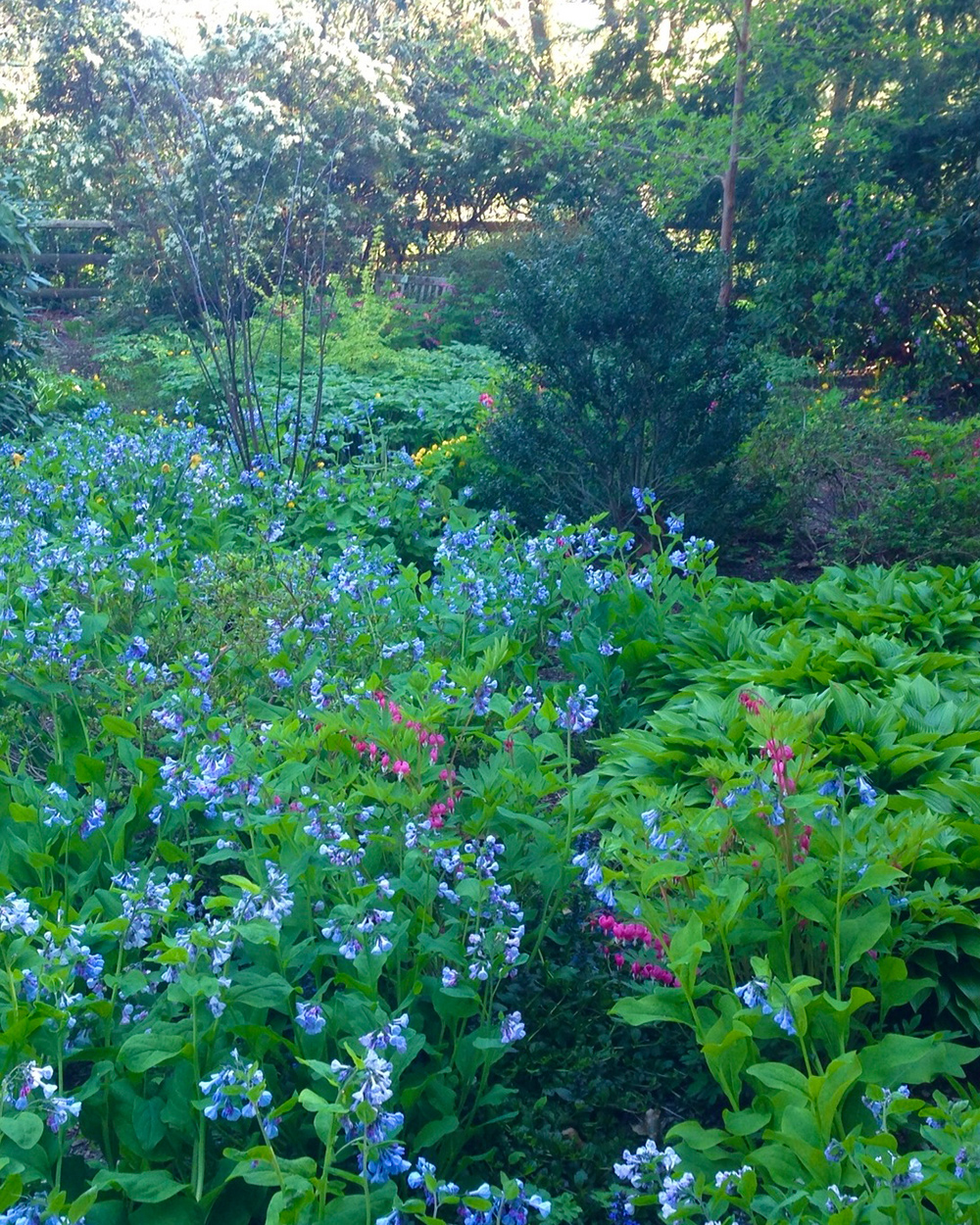 Woods showing some color—mostly the ephemeral Virginia bluebells (Mertensia virginicaZones 3–8) here
Thank you so much, Wendy, for two days of absolutely incredible garden photos. Both novice and experienced gardeners can take inspiration from the way you continue to cultivate beauty as you make changes for maintenance needs.
How has your garden evolved over the years? Are more low-maintenance plants taking the place of finicky garden troublemakers? Have maturing trees caused you to swap sun lovers for more shade-tolerant treasures? Let us know in the comments, or consider sharing your garden’s story with Garden Photo of the Day! Follow the directions below to submit photos via email, or send me a DM on Instagram: @agirlherdogandtheroad.
We want to see YOUR garden!
Have photos to share? We’d love to see your garden, a particular collection of plants you love, or a wonderful garden you had the chance to visit!
To submit, send 5–10 photos to (email protected) along with some information about the plants in the pictures and where you took the photos. We’d love to hear where you are located, how long you’ve been gardening, successes you are proud of, failures you learned from, hopes for the future, favorite plants, or funny stories from your garden.
Have a mobile phone? Tag your photos on Facebook, Instagram, or Twitter with #FineGardening!
Do you receive the GPOD by email yet? Sign up here
Fine Gardening Recommended Products
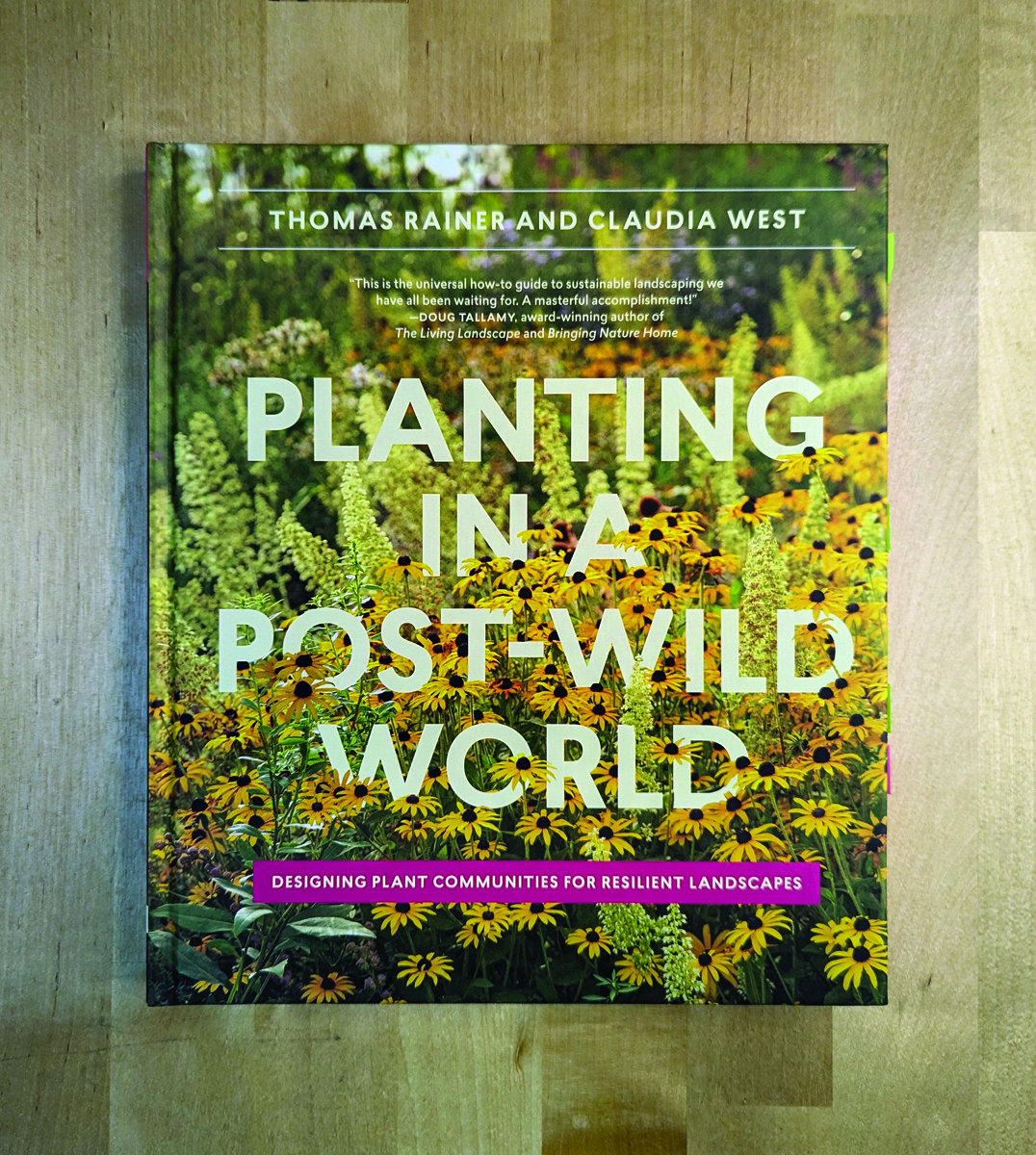
Planting in a Post-Wild World: Designing Plant Communities for Resilient Landscapes
Fine Gardening receives a commission for items purchased through links on this site, including Amazon Associates and other affiliate advertising programs.
Featuring gorgeous photography and advice for landscapers, Planting in a Post-Wild World by Thomas Rainer and Claudia West is dedicated to the idea of a new nature—a hybrid of both the wild and the cultivated—that can nourish in our cities and suburbs.
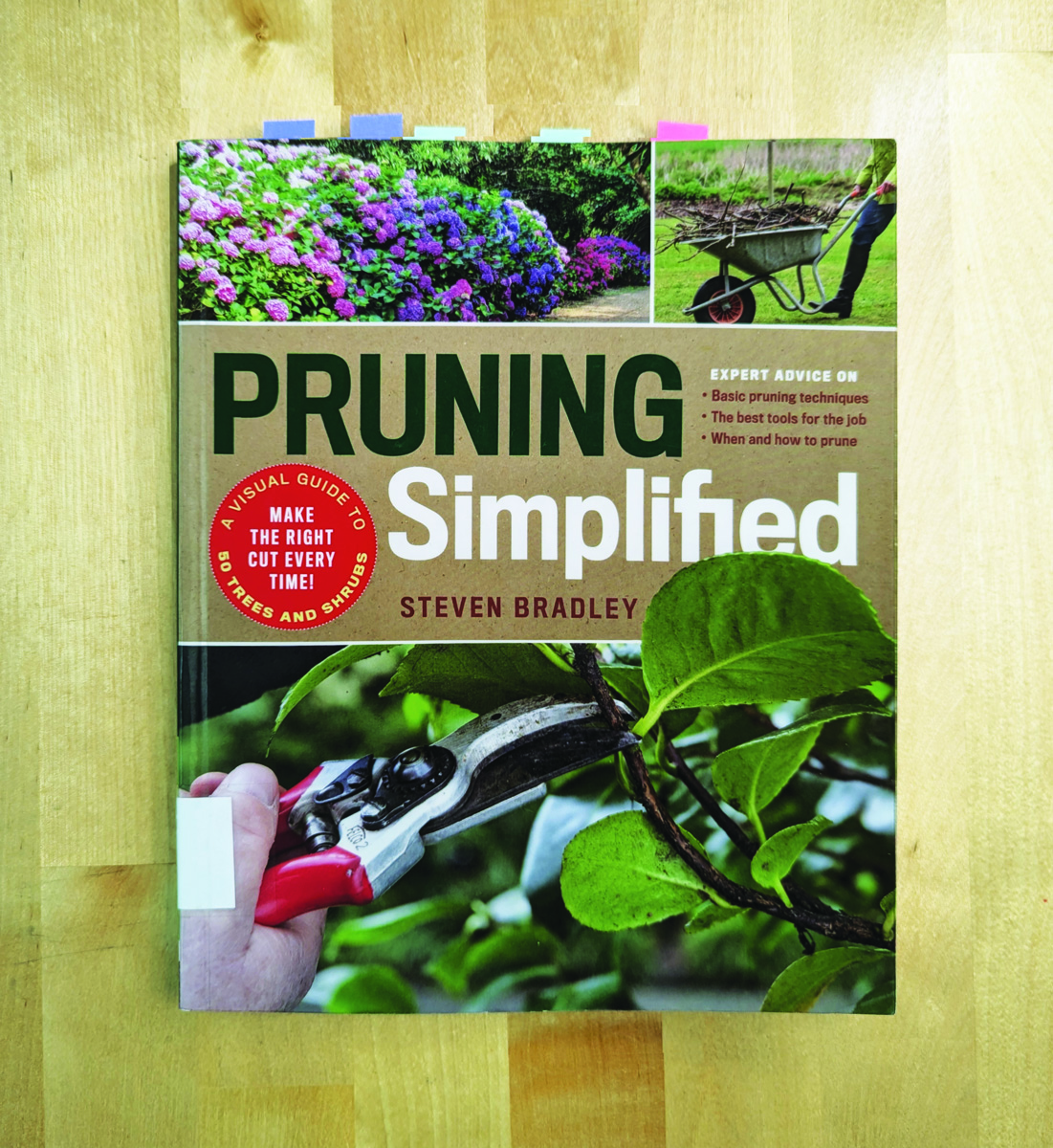
Pruning Simplified: A Step-by-Step Guide to 50 Popular Trees and Shrubs
Fine Gardening receives a commission for items purchased through links on this site, including Amazon Associates and other affiliate advertising programs.
Pruning Simplified shows you exactly how to do it. This must-have guide offers expert advice on the best tools for the job, specific details on when to prune, and clear instructions on how to prune. Profiles of the 50 most popular trees and shrubs—including azaleas, camellias, clematis, hydrangeas, and more—include illustrated, easy-to-follow instructions that will ensure you make the right cut the first time.
