


In his article featured in the 2026 spring issue of Fine Gardening, designer Scott Endres discusses how different categories of plants can help enliven a staid landscape. These species can be preexisting woody plants that just need a good haircut to shine, or a brand-new cadre of flashy perennials and annuals.
In this companion plant-ID guide, Scott highlights the standout trees, shrubs, and perennials that shaped the thoughtful reinvention of an aging garden—plants chosen not only for their beauty but also for their durability, seasonal interest, and ability to knit old and new elements seamlessly together. Use this reference to explore the key performers featured in the article, discover what makes each selection valuable in mature landscapes, and find inspiration for breathing fresh life into gardens that are ready for their next chapter.
Read More: Top Plants for Reinvigorating a Mature Garden
Ensure the gap fillers are show-stoppers
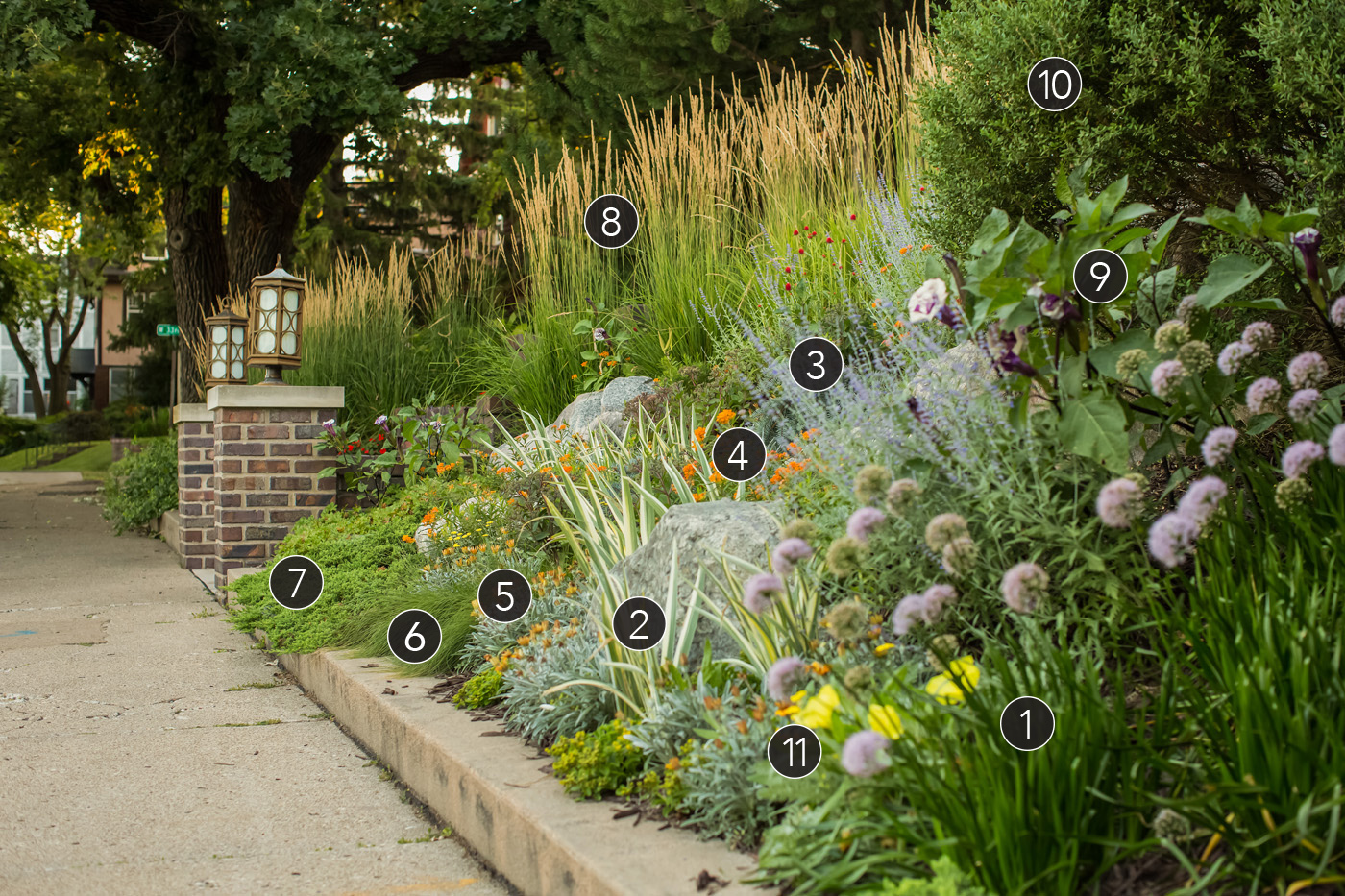
Plant list:
- ‘Summer Beauty’ allium (Allium tanguticum ‘Summer Beauty’, Zones 4–8)
- Dalmatian iris (Iris pallida ‘Variegata’, Zones 4–9)
- Russian sage (Salvia yangiiZones 4–9)
- ‘Profusion Orange’ zinnia (Zinnia ‘Profusion Orange’, annual)
- ‘Talent Orange’ gazania (Gazania is crying ‘Talent Orange’, Zones 9–11)
- Prairie dropseed (Sporobolus heterolepisZones 3–9)
- Japanese garden juniper (Juniper recliningZones 4–9)
- ‘Karl Foerster’ feather reed grass (Calamagrostis × acutiflora ‘Karl Foerster’, Zones 5–9)
- ‘Ballerina Purple’ datura (Datura metel ‘Ballerina Purple’, Zones 9–11)
- ‘Green Mountain’ boxwood (Boxwood ‘Green Mountain’, Zones 5–9)
- Missouri evening primrose (Oenothera macrocarpaZones 3–7)
Edit existing plants to enhance garden views
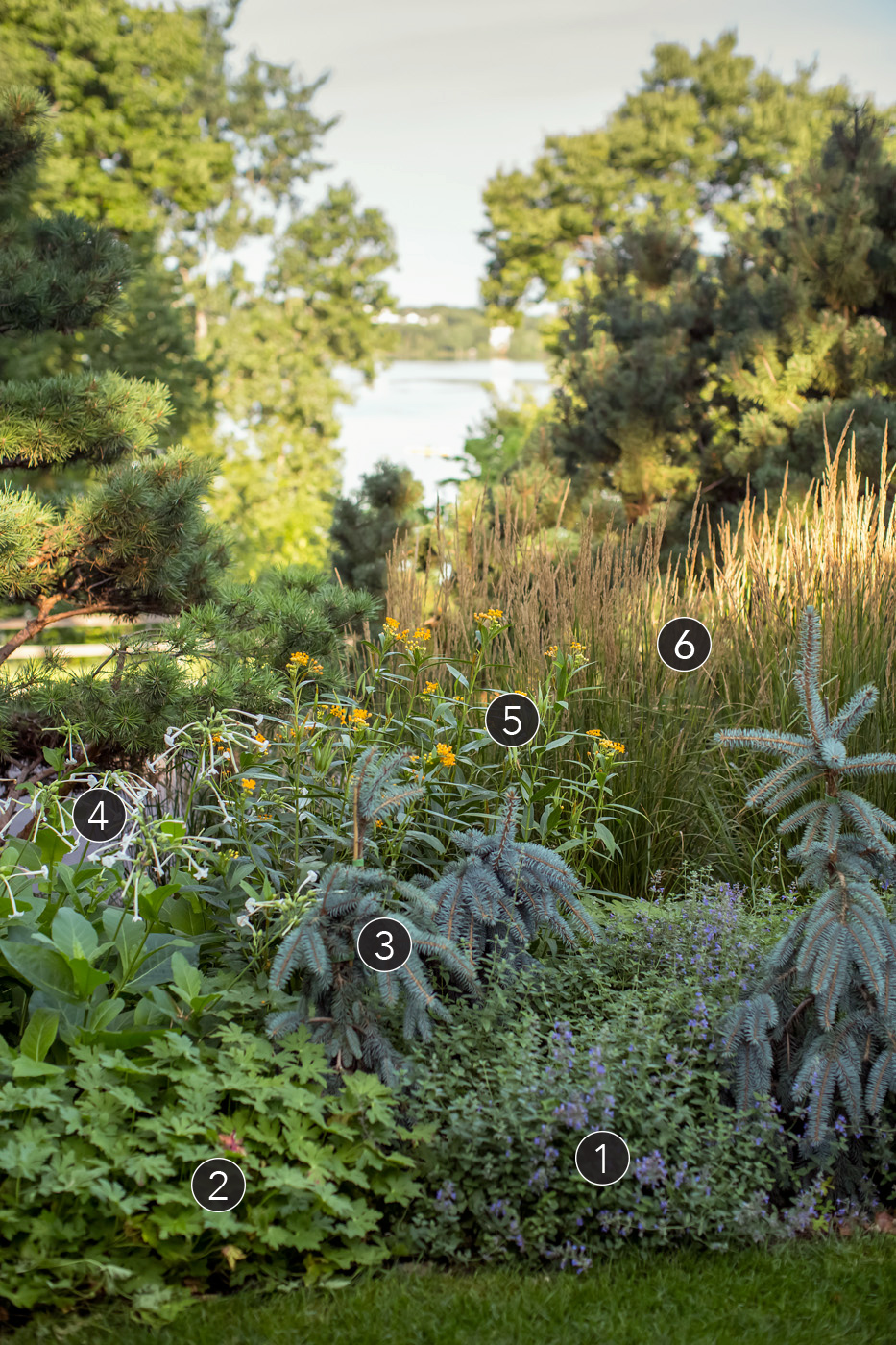
Plant list:
- ‘Walker’s Low’ catmint (Nepeta racemosa ‘Walker’s Low’, Zones 4–8)
- ‘Ingwersen’s Variety’ geranium (Geranium macrorrhizum ‘Ingwersen’s Variety’, Zones 4–8)
- Creeping Colorado blue spruce (Picea pungens ‘Prostrate’, Zones 2–7)
- Flowering tobacco (Nicotiana sylvestrisZones 10–11)
- ‘Silky Gold’ tropical milkweed (Asclepias Curassavica ‘Silky Gold’, Zones 8–11)
- ‘Karl Foerster’ feather reed grass (Calamagrostis × acutiflora ‘Karl Foerster’, Zones 5–9)
Mix bold foliage
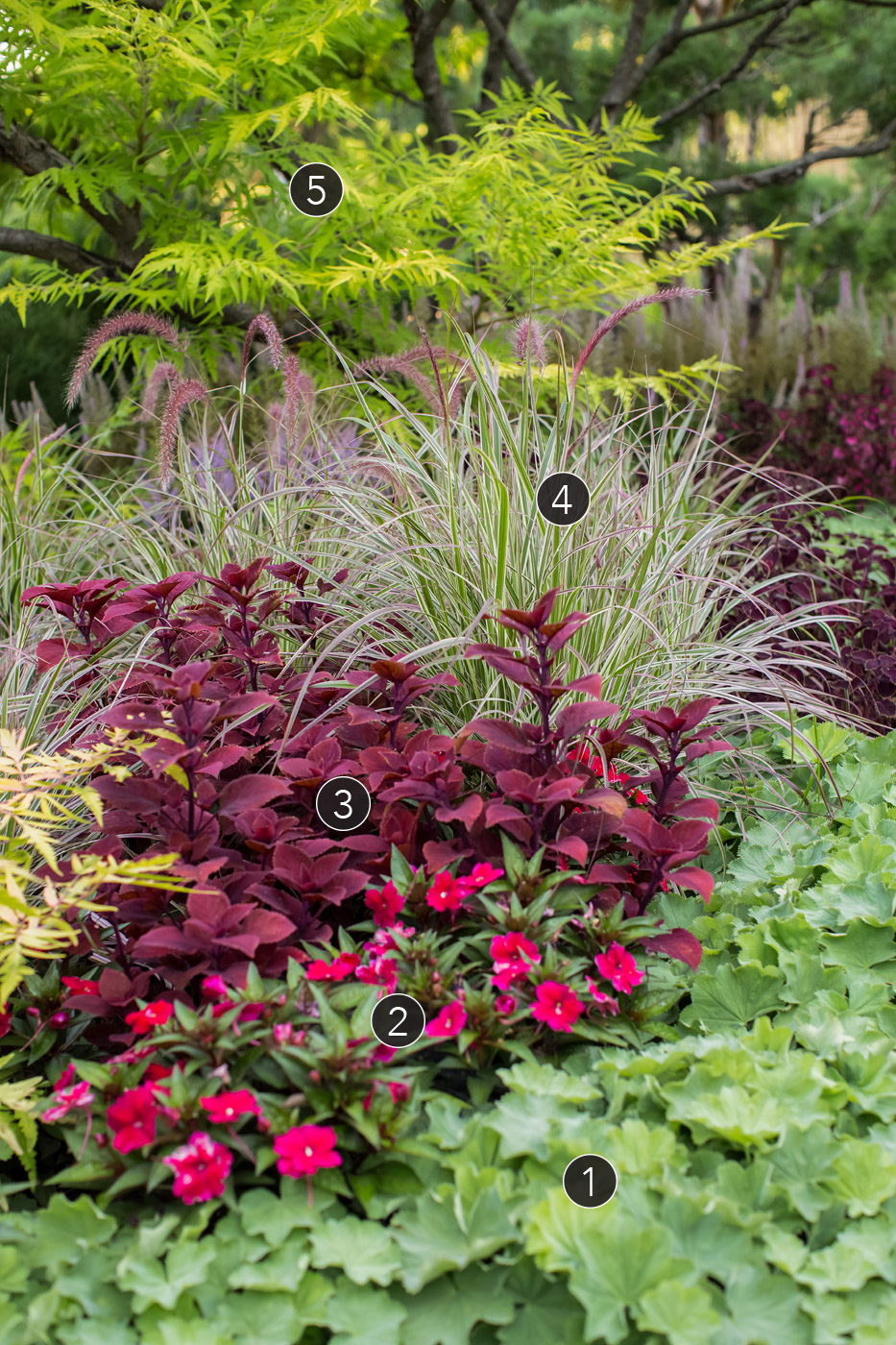
Plant list:
- Lady’s mantle (Alchemilla softZones 3–8)
- SunPatiens® Compact Fire Red (Impatiens × hybrid cv., annual)
- ‘Inferno’ coleus (Coleus scutellarioides ‘Inferno’, Zones 9–11)
- ‘Fireworks’ fountain grass (Pennisetum setaceum ‘Fireworks’, Zones 9–10)
- Tiger Eyes® sumac (Rhus typhina ‘Baltiger’, Zones 4–8)
All photos by Tracy Walsh
Related Articles:
Read the Full Feature: Strategies for Reinventing a Mature Garden
See More Planting Plans Here
Check Out Our YouTube Channel!
Fine Gardening Recommended Products
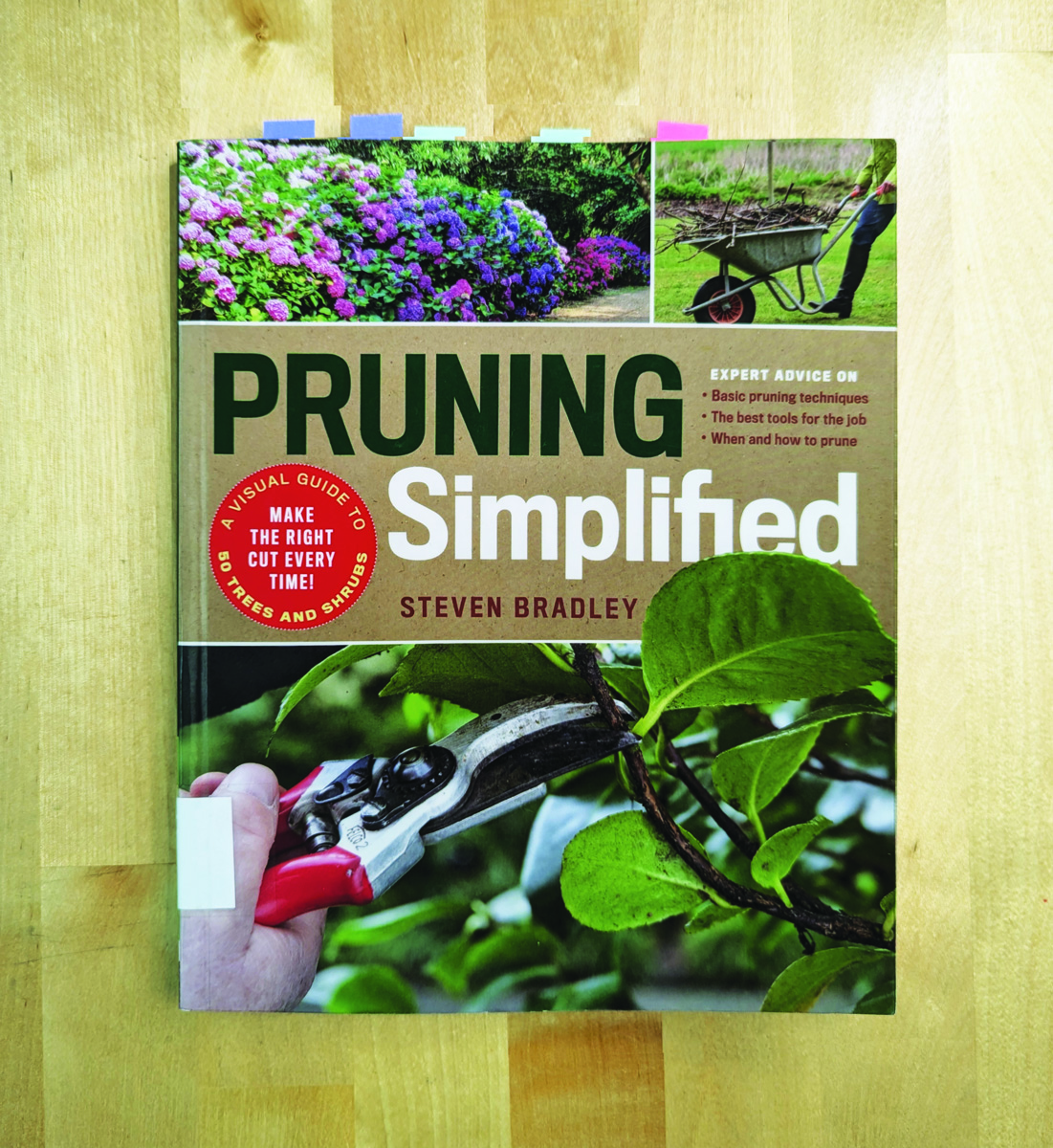
Pruning Simplified: A Step-by-Step Guide to 50 Popular Trees and Shrubs
Fine Gardening receives a commission for items purchased through links on this site, including Amazon Associates and other affiliate advertising programs.
Pruning Simplified shows you exactly how to do it. This must-have guide offers expert advice on the best tools for the job, specific details on when to prune, and clear instructions on how to prune. Profiles of the 50 most popular trees and shrubs—including azaleas, camellias, clematis, hydrangeas, and more—include illustrated, easy-to-follow instructions that will ensure you make the right cut the first time.

Planting in a Post-Wild World: Designing Plant Communities for Resilient Landscapes
Fine Gardening receives a commission for items purchased through links on this site, including Amazon Associates and other affiliate advertising programs.
Featuring gorgeous photography and advice for landscapers, Planting in a Post-Wild World by Thomas Rainer and Claudia West is dedicated to the idea of a new nature—a hybrid of both the wild and the cultivated—that can nourish in our cities and suburbs.
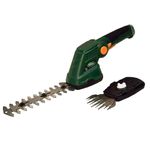
Scotts Cordless Grass-Shear/Shrub-Trimmer Combo
Fine Gardening receives a commission for items purchased through links on this site, including Amazon Associates and other affiliate advertising programs.
With a built-in 7.2-volt lithium-ion battery, this little guy weighs less than 2 lb. and can zip through all your minor pruning tasks quickly and easily.
– 13.5 x 3 x 5 inches
– Uses a 7.2-Volt 2Ah high-capacity built-in lithium-ion battery; Includes a fast charger
