


What makes a slug-resistant hosta? It’s the leaf thickness that influences whether or not slugs want to dine on their leaves. And for hosta growers, slugs can be a huge issue. Thankfully, there are hundreds of slug-deterrent varieties out there – way more than we’ll cover here.
Some of the most popular hostas are slug-repellent. That means you will find these at local nurseries and big-box stores. Here, we’ll cover a few that are common and a few that are rarer. But peruse a huge list of hostas in this category, and there are so many that you can buy almost anywhere hostas are sold.
While these are slug-resistant, in areas where slugs and snails are prolific, you may still see some feeding. So it’s best to be prepared by using integrated pest management techniques that control and deter slugs, so your hosta garden remains impeccable through the mild seasons when these creeping mollusks are at full force.
Field Rat

|
botanical name Hosta ‘Field Rat’ |
|---|---|

|
sun requirements Partial to full shade |

|
height 6-8″ |

|
hardiness zones 3-8 |
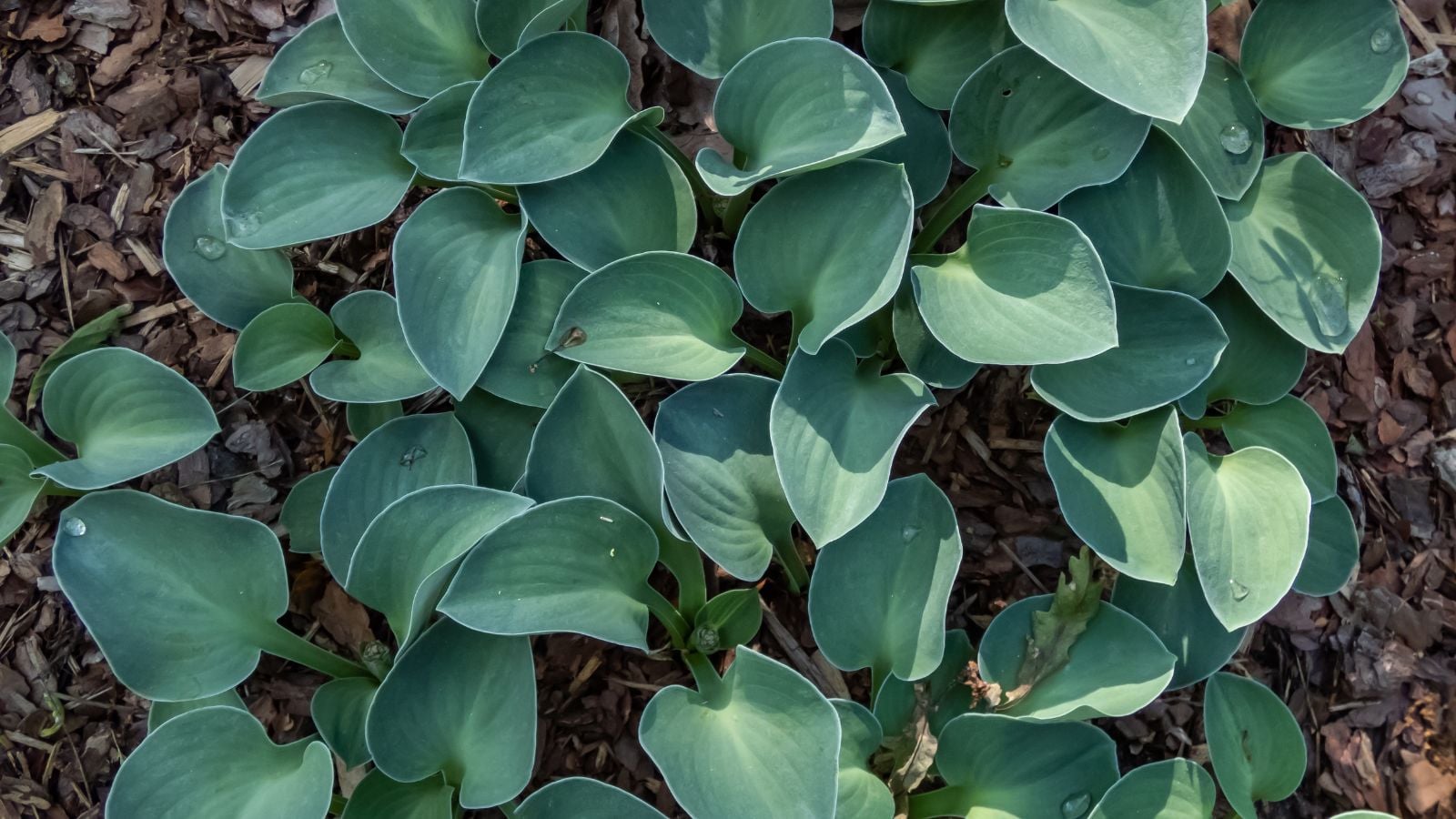
This slug-resistant hosta is similar to ‘Blue Mouse Ears’ in form, with one more inch in height. It has a standard green coloring, but it has the same thick foliage that keeps slugs and snails away. This is a sport of ‘Flamenco Mouse’, which has wildly twisted leaves, but ‘Field Rat’s’ leaves are straight and uniform.
What it does share with ‘Flamenco Mouse’ is the pointed leaf tips. Its flowers tend to be slightly darker than other hostas, verging more into purple than toward white. This is a fast grower that gardeners on the colder side of the continent will appreciate. As long as you protect it with mulch in winter, it will emerge and grow quickly in the following spring.
Mystic Star
|
|
botanical name Hosta ‘Mystic Star’ |
|---|---|
|
|
sun requirements Partial to full shade |
|
|
height 16-18″ |
|
|
hardiness zones 3-8 |
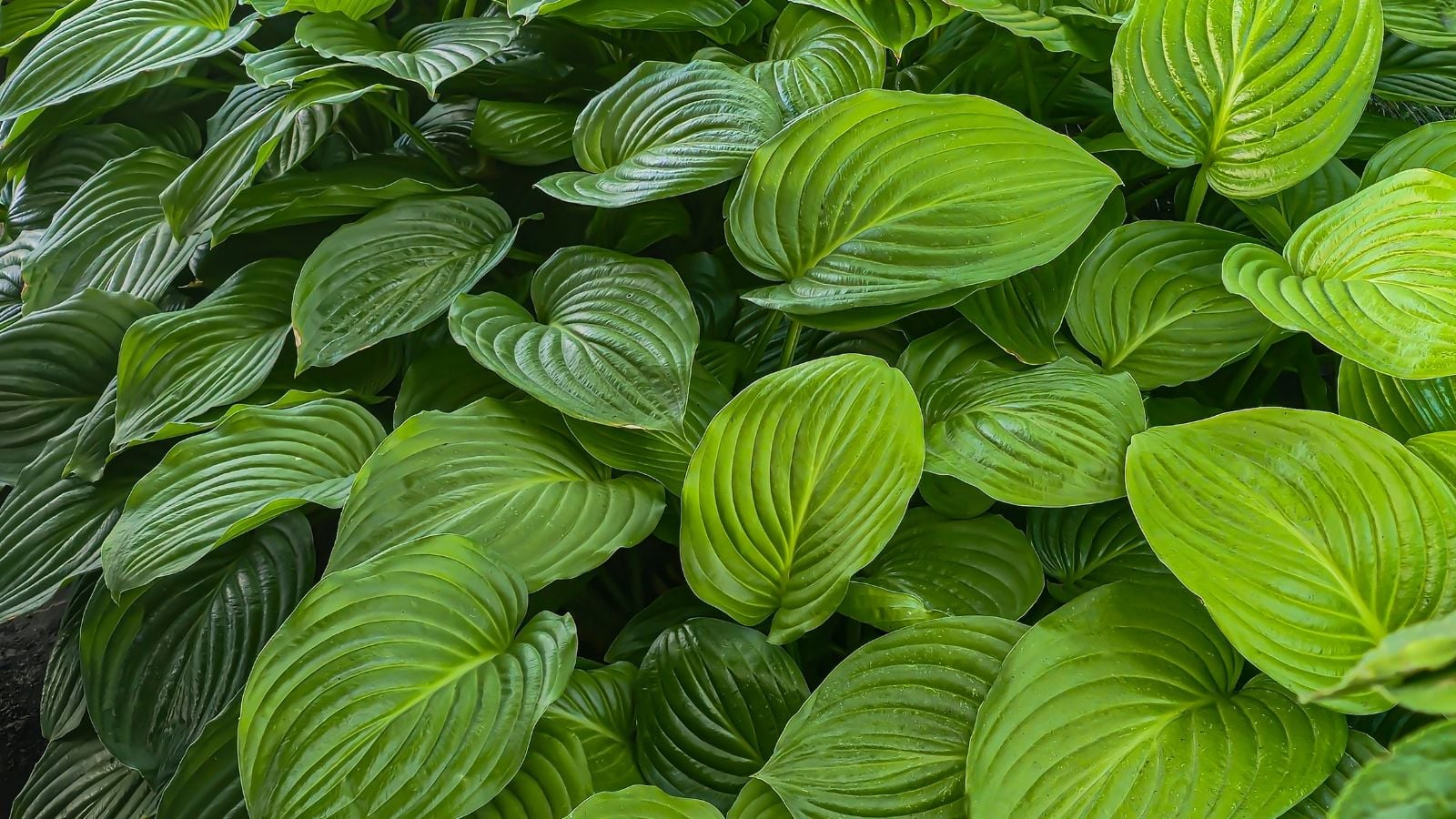
Now we enter rare hosta territory, with ‘Mystic Star’, a medium hosta bred by Iowa hosta breeder, Greg Johnson. This is a Hosta yingeri x ‘Dorset Blue’ hybrid with broad, blue-green leaves covered in pronounced veins. The leaves are densely arranged and whorl around one another as they grow.
The unique flowers are what give this hosta its name. Instead of the sparse, single-colored blooms of your standard plants, ‘Mystic Star’ has luscious blooms that open to display striped purple and white petals. It’s a stunning sight for mid-summer, and cutting them down will promote a rebloom.
Rhino Hide
|
|
botanical name Hosta ‘Rhino Hide’ |
|---|---|
|
|
sun requirements Partial to full shade |
|
|
height 1-2′ |
|
|
hardiness zones 3-9 |
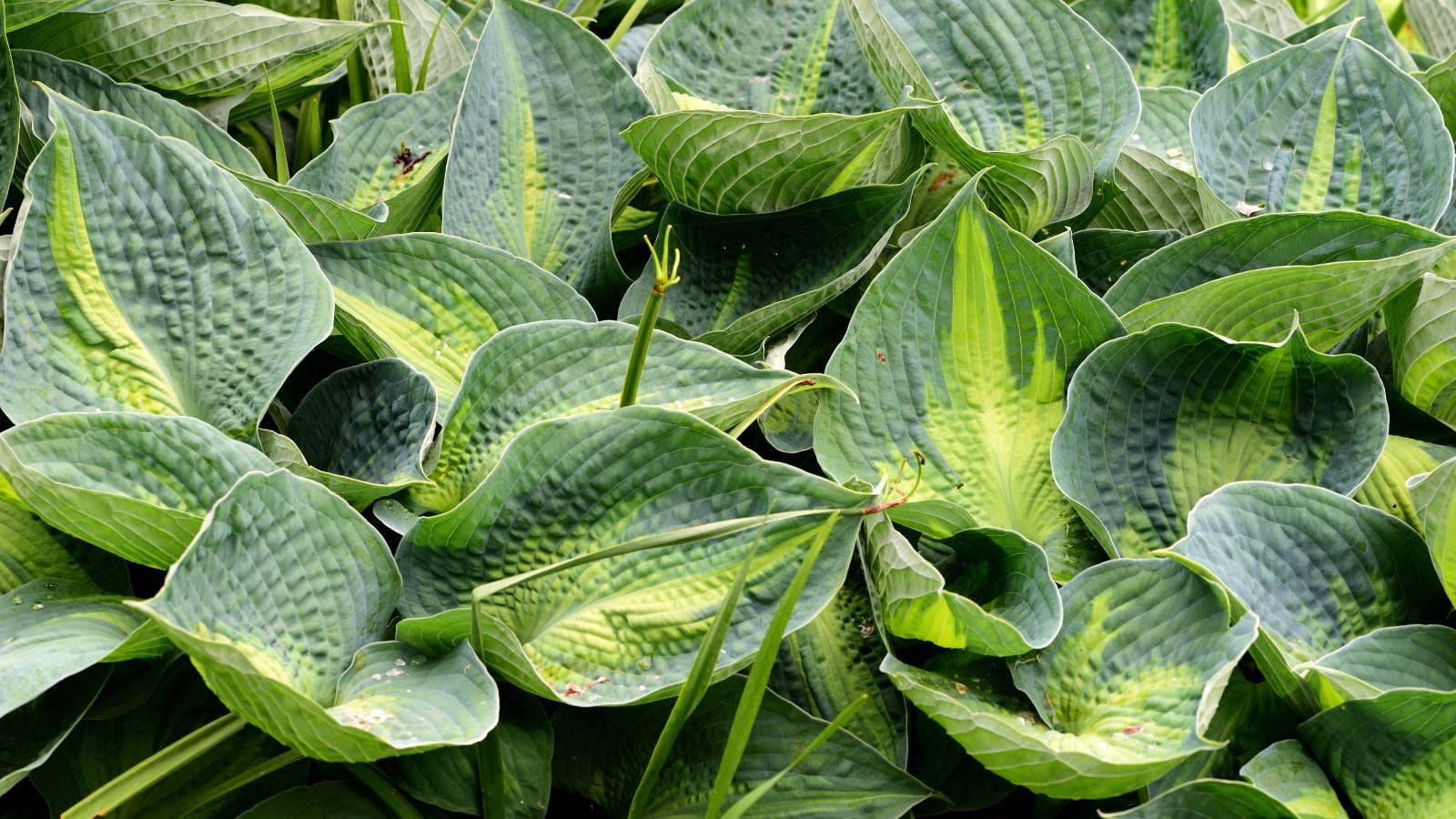
A moderate grower, ‘Rhino Hide’ is a real stunner in the garden. Its leaves are bordered in deep blue-green and have a chartreuse center. The flowers of this slug-resistant hosta are bright white, with no purple. This is a medium to large-sized hosta with highly cupped and puckered foliage. It’s a common variety you will find in most stores that sell other hostas.
True to its name, this variety has some of the thickest leaves of any other in its category. If you have room for its one to two-foot height, and two to three-foot spread, include this one in your shady or woodland garden. It will not disappoint you.
Whirling Dervish

|
|
botanical name Hosta ‘Whirling Dervish’ |
|---|---|
|
|
sun requirements Partial to full shade |
|
|
height 15-22″ |
|
|
hardiness zones 3-8 |
Similar to our last slug-resistant hosta, ‘Whirling Dervish’ has bordered leaves with emerald green in the center. However, the borders are cream-colored, and the inner green is much darker than ‘Rhino Hide’. The leaves are also textured and very upright, providing a joyful feeling.
It has an English garden appeal about it that many growers will enjoy. In summer, tall, three-foot spikes form deeper purple buds which open to light lavender flowers. Its medium stature lends a striking visage to the shady areas where it’s planted. Because it’s so aesthetically precise, plant it in rows, among more monochrome plants.
Aqua Velva

|
|
botanical name Hosta ‘Aqua Velva’ |
|---|---|
|
|
sun requirements Partial to full shade |
|
|
height 28-30″ |
|
|
hardiness zones 3-9 |
If intensely-textured foliage and white flowers are what you need in your shady areas of the garden, ‘Aqua Velva’ is one option that will fill that niche nicely. Its leaves are a lovely spring green with an almost rippling surface. These leaves are thick, making it hard for slugs to do much damage.
‘Aqua Velva’ has thick, upright stems that make the foliage seem tiered. Its blooms are solely white, but they have a fragrance that others lack. It has its parentage to thank for that, as its origins are with ‘Blue Seedling’ (hybridized from ‘Polly Bishop’ x ‘Blue Lace’) and ‘Summer Fragrance’. This larger slug-resistant hosta is great in areas where you can accommodate its three-foot spread.
Dinner Mint
|
|
botanical name Hosta ‘Dinner Mint’ |
|---|---|
|
|
sun requirements Partial shade |
|
|
height 5-7″ |
|
|
hardiness zones 3-8 |
We end our list of slug-resistant hosta varieties with one of the cutest ones out there. ‘Dinner Mint’ is a ‘Lemontini’ sport hybridized by Mark Zillis and Mary Beth Vanous, two hosta experts. It was registered in 2011 and has been a garden favorite ever since. Its low height of only seven inches makes it adaptable to small and large spaces alike.
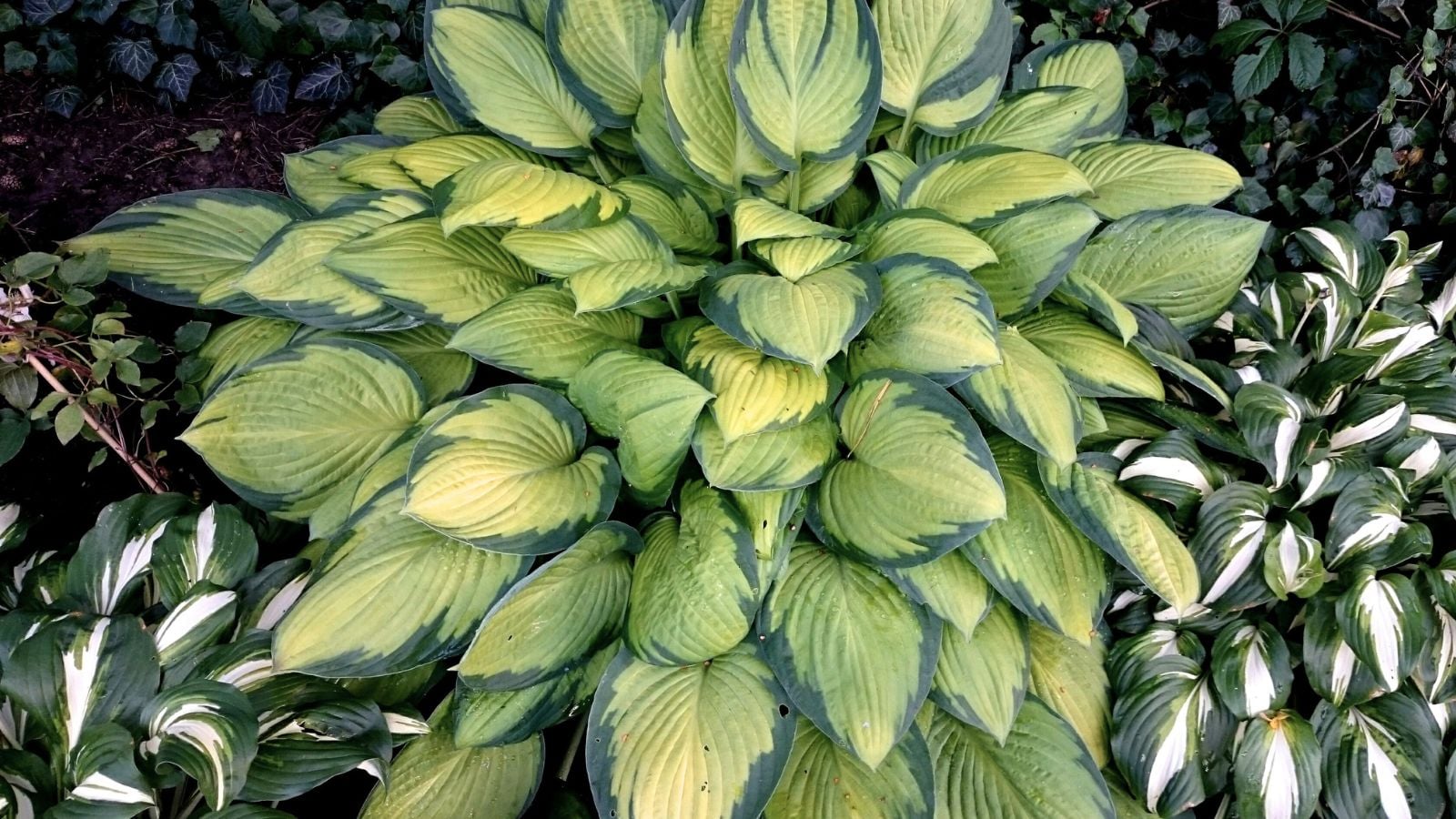
Its foliage is some of the most interesting out there compared to other hostas. The borders are solid blue-green, while the rest ranges from lime-green to golden yellow. At full maturity, this hosta really flourishes, forming dense mounds which produce purple-petaled blooms. It’s a true beauty you should at least witness once in your life.
