


All week, we’re revisiting the most popular stories of 2025, including this one from October.
Front gardens, stoops, driveways, and parking courts have the potential to spread cheer, absorb storm water, and harbor insects and birds. When there’s a clear design rationale at work, other people on the street will want to get on board. Here are some of our favorite ways to have a front garden that is more than “low-maintenance” (though it can be that, too). All the ideas are from our new book, Gardenista: The Low-Impact Garden.
Photography by Caitlin Atkinson.
Grow a sponge garden.
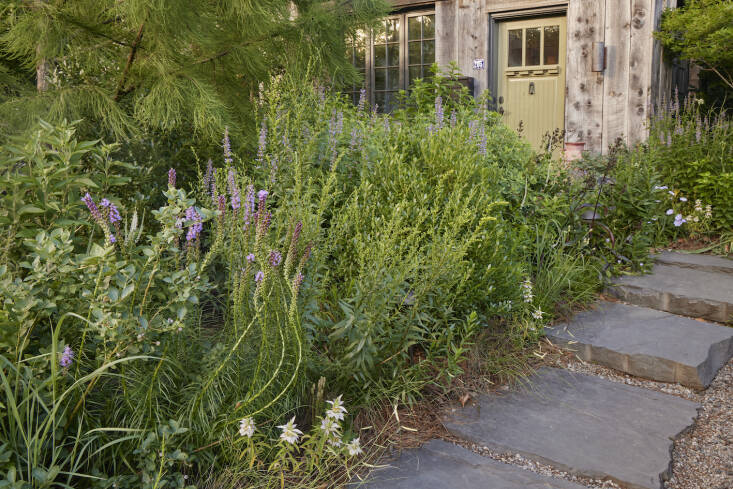
Jeff and Kayla removed their front lawn during their first year living in their house in Pennsylvania. Stormwater that used to flow over their compacted grass into the basement is now soaked up by closely planted perennials with mixed root profiles, and an absorbent swamp cypress.
Balance sharpness with softness.

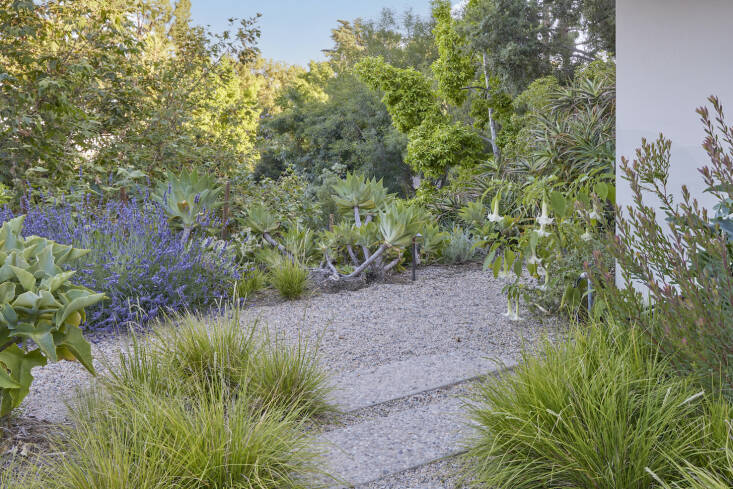
The sharp lines of this classic house are made even clearer, not from subtracting but by adding lively planting around the edges. This, in turn, is in dialogue with towering trees that seem to be held back by the immaculate walls. Loose symmetry on either side of the doorway adds more contrast, with a pair of Arbutus that refuse to be identical.
Re-wild the stoop.
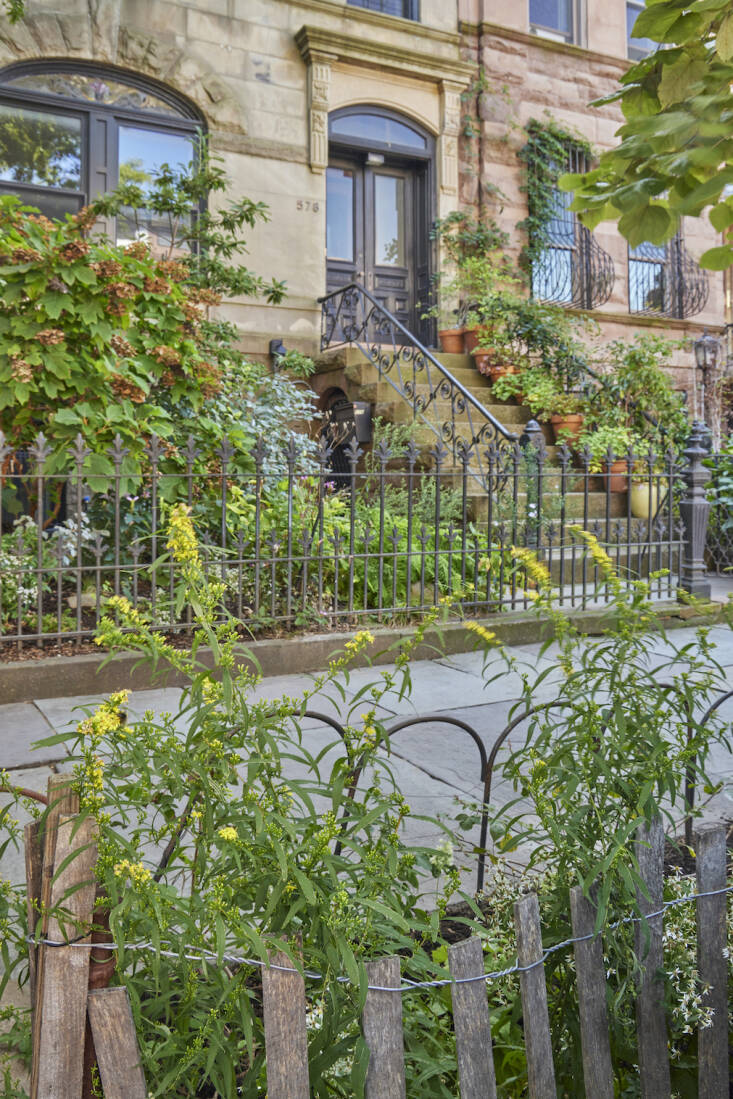
In pots on Rebecca’s stoop, long-lasting foliage of easygoing, northeastern perennials (Heuchera ‘Marmalade’ and Aquilegia canadensis) offers rest stops and shelter for small creatures. “Even in this tiny spot, it’s not hard to attract wildlife,” she says. And why let a tree pit go to waste? This one is fenced off with ad hoc railings and planted with tough natives that tolerate neglect as well as dogs. A sign directs dog owners’ attention to a couple of large rocks on the side, with the request, “Pee on me, not the tree.”
Say good-bye to mulch.
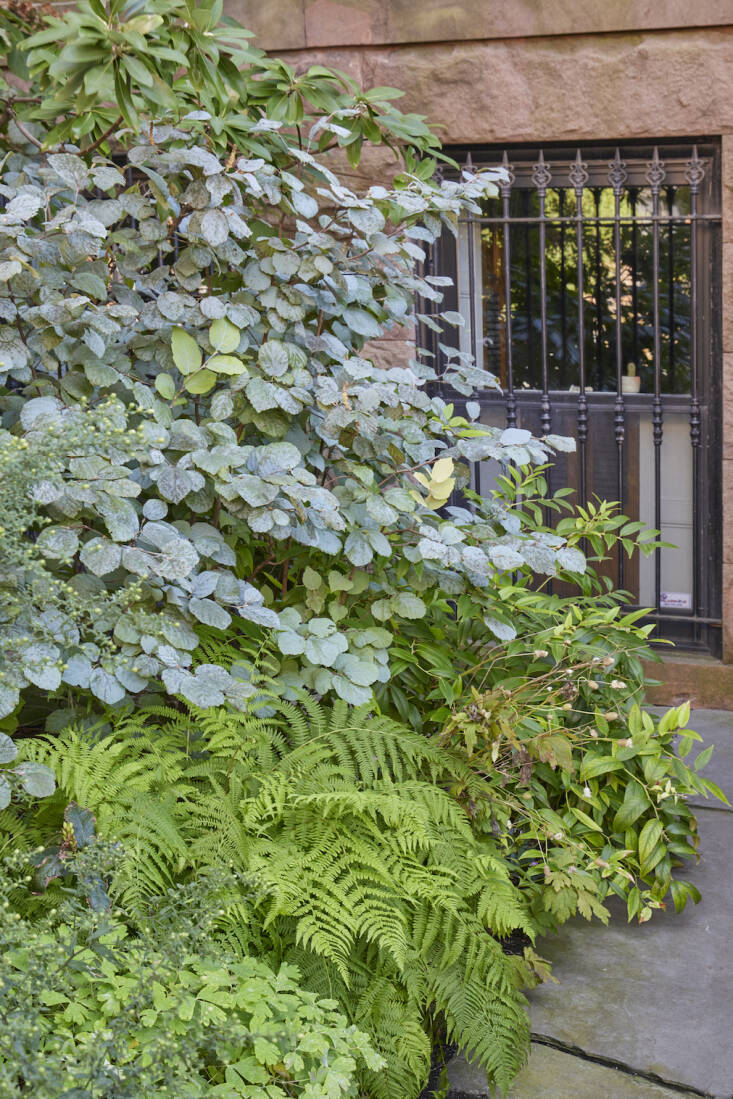
Rather than a desolate scene of straggly shrubs in bare earth, this basement view is of a mini Brooklyn forest. Layers of ground-covering plants, middle-story shrubs, and an airy magnolia make for an ecosystem that is self-cooling and sustaining. There is no need for mulch, dyed or otherwise, since the ground is protected from sun, and spent leaves feed the soil.
