


11. Jade Butterflies
‘Jade Butterflies’ is a compact Ginkgo biloba cultivar that performs well in urban locales, producing gorgeous butterfly-shaped leaves that turn yellow in autumn.
While the straight species, which hails from China, can reach up to 100 feet tall, this is one of the smaller ginkgo cultivars for your landscapereaching just six to 12 feet tall with a spread of three to nine feet.
You can grow this ginkgo in Zones 4 to 8 as long as you have full sun.
This deciduous species is adaptable to a wide range of soil types, even compacted soil, and both alkaline and acidic conditions.
‘Jade Butterflies’ makes a great choice as a small tree for an urban yard since it tolerates both pollution and heat.
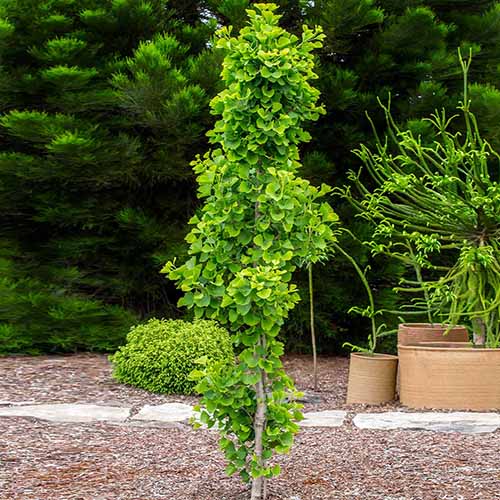
Ginkgo Biloba ‘Jade Butterflies’
Some gardeners avoid ginkgos because of the stinky and messy fruits the female trees produce, but since ‘Jade Butterflies’ is a male selection, you won’t have to worry about smells or fruit cleanup.
Two- to three-foot ‘Jade Butterfly’ saplings are available at Fast Growing Trees.
Check out our guide to growing ginkgo here.
12. Japanese Maple
One of the most popular small trees is the Japanese maple (Acer palmatum)a species native to Asia that has numerous beautiful cultivars.
In general these deciduous plants reach up to 25 feet tall and wide, and have lobed, palm-shaped leaves in gorgeous shades of yellow, green, red, and purple.
They also put on a stunning show with their fall colors.
Gardeners with urban yards in Zones 5 to 8 can grow Japanese maples in dappled sunlight as long as they have well-draining soil that is rich in organic matter and on the moist side.
While Japanese maples are perfect for smaller spaces, the verdict is still out on how tolerant of pollution they are.
So if you live in an area with a lot of air pollution, you may want to reach for an alternative, like hedge maple (A. campestre).
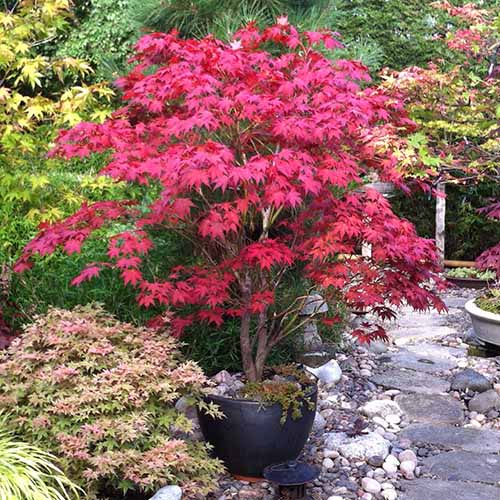
On the other hand, for those ready to choose a Japanese maple variety‘Bloodgood,’ is one of the best cultivars – it reaches 20 feet tall and wide, and has red leaves and a rounded shape.
You can purchase ‘Bloodgood’ Japanese maple saplings of various sizes at Fast Growing Trees.
Learn how to grow and care for ‘Bloodgood’ Japanese maple trees here.
13. The Dogwood thing
If you’re looking for a small flowering tree that blooms in late spring, consider Kousa dogwood (Cornus kousa).
These deciduous dogwood trees are native to Asia and won’t grow more than 30 feet tall and wide. They bear showy white to pink blooms, and pink or red edible fruits.
Expect showy fall colors in shades of red or purple from these wildlife-friendly specimens.
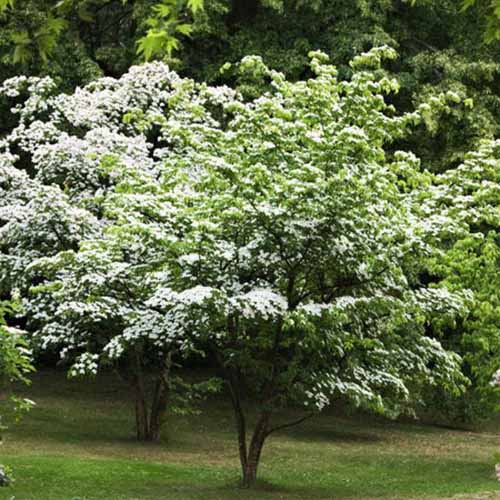
Kousa dogwoods are somewhat pollution tolerant, hardy in Zones 5 to 8, need full sun or part shade, and acidic, well-draining soil.
You’ll find two- to three-foot kousa dogwood saplings available for purchase at Nature Hills Nursery.
Learn how to grow and care for kousa dogwoods here.
14. Olive
If you live in Zones 8 to 10, you can add olives (European oils) to your list of options that will thrive in some urban yards, however, avoid planting them in areas of high air pollution.
These evergreens, native to the Mediterranean, Africa, and Asia, reach up to 30 feet tall and 15 feet wide, though some varieties are more compact.
In addition to their silvery evergreen foliage, they bear the edible fruits that you may best recognize when stuffed with a slice of pimento.
Olive trees require full sun and well-draining soil to thrive, and are drought tolerant.
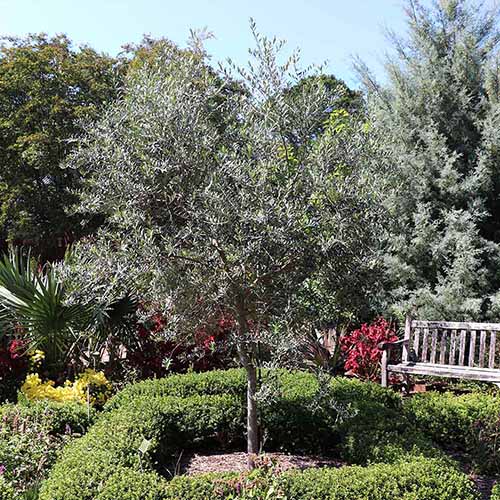
This compact cultivar reaches just 20 feet tall and 12 feet wide. The fruits can be used for brining or for pressing into oil, an added bonus in a small tree.
‘Arbequina’ olive saplings of multiple sizes are available at Fast Growing Trees.
Our guide to growing olives can get you started.
15. Red Buckeye
Red buckeye (Aesculus pavia) is a deer-resistant plant that bears showy, large, red flower clusters that will attract hummingbirds and other pollinators to your urban yard.
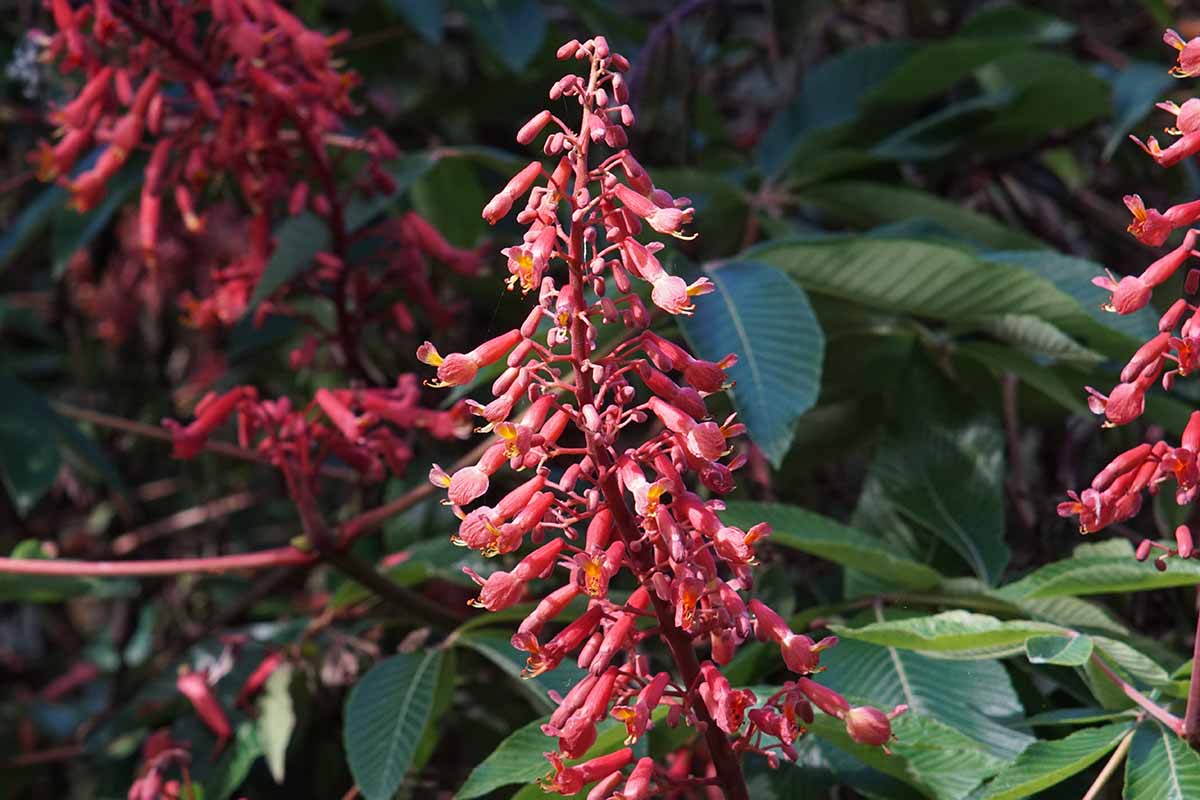
Also known by the colorful common names firecracker plant and scarlet buckeye, this deciduous species reaches no more than 25 feet tall and 20 feet wide at maturity.
It has a multi-trunked, rounded growth habit, and large, compound leaves that turn beautiful shades of red in fall.
Red buckeye is hardy in Zones 4 to 8, where it flourishes in partial shade and prefers moist soil with good drainage.
