


As a member of the Fabaceae or legume family, it fixes essential nitrogen into the soil when the crop is turned over to decompose as green manure.
You can read more about cover cropping here.
Toxicity
Popcorn cassia shares its purgative chemistry with medicinal senna, S. alexandrinathe species used in over-the-counter laxatives, but it is not a safe substitute.
In spite of it being used in some traditional medicines, this species is toxic and ingesting any part of the plant can cause violent vomiting and diarrhea.
Now, let’s get growing!
How to Grow
Suitable home gardening environments for popcorn cassia have a climate similar to the tropical savannas of central and eastern Africa, where there is ample rainfall, high humidity, and average temperatures in the 77 to 86°F range.
Light
A full sun placement, or six hours of direct sunlight per day, is essential for the production of lush foliage and robust flowers.
Soil
The ideal soil is organically rich, consistently moist, and exceptionally well-draining. The pH should be in the 6.5 to 7.5 range.
For container gardening, select a fertile, moisture-retentive, well-draining general purpose potting soil.
Water
Popcorn cassia has high moisture needs.
Check plants weekly, more often during a dry spell, and water annuals and first year perennials deeply when the top one to two inches of soil are dry.
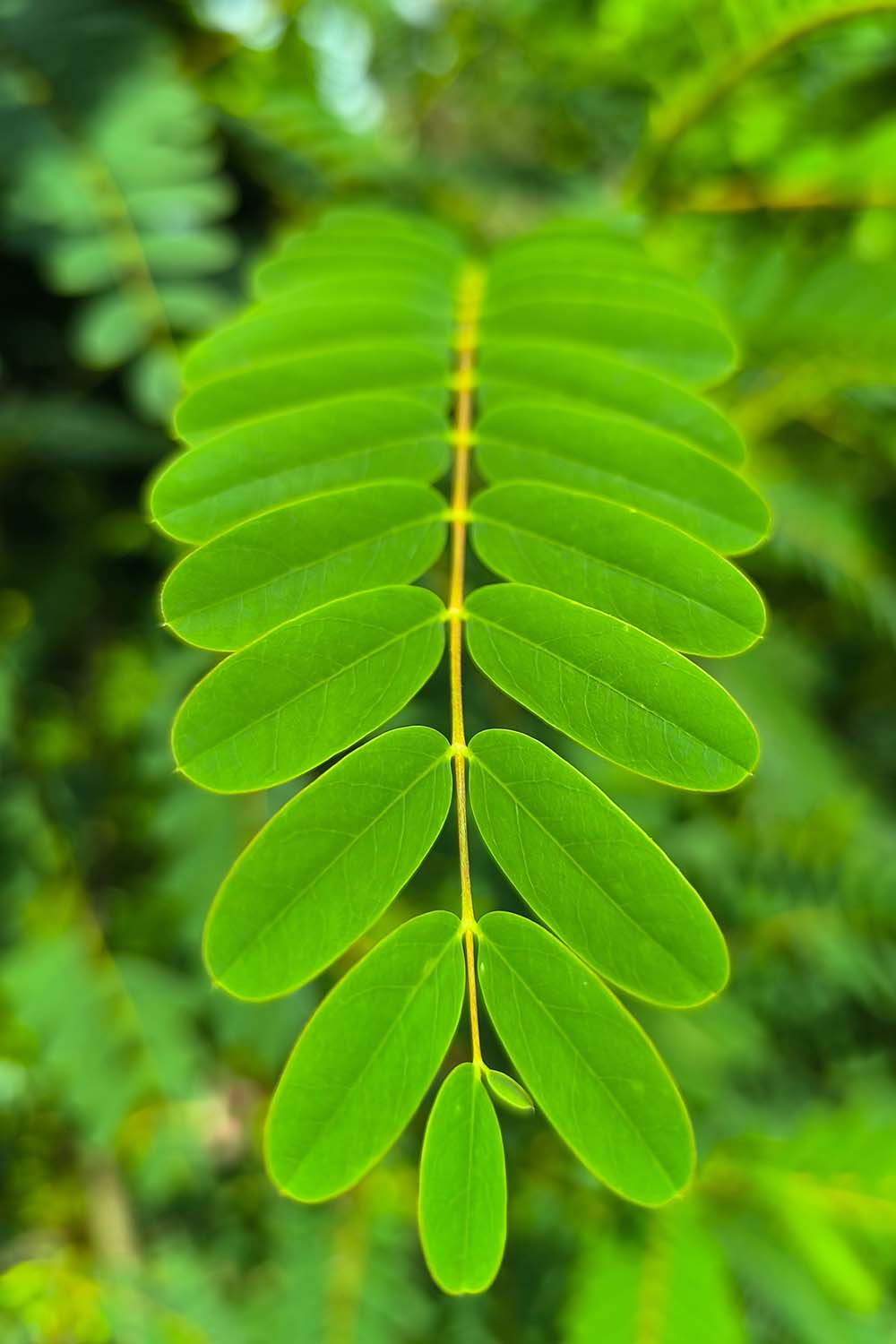
S. didymobotrya has a long tap root, enabling it to reach deep into the soil for water. Once established, supplemental moisture needs are reduced, unless there is a drought.
You may find it necessary to water container plants daily during peak summer heat, as potting soil dries quicker than ground soil.
In the absence of rain, continue to water annuals until late summer, and perennials until late fall to maintain root strength.
Fertilizer
Popcorn cassia is a heavy feeder and needs a lot of nutrition to produce lush foliage and vibrant flowers.
As such, it requires not only organically rich soil, but supplemental fertilizer. Choose a product with a balanced N-P-K ratio, such as 10-10-10.
Avoid products that are high in nitrogen (N), as they generally produce an excess of leaves at the expense of blossoms.
