


If you want to grow fruit trees, you probably assume you need a full garden. A big one, ideally, with room for the trees to spread and years of patience before you’d see a single apple. But once you start growing fruit trees in pots, you’ll realize that assumption isn’t quite right.
Although you’ll see fewer fruits in small spaces, a container orchard doesn’t have to be a compromise. It’s just a different approach, and in some ways a better one, depending on what you’re working with.
In tough areas, you get to control the soil. You can move trees to chase the sun or dodge a late frost. And if you don’t have anywhere to plant in soil at all, you can still grow your favorite fruits. Whether you have a balcony, a courtyard, a small patio, or just a strip of concrete that gets good light, you have enough space to grow fruit.
Chicago Hardy Fig Tree

Cold Hardy Red Pomegranate
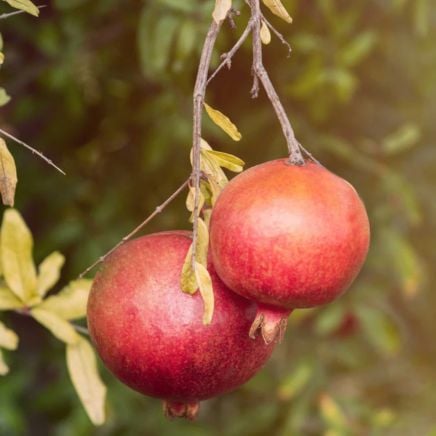
Cold Hardy Red Pomegranate
Improved Meyer Lemon Bush

Improved Meyer Lemon Bush
Analyze the Space
Before you buy a single tree for your container orchard, spend some time watching how light moves through your space over the course of a day. Most fruit trees need at least six hours of direct sun. Four to five hours can work for some, but you’ll get less fruit and the trees will be more prone to disease.
South-facing spots are ideal in most of the country. East-facing works too, especially for trees that appreciate morning sun and some afternoon relief from heat.
Wind is the other factor people overlook. A balcony eight stories up or an exposed rooftop might get plenty of sun but also gets hammered by wind that dries out pots fast and can physically damage branches. If your space is windy, position containers against a wall or use a windbreak.
Think about weight, too. A massive pot filled with soil and a tree is heavy, especially after watering. If your space is a balcony or elevated deck, check the weight limits before loading it up with multiple large containers.
Choose Your Trees
Dwarf fruit trees are the foundation of a container orchard. These are standard fruit varieties grafted onto rootstocks that limit the tree’s size while keeping the fruit full-sized.
But the single most important thing when choosing container trees is whether they need a pollination partner. Some fruit trees are self-fertile and will produce fruit on their own. Others need a second compatible variety nearby for cross-pollination. If you only have room for one tree, make sure it’s self-fertile or you’ll get flowers and no fruit.
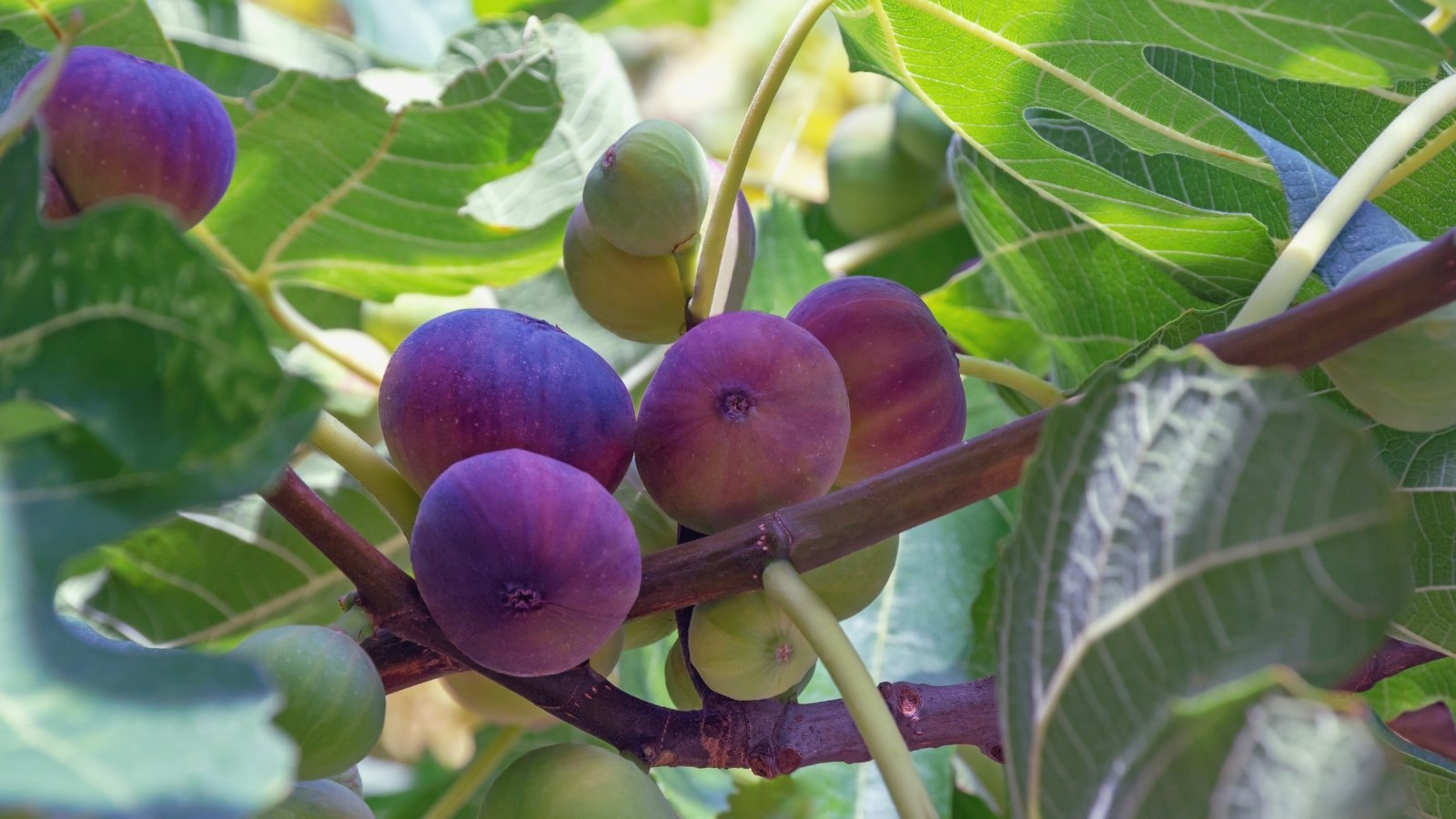
For a small container orchard, I’d focus on trees that produce reliably in pots over the long term. Improved Meyer lemon is one of the best performers in containers and can fruit for a decade or more with proper care. Figs do surprisingly well in pots (they actually fruit better with restricted roots). Dwarf apples on the right rootstock can produce for years. Blueberries aren’t trees, but they’re compact, self-contained, and produce generously in pots if you give them acidic soil.
If you’re in a climate where winter temperatures drop below freezing, factor in which trees will need to come indoors or into a sheltered spot. Citrus can’t stay outside in cold winters. Apples and figs, on the other hand, need a period of winter chill and are better left outdoors (with some protection for the roots).
Find Containers

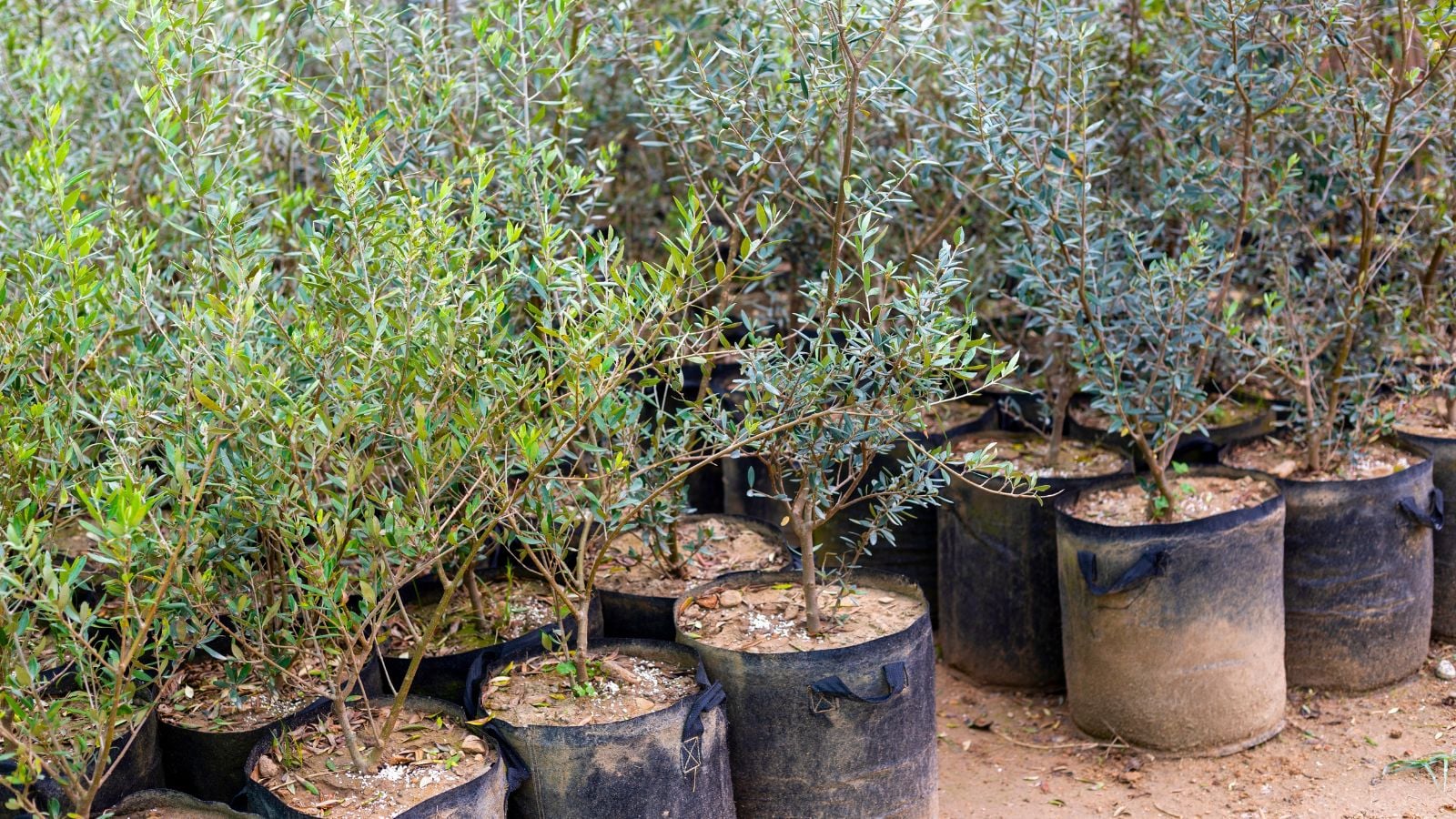
When it comes to containers, bigger is better. Up to a point. A container that’s too small dries out constantly, limits root growth, and stresses the tree. A container that’s too large is impossible to move, which is essential to consider if you’re not keeping the tree in one spot year-round.
Plastic pots are lightweight, cheap, and hold moisture well, which means less frequent watering. Ceramic and terracotta are heavier (good for stability in wind, bad for moving), more attractive, and more porous, so the soil dries out faster.
Fabric grow bags are another option. They’re lightweight, promote good air circulation around roots, and prevent circling roots, but they dry out quickly and aren’t the most attractive. For a patio or balcony where appearance matters, a glazed ceramic or a good-quality plastic pot with a saucer underneath is a reasonable middle ground.
Whatever you choose, drainage holes are non-negotiable. Fruit trees in waterlogged soil develop root rot fast.
Make Your Soil Mix

A good starting mix for a container orchard is roughly equal parts quality potting soil, perlite, and coco coir. The potting soil provides nutrients and moisture retention. The perlite keeps things draining well so roots can breathe. The coir adds structure and prevents the mix from collapsing into a dense brick over time.
For acid-loving plants like blueberries and citrus, look for a citrus-specific potting soil with a lower pH. Most other fruit trees prefer a slightly acidic to neutral pH, which a standard quality potting mix will provide.
The mix will break down over time. Plan to top-dress with fresh compost annually and refresh the top few inches of soil each spring. The tree can’t sit in the same soil mix forever without any adjustments.
Plant
Late winter or spring is the best time to plant container fruit trees in most climates. The tree has a full growing season ahead to establish roots before it has to deal with winter.
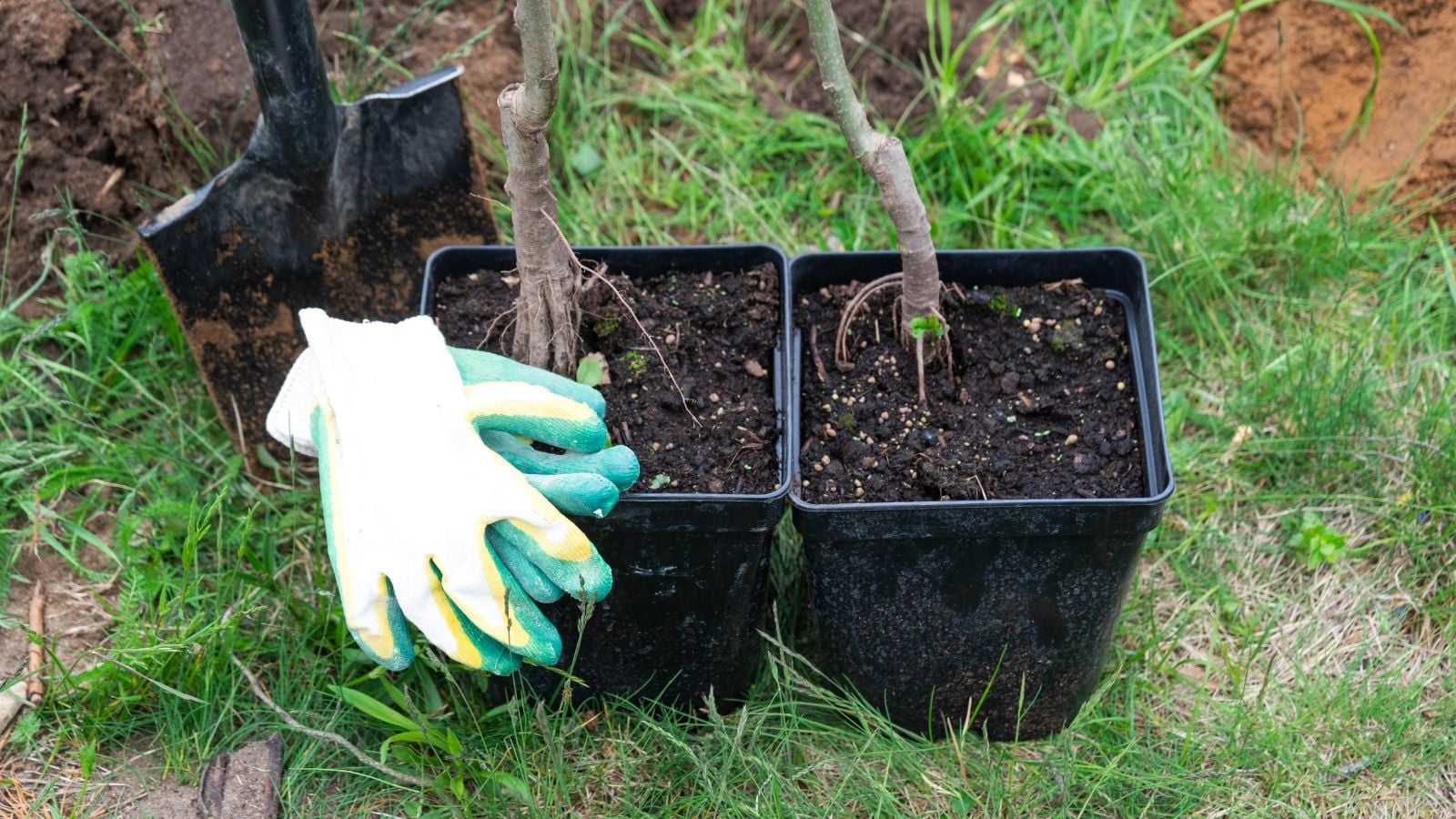
If you’re planting bare-root trees, soak the roots for an hour or two before potting up. For container-grown nursery stock, gently tease out any circling roots before placing the tree in its new pot.
Fill around the roots with your soil mix, firming gently as you go to eliminate air pockets. Water thoroughly until it runs from the drainage holes. The soil will settle after watering, so add more mix if needed to bring the level back up. Leave about an inch of space between the soil surface and the rim of the pot to make watering easier.
If your tree needs a stake for support (young trees often do), add it at planting time so you don’t damage roots by driving it in later. A single bamboo stake tied loosely with soft twine is usually enough for the first year or two.
Maintenance
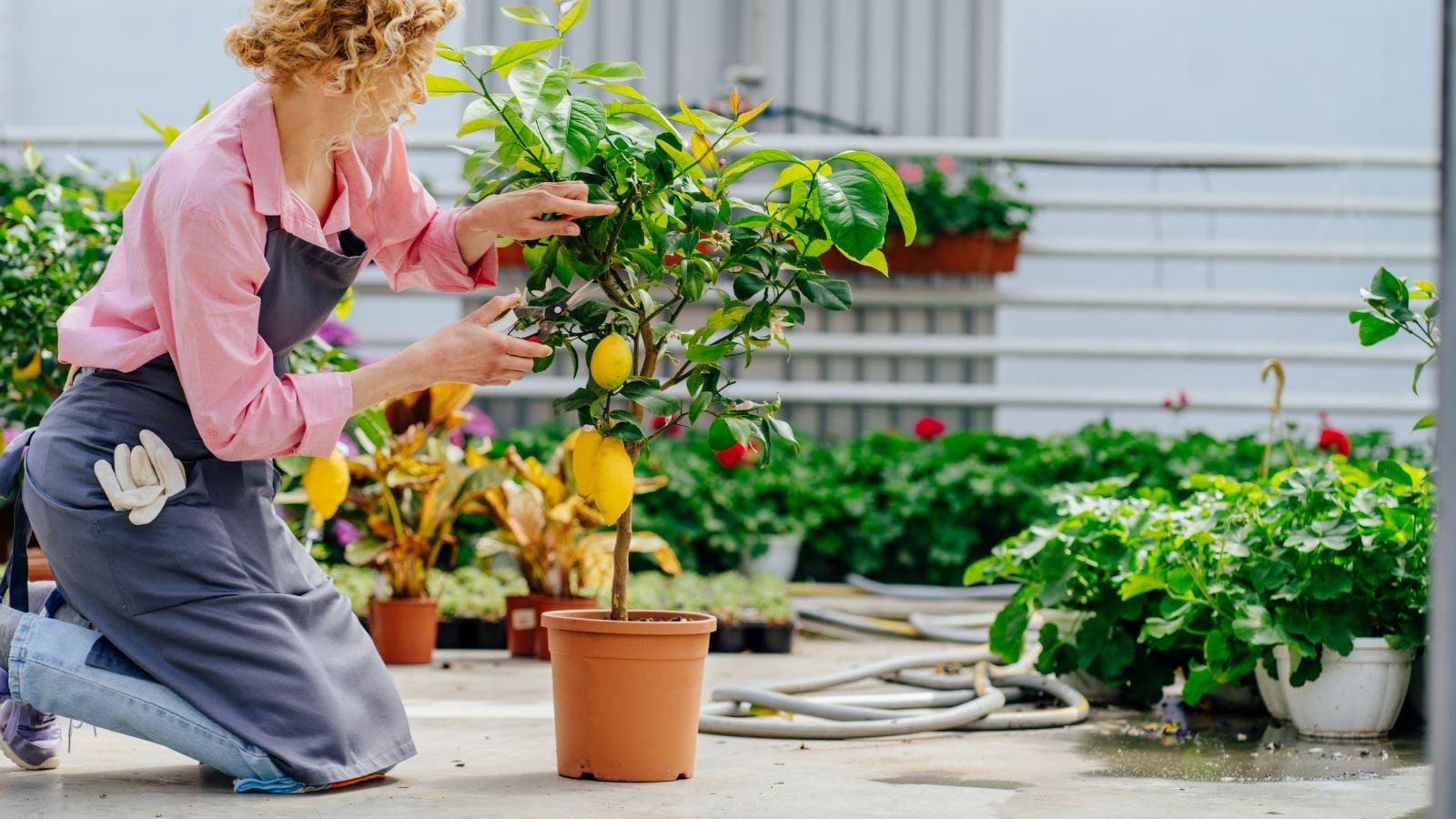
Container fruit trees need more attention than in-ground trees. The roots are confined, the soil volume is limited, and there’s no deeper ground to buffer against heat, cold, or drought. That’s the trade-off for growing fruit in a small space.
Watering is the biggest ongoing task. In summer, large pots may need water every day or two, and smaller pots or fabric bags may need it more often. Check by pushing your finger into the soil. If the top inch is dry, water.
A drip system on a timer takes this task off your hands and keeps moisture consistent, which matters for fruit quality. Inconsistent watering (dry, then soaked, then dry again) causes fruit to split or drop.
Feeding is the second priority. Container trees can’t forage for nutrients the way in-ground trees can. Feed with a balanced slow-release fertilizer in early spring, and supplement with liquid feed every two to four weeks during the growing season. Citrus trees in particular are heavy feeders and benefit from a citrus-specific fertilizer that includes micronutrients like iron.
Pruning keeps container trees manageable and productive. For most dwarf trees, an annual prune in late winter (while the tree is dormant) to remove dead wood, crossing branches, and any growth that’s reaching beyond what the container can support is enough. Citrus can be lightly shaped year-round.
Beyond that, all you need to do is look forward to your harvest. You may not be able to pick as many fruits as you would letting the tree grow unhindered, but they will be just as delicious.
