


But it’s definitely more of a climbing vine, and it’s more likely to flower profusely under a variety of conditions.
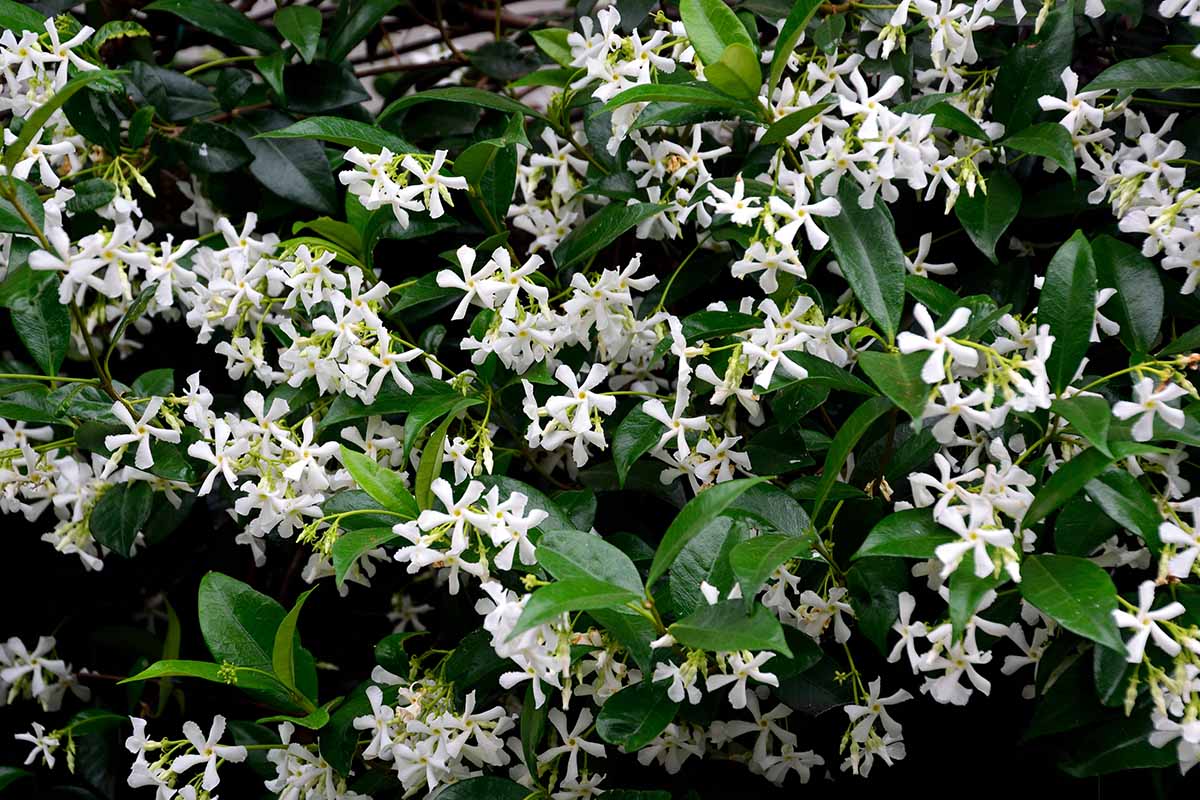
The genus from which Asiatic jasmine borrowed its name, Jasminumincludes about 200 shrubs and vines in the olive (Oleaceae) family that are native to Eurasia and Oceania.
We explore some of the most popular varieties here.
Common jasmine, J. officinaleis native to Iran and is beloved for its attractive and fragrant flowers.
How to Grow
T. asiaticum will tolerate a wide range of soil types, as long as it is well-draining and has a pH of 5.5 to 7.0.
Mine grows perfectly well in rocky clay soil. It will grow faster and more aggressively in soils with a higher percentage of organic content.
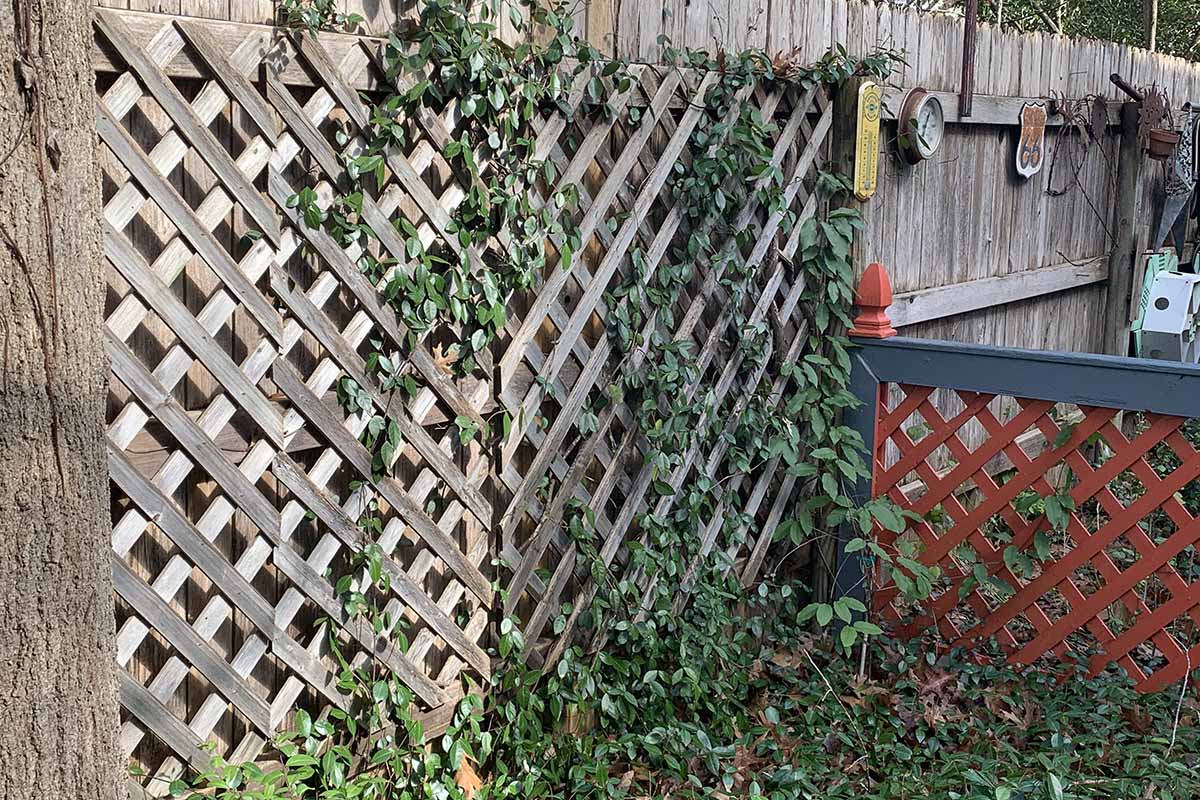
You can plant in areas that get full sun, part sun, or full shade.
Once established, these vines are fairly drought tolerant.
If you see some wilting during a long dry spell – particularly if planted in full sun – simply give the plants a good shower, and they’ll perk back up with no long-term ill effects.
The only time I water mine is in July and August, when it’s deathly hot and dry.
If you want to fertilize, apply an NPK 10-10-10 fertilizer at the start of the active growing season. I have never fertilized mine and they do very well.
Asian jasmine is most often used as a ground cover, though some of the cultivars that are available make attractive additions to hanging planters.
Where to Buy
While most of the T. asiaticum I see growing around Austin is just the generic, open-pollinated naturalized type, a few crafty breeders have developed some interesting cultivars.
For example, T. asiaticum ‘HOSNS,’ also known as Snow-N-Summer™, is a cultivar developed by Monrovia.
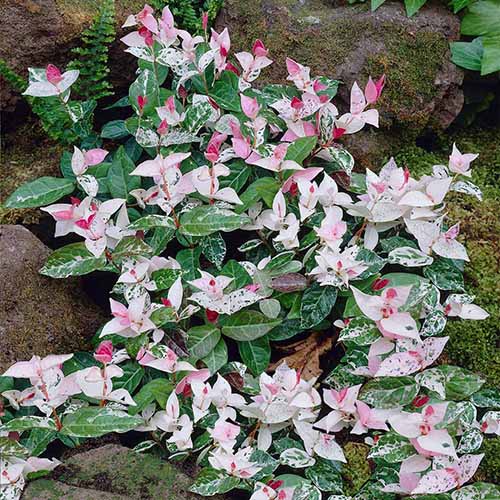
Its leaves start out pink, then turn white, then mature to variegated white and green. The plant produces small, tubular, creamy yellow flowers that are fragrant.
You can find ‘Snow-N-Summer’ in one-gallon pots available from Fast Growing Trees.
From Japan comes T. asiaticum ‘Kiifu Chirimen,’ a dwarf variegated Asian jasmine whose small leaves grow in copper-bronze and mature to pewter-silvery green.
T. asiaticum ‘Gold Brocade’ or ‘Ojon Nishiki’ is another cultivar from Japan. It grows variegated foliage that emerges in red and orange, and then matures to gold and deep green.
Maintenance
The only maintenance Asiatic jasmine really needs is pruning. It can spread rather assertively, and you may find it escaping its prescribed boundaries with abandon.
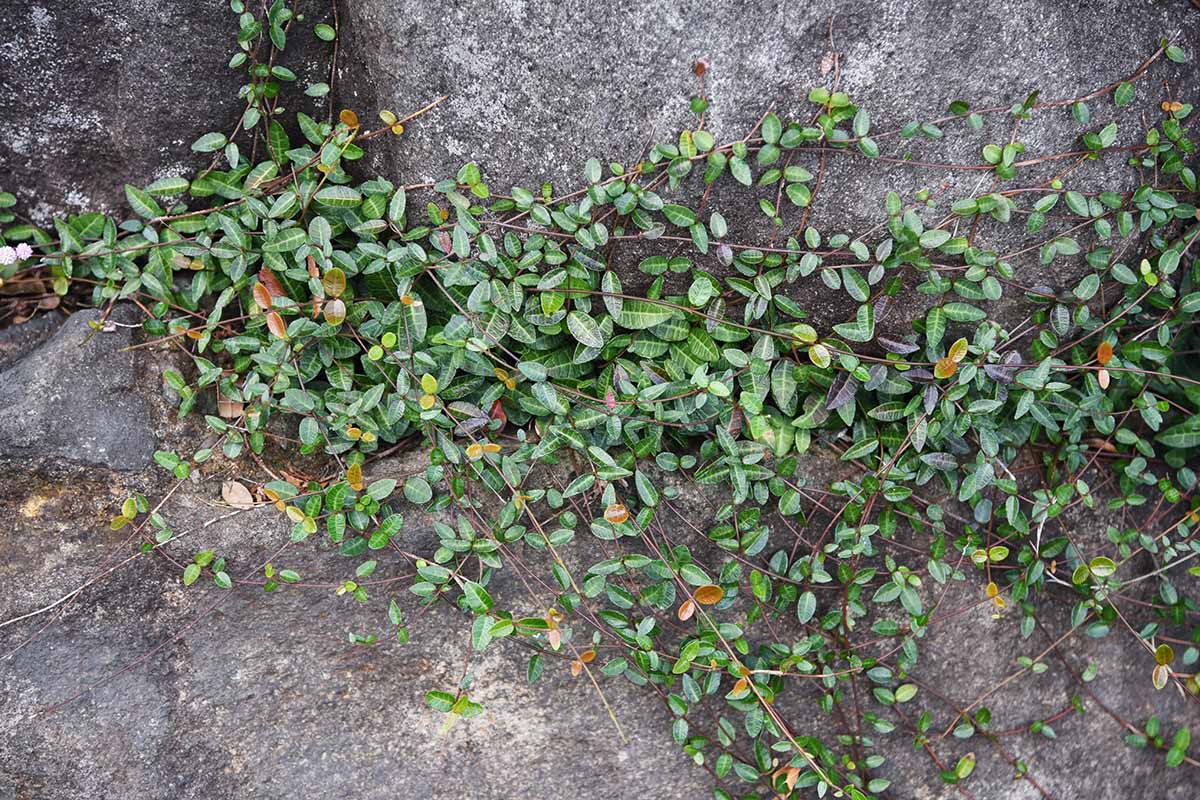
No matter. Just get out the string trimmer and whack away. It doesn’t mind a bit.
You can, of course, simply use pruners. But that can get tedious if you have a large area of this plant.
