


5. Black-Eyed Susan
This cottage garden favorite is one flowering perennial that marauding rabbits will pass over.
Plus, it provides those appealing daisy-type golden or deep red flowers in average soil.
It will need full sun and won’t grow well in containers, so plan to plant it in raised beds or in the ground.
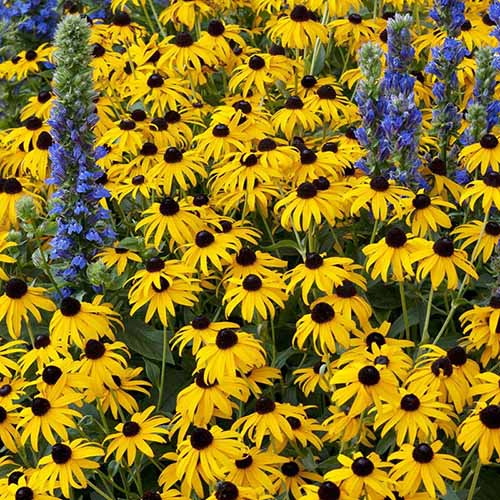
Otherwise, black-eyed Susans (Rudbeckia hirta) are low maintenance and will tolerate drought. They’re hardy in Zones 3 to 9.
You can find black-eyed Susan seeds in packets of various sizes available at Eden Brothers.
Learn more about growing black-eyed Susans in this guide.
6. Catmint
Catnip’s more subdued cousin catmint (Nepeta cataria) grows in average soil and produces subtly scented gray-green leaves followed by blue, pink, or white blooms.
They’ll keep coming throughout the summer if you cut it back mid-season.
This easygoing plant will grow in full sun to part shade and just about any type of well-draining soil. Average is fine!
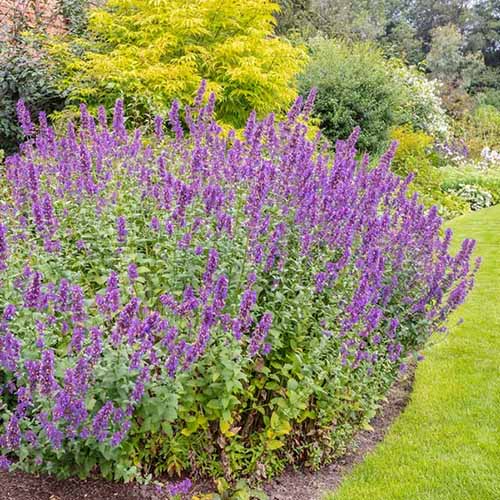
This perennial gets about a foot tall and is hardy in Zones 3-9.
Catmint seeds are available from Eden Brothers in various packet sizes.
Read more about growing catmint here.
7. Chives
Chives (Allium schoenoprasum) are members of the onion family that includes garlic, leeks, and spring onions.
These are a secret weapon against bunnies who are treating your garden like their personal salad bowl.
Like the ornamental Alliums described above, chives make a good flower garden addition, too, since they boast beautiful light purple flowering pom-poms late in the season.
They’re also tasty perennials. This is probably the only natural, non-toxic pest deterrent that tastes great as a topping on baked potatoes or baked into cheddar biscuits.
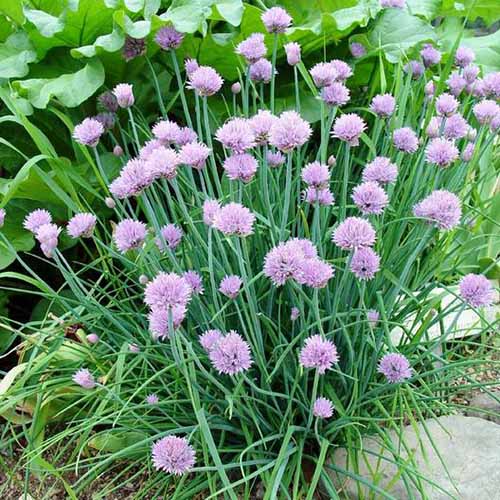
They grow best in fertile well-draining soil and full sun, though they’ll also persevere in part shade. And they’ll usually make a comeback if you let them reseed.
You can find common chive seeds (A. schoenoprasum) in various packet sizes available at Eden Brothers.
Check out our guide to learn more about growing chives.
8. Foxglove
You’ll be depriving certain hopping pests of dinner, but you won’t be missing out on drama or beauty when you grow these showy 18-inch-and-up spikes of pink, rose, white, and yellow flowers.
They’ll start busting out all over in June and continue the show through late summer.
It used to be that all foxgloves (Digitalis purpurea) were biennials, so they didn’t bloom until the second year after planting. Now, some new varieties have been bred to flower in year one.
All types of foxgloves are fairly easy to grow if you have moist, well-drained soil. Remember to keep them well-watered during dry spells.
They like part sun but are also a solid choice as a perennial for the shade garden.
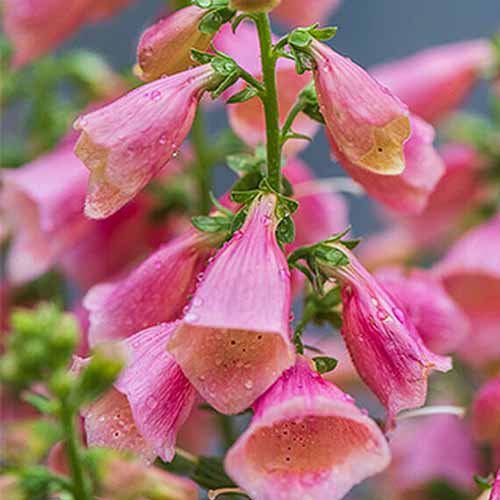
Most importantly, don’t plant foxglove anywhere young children will encounter them. They are poisonous!
Foxgloves are hardy in Zones 4 to 10.
You can find ‘Arctic Fox’ plants available at Burpee or for mixed color seeds bred to bloom the first year, try ‘Foxy,’ also from Burpee.
Read more about growing foxglove here.
9. Hardy Geranium
Here’s another flowering plant that deters nibblers with its scent.
Hardy geraniums, aka cranesbills (Geranium spp.), are not to be confused with those annual red geraniums that are actually a close relative, known botanically as Pelargonium.
Different varieties of hardy geraniums bloom in shades of blue, pink, purple, and white.
They produce mounds of dark green foliage and vibrant colored, five-petaled flowers. The leaves act as a deterrent with their subtle lemony scent.
They’re a great choice for native plant gardens, and areas with light shade or full morning sun.
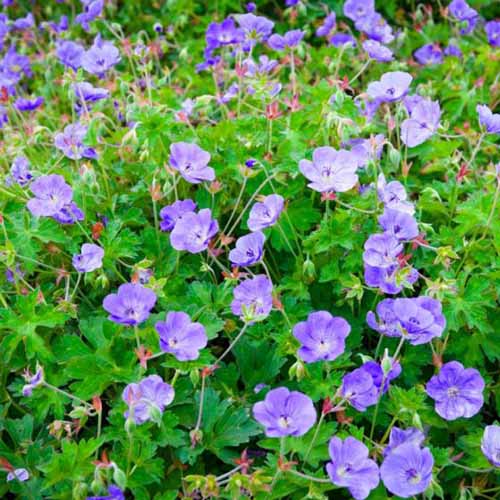
One of the many reasons I love hardy geraniums is that you can readily grow more by rooting cuttings in water.
You’ll be rewarded with a long-lasting perennial that blooms from late spring to early fall.
Hardy geranium cultivars like ‘Rozanne’ are available in #1 containers from Nature Hills Nursery.
Learn more about cultivating and propagating cranesbill geraniums in our growing guide.
10. Oregano
The tasty herb with its tiny pink or white flowers is a culinary delight, just not to rabbits.
A perennial, oregano (Oregano vulgaris) grows in average soil and tolerates drought and heat. It will need full sun to do its best. This summer favorite is hardy in Zones 5 to 10.
Plant oregano along the ground and save Thumper and Bugs’ favorites – like tender young petunias – for planting in raised beds or hanging baskets.
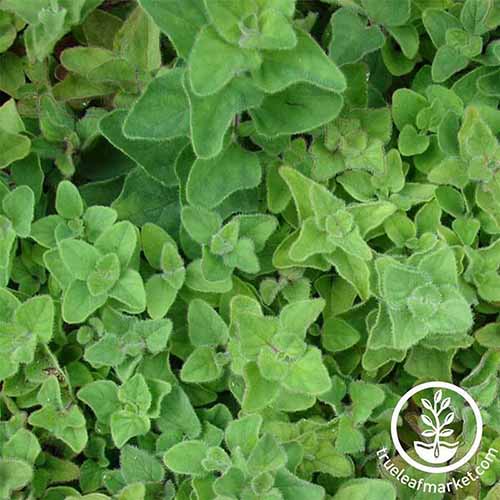
Greek oregano seeds are available in various packet sizes from True Leaf Market.
Check out our Greek oregano growing guide here.
11. Salvia
Our cute hopping buddies tend to leave this cheerful flowering plant alone, maybe because of its scent.
Salvia is a genus in the mint (Lamiaceae) familyso its aroma will probably be just fine for you.
It’s a handy option if you live where it’s hot or dry but still want brilliant color. In colder climes, salvia is also known for its chill tolerance.
And you’re bound to find at least one variety that suits you. Salvia can be perennial or annual, and some types are semi-woody sub-shrubs or ground covers.
If you’ve already planted your garden, you can find complementary salvia varieties in colors like red, purple, and blue that grow from one to five feet tall, depending on your selection.

‘Red Hot Sally II’ salvia seeds are available from True Leaf Market in a variety of packet sizes.
Take a look at our growing guide for the A to Z steps of growing this rabbit-resistant beauty.
12. Yarrow
This cottage garden, dried-flower, and bouquet favorite is also the rabbit’s least favorite. A win-win!
Yarrow (Achillea millefolium) is a drought resistant perennial that requires full sun and well-drained soil, and it grows best in Zones 3 to 9.
It’s dependable, long-blooming, and available in shades of pink, salmon, orange, red, white, and yellow, whatever you need.
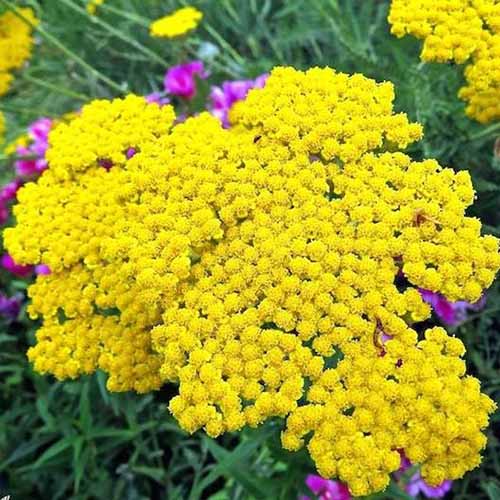
Gold yarrow seeds are available by the packet or in bulk from Eden Brothers.
Find detailed information about growing yarrow in our guide.
And revel in the possibilities from our list of hardy yarrow cultivars to grow. How about neon yellow?
13. Zinnia
These bright, cheery annuals are easy to grow in full sun. They come in a variety of sizes, from dwarf miniatures to those that grow four or five feet tall.
And they offer plenty of color options, from a pretty pastel pink to neon green.
My favorites are cactus zinnias (Zinnia elegans), which are mammoth and arty. When they’re flowering, I like to keep a single bloom in a bud vase on my bathroom vanity.
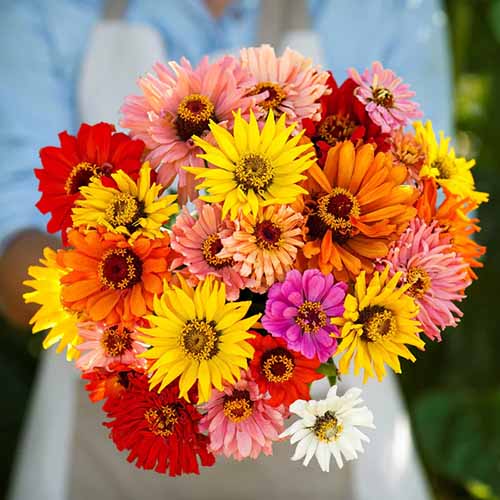
To me, they look like brightly colored mini haystacks. Instant cheer!
Super Cactus giant mix is available from Eden Brothersin several packet sizes.
Learn more about growing zinnia flowers here.
Hop On Down the Trail, Nibbling Bunnies!
Remember, there’s always a slight risk that rabbits will find some flowering plant in your garden to be to their taste.
For one thing, they’re constantly on the run from predators, so when they pause to eat, they’re happiest to get concentrated nutrition from those heavily fertilized bedding plants you’ve just purchased and planted.
They also like the tender sprouts of your perennials or flowering vegetables. If you’re able to keep them away with fences or other barriers while your plants are small and appealing, that’s a good strategy.
Also be extra cautious and protect young plants, woody shrubs, and even the trees that have delicious new growth, during times when wild food isn’t available for whatever reason.
Happily, a combination of all these strategies can usually make it possible to minimize or eliminate damage from these cute little creatures.
I have found that gardeners and even researchers in different areas have different ideas as to which flowering plants are rabbit-resistant. So be sure to experiment if you’re having trouble.
Let us know in the comments below if you’ve hit on a flower that seems impervious to furry little marauders with big ears, quivering whiskers, and wide eyes!
And if all this info about picking flowering plants has you in garden planning mode, read these other helpful guides next:
