


Soil
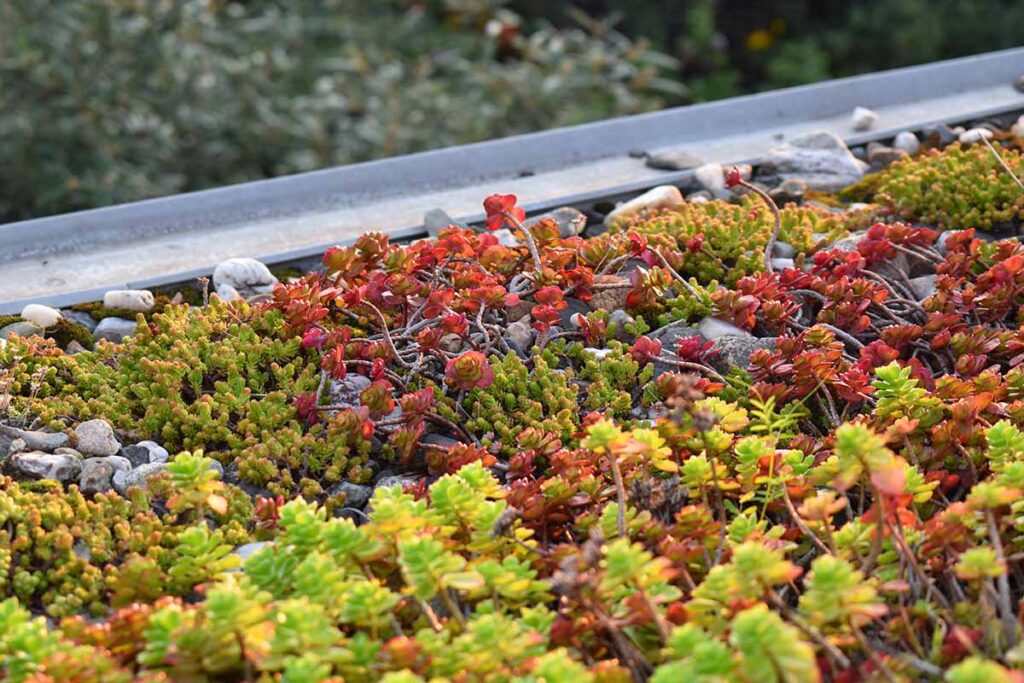
Sedums prefer lean, well-draining, coarsely-textured soil.
This is best achieved with coarse sand, but gravel-heavy soils will work in a pinch. The ideal pH for these plants is slightly acidic to neutral, or 6.0 to 7.0.
Deviating from the above recommendations will most likely lead to problems.
Too much moisture retention can cause rotting, and a soil that’s too high in nutrients can cause leggy growth.
Water and Fertilizer
Supplemental irrigation is only necessary for established plants when the top two inches of soil is dry.
You won’t have to water that much and depending on rain, you might not have to water at all! Sedum is pretty drought-resistant thanks to its succulent leaves.

Since stonecrop does well in nutrient-deficient soil, supplemental fertilizer isn’t necessary.
Too much nutrition results in weak and leggy growth. If you absolutely must fertilize, working an inch of compost at most into the soil annually is more than enough.
Cultivars and Species
The Sedum genus consists of 600 or so total species – and that’s a gargantuan amount of stonecrop!
You can narrow the list down by deciding between upright and low-growing varieties, but even that leaves a lot of options. Let’s go over some superior sedums.
Showy Stonecrop
Also known as Hylotelephium spectabile or A watchable seatshowy stonecrop stands out as a specimen planting in the landscape, whether individually or en masse.

It’s topped with showy clumps of red, pink, or white flowers and the plant grows into a rounded shape, no pruning required.
As an upright species, it reaches 18 to 24 inches in height, which fits in nicely with the rest of your perennial garden.
For optimal growth, cultivate showy sedum in USDA Hardiness Zones 3 to 10.
There are some beautiful varieties available besides the standard species.
‘Brilliant’ is a premium showy stonecrop cultivar with bright pink flowers, while S. watchable our. atropurpurea has deeply purple foliage.
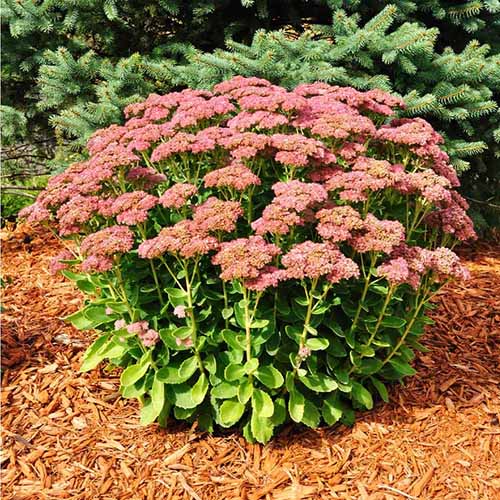
‘Autumn Joy’ is a hybrid between S. watchable and S. telephiumand its stunning year-round interest makes it one of the best garden perennials.
You can find ‘Autumn Joy’ plants available from Fast Growing Trees.
Find more tips on growing ‘Autumn Joy’ here.
Two-Row Stonecrop
St. spurius is a low-growing species that tolerates urban conditions remarkably well.
Reaching four inches in height – six when flowering – this species spreads as a dense mat in the landscape.
It looks amazing as both a ground cover and a complementary patch of growth between other plants.
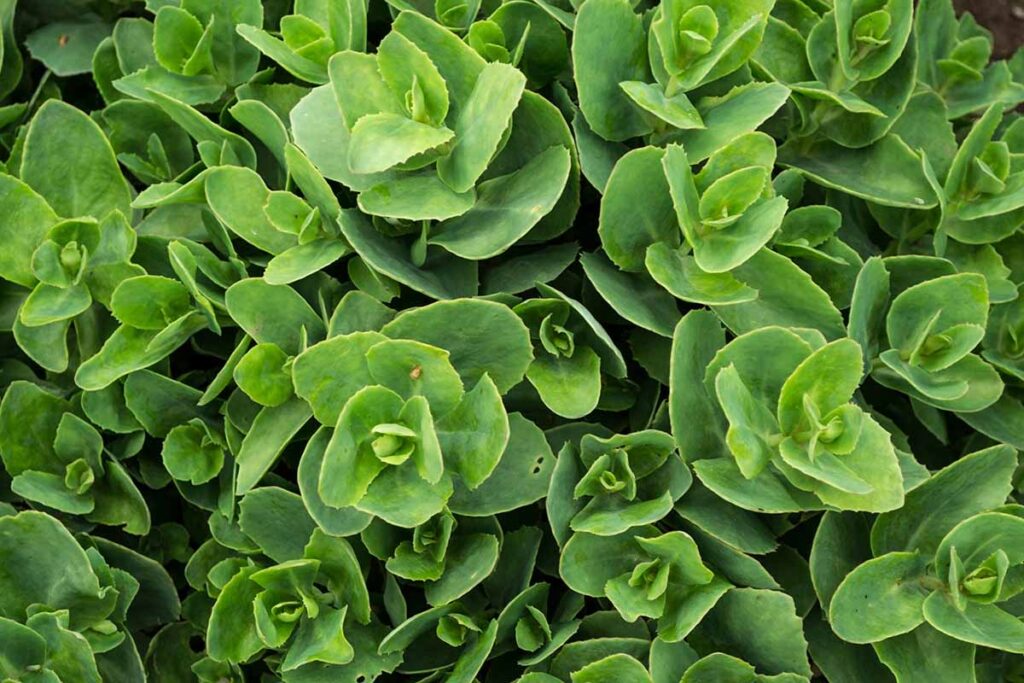
This plant has paddle-shaped leaves and rounded toothing on the margins.
Pinkish-red flowers protrude beyond the foliage. This stonecrop species thrives in USDA Hardiness Zones 3 to 8.
Notable cultivars include ‘Bronze Carpet,’ with reddish-bronze foliage and pink flowers, as well as ‘Fuldaglut’, which has scarlet flowers and deep red foliage.
This species can become invasive in certain zones if it’s not closely monitored.
Orange Stonecrop
S. kamtschaticum is an evergreen sedum that performs well on hillsides, within pockets in stone walls, and along borders, providing visual interest in these spaces.

Growing best in Zones 3 to 8, its light green leaves are long, skinny, and toothed on the ends. Flowers are yellow to start, but produce orange seed heads with age, hence the common name.
A cultivar worth mentioning is ‘Variegatum,’ which has many cool features. Its foliage is variegated, with white leaf margins that are flushed with pink.
The flowers are also a bit different: they’re a deeper, more intense yellow than those of your everyday orange stonecrop.
Maintenance
Sedums are pretty low-maintenance, but there are some things you can do to keep them looking their best.
Pinching living flower heads before they fade or topple will strengthen the stems, if you’re working with less-than-ideal conditions that could result in flopped-over stonecrop.

In addition, pinching spent blooms will help clean up the plants, but it’s not necessary, since the dry flower heads will provide winter interest if left alone.
The only effort low-growing species need by way of maintenance is the occasional pruning if they go out of bounds and encroach on other plantings.
Learn about pruning sedum here.
Propagation
You’ve got a few options for propagating sedum: seeds, cuttings, division, or transplants.
Despite the satisfaction of growing from seed, stonecrop seeds don’t always grow true.
From Seed
Sow stonecrop seeds in spring or summer. The minimum temperature necessary for sowing is about 60°F.
Select a pot or a seed tray and fill it with a well-draining substrate such as a mix of three parts gardening soil, three parts sand, and one part perlite.

Moisten the soil, spread the sedum seeds over the soil surface, and add a very thin layer of vermiculite on top. Lightly spray it all with additional water.
Cover the container with glass, white paper, or a clear plastic bag.
Place in an indoor location such as a windowsill with indirect light for two to three weeks until seedlings appear, then remove the cover. Keep the medium moist.
After six to eight weeks, when outside conditions are acceptable, gradually acclimate the seedlings to direct sunlight outdoors.
At this point, you can move them into their new location.
Find more tips on growing succulents from seeds here.
From Cuttings
Before preparing your cuttings, fill a pot with a similar medium to what you might use for growing stonecrop seeds as described above.
