


Hi GPODers!
We’re back in Malvern, Pennsylvania, with a new update from Carla Zambelli Mudry. We’ve been keeping up with Carla’s garden as it evolves through the seasons this year (catch up with her previous 2025 submissions: Carla’s Early Spring Flowers, Carla’s Mid-Spring Flowers and Mid-Spring Foliage, Roses and Clematis Bloom in Carla’s Garden, Carla’s Garden in Juneand Carla’s Late June Flowers and Foliage), and we’ve already seen an incredible array of blooms and foliage. Despite fighting against high temperatures and end-of-season fatigue throughout August, her garden still had an impressive display of color and abundance.
Well, it’s August. And that means late summer is here, because I think, aren’t we forever a little bit of a kid in our heads, realizing this is the last gasp before we go back to school in the fall? It certainly has been a different summer from last summer. We’ve had a lot of blasting heat but also a lot of rain. Everything has grown exponentially. I have been pruning things more than once in a couple of cases. However, now I see azaleas starting to set for next year, so there’s some that I can’t trim that I should have. I have really trimmed back some hydrangeas in some instances because it got so warm so early after the weird cold spring; on some of the lacecaps, for example, the flowers aged and browned out more quickly. A couple of hydrangeas have rewarded me, like Tuff Stuff™ (Hydrangea serat ‘MAK20’, Zones 5–9), by starting to bloom again. The delightful end of summer flowers like the dinner plate hibiscusand the giant Rudbeckkia I love (and my husband does not) are blooming. And I have a pretty good group of zinnias going. I also have crocosmia and a couple of patches of Gaillardia, or blanket flowers. One patch of gaillardia is sort of a deep red and the other a rust orange. They’re really quite pretty. I’m now many years into this garden, and I love the way it has evolved and grown. I would definitely say it’s layered, sometimes to the point of being crowded, so I have moved things around and even given plants away over the years. And the garden looks different depending on the time of day you are viewing it. I especially like dusk. However, another part of a long hot summer with lots of rain (and waiting for our sixth heat wave next week) means I’ve also gotten to the point where you want to look at the garden some mornings and say, “Please take care of yourself now; I am tired.” But then you see an unexpected flower, and you hear a bird sing (or a screech owl and the other big owl in the woods at night), and you’re in love all over again. I will admit that the catbirds, cardinals, and Carolina wrens need to stop having babies, because they’re all still having clutches, which makes pruning in a timely manner difficult. Soon fall will be upon us, and that will mean more bulbs to plant. How does your garden grow?
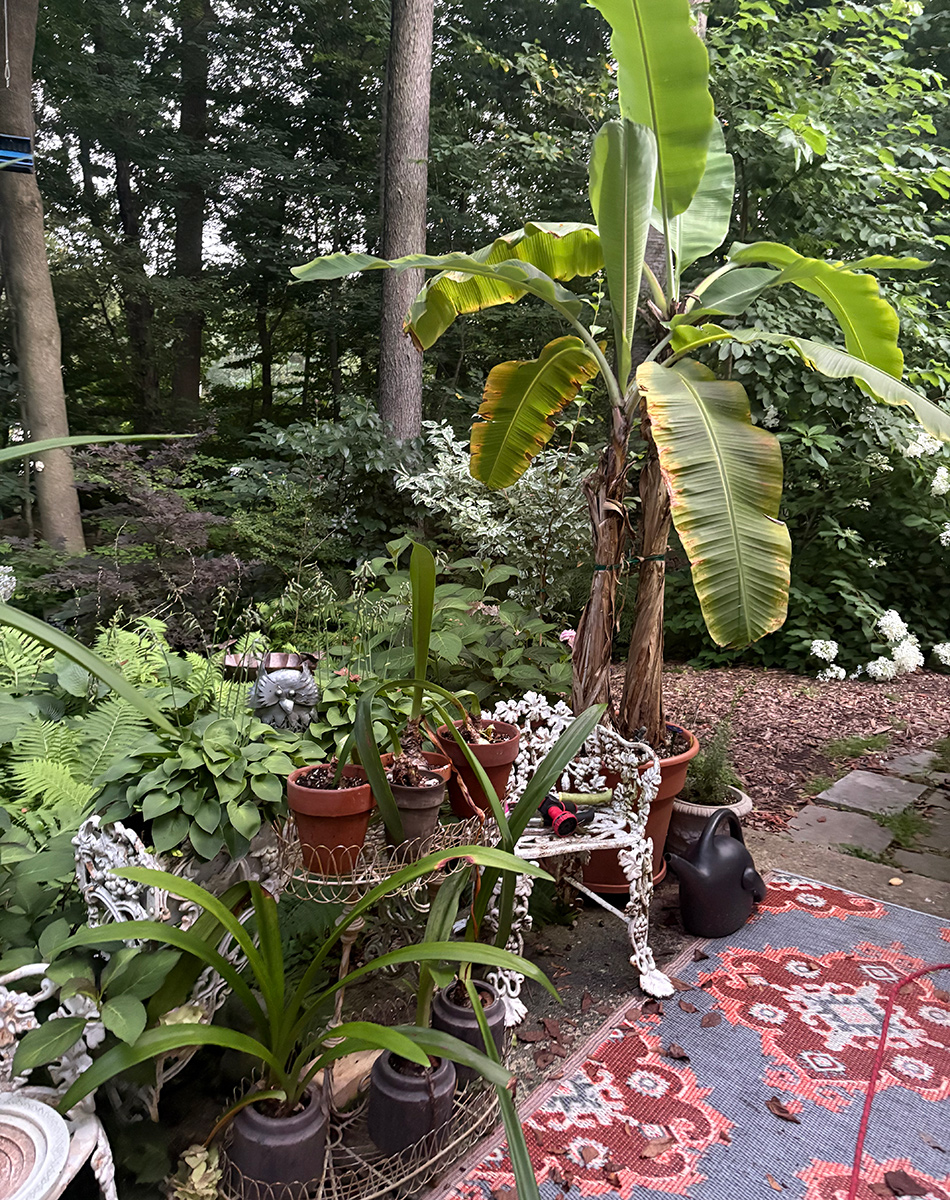 Carla’s banana trees are still thriving; just a little yellowing on the edges of a couple of leaves is completely normal, considering the turbulent weather she has been getting. Check out her post from June to see how it was looking earlier in the season (Carla’s Garden in June).
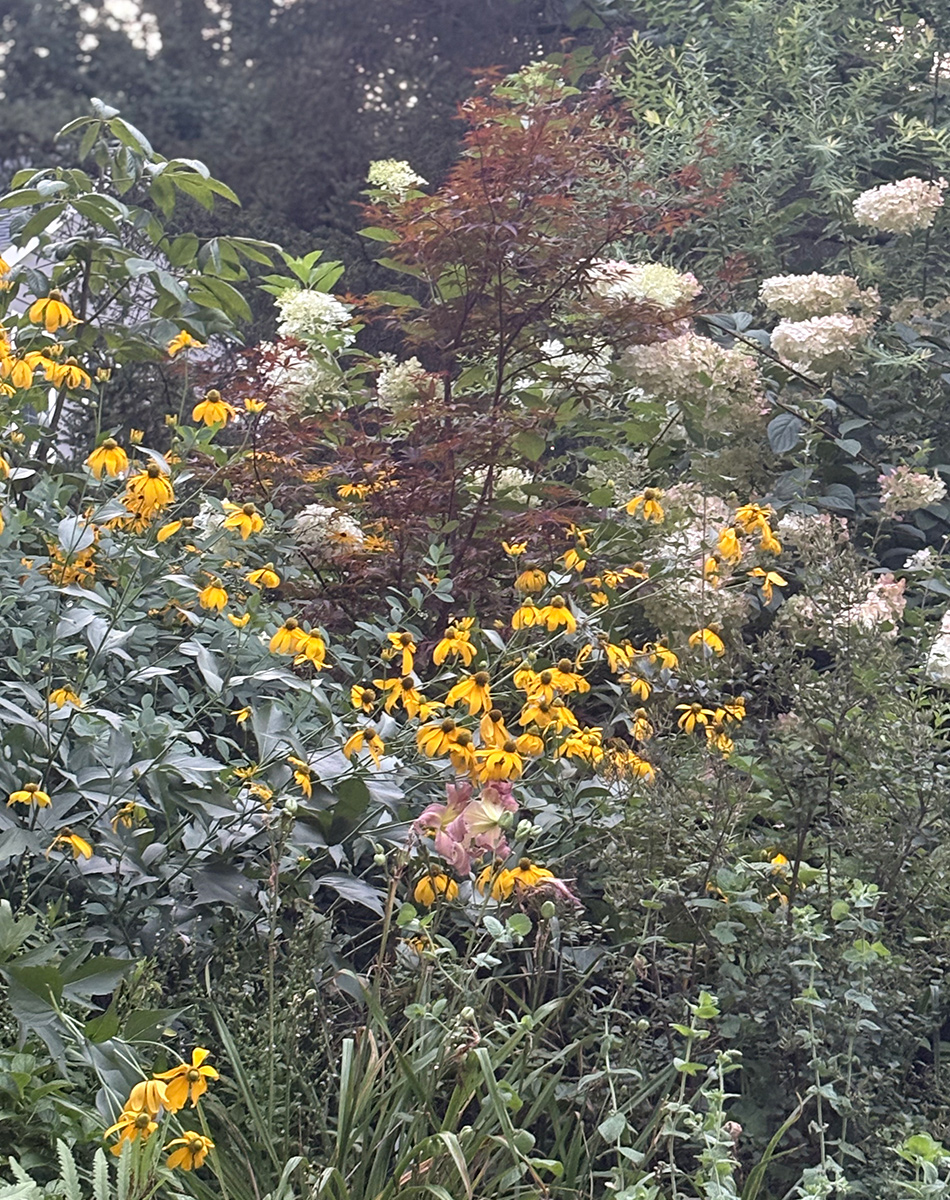 Despite the turbulent weather, both flowers and foliage are looking vibrant. You can also see the exuberant growth Carla talks about in her introduction, with these plants taking up every possible inch that she has provided them. While these layers might be getting overcrowded for some plants, the dense mixtures of color and texture have a beautiful effect.
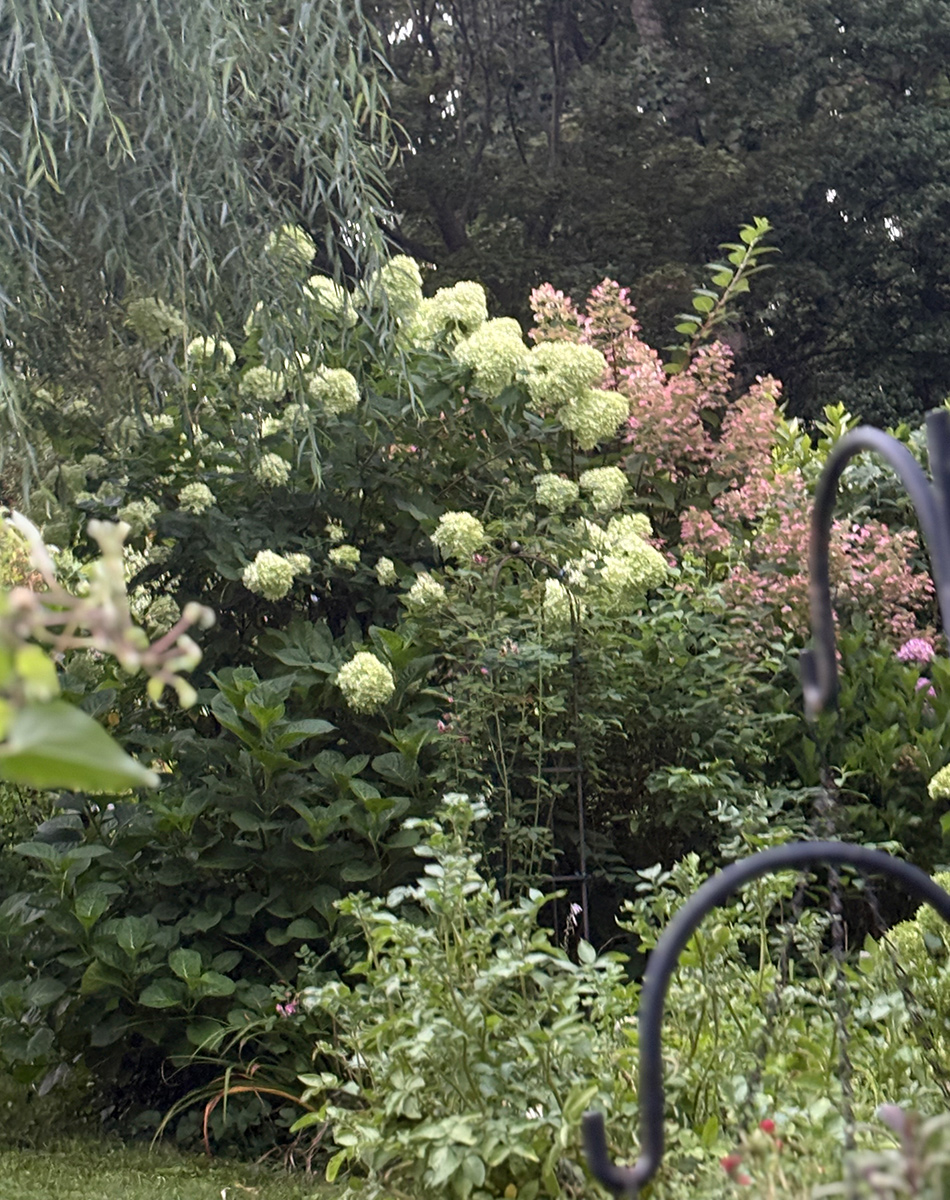 As mentioned in Carla’s intro, her hydrangeas are putting on a spectacular late-season show. Panicle hydrangeas (Hydrangea paniculataZones 3–8), in particular, are more exciting as their blooms put on some wonderful pink fall color.
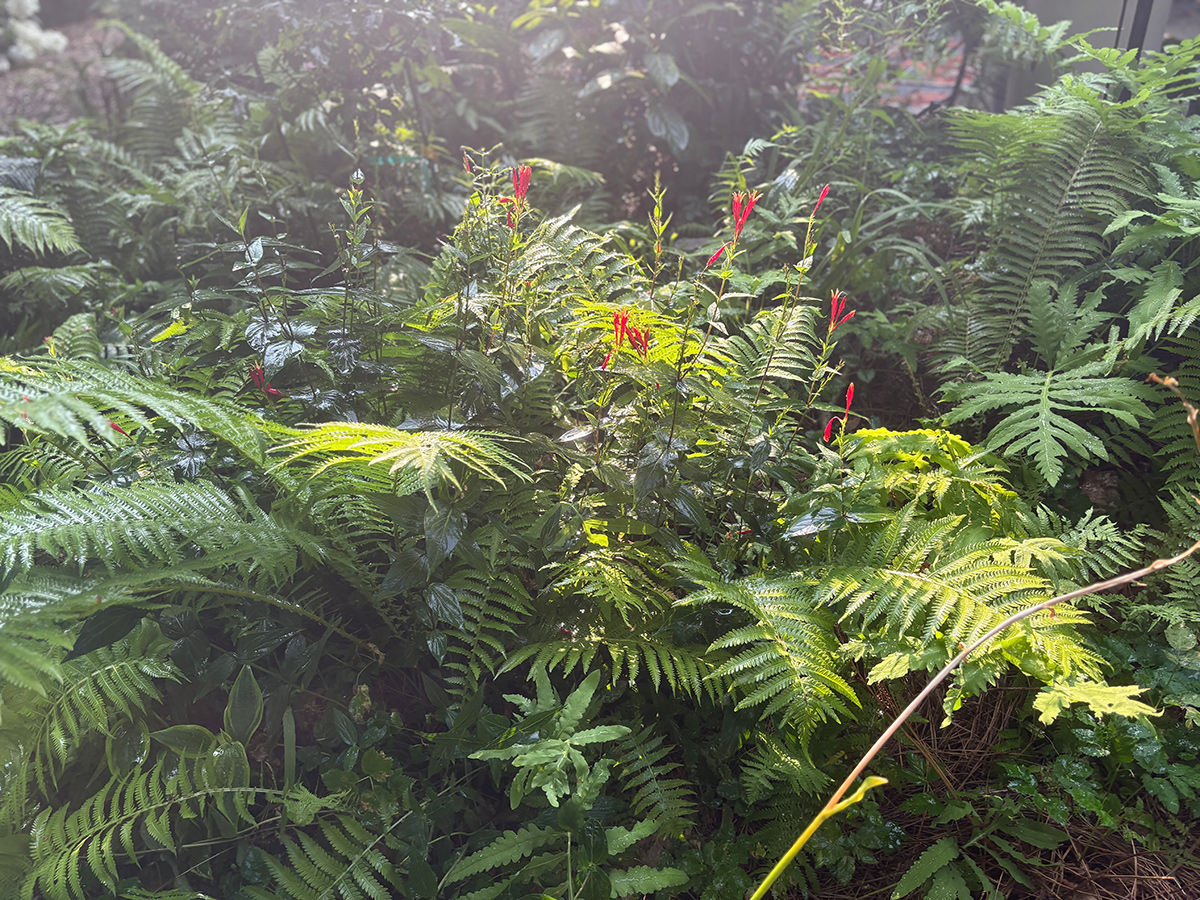 Another area of lush layers is this section of ferns: A ray of sunlight is acting like a spotlight on the bright red Indian pink (Mirroria maritalaaZones 5–9) flowers sticking up from the center of this greenery.
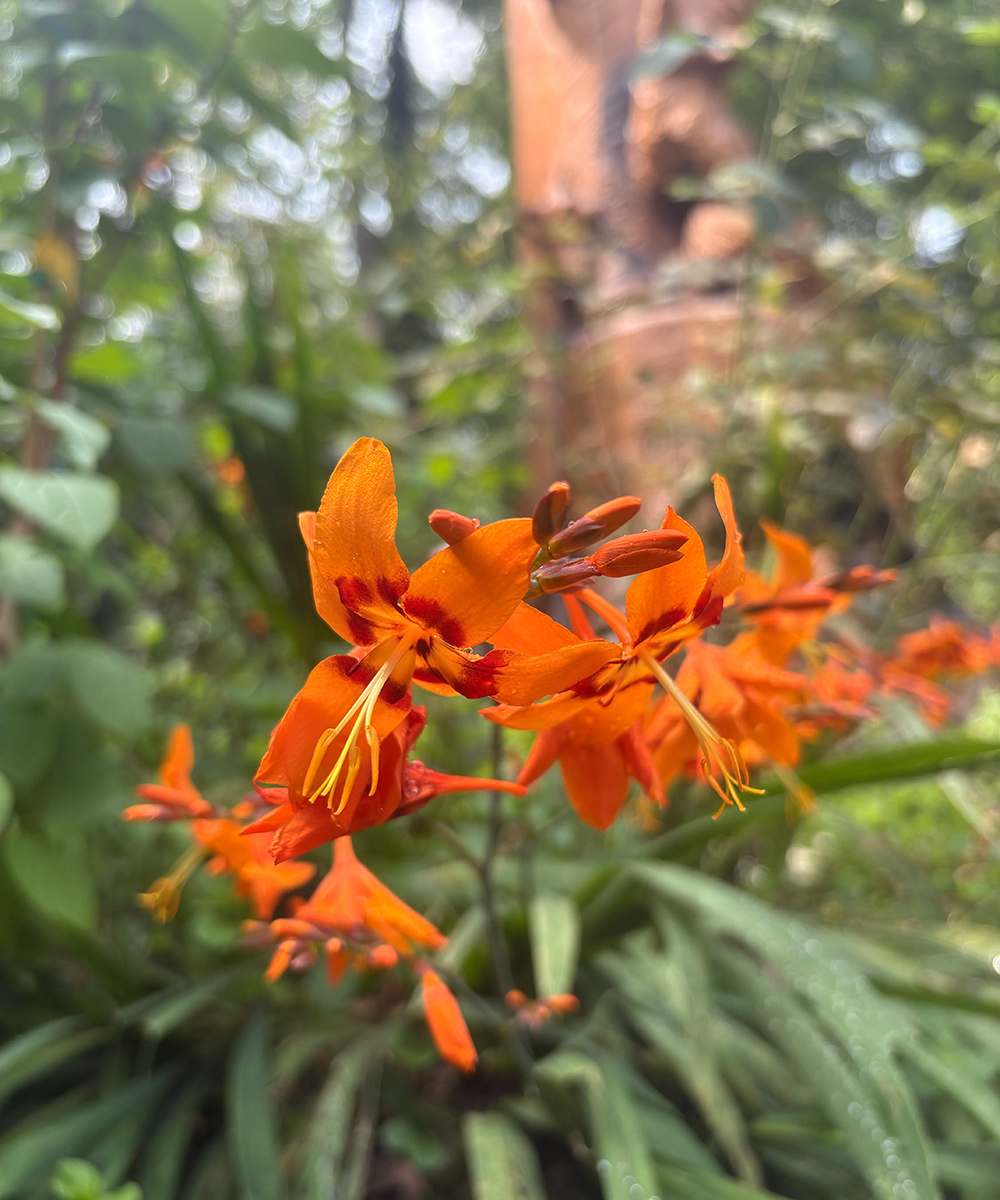 Carla has a mostly woodland garden with an incredible collection of shade-loving plants, but she also utilizes every sliver of sun to incorporate more unexpected selections. This bright orange crocosmia brings some more tropical flair to her woody wonderland.
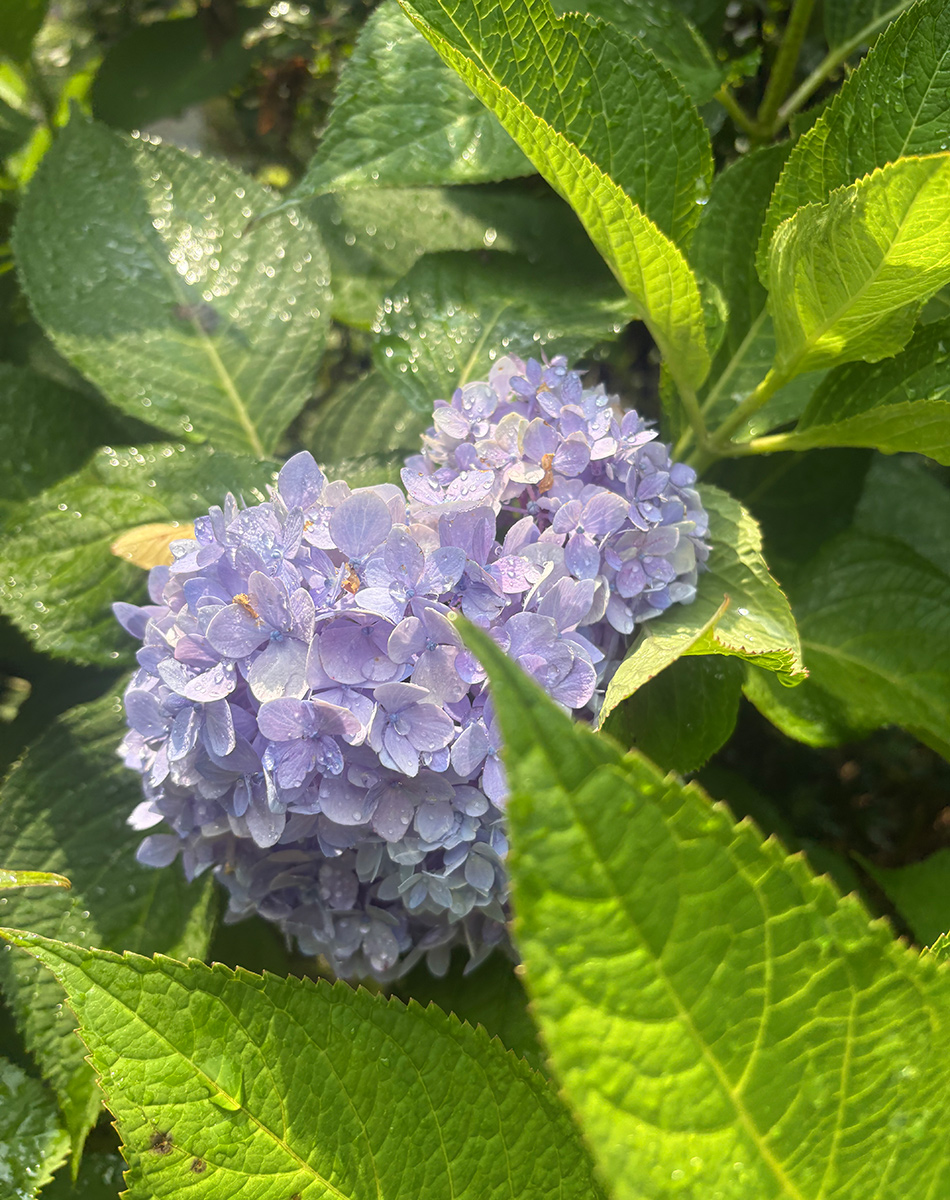 A closer look at one of Carla’s hydrangeas, still producing pristine blooms in the late season.
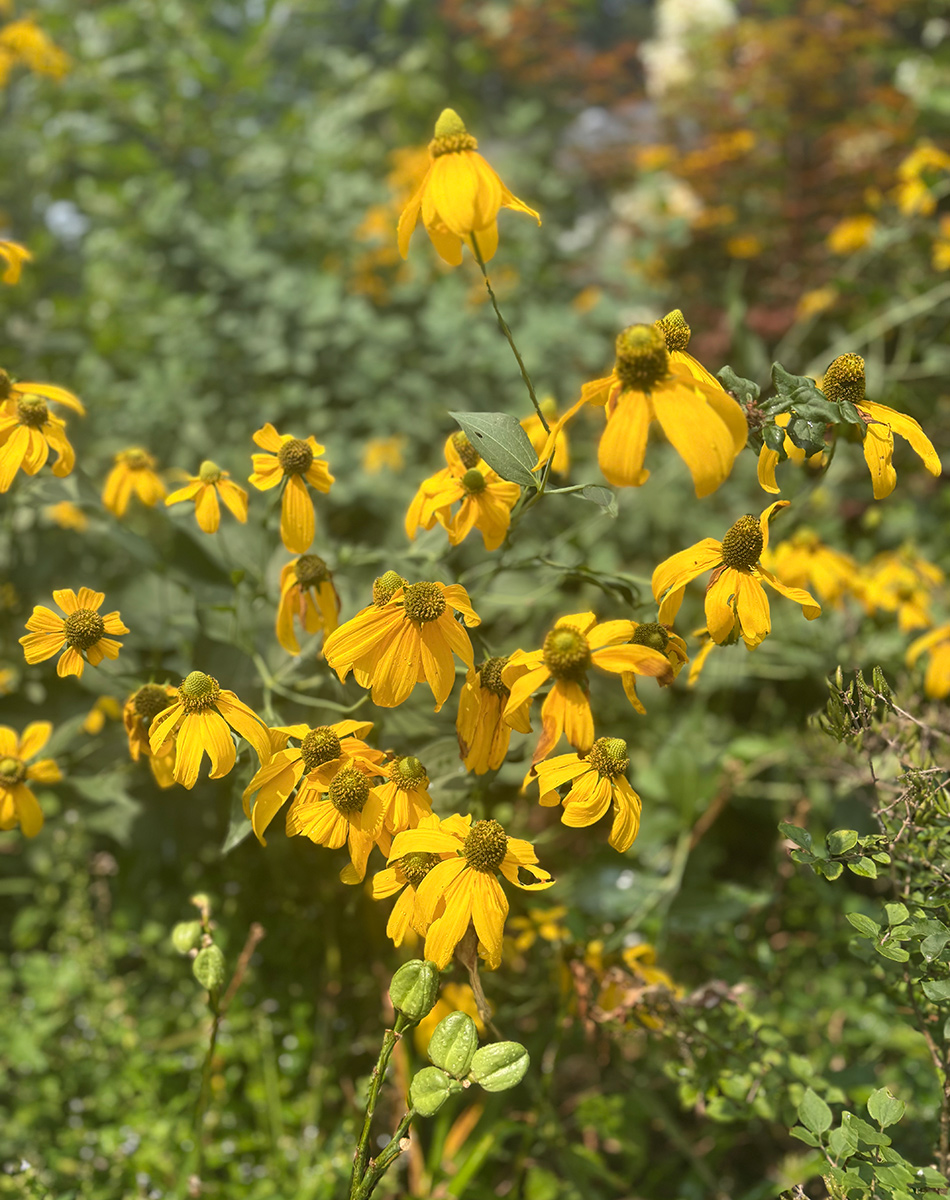 Lastly, one of Carla’s Rudbeckkiawhich are apparently controversial plants in her household! Cutleaf coneflowers (Rudbeckia laciniataZones 3–9) can grow up to 10 feet tall, so it’s hard to ignore if you’re not a fan. But I’m siding with Carla on this one—how can you not love these vibrant pollinator plants?
As always, Carla sent in a copious amount of gorgeous garden photos, so we will be back in her garden tomorrow to see more colorful August scenes. Keep an eye on your inbox so you don’t miss more spectacular pictures.
We want to see YOUR garden!
Have photos to share? We’d love to see your garden, a particular collection of plants you love, or a wonderful garden you had the chance to visit!
To submit, send 5–10 photos to (email protected) along with some information about the plants in the pictures and where you took the photos. We’d love to hear where you are located, how long you’ve been gardening, successes you are proud of, failures you learned from, hopes for the future, favorite plants, or funny stories from your garden.
Have a mobile phone? Tag your photos on Facebook, Instagram, or Twitter with #FineGardening!
Do you receive the GPOD by email yet? Sign up here
Fine Gardening Recommended Products
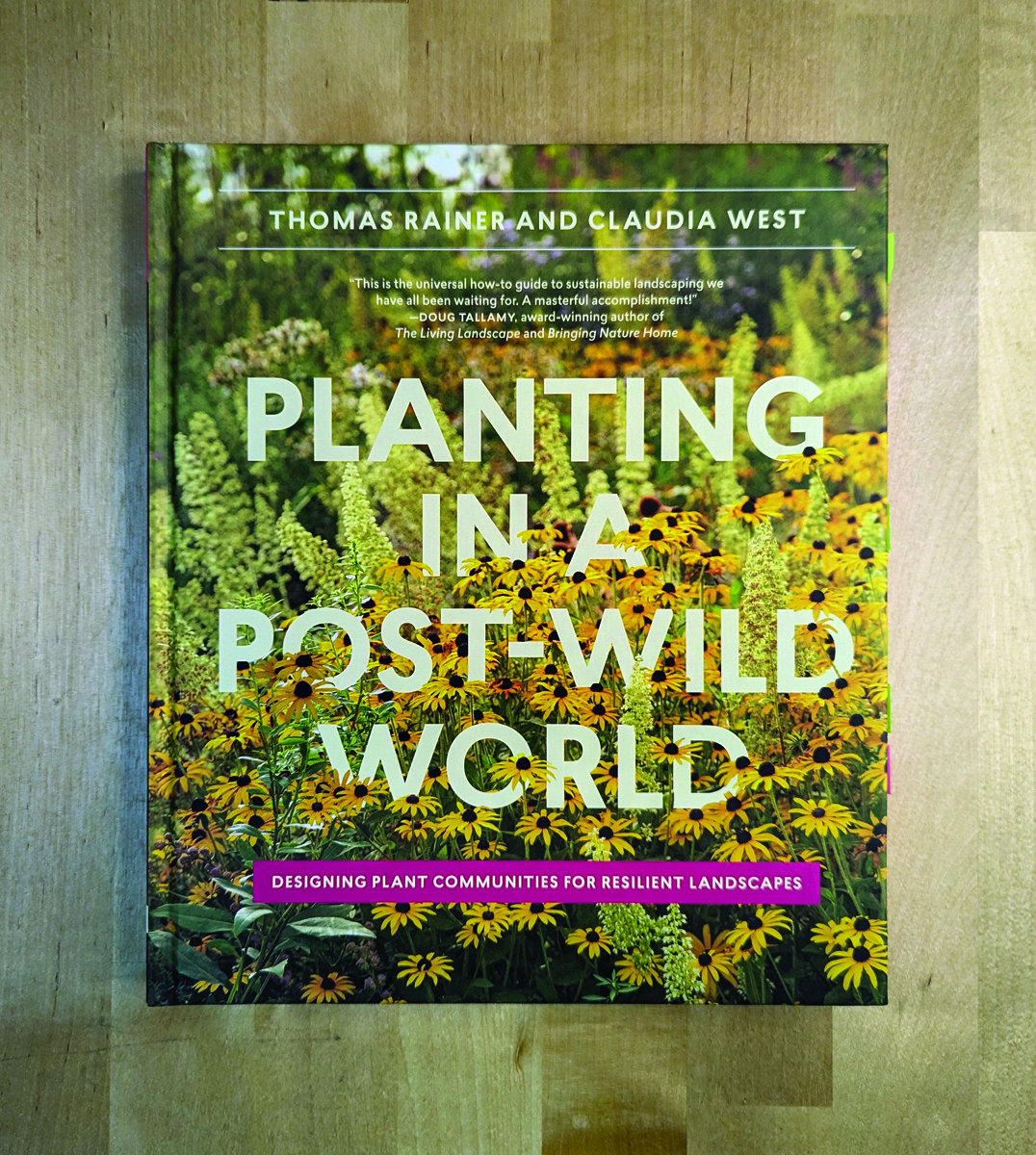
Planting in a Post-Wild World: Designing Plant Communities for Resilient Landscapes
Fine Gardening receives a commission for items purchased through links on this site, including Amazon Associates and other affiliate advertising programs.
Featuring gorgeous photography and advice for landscapers, Planting in a Post-Wild World by Thomas Rainer and Claudia West is dedicated to the idea of a new nature—a hybrid of both the wild and the cultivated—that can nourish in our cities and suburbs.
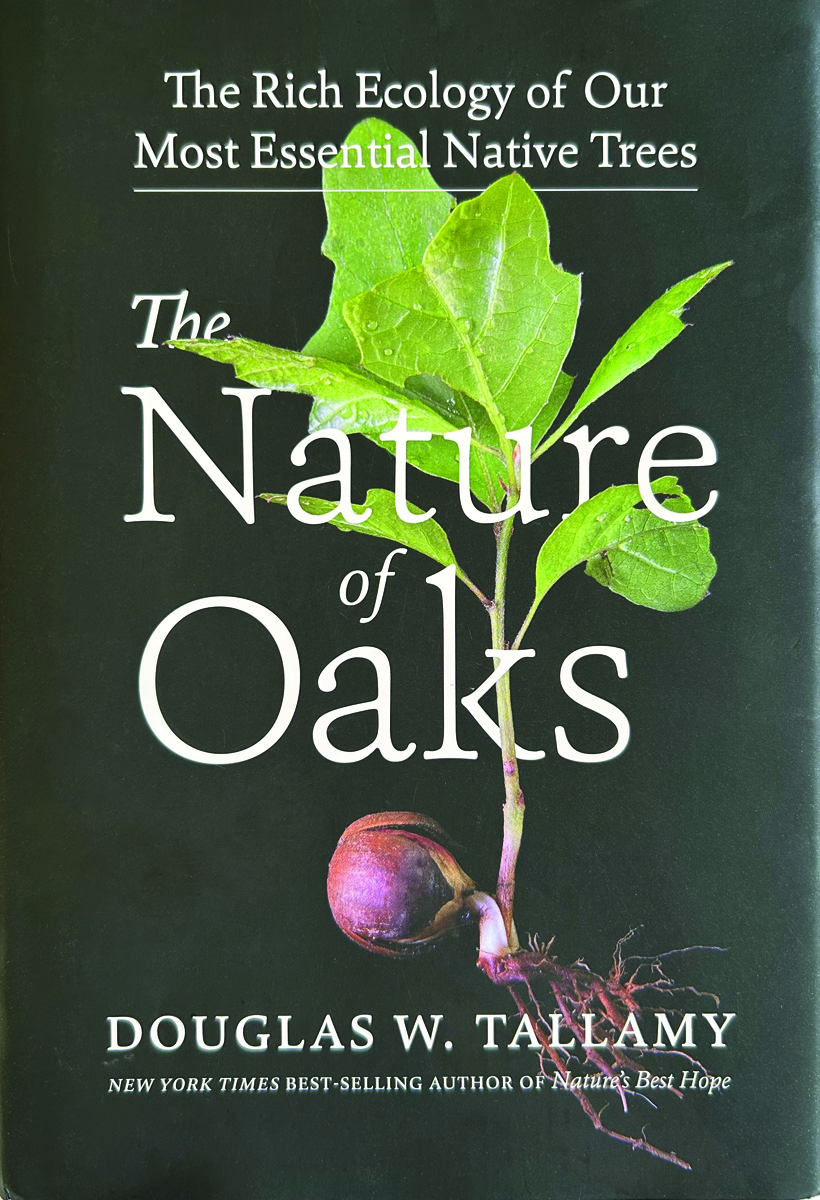
The Nature of Oaks: The Rich Ecology of Our Most Essential Native Trees
Fine Gardening receives a commission for items purchased through links on this site, including Amazon Associates and other affiliate advertising programs.
The Nature of Oaks reveals what is going on in oak trees month by month, highlighting the seasonal cycles of life, death, and renewal. From woodpeckers who collect and store hundreds of acorns for sustenance to the beauty of jewel caterpillars, Doug Tallamy illuminates and celebrates the wonders that occur right in our own backyards. He also shares practical advice about how to plant and care for an oak, along with information about the best oak species for your area.
ARS Telescoping Long Reach Pruner
Fine Gardening receives a commission for items purchased through links on this site, including Amazon Associates and other affiliate advertising programs.
Telescopes from 4 to 7′. Cut and Hold (160) Blades. Drop forged blades for unsurpassed long lasting sharpness. Lightweight, 2.3 lbs., for continued use. Perfectly balanced for easy pruning.
