


Steven Gallo, founder of Cube Cap and Lion’s Mane Steak Company, offers a compelling perspective on the intersection of agriculture, innovation, and supply chain resilience.
With over four decades of experience in plant cultivation before pivoting to fungi, Steven Gallo, inventor of Cube Cap, has built a unique perspective on how controlled environments and innovative thinking can reshape food production. From plug-and-play container farm systems to Lion’s Mane Steak Company, Gallo is championing mushrooms as a delightful solution for everyone, chefs and consumers alike.
What is Farm Anywhere, and how did you get involved?
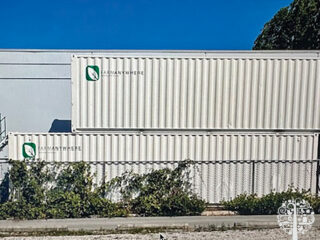
Farm Anywhere is a company that takes shipping containers and converts them into incredible, environmentally controlled grow spaces. It intrigued me; I was very interested in mushrooms at the time. And I saw these things grow so quickly without a lot of labour. I got involved and saw the market evolving with the mushrooms, specifically lion’s mane, and I just love it!
Farm Anywhere has five or six different containers, from strawberries to hemp, leafy greens, microgreens, and mushrooms. They were interested in my flood caps – that’s how I got introduced to them – and we became great friends. This was seven years ago.
I became a sales manager for the company because of everything that’s going on with the supply chain, and food being imported from outside the country. I thought everyone should get involved with hyperlocal food production; the freshest it could be. So, I bought one.
Why is lion’s mane such a great meat replacement?
We had the idea of starting to produce gourmet mushrooms and sell them to the grocery stores, restaurants, and the public. We started growing lion’s mane, chestnut, blue, grey, pink, and yellow oyster mushrooms, as well as king mushrooms. The more research I did with the lion’s mane, I discovered doctors prescribe powdered lion’s mane for dementia and Alzheimer’s. I was amazed at what they can produce. I found people were making steaks out of them, so we started making steaks.
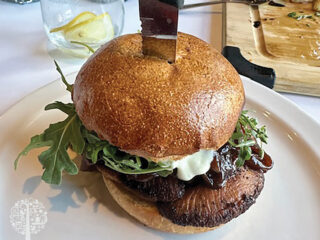
It grows to be like a big cauliflower. And it’s like a sponge, so you cut it up into sections, one-inch pieces, and you marinade it. It absorbs the marinade and tastes exactly like whatever marinade you choose to use. We make “no chicken” and “no beef” steaks. Greek, Thai, BBQ, all sorts of things.
One of the reasons we started is that they’re very perishable mushrooms. How do we (avoid) throwing out the extra pounds not sold? We turn everything into steaks and opened Lion’s Mane Steak Company. Now we have great interest from the vegan restaurants, even non-vegan restaurants; they just love it. Coming up in January, it’ll be two years since we had the container. Everybody we introduce it to is just elated about it. It’s not a hard sell.
What kind of growing medium and environment do you use?
We are Global G.A.P.-approved – GGAP, Good Agricultural Practices through ECOCERT. We grow them organically, although we’re not certified organically. But there’s no fertiliser; nothing dangerous. We are going to be organically certified for the grocery stores.
Right now, we purchase our medium from an outside source. We will be making our own, but since we’re so new, it’s a mixture of sawdust and soy hull pellets, and 60% moisture. Then, grain spawn is added, it gets inoculated, and within three weeks, those bags go inside the container. If you’re growing blue oysters, it’s seven to nine days before they’re ready. Lion’s mane is 11 to 14 days, start to finish. It’s amazing. And we just keep reusing them.
The pinks, yellows and blues like a warmer environment. There’s a range involved there, but you set up the container and forget it; it’s plug-and-play. Others like around 17°C. But you have to keep that temperature with a high humidity, like 85-87%. Lion’s mane works between 18-22, so we’re around 19 degrees on average. There are five shelves in the container, so you could move the substrate bags higher up for a little more temperature, or lower down for cooler temps.
How do you see the demand for mushrooms evolving?
Lion’s mane is the most popular. Next after that would be the blue and grey oysters. Blue oysters, torn into strips and battered, make chicken strips at the restaurants. Lion’s mane, they mulch up and make crab cakes. They’re very high in protein.
The barbecue restaurants, you know, if you have a guy coming in eating steak and he brings his girlfriend and she’s a vegetarian, a salad isn’t very accommodating, is it? So, it gives them another feature on their menu.
A lot of people are getting into mushroom production – the demand is growing. In a small way, they’re growing their own. I’ve seen people putting straw in buckets and drilling holes. Of course, they sell little substrate bag kits. You create your own humidity with a spray bottle, and it grows right on your counter. One of our friends, it’s a pretty big company in Ontario, they do farmer’s markets all the time, and the success is amazing!
When I’m finished with my bags, I’ll give them to my friend who’s got a nice garden. He mulches the bags and mixes them in there, and the mushrooms start growing again. Not even in a controlled environment! There’s excellent regenerative potential there.
Looking Ahead: Mushrooms as food security
“You know, Haley, that’s one of the things I tell my wife – ‘we will never starve.’ If the food shuts off, we will always be having our mushroom soup, our mushroom steaks, 100% in the dark.”
Steve’s work highlights more than just a business opportunity – it signals mushrooms as a cornerstone of sustainable food systems. That’s because container farming offers reliability. Local production reduces dependence on supply chains, and mushrooms themselves provide satiating nutrition and versatility.
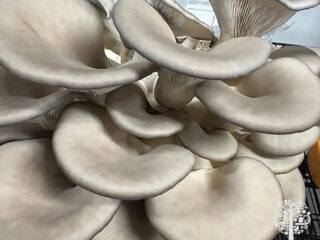
Mushrooms are not only the future of sustainable agriculture, but they are also a versatile food source that can thrive almost anywhere, requiring only humidity, fresh air, and minimal care.
For more information on Steve Gallo’s ventures, check out farmsmart.ca, lionsmanesteak.caand his IG: @cubecap
