


Propagation
Hostas typically grow via underground rhizomes, though some species have fibrous roots.
All of them can be propagated by division, or you can purchase transplants or bare root plants.
H. ventricosa can even be grown from seed, though this method is not recommended as the seedlings are unlikely to grow true to the parent.
The best time to plant is in the spring or fall.
From Divisions
Dividing can be done at any time of year when the soil can be worked, but spring or fall is best.
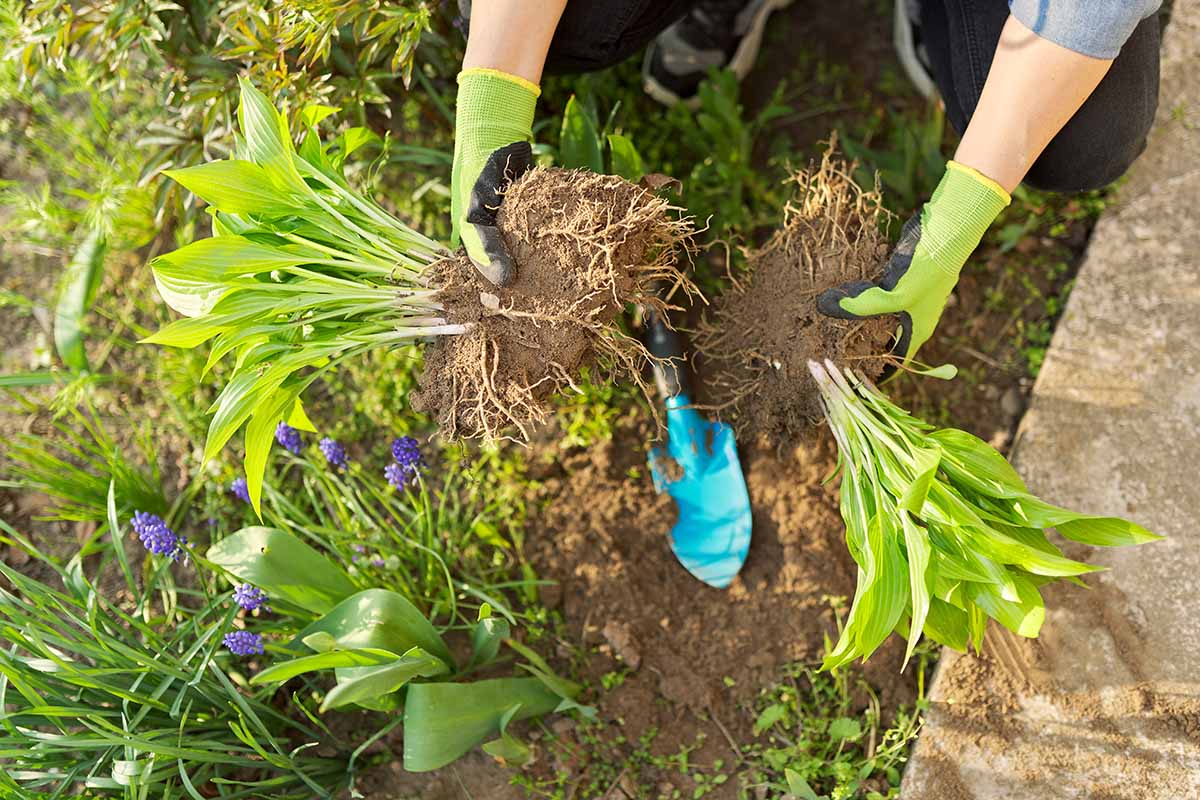
If you divide in the spring, wait until the eyes (those little growing tips) have emerged from the earth.
You need to include a bit of the crown and roots of each section for it to survive. Plant as you would a transplant, as described below.
Keep the divisions well-watered for the first month. You’ve reduced the root structure, so the leaves aren’t being fed as much moisture as they’re used to.
Find more tips on dividing hosta plants here.
Transplanting
If you purchase starts at a nursery, the planting process is pretty straightforward.
Gently remove the plant from its container, loosen the roots and shake away any excess soil.
Dig a hole that is slightly larger and deeper than the container the plant was growing in. Put the root ball into the ground so that it sits at the same level it was growing at in the container.
Gently tamp soil around the plant to fill in the rest of the hole, and water well to settle it.
Get more tips on transplanting hostas here.
Pests and Disease
Part of what makes growing hostas so easy is that there are very few pests and diseases that impact them seriously.
If you have deer in your area, chances are those hungry ungulates will have a go at your plants at some point.
We have a helpful guide to help you deer-proof your garden. If you want a solution to protect your entire garden, you might consider fencing.
Like deer, rabbits love hostas too. They might just take a nibble here and there, or they can devour an entire plant.
But don’t worry, we have lots of tips to help you keep the rabbit situation under control.
Voles eat the roots and have the potential to completely kill your plants because they destroy the root structure underground before you realize what’s happening.
Pests
Hostas are rarely troubled by the insects that can wreak havoc on other plants. However, there are two exceptions.
Cutworms
Young plants are susceptible to cutworms, which are caterpillars in the Noctuidae family. Once they get a bit more mature, your plants aren’t in danger.
You can protect them by creating barriers, handpicking cutworms when you see them, and encouraging or introducing beneficial predators like braconid and trichogramma wasps, and tachinid flies.
For more help on identifying and eliminating cutworms, read our guide on these common pests.
Slugs and Snails
Ask any hosta grower and they’ll tell you, the biggest problem you’ll deal with (beyond hungry herbivores) is snails and slugs.
If your beautiful plants are beginning to look like Swiss cheese, then this is usually the problem.
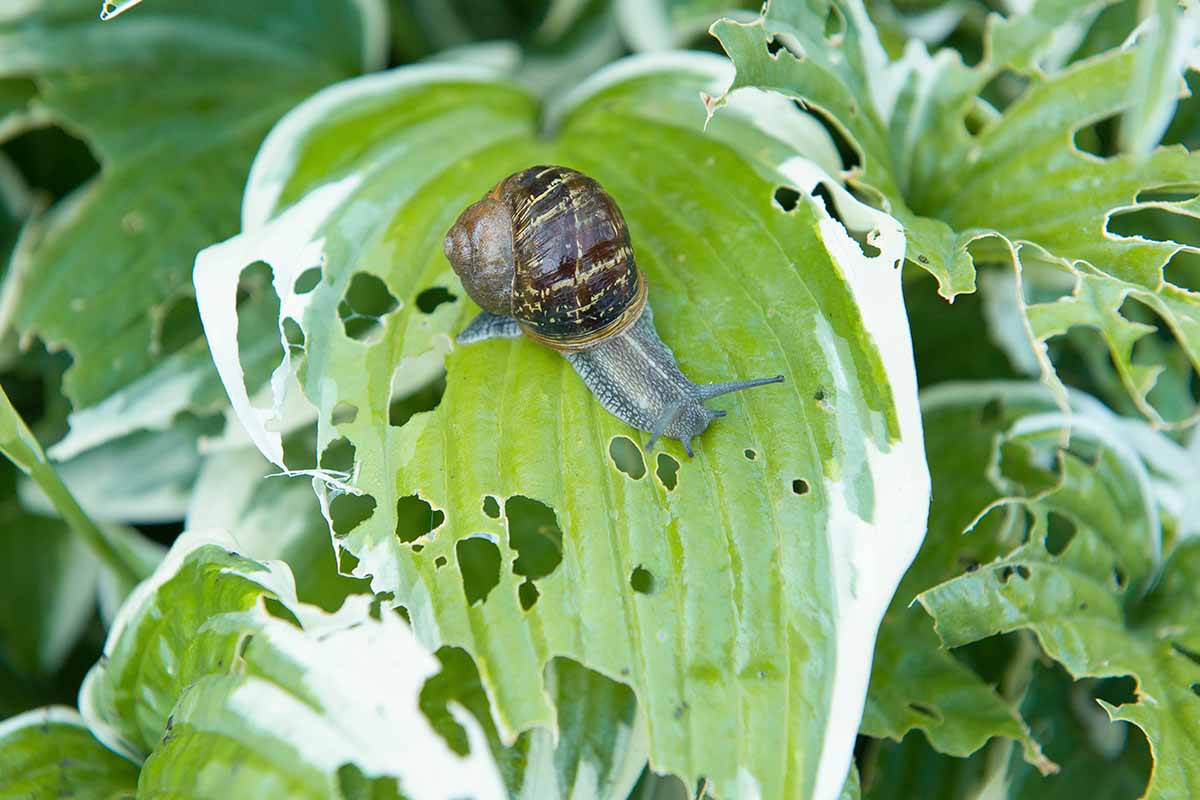
There are chemical baits available to control slugs and snails, but these may be dangerous to wildlife and pets.
Instead, there are several nontoxic ways to control the night feeding slugs and snails. Our guide to slug control provides all the info you’ll need.
Find more tips on identifying and controlling hosta pests here.
Disease
As with pests, there aren’t too many diseases that trouble hostas. There are really just three main ones you might run up against.
Anthracnose
Anthracnose won’t usually kill your plants, but it’s unsightly.
Caused by fungi in the Colletotrichum genus, the disease shows up as tan spots with dark borders on the foliage that merge and eventually kill off some of the leaves.
