


Location, Location, Location
Checking individual sun and temperature requirements for specific varieties is the best way to determine location.
But as a general rule of thumb, think Mediterranean. Most kitchen herbs enjoy plenty of sunshine and warm temperatures in well-drained, somewhat rocky or sandy soil.

Most leafy types, both perennial and annual, will do best with full morning sun and some afternoon shade.
An afternoon break from the heat helps to prevent leaf scorch and early bolting to seed.
There are exceptions, of course. Cilantro does best in the cooler days of spring and autumn, while basil likes the summer heat. Always check individual requirements if you’re unsure.
Herbs with needle-like or thick leaves – such as lavender, rosemary, and sage – can handle full sun all day.
In the garden, amend any thick or heavy soil with builders’ sand or finely calibrated pebbles to ensure adequate drainage – herbs will sulk and underperform if their roots are allowed to stand in soggy, waterlogged soil.
Fertilizers and Watering
These flavorful plants will produce the highest levels of essential oils, which produce their distinctive flavors and fragrances, when they are somewhat under-fertilized.
High levels of nutrientsespecially nitrogen, will generate plenty of leafy growth. But this is at the cost of taste and aroma.
An organic fertilizer such as well-rotted manure or compost dug into the soil in spring, along with the occasional application of fish fertilizer, works well for herbs.
A time-release fertilizer that doesn’t flood the roots all at once with an excess of nutrients can be used as well.
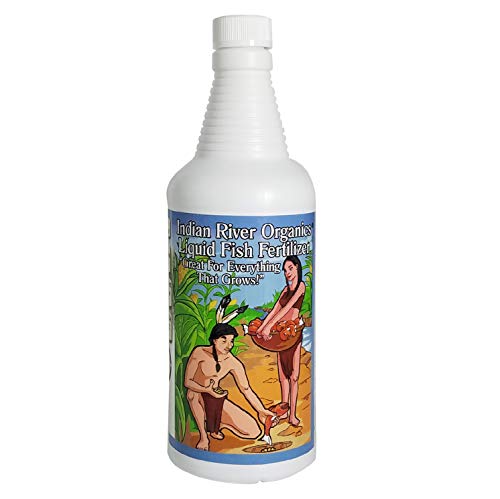
Indian River Fish Fertilizer available on Amazon
The exception to this is container-grown plants.
As potted roots can’t spread out to find nutrients, a fish fertilizer or water-soluble fertilizer solution diluted to about half-strength and applied every two or three weeks will supply the food they need.
Many varieties also prefer to be slightly under-watered for the same reason – lower amounts of fertilizer and water mean greater flavor and fragrance.
But some common herbs such as red bergamot, chervil, lemon balmmeadowsweet, sweet grass, watercressand water mint do prefer moist soil. Again, check individual requirements to be sure.
Don’t allow any potted herbs to get too dry. Water when the top few inches of soil are dry, and just until water emerges from the drainage holes.
Propagation
Woody types – such as bay laurellavender, sage, and southernwood – may be propagated easily from stem cuttings.
Semi-woody herbs – such as mint, oregano, thyme, savoryand yarrow – are best propagated by root division as described above.

Leafy and annual herbs – like basil, cilantroand parsley – are easiest to propagate by sowing seeds.
For spring stem cuttings, take material from last season’s growth in the upper part of the plant. Cuttings should be taken in the morning while the plant stems are still fully turgid.
Choose healthy plant material free of any flowers or flower buds, and remove any greenery from the lower third to the lower half of the stem.
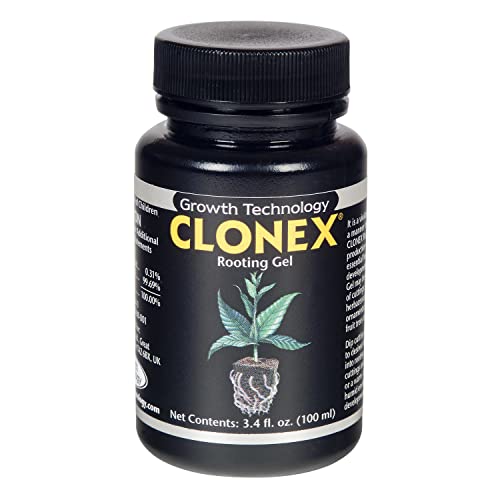
HydroDynamics Clonex Rooting Gel
Gently wound the lower stem with a few light nicks or scrapes to reveal the inner green wood, then dip the stem in a rooting compound such as this one from Amazon.
Place the stem in a small pot with a light-bodied rooting mix, then seal in a plastic bag or cover with a bottomless milk jug – high humidity is needed to prevent moisture loss in the new cuttings.
The rooting mix should be low in nutrients, with plenty of aeration. A good combination is one-third coarse sand, one-third peat, and one-third perlite.
Place indoors or in a greenhouse in a warm spot with bright light, but out of direct sunlight.
Leave for several weeks until well rooted, with strong, new growth emerging. Water moderately, and only when needed.

But maybe you’re more of a lazy gardener…
A less fussy option is to take twice as many cuttings as you want plants, then pot as above.
Place in a sheltered spot in the garden in dappled light, and where it will get regular water from an automated sprinkler or by hand watering.
Then forget about them until autumn when they can be planted in the garden.
The success rate is lower with this method, which is why more cuttings are taken. But they don’t require as much attention either.
