


Listen up! Your weeds are trying to tell you something.
Like all varieties of plants, individual weeds thrive in particular conditions. Some like it dry, others moist. Some prefer acidic soil, others thrive in more alkaline environments. Some will even tell you that your soil is perfect.
So before you pluck and pull, take note. You can learn a lot about the growing conditions in your yard, based on which weeds are growing where. These 10 common weeds will reveal secrets about your soil:
Plantains

Used in traditional medicine to make a poultice against stings, rashes, and insect bites, plantains are nonetheless unsightly in the lawn and garden. Their presence indicates low fertility and high acidity. They also thrive in poorly drained, compacted soil.
The cure: To prevent plantains, correct the soil imbalance, aerate soil, and raise the level of your lawn mower so tall grass blades can shade plantain’s leaves.
Crabgrass

Ever the opportunist, crabgrass thrives in both poor or very fertile soils, and will spring up in times of drought or excessive watering.
The cure: To combat, raise the height of your mower to encourage “good” grass. Seed control also works with this annual: discourage germination by spreading cornmeal in the early spring.
Ground Ivy
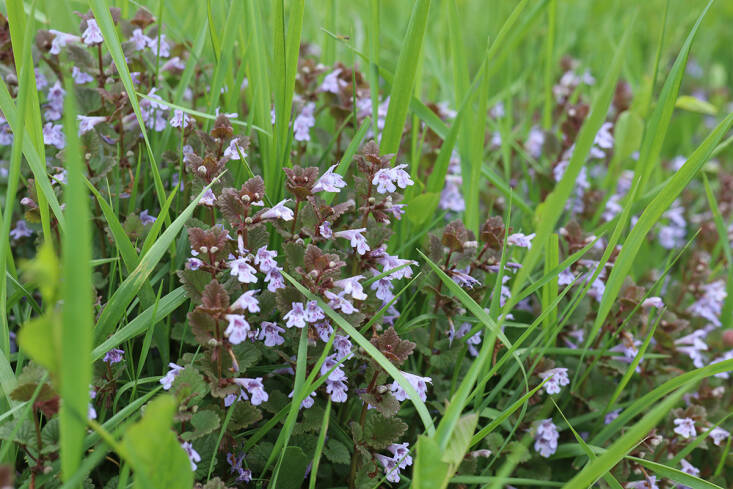
Ground ivy (Glechoma hederacea), also known as “Creeping Charlie,” is an aggressive weed that can quickly consume an unhealthy lawn. It thrives in areas with poor drainage, low fertility and lots of shade.
The cure: Ground ivy will take advantage of bald spots, so make sure your lawn and garden have a lush canopy (or mulch), and fertile, well-drained soil. A higher mowing height (from 2.5 to 3 inches) will also help.
Annual Bluegrass

An abundance of annual bluegrass is an indication that your soil is fertile, but most likely compacted and over-watered and poorly drained.
The cure: To combat, aerate and water less, raise your mower height, and prevent seeds from spreading by spreading a cornmeal gluten in spring.
Chickweed

Got chickweed in your garden? Goods news. That means it’s highly fertile. But this spreading annual can also indicate poor drainage and too much watering as well as compacted soil. (Good thing they’re delicious to eat.)
Dandelions

