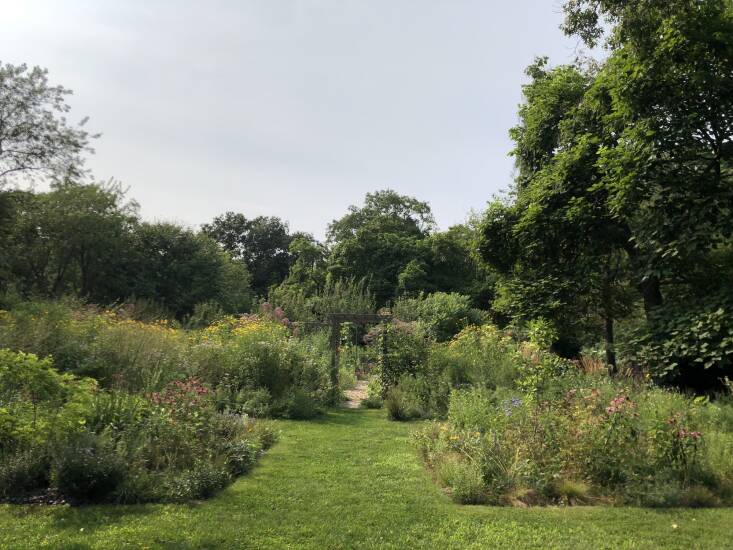


This is part of a series with Perfect Earth Projecta nonprofit dedicated to toxic-free, ecological gardening, on how you can be more sustainable in your landscapes at home.
“What does aesthetics have to do with ecology?” asks Joan Nassauer. Turns out a lot. A professor of landscape architecture at the University of Michigan, Nassauer has been studying how to make ecological gardens more acceptable and accessible. Several decades ago, she coined the phrase “cues to care,” which has now become a catch phrase among ecological gardeners. (Read her paper “Messy Ecosystems, Orderly Frames” and a recent review paper “Cues to Care: A Systematic Analytical Review”.)
Cues to care are the key indicators that a landscape is intentional and being looked after. Think: mown turf; visible, unimpeded windows; and prominent, recognizable flowers. Most people find these things comforting. “We want to affect human-dominated landscapes to protect and increase biodiversity, increase their capacity to store carbon, and ensure human comfort with rising temperatures,” says Nassauer. But the key to acceptance and success lies with our ability to “create landscapes people are happy to inhabit.”
The size of your property does not matter. Every bit of land can make a difference. “The 1/4 acre or even 1/8 acre is in some ways the most important, because from the standpoint of a seed, or a pollinator passing by, or a migrating bird being able to stop and rest, these small pieces all contribute to a larger matrix that is the functioning landscape,” says Nassauer.
As more people learn about the dangers of conventional landscaping with its toxic lawns and “ultra-processed plantings,” as Perfect Earth founder Edwina von Gal calls them, they’re discovering the benefits of a healthier, looser, chemical-free approach, where lawns are diminished, native plants replace unsustainable ones and are allowed to grow freely, and dead trees or snags are celebrated as sculpture. Cues to care become an important bridge linking the wildness of nature with the intentional. Nassuer notes that cues to care are “not universal, but culturally contingent.” Experiment on your own property, talk about them with your neighbors, and take some cues from these ecological designers who share with us how they show they care.
Incorporate straight lines and right angles.