


Do you know about the tomato & marigold planting secret? Believe it or not, by simply planting marigolds alongside your tomato plants – you can not only help your tomatoes stay healthy, vibrant & strong, but also get them to produce more tomatoes than ever!
Why does this work so well? Because as it turns out, marigolds are one of the best companion plants of all for tomatoes. Not only do they help to repel many of the common pests that can injure or destroy your tomato plants, they also serve as a calling card to bring in an enormous amount of pollinators and beneficial insects to the garden as well.
Marigolds have long been known as one of the most beneficial companion plants around. Not just for tomatoes, but for other vegetable plants, herbs, and perennial and annual flowers too. Adding to their allure, of all the annual flower choices around, marigolds also happen to be one of the easiest to sow and start directly from seed. And of course, all of their big, beautiful blooms look amazing too!
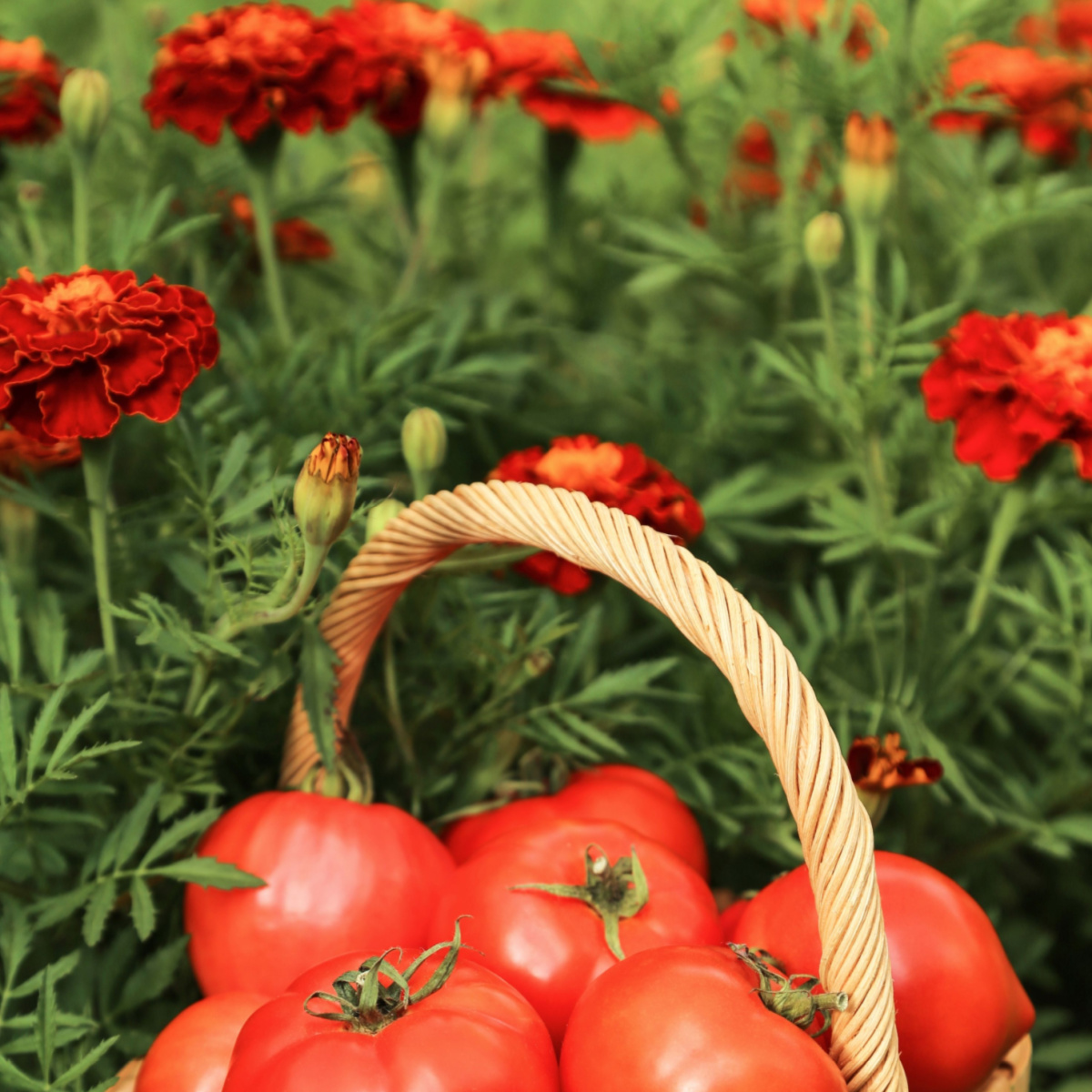
The Tomato & Marigold Secret – How & Why Planting These 2 Annuals Together Works Wonders!
The Many Benefits of Marigolds For Tomato Plants
As you will see below, the list of benefits for growing marigolds with your tomatoes is certainly lengthy. But right up front, one of the most important issues that marigolds can help with when it comes to protecting your tomato plants is with the dreaded nematode.
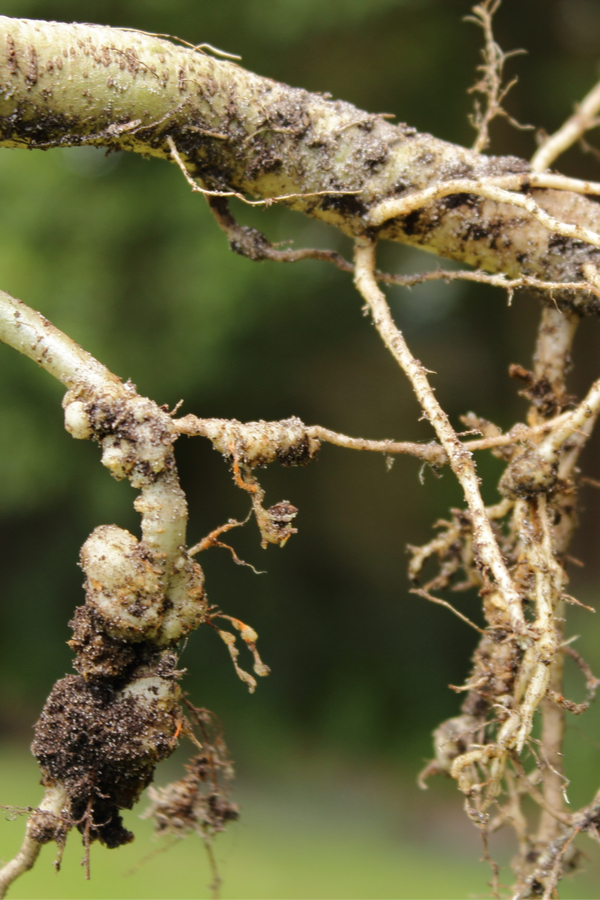
Nematodes are extremely destructive pests, especially when it comes to tomato and pepper plants. Living in the soil, nematodes feast on the roots of plants. As they do, they take energy from the foliage and fruit above.
Nematodes slowly drain life from the roots, causing decay in the root structure of the plant. As this occurs, the foliage and fruit above slowly wilt away until they ultimately die off completely. It’s a slow and steady decline for the plants, but one that marigolds can actually prevent.
The roots of the marigold plant produce and secrete a chemical substance that is toxic and deadly to nematodes. In fact, in short order, it can wipe out an entire population of nematodes. In the process, it can save not only your tomato and pepper plants, but many of the other vegetable plants they feed on as well.
Attracting Beneficial Insects
Marigolds attract a long list of beneficial insects to the garden with their pungent foliage and colorful blooms. That list includes honey bees, butterflies, moths and most importantly, wasps.
Why are wasps so important for tomatoes? Believe it or not, the paper wasp is one of the best pollinators of tomato plants. In addition, parasitic wasps are also beneficial to tomatoes because they are one of the few insects that can help control tomato hornworms.
Tomato hornworms can decimate a tomato plant and crop quickly. Not only do they strip plants of foliage seemingly overnight, they will also drill right into your tomatoes on the vine.
But parasitic wasps can help fight hornworms naturally. For starters, they lay their eggs on the back of hornworms. When they do, the young larvae hatches, feeds on the hornworm, and it eventually dies.
But not only do marigolds help bring in the wasps that help control hornworms, their pungent smell is also offensive to hornworms, and it helps keep them out of your tomato patch right from the start!
Check out our latest podcast below!


Marigolds can protect your garden from far more than just the dreaded tomato hornworm. Their smelly blooms and foliage also help repel and protect against squash bugs, cabbage worms and aphids as well.
As if that wasn’t enough, many common animal visitors to the garden are not exactly fond of marigolds either. That list includes rabbits, squirrels, chipmunks, groundhogs, raccoon and even deer. Talk about a blooming plant that can protect like no other!
Where To Plant Marigolds
So where are the best places and locations to plant marigolds in the garden? The short answer is anywhere and everywhere! After all, they do provide amazing color wherever they grow. But when it comes to protecting tomatoes, the closer you can grow marigolds to your tomato plants, the better.
For traditional garden plantings, that means planting right in the same row. We now sow marigold seeds right in the same growing rows as our tomato plants on the same day we plant our tomatoes. The soil at this point is warm, and the seeds will germinate, grow, and begin to protect fast.
For our row plantings, we sow 8 to 12 seeds about 12″ inches around the circumference of each plant. As they sprout we thin to 4 to 5 plants around each tomato.
For container plants, we use either seeds or small marigold transplants in the containers right beside the tomato plants. With containers, we usually plant or leave one or two growing alongside, depending on the container size.
Why French Marigolds Are The Way To Go
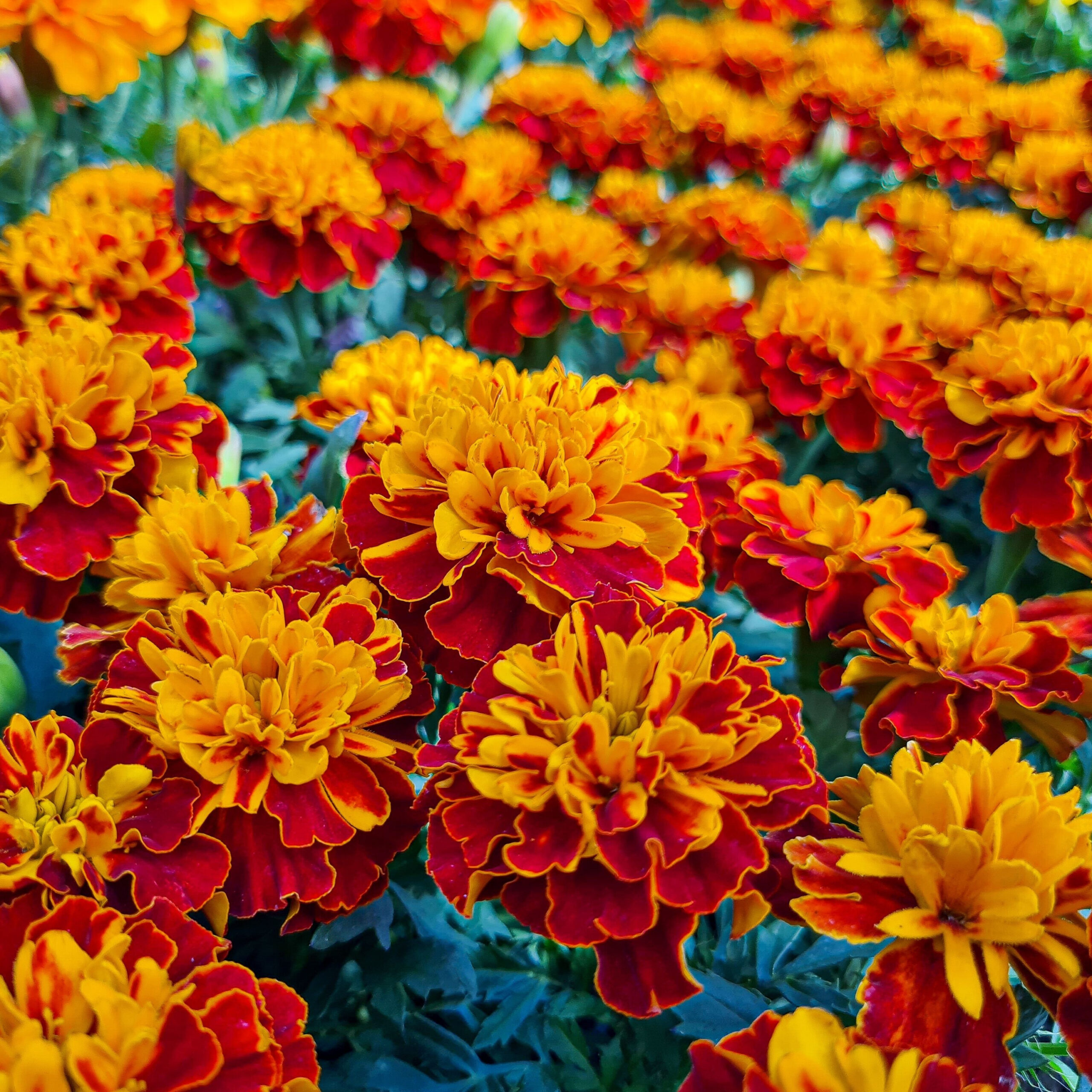
The real secret to planting marigolds and tomatoes together is to plant the French Marigold variety. Not only are many of the varieties in this family compact (making them perfect for protecting container plants), they are known to be among the best of the best of marigolds when it comes to deterring pests.
French marigolds also happen to be one of the easiest to grow, and are extremely tough and durable against drought, excessive sunlight and heat. Affiliate Link: Tri-Color French Marigold Seeds
In addition to planting in the rows and in containers, you can plant the border of your garden in marigolds as well. For these areas, we usually select large varieties that bring big color and interest. Marigold types such a with their huge pom pom blooms are always a hit.
The Ease of Planting
What really makes marigolds a perfect choice for planting in the garden is just how easy they are to plant. Although you can purchase marigold transplants, they grow so incredibly well from seed it simply isn’t necessary.
Marigold seeds can sprout in as little as 5 days after planting, especially if the soil is warm. Within a few weeks, they can already be a solid four to six inches tall, and emitting their unique and protective aroma from their foliage. And by six to eight weeks, they are usually blooming strong.
To plant, sow seeds directly into the soil and cover with 1/8 to 1/4 inch of soil. Water the seeds in gently and sit back and wait. If the soil is near 60° Fahrenheit or more, the seeds will usually pop up within a week.
Best of all, they will germinate and take off in nearly any soil or growing condition you can throw at them. Perhaps best of all, the seeds of marigolds are easy to save and use year after year – making them not just beautiful, but extremely economical too.
Here is to discovering the marigold and tomato planting secret, and to growing your best tomato harvest ever! Happy Gardening, Jim and Mary.
Old World Garden
Jim and Mary Competti have been writing gardening, DIY and recipe articles and books for over 15 years from their 46 acre Ohio farm. The two are frequent speakers on all things gardening and love to travel in their spare time.
As always, feel free to email us at thefarm@owgarden.com with comments, questions, or to simply say hello! You can sign up for our free email list in the subscribe now box in the middle of this article. Follow us on Facebook here : OWG Facebook. This article may contain affiliate links.
