


To start with, there are many excellent regional native plant books available, some of which are focused not just on identifying these species, but on using them in the garden as well.
I’ll share a few titles that are on my own bookshelves.
For the Intermountain West region of the US, one of the best selections is “Landscaping on the New Frontier: Waterwise Design for the Intermountain West” by Susan E. Meyer, Roger K. Kjelgren, Darrel G. Morrison, and William A. Varga.
The species recommended in this book are arranged by water needs, a feature I find extremely helpful in my arid climate. It’s available for purchase at Amazon.
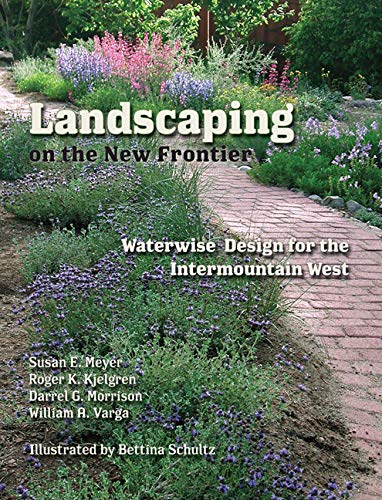
Landscaping on the New Frontier
For the Southeast region, my top pick is “Native Plants of the Southeast: A Comprehensive Guide to the Best 460 Species for the Garden” by Dr. Larry Mellichamp, also available from Amazon.
The species in this book are organized by plant type.
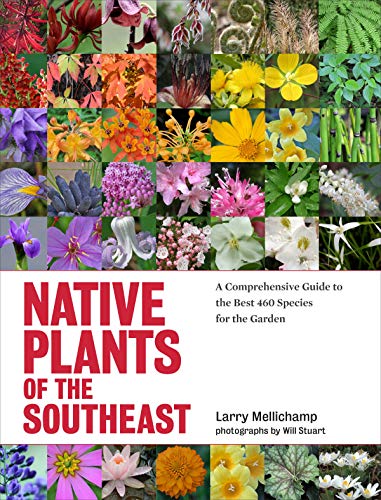
Native Plants of the Southeast
And if you’re a resident of the Pacific Northwest, one of my top resources for that area is Eileen M. Starck’s “Real Gardens Grow Natives.”
This is an excellent guide to gardening with native species in the Pacific Northwest, with species organized by light requirements. You can find it at Amazon.
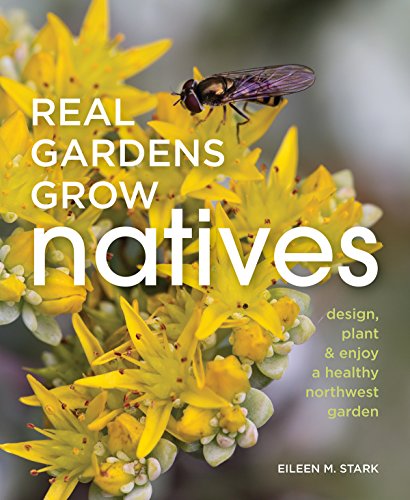
In addition to guide books, the website of your local native plant society would be another excellent resource for identifying local species for gardening projects.
Some of these organizations, such as the California Native Plant Societyhave extensive searchable plant databases.
And to add to these resources, I’m going to make a few plant suggestions of my own shortly.
Before we get to those recommendations though, a lighthearted word of warning: While choosing plants can be the most thrilling part of the process, this is also the time to exercise some self-control!
If your planting area is in full sun with dry, sandy soil, then you are going to just completely ignore the species that require deep shade and moist soil that’s rich in organic matter.
If you can’t do that, and keep fixating on the shade growers, then you probably need to start over and select a shady location.
And it’s ok to rethink your project! Maybe once you get your shade garden out of your system you can come back later and work on your dry, sunny garden next.
Once you have a broad list of wildflowers to work with, you can narrow your selection during the following portions of the design process.
In addition to the books and websites mentioned, here are a few of my favorite native wildflower recommendations for various regions of the US.
California Poppies
The nodding orange heads of California poppies are a cheery sight to behold.
This species, Eschscholzia californica, is native not just to California, as its name implies, but also to other states in the western US, including Washington, Oregon, Nevada, Arizona, Utah, and New Mexico.
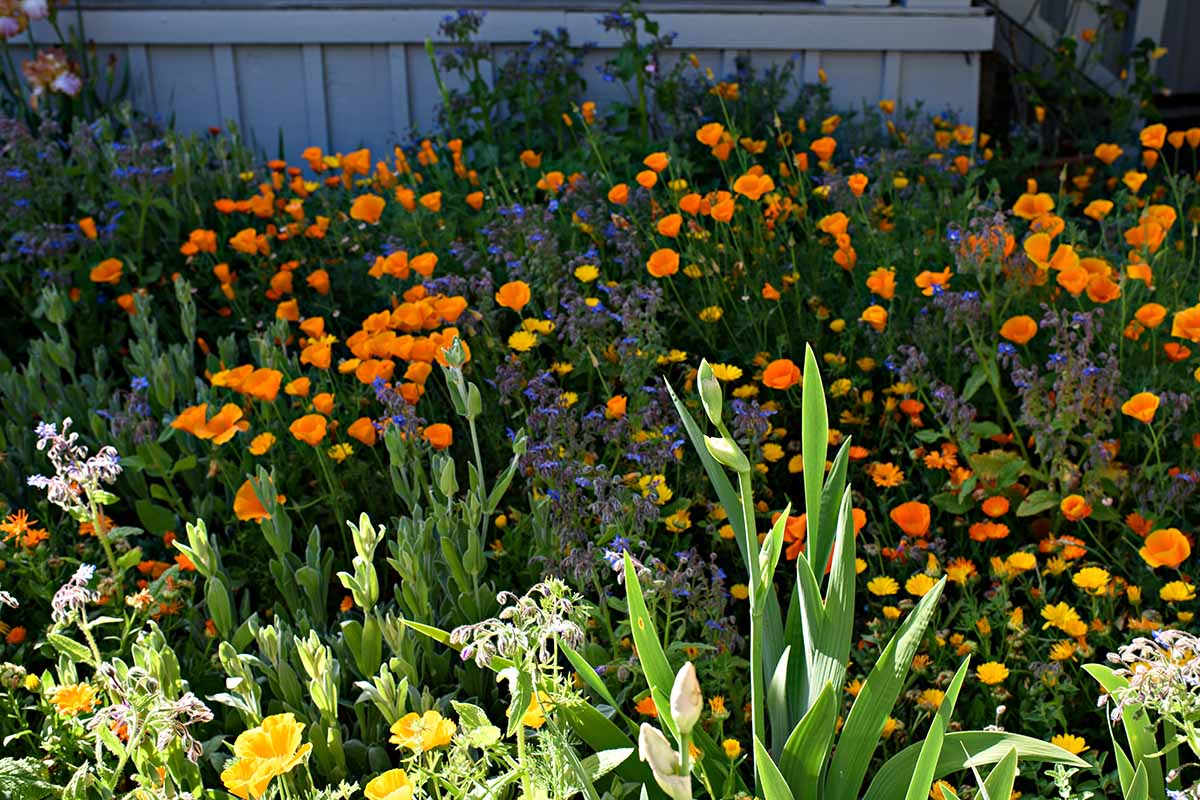
The flowers of this species are bright orange and delicate, fluttering in even the slightest breeze. The plants have silvery green foliage and reach six to 12 inches tall.
This species is lovely when mixed with other wildflowers, but when used a lot to create wide swaths of color, it is truly stunning. Expect these bright blooms to provide a show from spring until your first fall frost.
California poppies are perennial in Zones 8 to 10, but they can be grown in colder zones as annuals, where they will readily self-seed.
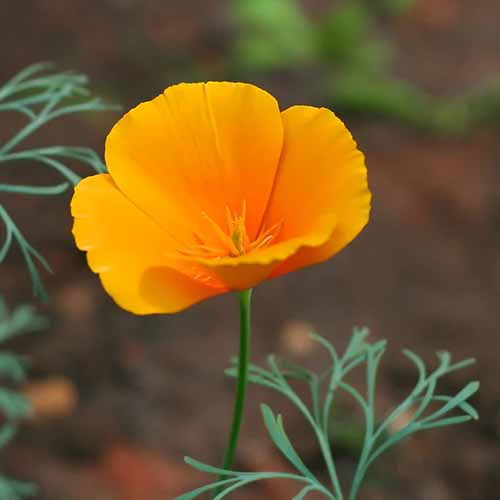
Both organic and conventionally grown California poppy seeds are available for purchase in an assortment of package sizes from Eden Brothers.
Find tips on growing California poppies here.
Plains Coreopsis
Native to the central plains of the US, plains coreopsis (Coreopsis tinctoria) makes a bright and cheery addition to any veggie garden, bed, or border.
The flowers are yellow with maroon centers, highly attractive to pollinators, and are held aloft on stems adorned with delicate, wispy foliage that might remind you of cosmos.
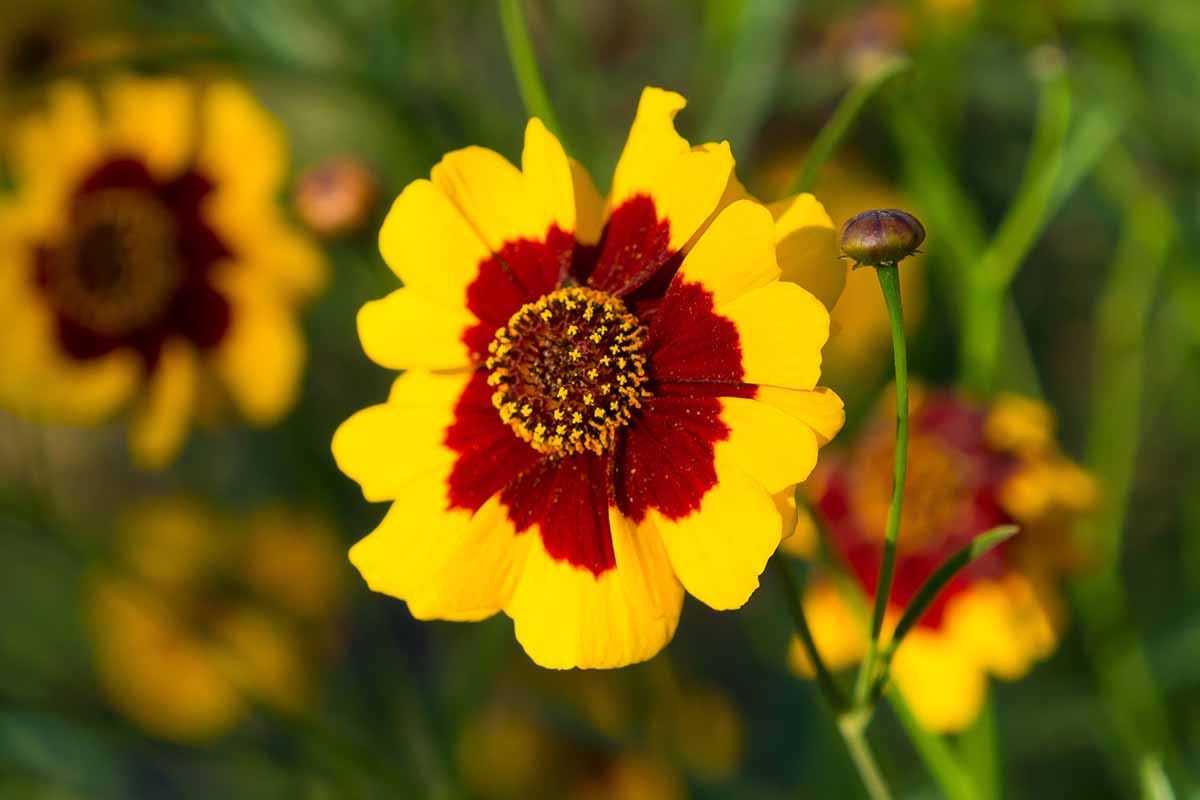
This species grows to be one to two feet tall.
Plains coreopsis requires full sun to part shade, is adaptable to moist conditions while remaining very drought tolerant, and prefers sandy soil.
This annual can be grown successfully in Zones 2 to 11, and will bloom from midsummer until your first frost.
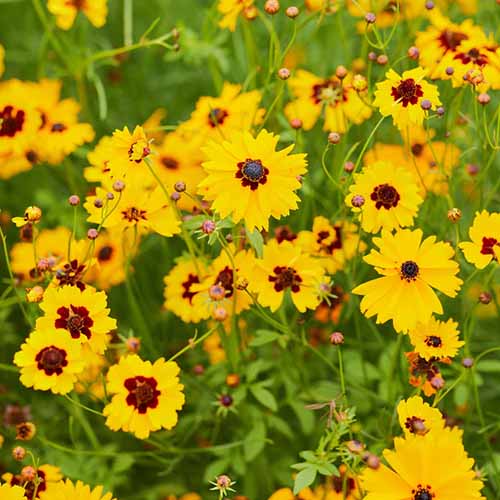
Plains coreopsis seeds are available in a variety of packet sizes from Eden Brothers.
You can learn more about growing coreopsis here.
Sundial Lupine
This next selection, sundial lupine, is native to the Midwest and the eastern United States.
Sundial lupine (A perennial wolf) has palm-shaped leaves and long spikes of purplish-blue flowers, which bloom in the spring.
This species grows to be two to three feet tall and 18 inches wide.
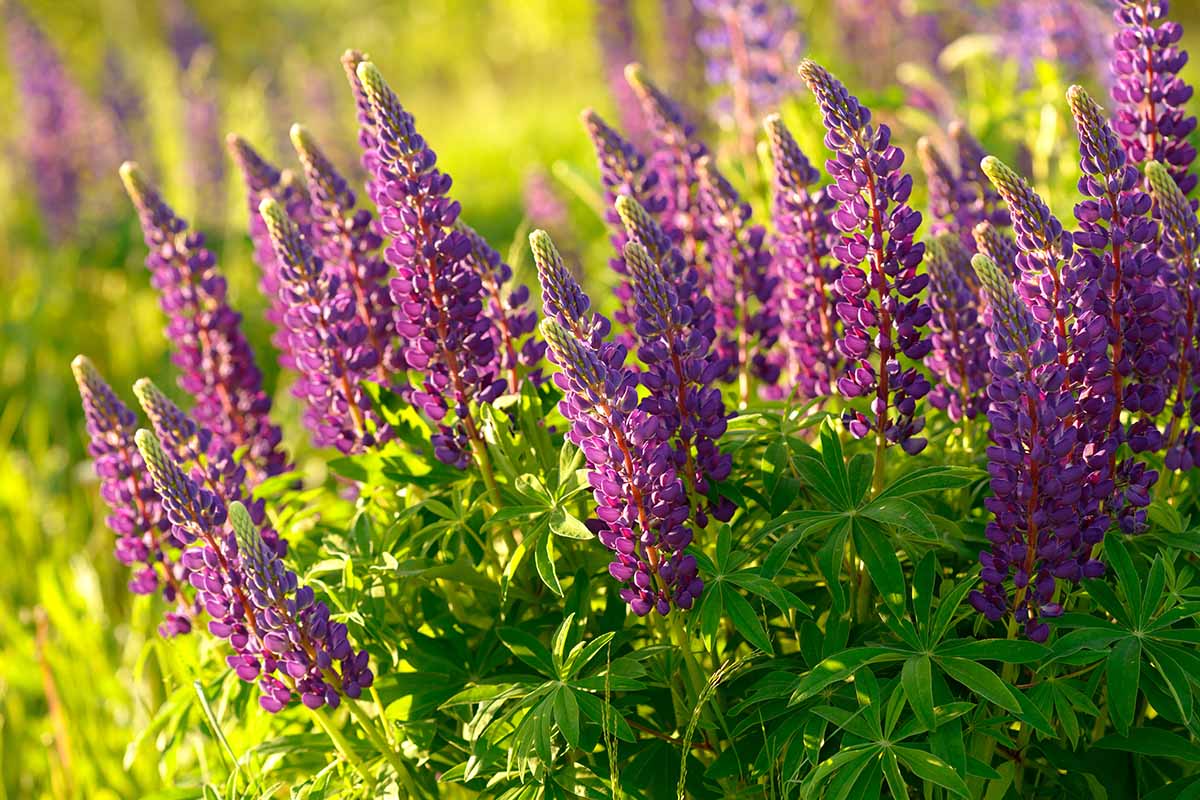
Also known as “wild lupine,” this member of the legume family is a nitrogen fixer like its relatives, peas and beans.
Sundial lupine is adaptable to sun or part shade, and to both dry and moist conditions. It is also drought tolerant.
This species grows well in sandy soils but will tolerate other soil types, as long as it has good drainage and a soil pH between 6.8 and 7.2.
Sundial lupine is a host plant for Karner blue butterflies (Plebeian Melissa Samuels) a subspecies of Melissa of the common people that is at risk of becoming extinct.
In its caterpillar stage, this butterfly feeds only on the leaves of sundial lupine, a perennial hardy in Zones 3 to 8.
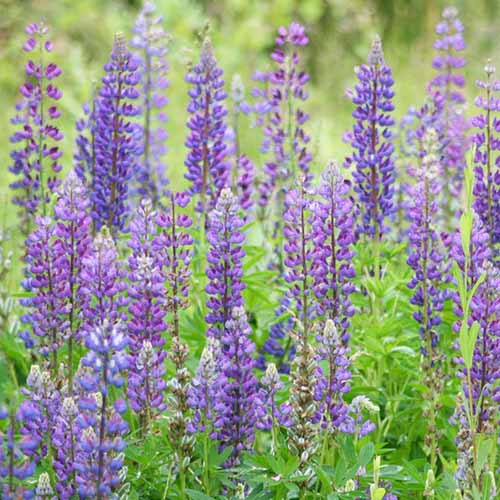
Seeds are available in a variety of packet sizes from Eden Brothers.
While some wildflowers have a fairly narrow indigenous range, others have a much larger native distribution, making them good options for a larger group of gardeners.
Learn more about growing lupines here.
If you’d like to peruse more options for your landscape, be sure to read our article on 15 of the best native wildflowers for the US and Canada.
Sketch Your Design
Once you have a selection of species in your plant palette, you can start playing with how to arrange them within your space – something I recommend trying out on paper first!
No worries if you feel you don’t have art skills.
A rough sketch drawn from a bird’s eye view will help you fit your selected wildflowers into your garden area nicely, so that they aren’t too crowded or too widely spaced.
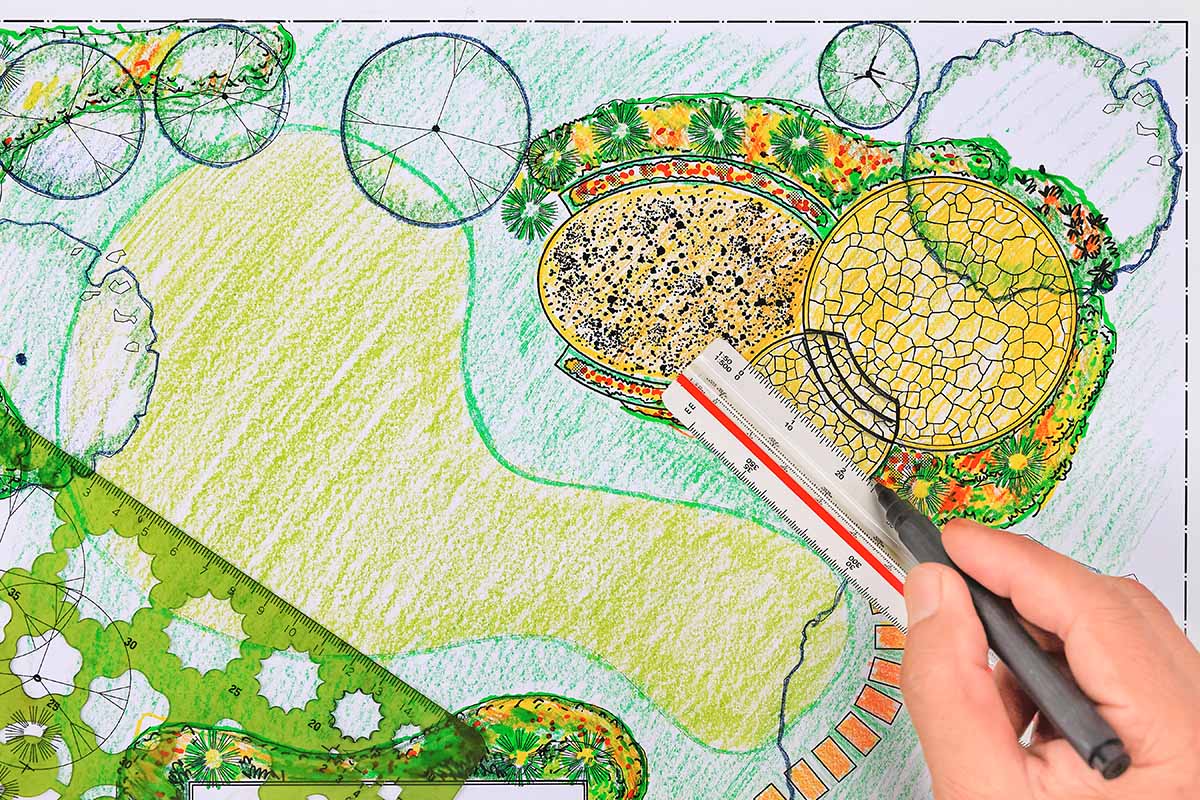
But to know how many plants you can fit into your planting area, a drawing made to scale is what you need.
A simple way to make a basic scale drawing is to use graph paper. You can assign each square a specific size, for instance, designating each square in the grid as a square foot.
Remember when you took measurements of your garden area earlier? Now is the time to use those.
Draw in the dimensions of your planting area, using the lines of the graph paper as your guide.

Now you can begin to arrange your palette selections on paper. To do this, you’ll need to know the mature width of each plant.
Decide how dense you want the landscape to be, and arrange your plants on your grid accordingly.
Sketching out a design is certainly a trial-and-error process, so plan on completing several tries before you come up with your final design.
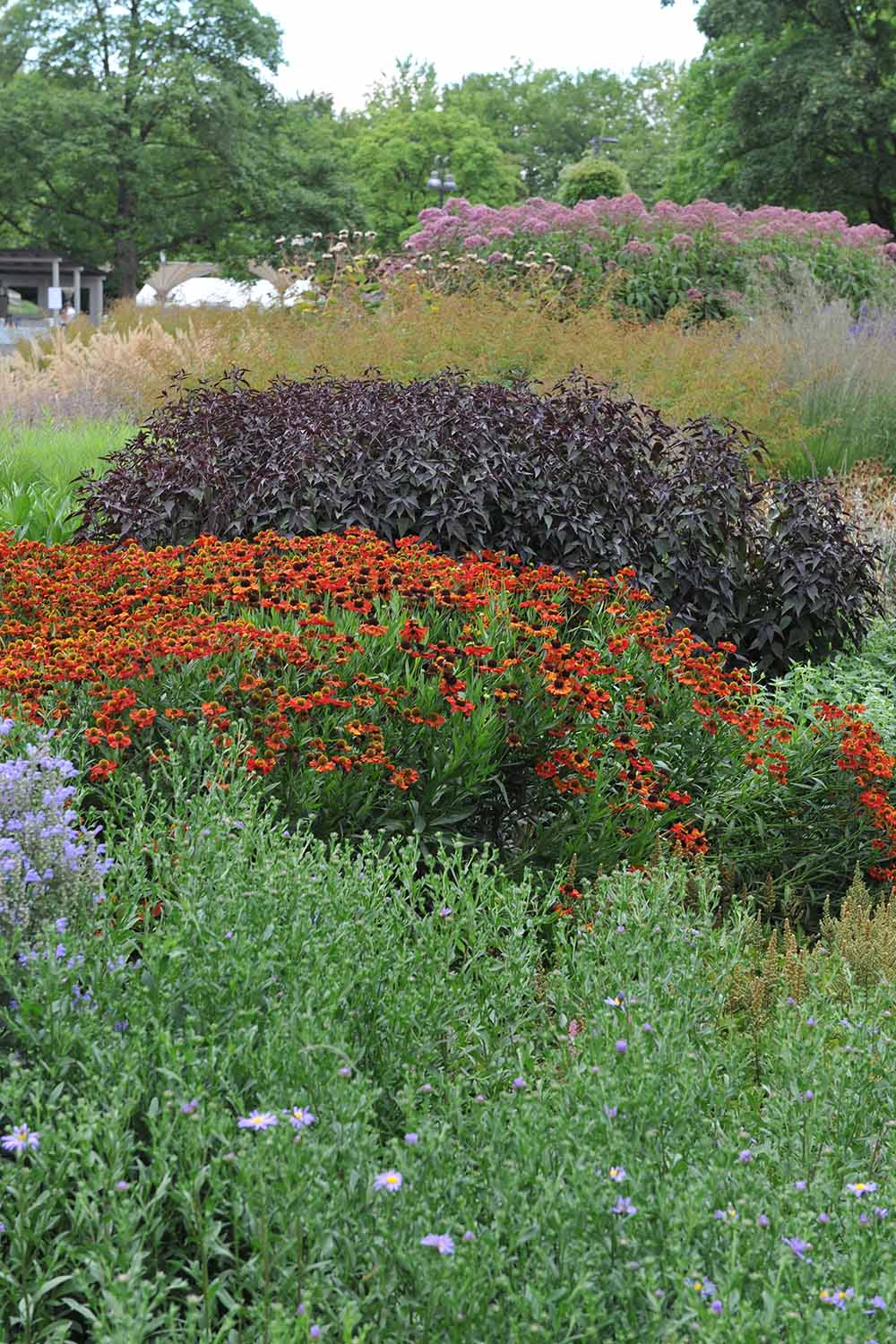
While sketching your design, there are a few things to consider:
When arranging the wildflowers in your sketch, check the mature height of each plant, and place taller ones towards the back of your landscape, so you will have a clear view of the smaller species in the front.
Another good design consideration is that mass plantings will often give you more bang for your buck.
