


Plant this beautiful spring garden layout in the Northeast
Catharine Cooke, a landscape designer, writer, and speaker, co-owns Spring Lake Garden Design in northwest Connecticut. She shares a planting plan thoughtfully designed for the Northeast’s climate. Anchored by eastern arborvitae and gray birch trees, the design is complemented by blooms from great camas and deutzia, which attract pollinators throughout the season in this Northeast spring garden layout.
Spring garden layout plant list
Read on to find details about each corresponding plant numbered in the illustration above to recreate this expert layout in your own landscape.
See More: Design Ideas for the Northeast
1. ‘Degroot’s Spire’ Eastern arborvitae
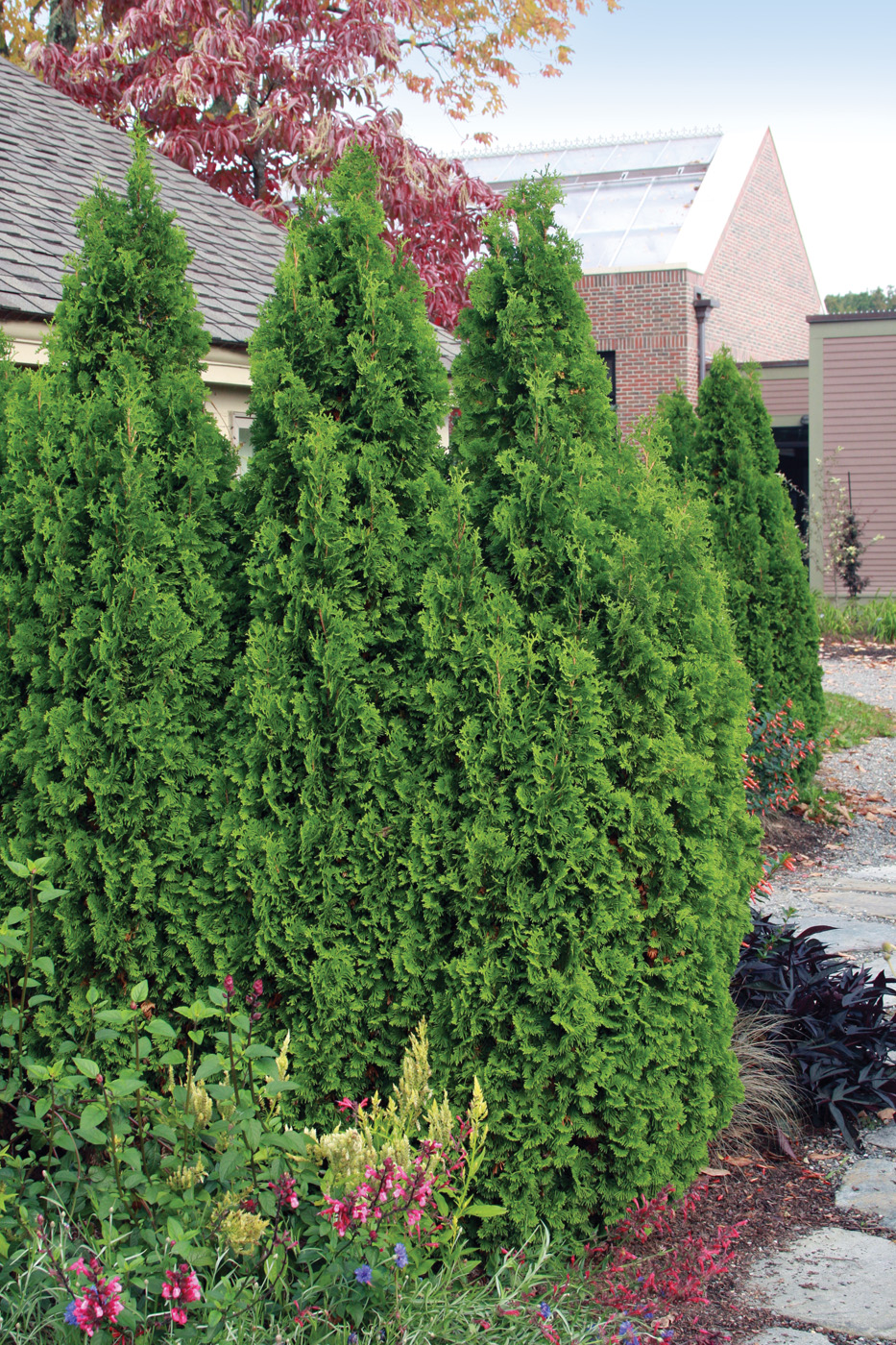
Western thuja ‘Degroot’s Spire’
- Zones: 2–7
- Size: 20 to 30 feet tall and 4 to 6 feet wide
- Conditions: Full sun to partial shade; average to moist, well-drained soil
- Native range: Northeastern North America
‘Degroot’s Spire’ eastern arborvitae offers welcome relief from ubiquitous screening hedges. This native can hold its own as a specimen, with multiple trunks forming a squared-off, irregular finish at the top that is reminiscent of Irish yews (Taxus baccata ‘Fastigiata’, Zones 6–8). It has a columnar habit with rich green foliage, and the soft, feathery fans are flat and slightly twisted with a citrusy scent. Arborvitaes take pruning in early spring well, but this cultivar doesn’t need it. In the above vignette, ‘Degroot’s Spire’ serves as an evergreen backdrop that will let the gray birch shine, especially in winter, when the arborvitae will gracefully bronze.
Read More: 20 Unique Hedging Plants, Small, Medium, and Large Options
2. Great camas
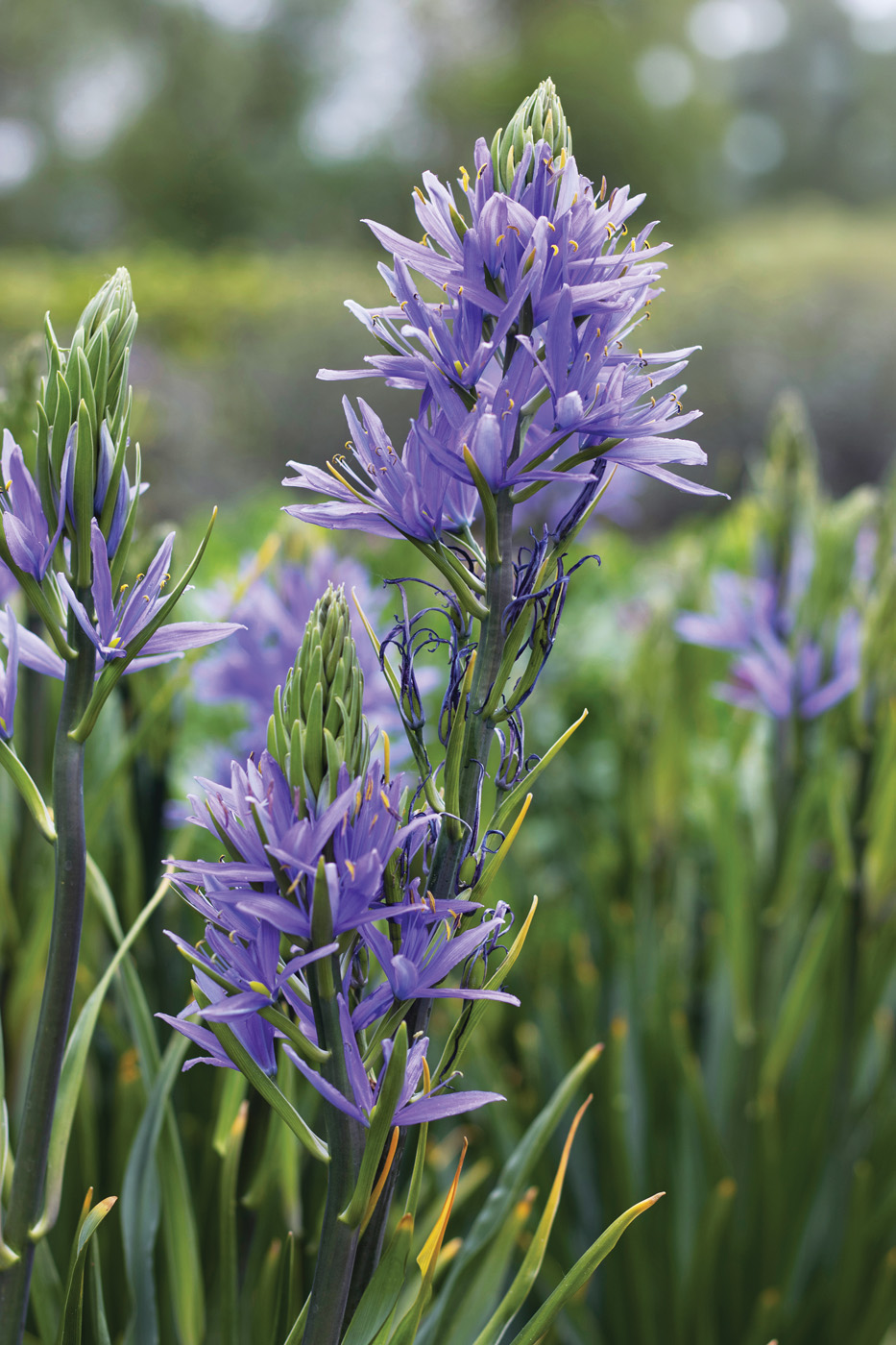
Camassia leichtlinii subsp. suksdorfii (Caerulea Group)
- Zones: 5–9
- Size: 2½ to 4 feet tall and 1 to 2 feet wide
- Conditions: Full sun to partial shade; moist, acidic, well-drained soil
- Native range: Western North America
This bulb brings a gorgeous blue-violet vertical accent to any planting and is great for pollinators, especially bees. It bears starlike blue flowers in April through May that are 2 to 3 inches wide, with up to 80 flowers per raceme. They open from bottom to top for several weeks. Its strap-like leaves form a clump at the bottom of the plant.
The Caerulea Group features plants with blue blossoms that look great with the white blooms of ‘Nikko’ deutzia, but this species can also have white, cream, or purple flowers. It prefers fertile, acidic, humusy soil but will grow in most soil types, even wet ones, making it good for rain gardens. Plant the bulbs 4 to 6 inches deep in fall.
Read More: Unusual Garden Bulbs to Try
3. ‘Whitespire’ gray birch
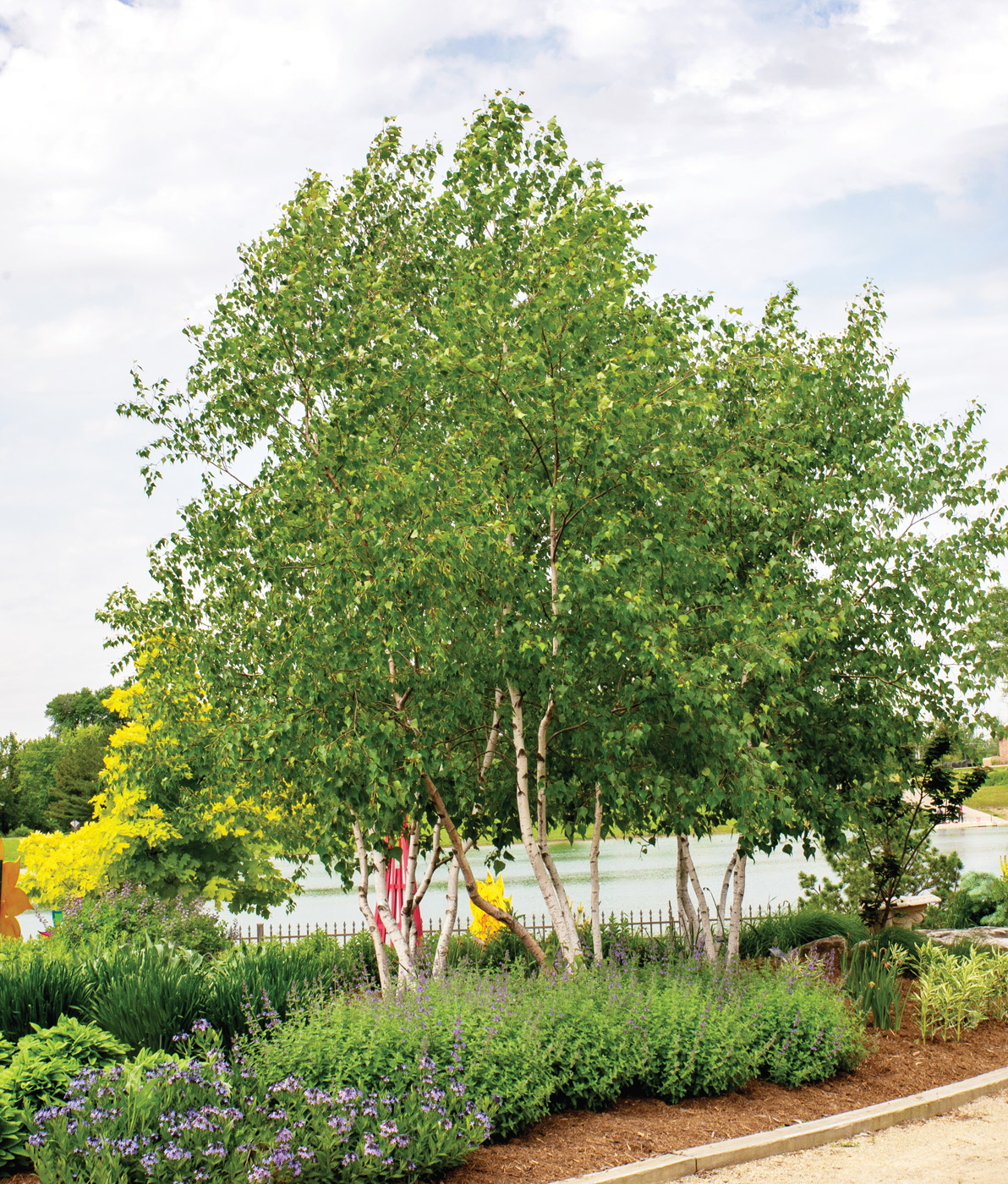
Betula populifolia ‘Whitespire’
- Zones: 3–6
- Size: 20 to 40 feet tall and 10 to 20 feet wide
- Conditions: Full sun to partial shade; medium to wet, well-drained soil
- Native range: Northeastern North America
Gray birch is a native tree with good resistance to bronze birch borer but is not heavily cultivated due to its dull bark color. Welcome ‘Whitespire’, an upright, fast-growing cultivar with shiny dark green leaves that turn a pleasing yellow in fall. The bark is non-exfoliating but is white like the classic paper birch (B. papyrifera, Zones 2–6).
This cultivar has better resistance to borers than paper birch, especially if it has been vegetatively propagated as opposed to propagated by seed. As a result, some nurseries are now designating this distinction with the name ‘Whitespire Senior’ instead of ‘Whitespire’ to indicate the tree has been vegetatively propagated.
4. The name ‘Nikko’
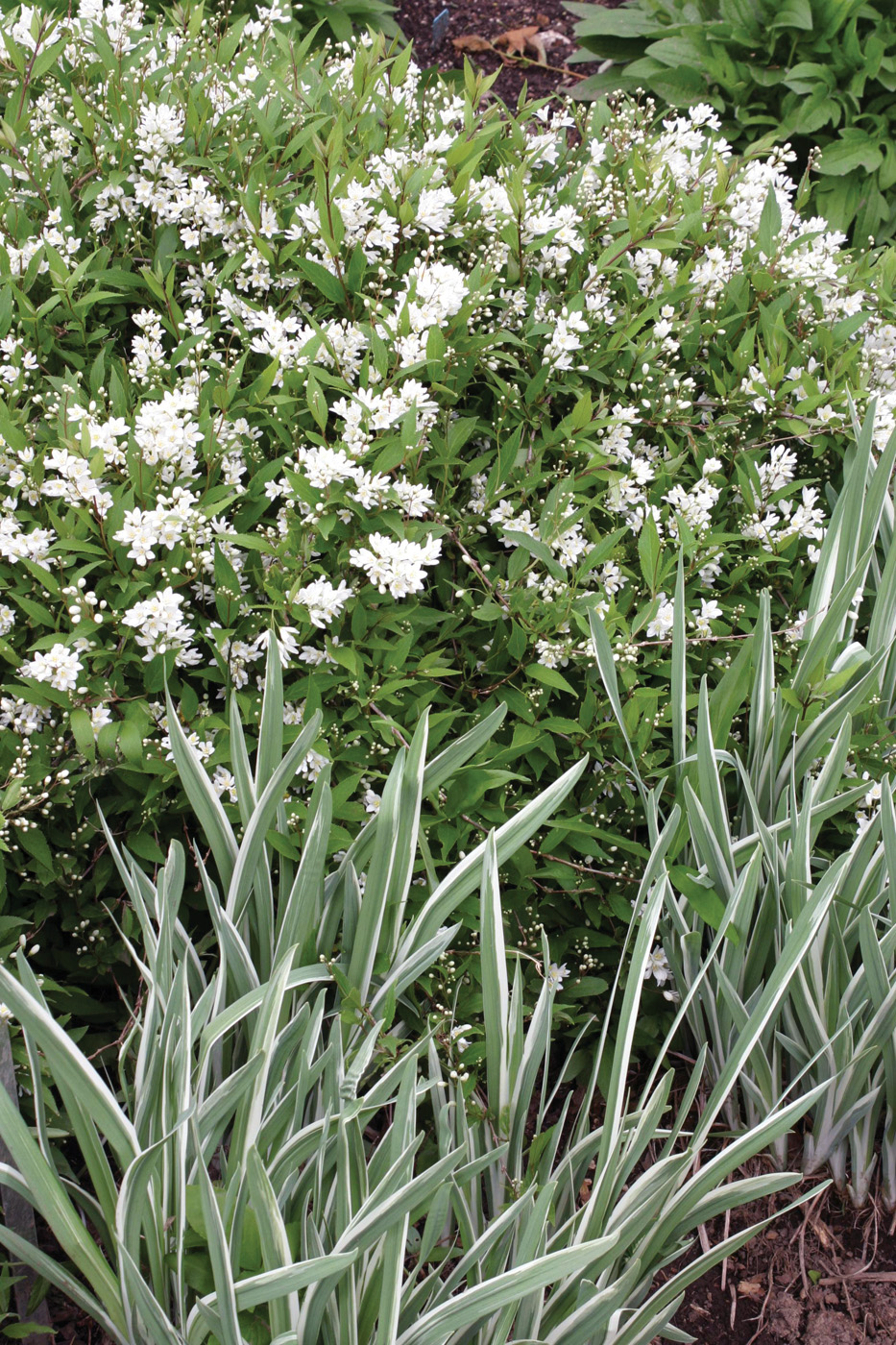
Deutzia gracilis ‘Nikko’
- Zones: 5–8
- Size: 1 to 2 feet tall and 2 to 5 feet wide
- Conditions: Full sun to partial shade; average to moist, well-drained soil
- Native range: Japan and Taiwan
Graciliswhich means slender or graceful, is a good descriptor of this plant from the hydrangea family. ‘Nikko’ is a dwarf, dense, spreading cultivar with a mounded habit and arching stems that would sit well under a gray birch. It is more compact than the species, growing only about 2 feet tall. But its pearly, clear white spring blooms are the reason why I grow this deciduous shrub. The flower buds are like tiny pearls that cover the green leaves and open to fragrant, small, starlike panicles that shine for about two weeks in April and May. In fall, the leaves turn a rich burgundy, which would also be effective against the white bark of ‘Whitespire’ birch.
See More from the Summer Issue of Fine Gardening!
Fine Gardening Recommended Products

The Crevice Garden: How to make the perfect home for plants from rocky places
Fine Gardening receives a commission for items purchased through links on this site, including Amazon Associates and other affiliate advertising programs.
A crevice garden replicates the environmental conditions of mountain tops, deserts, coastlines, and other exposed or rocky places on earth. These striking garden features provide perfect conditions for the plants native to these far-off places, bringing the cultivation of these precious gems within everybody’s reach.

The Regenerative Landscaper: Design and Build Landscapes That Repair the Environment
Fine Gardening receives a commission for items purchased through links on this site, including Amazon Associates and other affiliate advertising programs.
2024 Nautilus Award Gold Medal Winner! This awe-inspiring guide weaves together permaculture design, food resiliency, climate adaptation, community organizing, and indigenous wisdom that you can implement in your own backyard.
