


Plant ‘Burgundy Blast’ baptisia once and enjoy this purple beauty for years to come
The first time I grew a baptismit ended in heartbreak. It started as love at first sight at the nursery, when I spotted ‘Twilite’ (Baptisia × varicolor ‘Twilite’, Zones 4–8) in all its glory sitting on a sunny bench in the corner. I had never seen anything like it and promptly put its gorgeous, smoky purple blooms with yellow keels in a prominent spot in my entry garden. A few years later I was moving, and I was not going to leave ‘Twilite’ behind. Unfortunately, I did not know that baptisias have taproots that do not transplant easily, and I lost my beloved perennial.
Learn more: Why Aren’t You Growing More Baptisias?
A baptisia you and the pollinators will both love
It was a sad loss and one I’ll never forget, but I’m happy to report there’s a stunning new baptisia in my life, ‘Burgundy Blast’ (B. ‘Burgundy Blast’). In early summer, this gem puts on a floral show that will stop you in your tracks. Beautiful, spiked, wine-purple flowers with yellow keels beckon bees, butterflies, and hummingbirds alike, towering above attractive, dark blue-green foliage. After the blooms fade, the plant produces intriguing seedpods and its foliage provides a lovely backdrop for neighboring perennials through the end of the season.
Plants can reach nearly 4 feet tall and wide, providing a small shrub-like presence that pairs well with other early perennials like eastern bluestar (Amsonia tabernaemontana, Zones 3–9) and wild geranium (Geranium maculatum, Zones 3–9), as well as later-blooming perennials like butterfly weed (Asclepias tuberosa Zones 3–9) and classic black-eyed Susan (Rudbeckia hirta, Zones 3–9). Place ‘Burgundy Blast’ in full sun to partial shade for the best performance. Once established, this perennial is fairly drought tolerant because of its deep taproot, but learn from my mistake and don’t move it once it has settled into the garden.
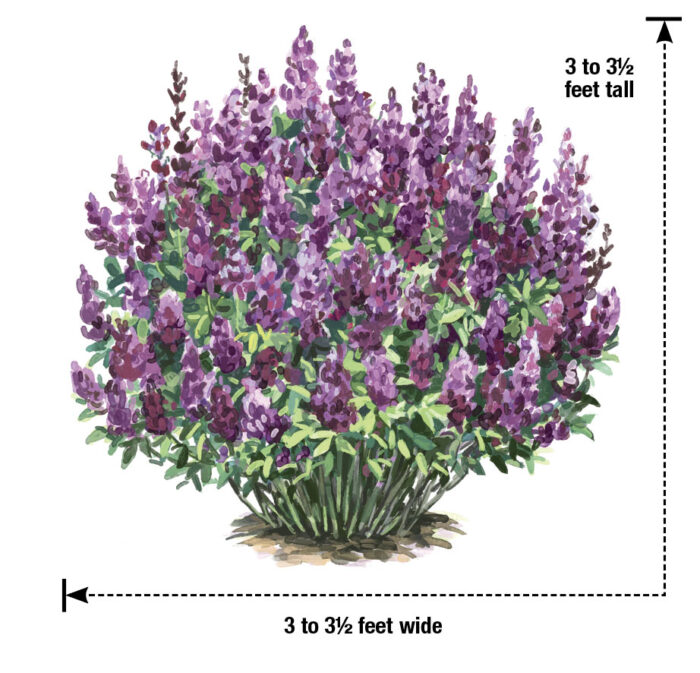
‘Burgundy Blast’ baptisia
Baptisia ‘Burgundy Blast’
Zones: 4–9
Conditions: Full sun to partial shade; poor to average, well-drained soil
Native Range: Central and eastern North America
Shade garden companion
This unique fern livens up shady nooks and crannies
Say goodbye to your shade-garden woes. Variegated holly fern is a distinctive deep-shade lover that looks refined without demanding attention. Each frond unfurls with a band of gold down the center, making this fern a standout in containers and garden beds. It pairs beautifully with darker greens, broader-leaved plants like hostas (Hosta spp. and cvs., Zones 3–8), heucheras (Heuchera spp. and cvs., Zones 3–9), or the strappy leaves of Japanese forest grass (Hakonechloa macra cvs., Zones 5–9). Its evergreen foliage provides an extended period of interest.
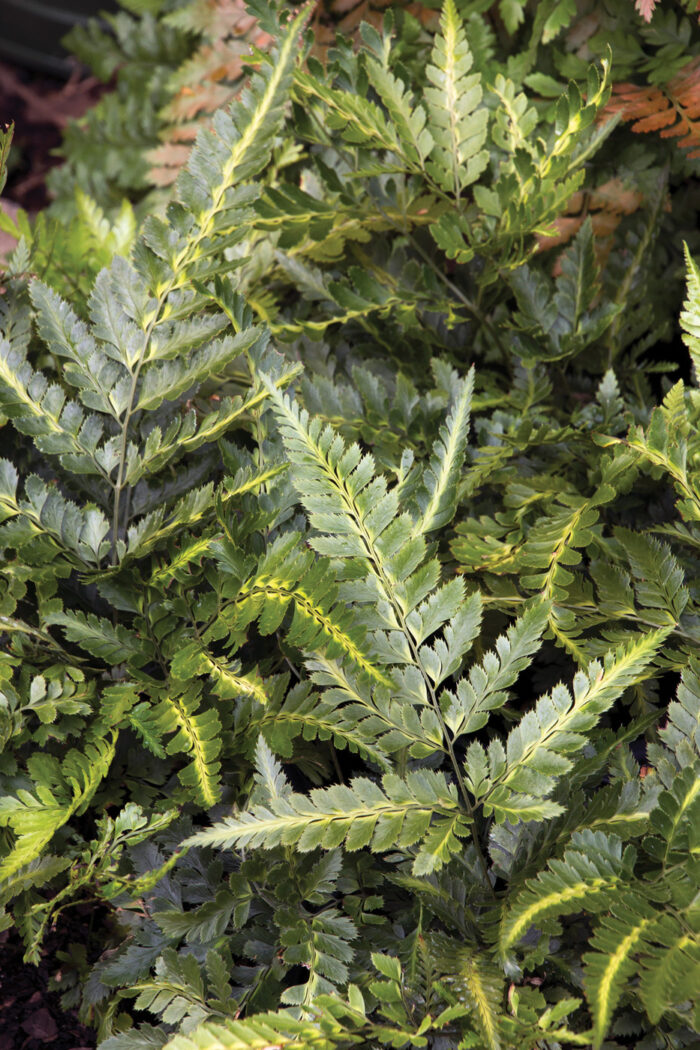
Variegated holly fern
Arachniodes simpler ‘Variegata’
Zones: 6–9
Size: 1 to 2 feet tall and 1½ to 3 feet wide
Conditions: Partial to full shade; rich, moist to wet soil
Native Range: China, Japan, Korea, and Vietnam
Plant sources:
Jennifer Benner is a former editor of Fine Gardening who gardens in northwest Connecticut.
Baptisia photo courtesy of Walters Garden Inc.;Variegated holly fern photo by Doreen Wynja/Monrovia. Illustration: Elara Tanguy
Fine Gardening Recommended Products
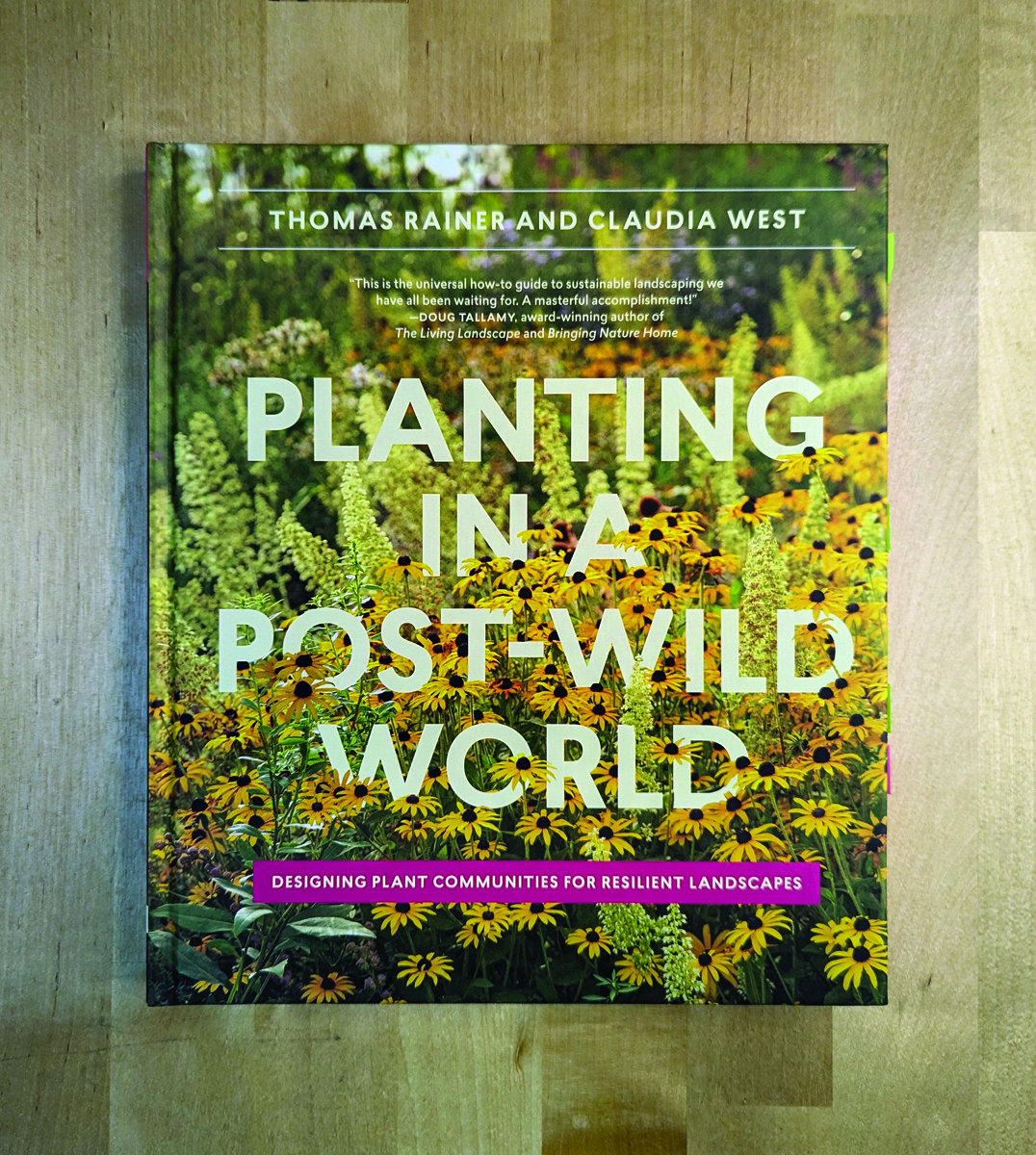
Planting in a Post-Wild World: Designing Plant Communities for Resilient Landscapes
Fine Gardening receives a commission for items purchased through links on this site, including Amazon Associates and other affiliate advertising programs.
Featuring gorgeous photography and advice for landscapers, Planting in a Post-Wild World by Thomas Rainer and Claudia West is dedicated to the idea of a new nature—a hybrid of both the wild and the cultivated—that can nourish in our cities and suburbs.
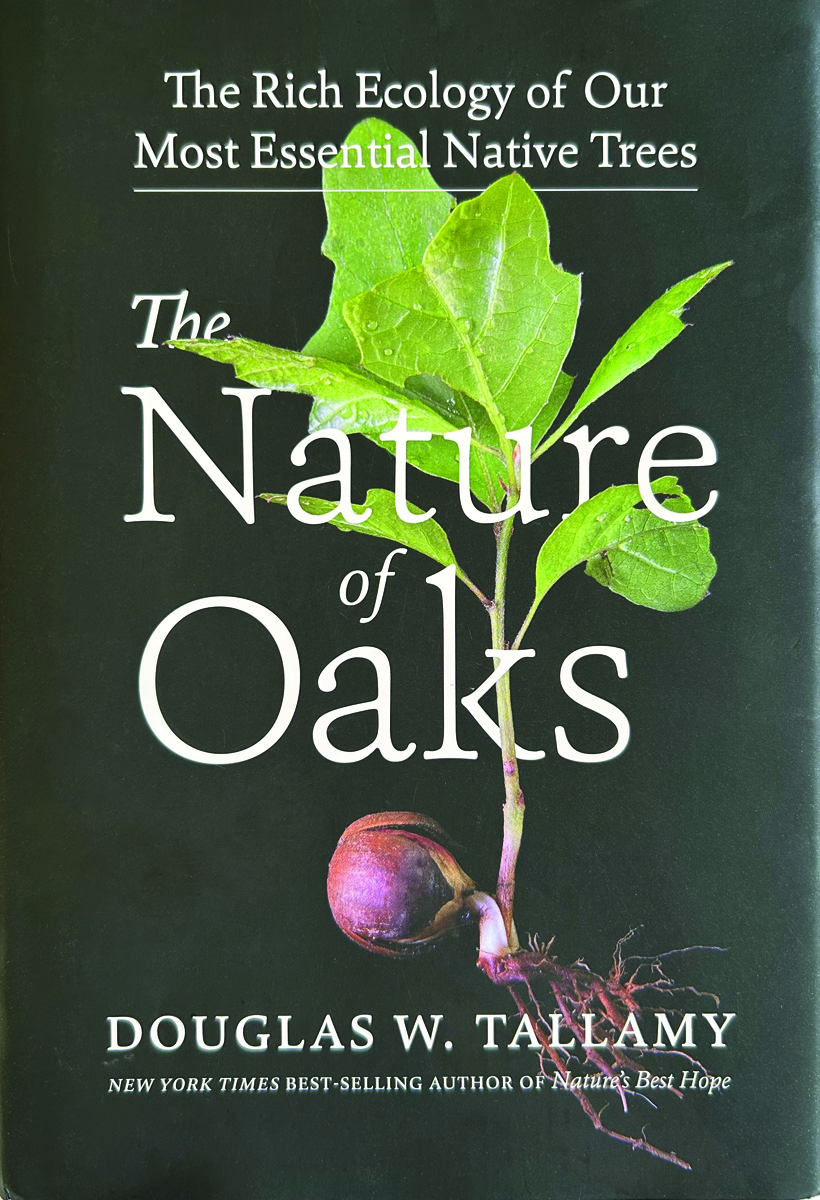
The Nature of Oaks: The Rich Ecology of Our Most Essential Native Trees
Fine Gardening receives a commission for items purchased through links on this site, including Amazon Associates and other affiliate advertising programs.
The Nature of Oaks reveals what is going on in oak trees month by month, highlighting the seasonal cycles of life, death, and renewal. From woodpeckers who collect and store hundreds of acorns for sustenance to the beauty of jewel caterpillars, Doug Tallamy illuminates and celebrates the wonders that occur right in our own backyards. He also shares practical advice about how to plant and care for an oak, along with information about the best oak species for your area.
