


Looking for the best way to fertilize and power up your cucumber plants to get them to produce more cucumbers this year?
If you want your cucumber plants to stay healthy, grow strong, and produce a steady harvest of crisp, flavorful cucumbers, fertilizing them correctly is one of the most important things you can do.
Cucumber plants are heavy feeders. They require a good supply of nutrients throughout the growing season to develop strong roots, healthy vines, and plenty of flowers and fruit. And while many gardeners know their plants need fertilizer, what they often don’t realize is that cucumber plants need different nutrients at different stages of growth.
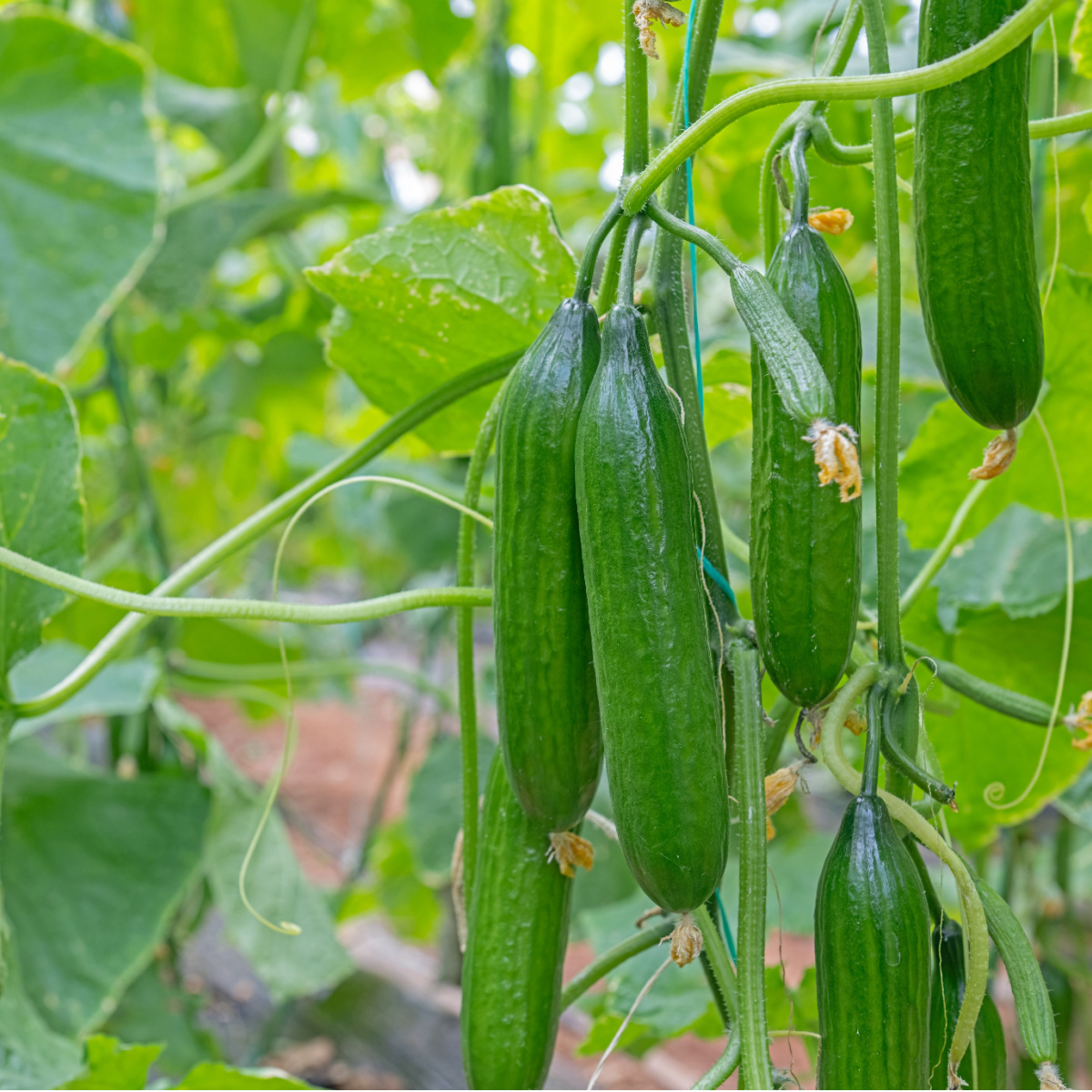
The good news is that feeding cucumber plants the right way is simple. By providing the proper nutrients when plants need them most, you can help increase both plant health and cucumber production all season long.
The Best Way To Fertilize Cucumber Plants
Why Fertilizing Cucumber Plants Matters
Like most vegetable crops, cucumber plants depend on nutrients from the soil to grow. In the early stages of life, those nutrients help create a strong root system, healthy stems, and lots of foliage.
That early growth is extremely important. The more leaves a cucumber plant develops, the more sunlight it can capture and convert into energy through photosynthesis. Strong roots also allow the plant to absorb water and nutrients more efficiently.
All of that early growth lays the groundwork for what comes later. Once cucumber plants begin producing flowers and fruit, they need a different type of energy to keep blooms forming and cucumbers developing. For the best harvest possible, it helps to adjust your fertilizing routine as the plant matures.

Fertilizing Young Cucumber Plants
During the first six to eight weeks of growth, cucumber plants are focused on building roots, stems, and leaves. At this stage, nitrogen is the nutrient they need most.
Nitrogen is responsible for leafy growth and vibrant green foliage. It is the same nutrient that gives lawns their rich green color. When cucumber plants receive enough nitrogen early on, they develop faster and create the strong framework needed for future production.
For young cucumber plants, an all-purpose granular fertilizer is an excellent choice. Fertilizers with a balanced N-P-K ratio such as 10-10-10 or 15-15-15 work particularly well. The nitrogen helps power growth, while the phosphorus and potassium support root development and prepare the plant for flowering and fruit production later in the season.
Granular fertilizers are especially effective at this stage because they release nutrients slowly into the soil. Instead of receiving a quick burst of nutrients, the plant gets a steady supply over time. This slow feeding process helps encourage consistent growth.
If you are planting transplants, apply fertilizer at planting time and then again about two to three weeks later. We typically grow our cucumbers directly from seed. When doing so, we allow seedlings to establish themselves for about ten days before giving them their first application of fertilizer.
Check Out Our Latest Podcast Below!


Why Nitrogen Is Important Early
When cucumber plants are young, their main goal is growth. They need strong vines and lots of leaves before they can begin producing heavily. Without enough nitrogen, plants often remain small and weak. They may struggle to produce enough foliage to support a large crop later in the season.
That is why using a balanced fertilizer early is so effective. It gives plants the nitrogen they need while still supplying other essential nutrients. However, once flowering begins, continuing to feed heavily with nitrogen can actually slow production. That’s when it’s time to switch your strategy.
Fertilizing Cucumber Plants For Maximum Production
As soon as your cucumber plants begin producing flowers, their nutrient needs change. At this point, the goal is no longer to encourage leafy growth. Instead, you want the plant to focus its energy on creating blooms and developing cucumbers.
This is where phosphorus and potassium become extremely important. Phosphorus helps support flower production and fruit development. Potassium plays a major role in overall plant health and helps plants produce and ripen fruit more efficiently.
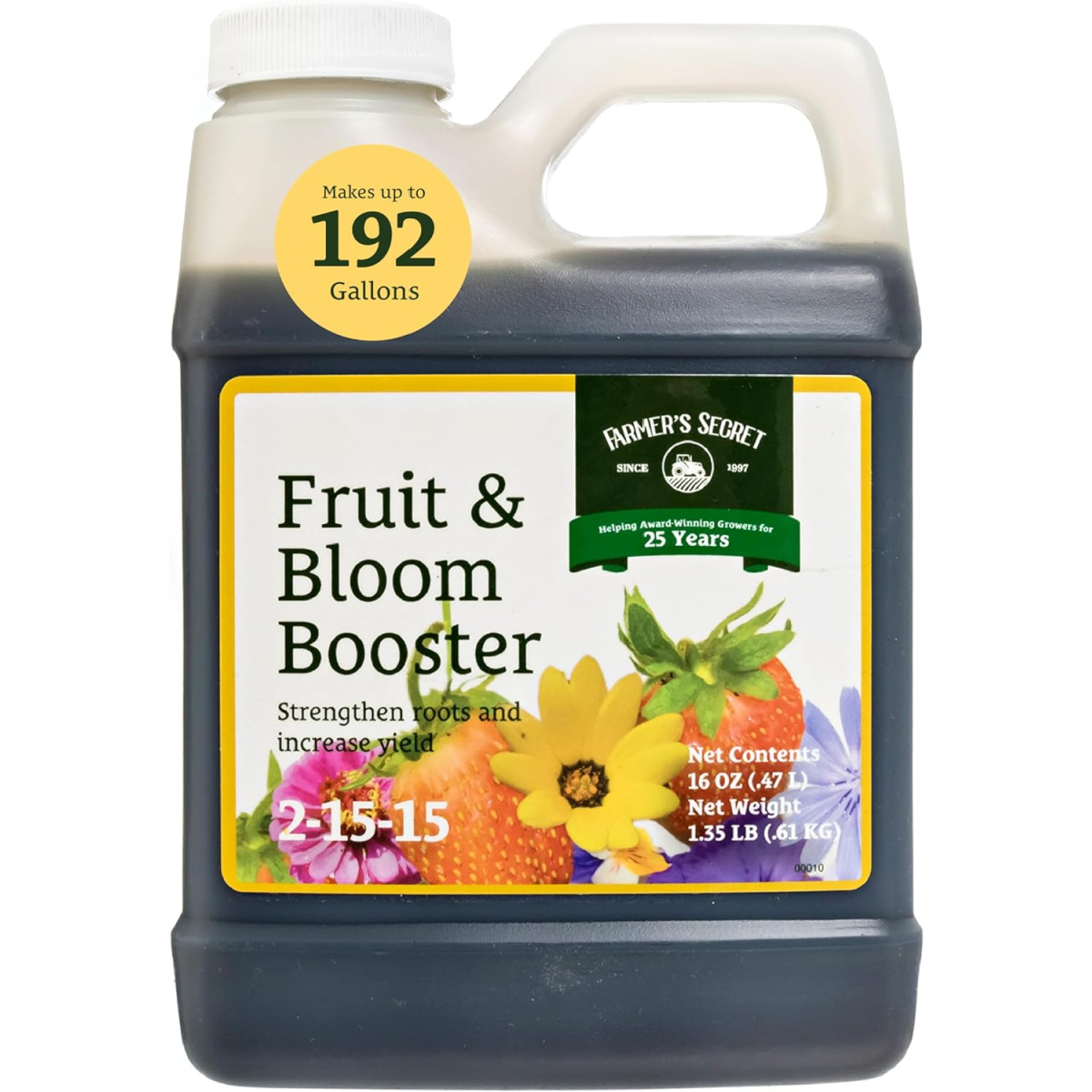
To provide those nutrients quickly, liquid fertilizers are often the best option. Unlike granular fertilizers, liquid fertilizers are absorbed rapidly through both the roots and the foliage. That quick uptake allows nutrients to go to work almost immediately. Affiliate Link: Farmer’s Secret Fruit & Bloom Booster Fertilizer
The Best Fertilizer For Flowering Cucumber Plants
Once blooms appear, switch to a liquid fertilizer that contains significantly less nitrogen and much higher levels of phosphorus and potassium. Look for products where phosphorus and potassium levels are at least two to three times higher than nitrogen.
Reducing nitrogen helps prevent plants from putting all of their energy into producing more vines and leaves. Instead, they can direct that energy toward creating flowers and cucumbers. This simple change often results in more blooms, more fruit, and a longer harvest season.
Feed More Often With Lighter Applications
One of the best ways to keep cucumber plants productive is to feed them regularly with lighter doses rather than giving large feedings less often. We prefer to dilute liquid fertilizer to about half of the recommended strength. By doing so, we can apply it every ten days or so throughout the growing season.
This provides a consistent supply of nutrients without overwhelming the plants. Over the years, we have found that this approach keeps cucumber plants healthier and more productive than applying full-strength fertilizer every two or three weeks.
The steady flow of nutrients helps plants continue producing flowers and fruit while avoiding the ups and downs that can occur with heavier feedings.
Getting The Most From Your Crop
When you match your fertilizer to the plant’s growth stage, cucumber plants stay healthier, bloom more heavily, and produce far more cucumbers throughout the season. And if you don’t have cucumbers planted in the spring – it’s not too late! We actually plant a second round of seeds right in the middle of summer for a great late harvest! See: How To Replant Cucumbers With Seeds In The Summer – And Why It Works So Well!
Here’s to giving your cucumber plants the nutrients they need for their biggest and best harvest ever. Happy Gardening – Jim & Mary.
The Farm At Old World Garden
Jim and Mary Competti have been writing gardening, DIY and recipe articles and books for over 15 years from their 46 acre Ohio farm. The two are frequent speakers on all things gardening and love to travel in their spare time.
As always, feel free to email us at thefarm@owgarden.com with comments, questions, or to simply say hello! You can sign up for our free email list in the subscribe now box in the middle of this article. Follow us on Facebook here : OWG Facebook. This article may contain affiliate links.
