


Explore Canada’s evolving cannabis industry with Dr. Av Singh, founder of the Scotian Cannabis Alliance. Discover the value of community farming, challenges facing small-scale growers, and the role of sustainable stewardship.
Who is Av Singh?
By Singh’s professional career spans continents and decades, rooted in a lifelong commitment to agronomy, organic agriculture, and cannabis production. Holding a PhD in crop management, Singh has lived and worked across Canada, from the Maritimes to the Prairies. He has helped pioneer the Canadian cannabis industry through cultivation and policy as the founder of the Scotian Cannabis Alliance.
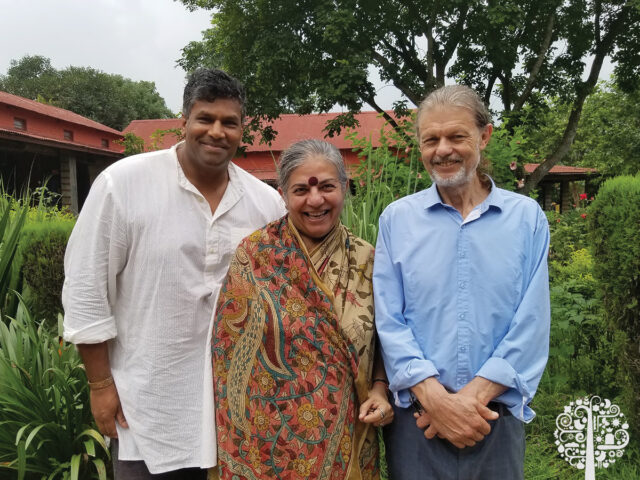
Singh’s contributions have earned international recognition, including acknowledgment from Dr. Vandana Shivaworld-renowned author, biologist, and leading voice of the small-scale organic farming movement. Dr. Shiva is known for defending seed sovereignty and heirloom genetics, and for her outspoken opposition to corporate agriculture conglomerates, namely Monsanto. Chances are, if you’ve studied ecology since the late 20th century, you’ve studied her work.
In fact, Shiva personally sought out Singh years ago in pursuit of a Canadian researcher with similar values and scientific accolades. Their relationship continues today, with Singh making annual visits to speak and lead discourse at her Indian conservation and education center, Navdanya, and to lecture broadly on agronomy and, more specifically, on regenerative agriculture, biodiversity, and Vedic biodynamics.
The Scotian Cannabis Alliance
Back home in Nova Scotia, Av Singh leads the Scotian Cannabis Alliance group, hosting events and bringing together industry and consumers for educational purposes.
“We do receive some core funding from the Nova Scotia Liquor Commission (the province’s sole retailer), and we represent the (close to) 25 license holders in the province,” he says.
Aside from consumer education, the group also participates in advocacy efforts to improve returns on the province’s excise tax revenue. Unfortunately, cannabis does not yet qualify as an agricultural crop and is ineligible for certain programs. Though conversations continue in Canada with other advocacy groups about excise taxes and how a more sustainable industry would ensure the continued collection of these excise dollars.
While after seven years the cannabis industry remains unsettled, the foundational knowledge needed for its advancement started years ago. For Singh, his journey began with a passion for organic agriculture. Dalhousie University professor and founding researcher of the organic movement in Canada, David Patriquin, encouraged Singh to work alongside University of Guelph academic and farmer Ann Clark.
“So, my Master’s work was in grazing management,” he says.
The Culture of Agriculture
It wasn’t until digging deep into soil ecology and biology that he understood the profound connection between grazing management and organic agriculture. Singh went on to do a doctorate at the University of Manitoba, spending time in Saskatchewan, Alberta, and North Dakota. He then worked at the Organic Agriculture Center of Canada.
“That’s really where most of the knowledge comes from,” he says. “Working with farmers on their farms, and learning from and observing all the new innovative technologies.”
Historically, agriculture has been a deeply communal practice, and grazing management is a great example of how farmers can lead social movements.
“When you look at the whole grazing management movement, there’s very little industry involvement. I mean, really, what can you sell? A little bit of fencing, a little bit of seed, and maybe some semen? There’s not a lot of industry involvement in that.”
Farmers had strong networks with the ability to share ideas through conferences, pasture walks, and so on. They relied on community learning to refine their practices and collectively advance land stewardship. However, over time, Singh says these networks have eroded.
“We’ve gone from that type of collaborative work in agriculture to almost making it seem like your neighbor is your competitor. And that, in my opinion, has broken a big part of the culture of agriculture in general, let alone of organic systems.”
Rebuilding Community
True, the culture of agriculture seems to have waned in our modern world, but grassroots groups still exist nationwide, even though government funding is sorely lacking.
While a double-edged sword, one of the silver linings of our highly industrialized, interconnected information age is that more people conduct self-appointed research aligning with their own values and integrity. Finding spaces to share ideas, especially in person, is more valuable perhaps than ever.
“When I was the organic farming specialist in Nova Scotia, I quickly realized that my role was not to disseminate information,” says Singh. “ My role was often to offer wine and whiskey and chocolate and invite farmers to just come and talk.
“If I talked about compost teas, a month later I’d have a farmer who knew phenomenally more, was practicing compost teas, and had seen all these results from looking under the microscope on a daily basis. The learning curve for farmers was so immediate once they got passionate about it.”
Why Cannabis?
When asked why he continues toiling in the cannabis space on behalf of Canadians and for the betterment of our industry, Singh says the answer to that question changes.
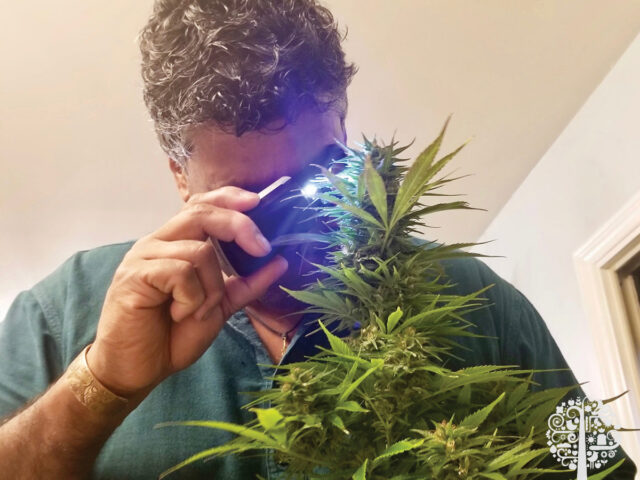
“I’m incredibly passionate about the plant. I’m so thankful for all those farmers for centuries, millennia, who propagated this plant. It’s become a great medicine for myself, and as a grower, isn’t it just such a fun plant to grow?”
Singh worked on organic farms surrounded by people enthralled with the cultivation of cannabis as a crop. Apart from a home grow during university, this is where he learned about production. Though they had other crops, cannabis was the clear favorite.
Singh also helped design much of the soil that is used in the cannabis sector. He says it’s simple, given his background in organic agriculture. By combining soil biology and legacy-era recipes with the introduction of microbes and other biostimulants, Singh has created super soils. Biostimulants are important inputs widely used in cannabis today. These include microbial inoculants, humic and fulvic acids, kelp and seaweed extracts, amino acids, peptides, and more.
“I’m a big pusher of the biostimulants,” he says. “I think it’s very respectful of that ‘less is more’ philosophy. And that, in my opinion, should be our philosophy for how we live.”
For example, squid juice at 50mL per liter is a fertilizer, but at 5mL, that’s a biostimulant. These additives are used for specific purposes, such as enhancing nutrient uptake or improving plant health.
“I see this as a huge opportunity for farmers to perhaps save money, and arguably more important, save the environment by using less fertilizer,” Singh says.
Back to Basics by Av Singh
Singh has been a member of the Grow Up Awards & Event board for years, helping host, organize, and moderate discussions during the biannual Canadian cannabis industry event. As a chance to come together, share knowledge, and reconnect with friends, these events have proven integral to the community that continues to expand.
Insofar as his regulatory work is concerned, there is a lack of government support.
“I’m really happy to see that the (micro cultivators) are doing well, but I do feel right now that the business of cannabis is a real challenge.”
Even with the deck stacked, there are still profitable cannabis companies in Canada. Singh believes the recipe for success begins with a positive work environment, which in turn yields a superior product.
Mom & Pop Prevail
Singh says because the margins are so small, the most important thing, especially with new entrants, is that the owners put in most of the initial work. This notion of small, family-oriented micro-cultivators, willing and able to put in 18-hour days in the beginning, has helped several small producers establish themselves.
“It’s so important to go in there, know that this is farming, roll up your sleeves, and just keep working until it happens,” he says.
At its core, Av Singh’s work is a reminder that agriculture has always been about more than yield or profit. It’s about the relationships between soil and plants, and between farmers and communities. Throughout his career, he’s learned that progress happens when people come together with integrity, curiosity, and care for the land, and in doing so, he has taught us that how we grow matters just as much as what we grow.
