


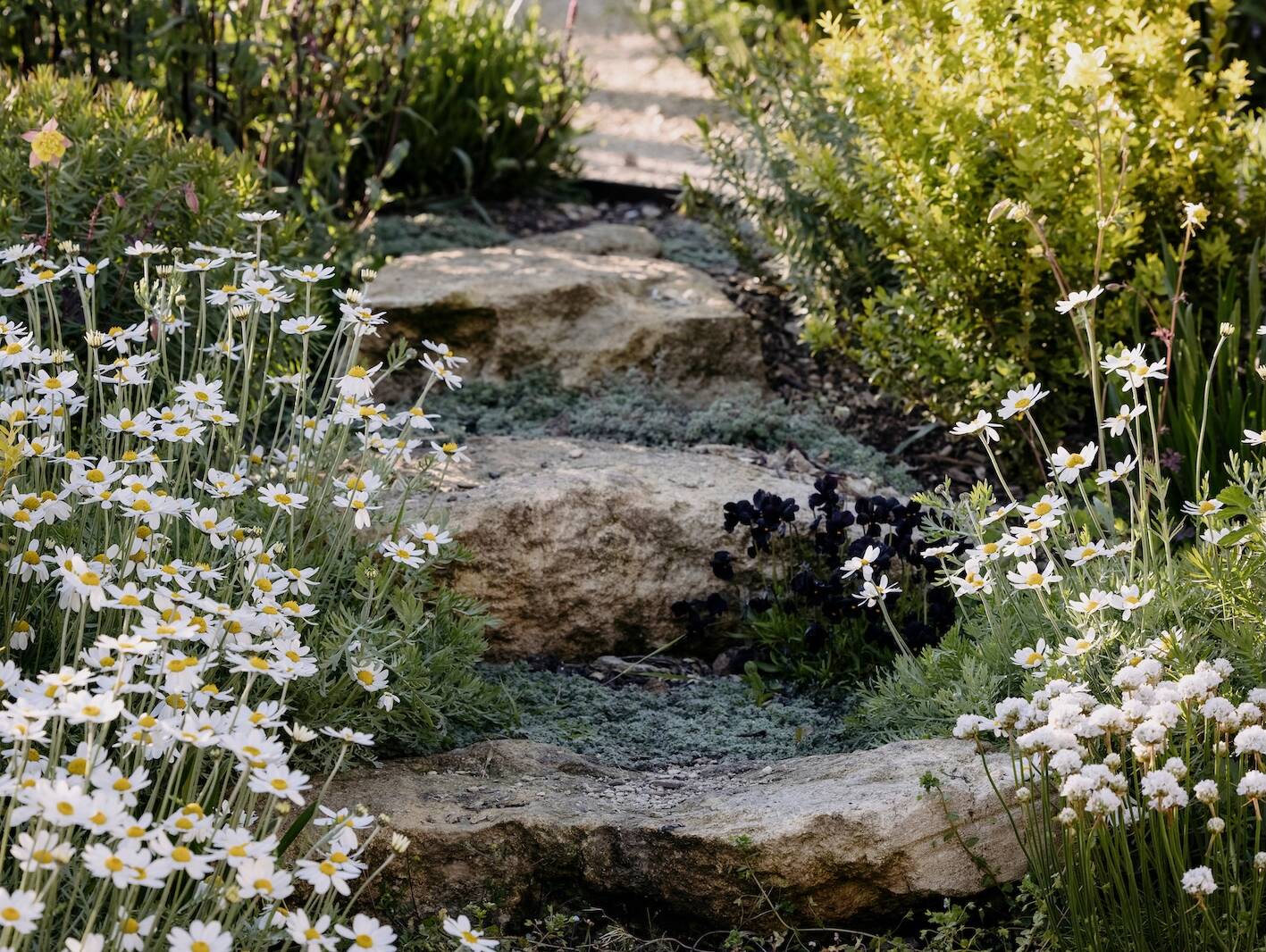
We’ve been noticing lately that a talent for stonework is more than an extra feather in the cap for garden designers. Wilder planting can stand or fall on the hard landscaping; crisp edges are one way of signifying that “here is a garden.”
Ecological garden designer Tom Eaglestone, based in Bath, on the edge of the Cotswolds, is as stone-obsessed as he is plant-obsessed. The native stone there is glorious, but he uses other materials as well. It just depends on what he finds on site. “I’ve always tried to see what’s already in the garden and what we can find; that makes a lot of sense for me,” he explains. Crazy patchwork paving is one way of dealing with random shapes of stone: “It’s a funny thing—people think it looks complicated, or very hard, but when you work with what you’ve got, it’s so satisfying when exactly the right piece of stone fits into the jigsaw.”
Below, we ask him our burning questions about how to be more sustainable in our approach to hardscaping.
Photography courtesy of Eaglestone Gardens.
How do you match your materials to your setting?
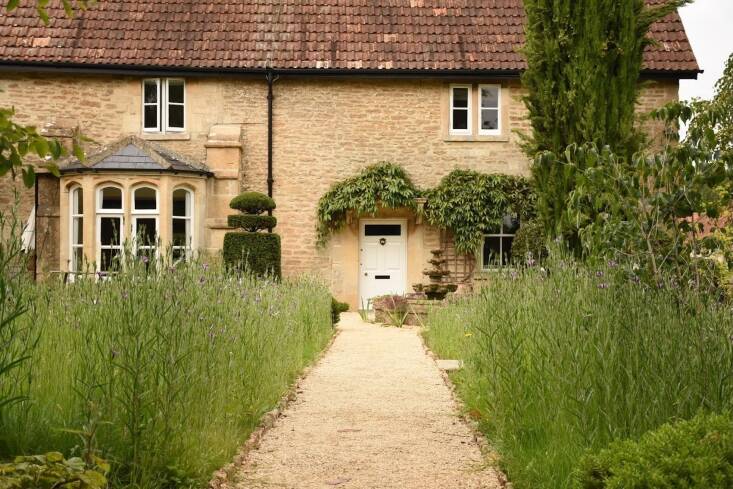
Eaglestone is fortunate to live and work in southwest England, known for its honey-colored limestone. The buildings seem to rise out of the rock, and it follows that pathways, edgings, and walls would be made from the same materials. When gardeners import Cotswold stone to other parts of the country, it can look completely wrong. Stone should to come from a local quarry. Materials found on site, hidden under hedges, in flower beds, lying around here and there, lead the way.
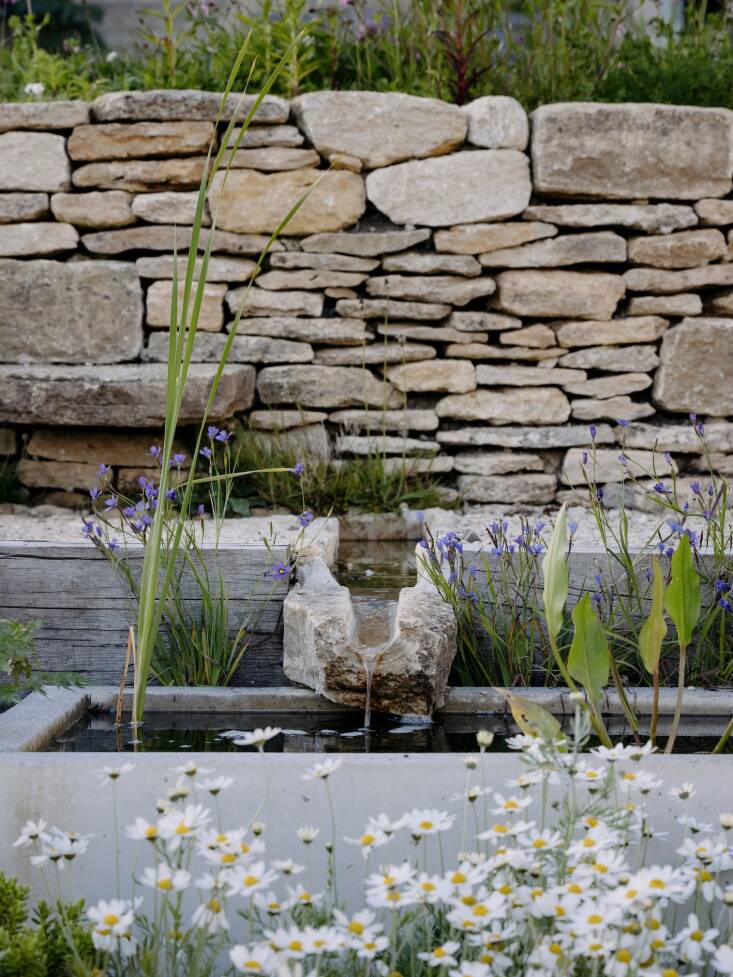
“There is something deeply satisfying about taking characterful, trodden, marked, and weather-beaten stone—stone that must have been around a very long time—and repurposing into something new and cohesive and aesthetically pleasing,” says Tom. “It is very absorbing, tactile work.”
