


Sharing is caring!
Knowing when to harvest potatoes is crucial for maximizing yield and ensuring flavorful, well-stored tubers. Harvest too early, and the potatoes may be small; wait too long, and they may become damaged or susceptible to disease. After decades of gardening experience, I’ve developed a reliable method for identifying the signs of potato maturity.
1. Monitor Foliage
The most obvious sign that potatoes are ready is the plant’s foliage:
- New potatoes: Harvest when plants flower. Tubers are small, tender, and perfect for fresh eating.
- Mature potatoes: Wait until the leaves turn yellow and die back naturally. This signals the tubers have fully developed and the skin has thickened for storage.
2. Check the Soil
- Gently dig near a plant with a spade or your hands to examine a few tubers.
- The skin should be firm and not rub off easily. If the skin peels, the potato is not fully mature.
3. Weather Considerations
- Avoid harvesting when soil is overly wet; this can cause tubers to bruise or rot.
- In hot climates, allow the soil to dry slightly before digging.
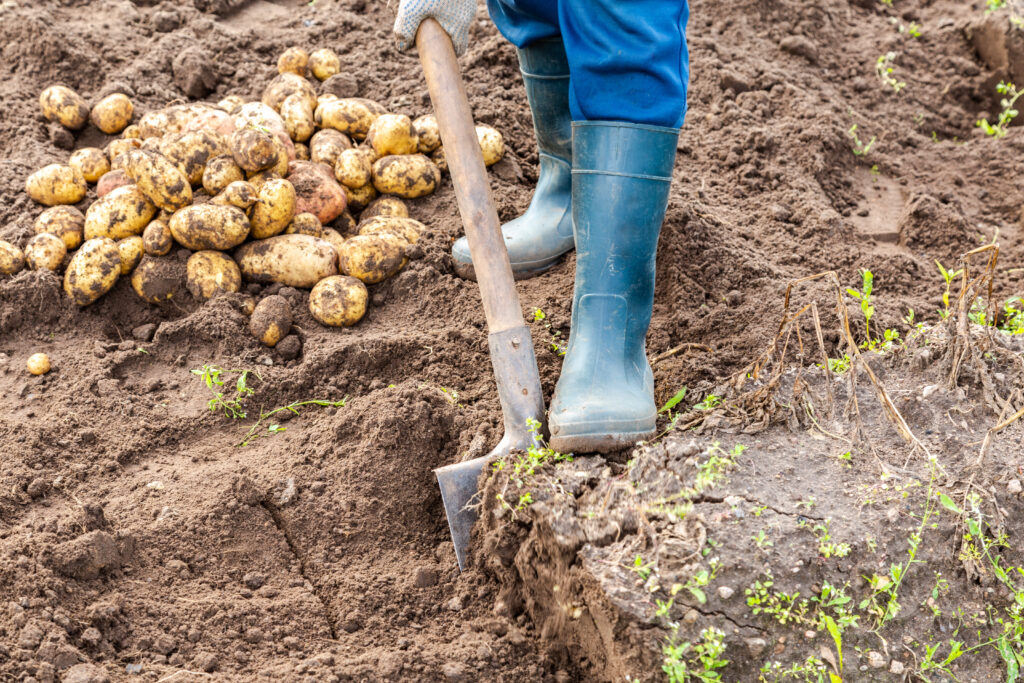
4. Harvesting Technique
- Use a spade or fork to carefully lift the plant from the soil.
- Start from the edges to avoid damaging tubers.
- Brush off excess soil and let tubers cure in a cool, dark, ventilated area for 1–2 weeks before storage.
5. Storing Potatoes
- Store mature tubers in a dark, cool (40–50°F), and humid environment.
- Avoid storing new potatoes for long periods—they have thin skins and are best eaten fresh.
Gardener’s Tip:
In my Sonoma Valley garden, I harvest early potatoes at flowering for tender new spuds, and wait for foliage dieback for long-term storage potatoes. This staggered approach maximizes both taste and yield.
Potato Maturity and Harvest Guide
| Stage | Plant/Foliage Signs | Tuber Signs | Best Use |
|---|---|---|---|
| Early / New Potatoes | Plant begins flowering | Small, tender tubers; skin thin and soft | Fresh eating, boiling, roasting |
| Maturing | Leaves start yellowing; some dieback | Skin starting to firm; tubers growing in size | Roasting, mashing, everyday cooking |
| Fully Mature | Foliage mostly dead; stems dry | Firm, thick-skinned tubers | Long-term storage, winter use |
Harvest Tips:
- Gently dig from the edges of the plant to avoid bruising tubers.
- Cure mature potatoes in a cool, dark, ventilated area for 1–2 weeks before storage.
- New potatoes are best eaten immediately.
