


With all the work to be done in the outdoor garden, neglecting your houseplants can happen. This guide will help make fertilizing your indoor plants a cinch!
I am a great outdoor gardener, but when it comes to houseplants, I ignore my indoor garden, thinking it will be just fine on the windowsill with a little water when I get around to it.
The reality is that indoor plants need as much TLC, if not more, than garden plants. Unlike outdoor plants, indoor plants don’t benefit from roots in soil that is constantly replenished by the decomposition of organic matter, such as leaves, which add nutrients. Instead, they sit in pots that, over time, are depleted of nutrients by the plant’s roots. Fertilizing them is essential for their continuing health.
Signs a Houseplant Needs Fertilizing
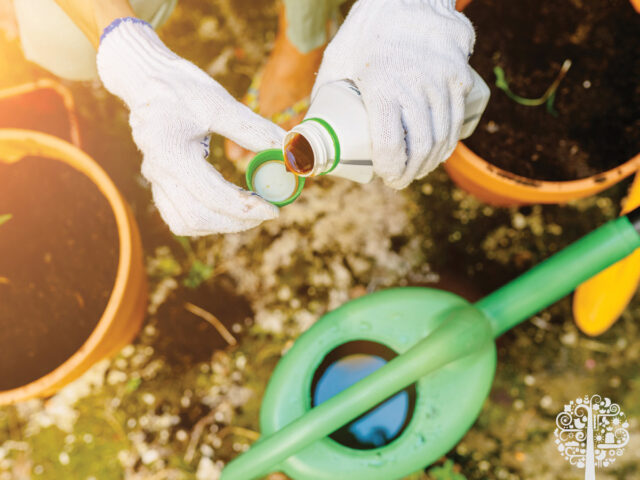
Houseplants are really great communicators, and they will let you know when they need fertilizing. If the plant has stopped growing or is growing slowly, it is a good sign that it isn’t getting enough nutrients. Yellowing or shedding leaves are also telltale signs that the plant is struggling to survive and could benefit from a little fertilizer.
Organic vs. Synthetic Fertilizers
The best option for any plant is always to use organic fertilizers. But just a word of caution: houseplants are sensitive, so as tempting as it is to use a homemade bokashi tea or a slew of leftover coffeeremember they are confined to a small space, and too much of a good thing can be detrimental. So, unless you are confident in the proportions for the plant, go with the natural fertilizers that come with instructions. The good news is that there are many great options made with seaweed or compost tea that are available over the counter.
When choosing a fertilizer, look for the NPK ratio. Nitrogen is for leaf and stem growth. Phosphorus is for root growth. Potassium is for overall plant health. A 10-10-10 ratio is ideal for indoor plants, which come in many forms.
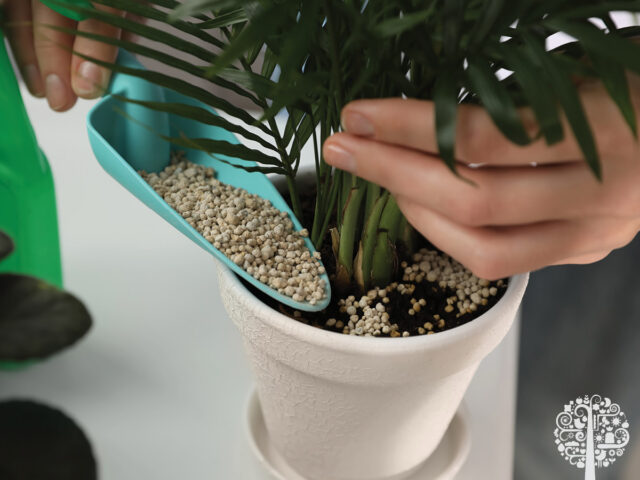
- Slow-release fertilizer: Add granules that slowly release nutrients to your plants over weeks.
- Sticks or Spikes: These slowly release nutrients into the soil. The benefit of using a spike is that you can just push it into the soil. No measuring, mixing, or mess. But read the label carefully so you don’t accidentally add too many.
- Water-soluble fertilizer: Mix this fertilizer with water according to the package instructions, then apply it to your plant. The downfall is that you need to apply it frequently. The good news is that it usually comes ready-to-use, in a concentrate.
- Liquid fertilizer: This offers the convenience of a pre-mixed, water-soluble product, making it ready to use. But read the directions, as some liquid fertilizers need to be diluted in water.
When to Fertilize Houseplants – A Seasonal Plan
Houseplants work on the same seasonal schedule as the outdoor garden. During the growing season, from spring to early fall, a good rule of thumb is to fertilize houseplants every three to four weeks. The best time of day is in the morning. This gives the plant time to absorb the nutrients before it gets too bright or too hot. Just like the outdoor garden, houseplants go into a dormancy during late fall and early winter, so during this time of year, they won’t need to be fertilized.
