


There are three keys to success when it comes to getting the most value for your money from garden hand tools:
First, purchase the best you can afford from reputable vendors. Poor-quality items are not only a safety hazard; they don’t last.
Second, use each item as intended by the manufacturer.
We link to vendors to help you find relevant products. If you buy from one of our links, we may earn a commission.
For example, if you need a dibber or weeder, don’t push the point of your pruners into the soil simply because they are handy. Improper use may result in injury and/or damage to equipment.
Third, it’s crucial to maintain tools so they are clean, sharp, and in good working order. This is our article’s topic.
Here’s what we’ll cover:
Let’s get started!
Cleaning Tips
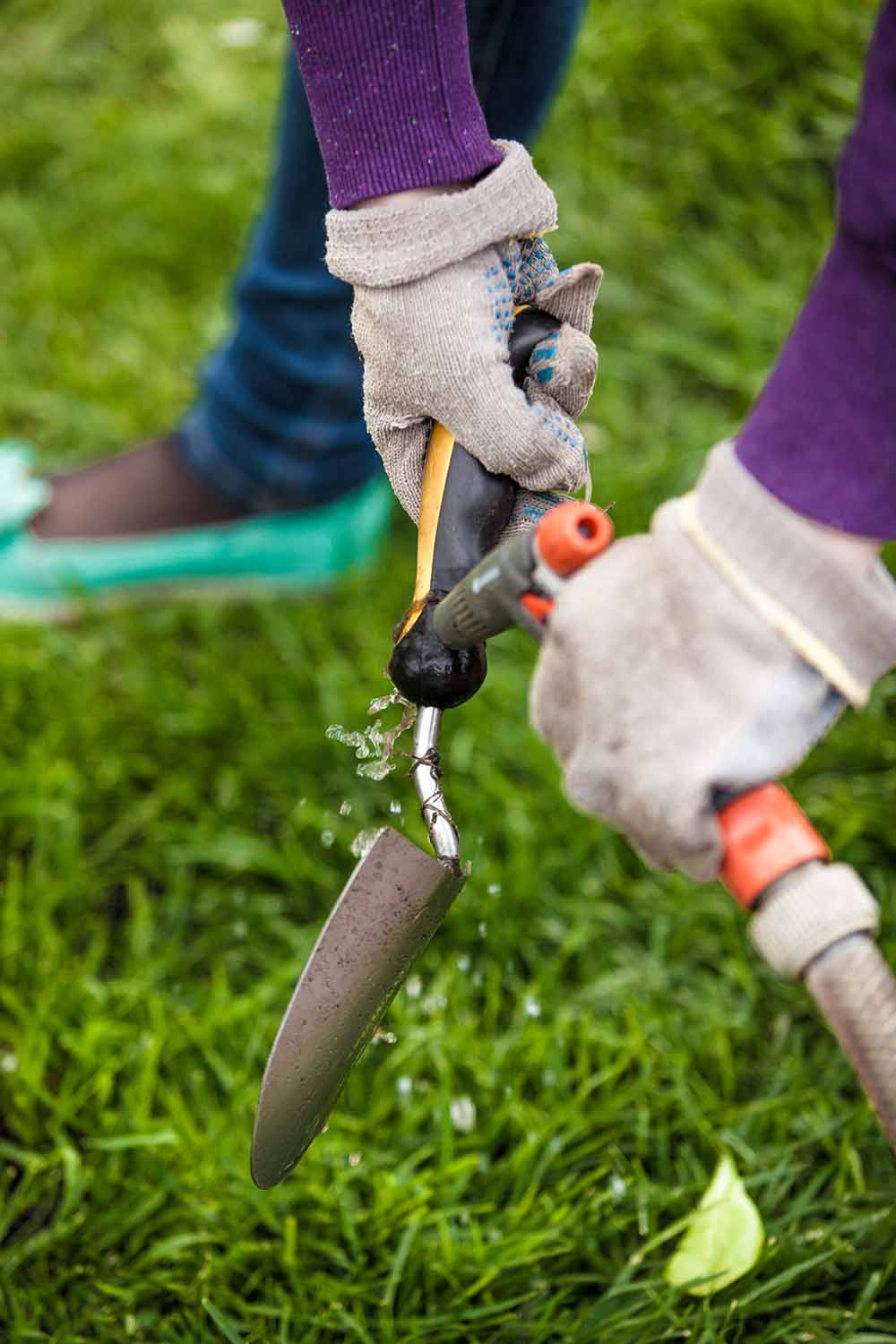
Keeping equipment clean goes a long way toward making it last. It’s essential to take a few minutes to rinse off the soil and air dry before storage.
Use a rag or scrub brush for persistent dirt to prevent it from clinging, harboring bacteria, and promoting rusting.
When you use tools on plants known to be infested with pests or infected by pathogens, be sure to sanitize them.
Here’s how:
Wearing rubber gloves, mix nine parts water and one part laundry bleach in a bucket.
Swish the business ends of soiled tools around, taking care not to submerge wooden handles.
Use a rag dampened with the bleach-water solution and wrung out to wipe the handles before letting the implements air dry.
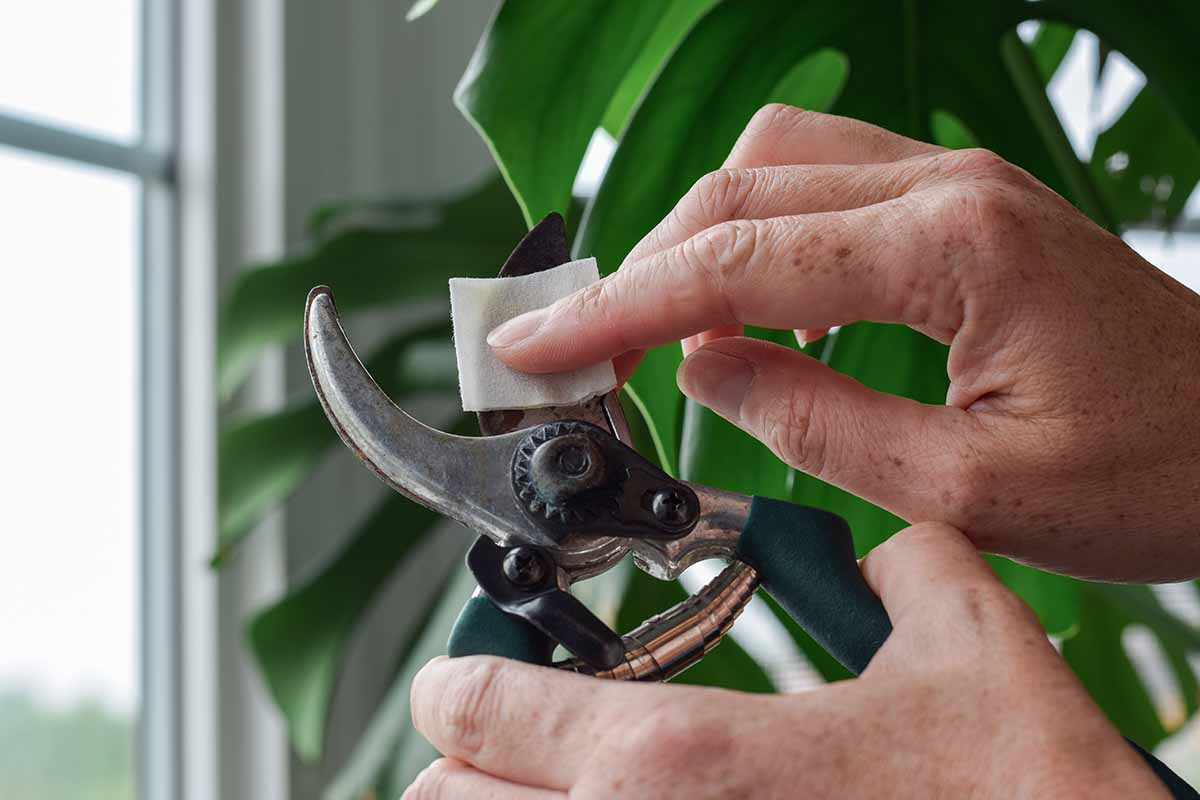
To sanitize knife, lopper, pruner, and saw blades, use 70 percent isopropyl rubbing alcohol on cotton wool for larger jobs and individual pre-moistened prep pads for small ones to avoid spreading pathogens through the garden and keep blades gunk-free.
When you do the final clean of the year, rub all wooden handles with linseed oil.
If the wood is already dried out or has many scratches or worn areas, you can use a mixture of 75 percent linseed oil and 25 percent turpentine for efficient penetration.
Use a rag to rub the oil into the wood.
During storage, the oil dries and inhibits future damage from sun, moisture, perspiration, and wear and tear.
To treat and maintain the blades or steel parts, save some used motor oil and pour it into a large bucket of sand.
