

Soil
Aronia tolerates boggy, clay-heavy, and chronically wet soils – including sites exposed to road salt – that exclude most fruiting shrubs.
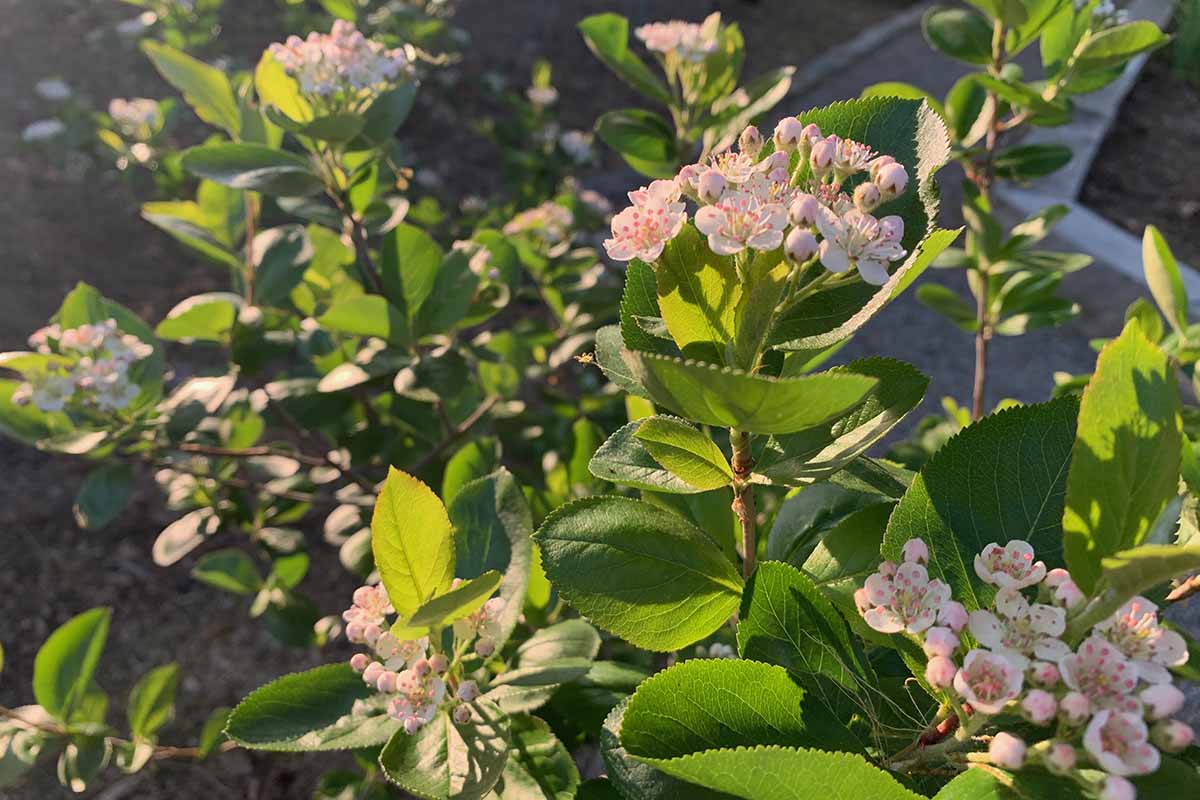
It prefers a soil pH of 5.0 to 7.0 but grows without visible stress at 4.5 to 8.5. Well-drained loam is ideal but not often required.
Water
Keep soil consistently moist through the first one to two seasons while plants become established.
Mature specimens are drought-tolerant and persist through dry periods without supplemental watering.
Consistent moisture during flowering and fruit development noticeably improves berry size.
Fertilizer
Aronia performs well in lean soil, and heavy fertilization tends to produce vigorous leafy growth at the expense of fruit set. Home gardeners rarely need to fertilize.
You can work in some compost or side dress in spring if your soil is on the lean side.
Cultivars to Select
Mature height, yield, berry size, and sugar content vary considerably between cultivars. Choose those that are described as having sweeter berries if you’re counting on a harvest.
Brilliant
‘Brilliantissima’ is a red chokeberry (Aronia arbutifolia), grown for ornamental appeal rather than fruit.
This cultivar is an upright spreading shrub six to 10 feet tall and three to five feet wide that’s hardy in Zones 4 to 9.
Small white flowers with pink anthers open in spring, followed by glossy red berries in heavy clusters that develop in late summer and persist well into winter for the birds.
The fall foliage is the real draw, turning brilliant scarlet, orange, and crimson.
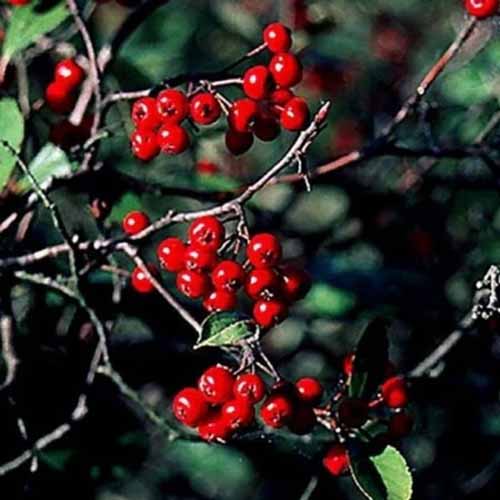
The berries are technically edible but far too tart and astringent to eat raw, so plant this one for wildlife habitat, rain gardens, screening or hedges, and woodland edges.
It tolerates clay and wet soils, and is drought-tolerant once established.
You can find plants in #1 containers available at Nature Hills Nursery.
Galician
‘Galicjanka’ (also spelled ‘Galicianka’) reaches six to eight feet tall with the largest berries and the highest sugar content of any named cultivar.
It is the ideal pick where palatability matters – in fresh preparations, jam, or any recipe where the raw astringency needs to be minimized.
It is less commonly stocked in North American nurseries than ‘Viking,’ so you may need to look at ordering from a specialty nursery.
Ground Hug
Ground Hug® (A. melanocarpa ‘UCONNAM012’) is a Proven Winners selection that tops out at just one to two feet tall and spreads two to three feet wide in Zones 3 to 9.
It’s ideal for growing as a tough, self-contained ground cover, because the naturally tidy prostrate habit means you’ll never have to crack out the pruners.
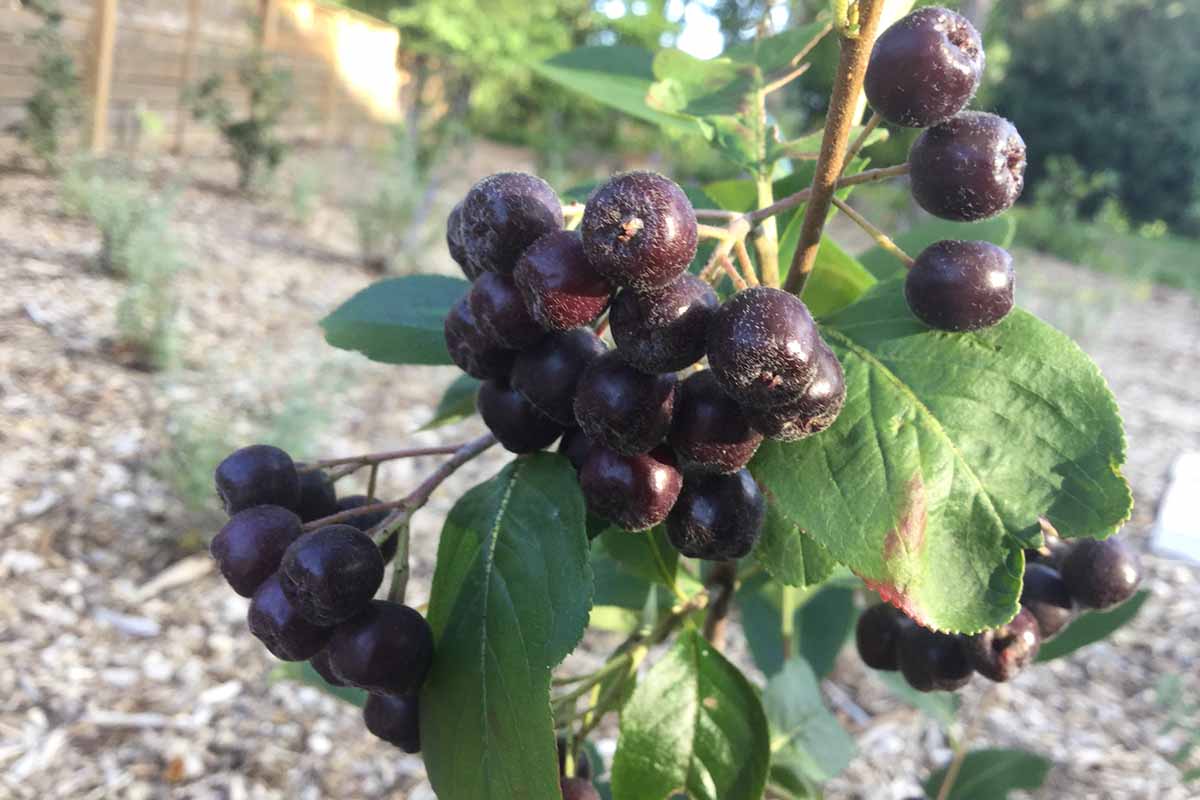
Glossy bright green foliage turns brilliant red and orange in fall, following white spring flowers and dark purple-black berries that are technically edible but astringent enough that they are better left for the birds.
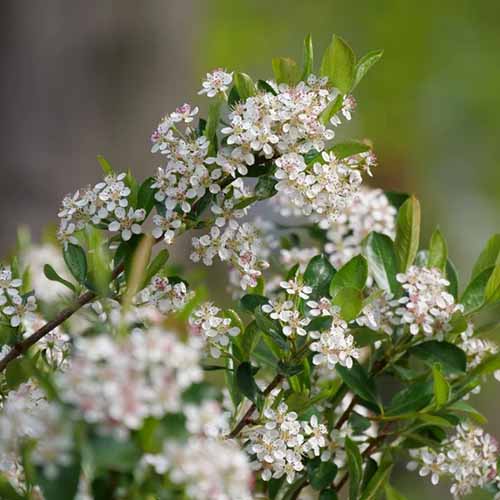
Use it on slopes, for erosion control, along pathway edges, in rain gardens, or in mass plantings.
You can find Ground Hug® available at Nature Hills Nursery in quart-sized containers.
Low Scape Mound
Low Scape Mound® (Aronia melanocarpa) is a Proven Winners selection with a compact, rounded growth habit, just one to two feet tall and two feet wide in Zones 3 to 9.
In spring it produces hundreds of white flowers blushed with pink, which give way to dark purple-black berries from late summer through early fall.
Unlike ‘Ground Hug,’ this one produces fruit worth picking. The berries sweeten after the first frost, and I use them for juicing, baking, and jellies.
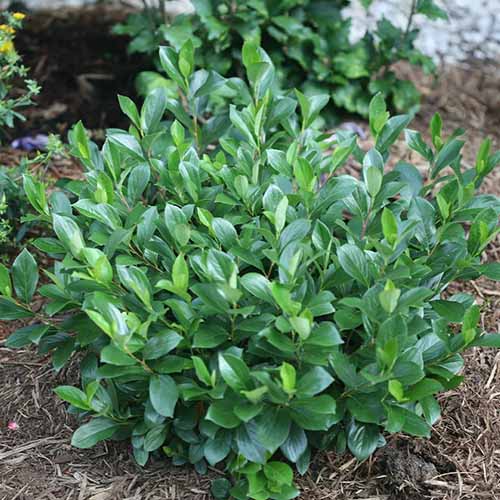
Come fall the foliage turns brilliant red.
You can find Low Scape Mount® available at Fast Growing Trees in one-quart and two-gallon containers.
Viking
‘Viking’ is the industry standard worldwide, growing six to eight feet tall and producing an abundance of deep purplish-black berries in Zones 3 to 8.
It is the default selection for juice, wine, and natural food coloring because of its reliable high yield and consistent berry color.
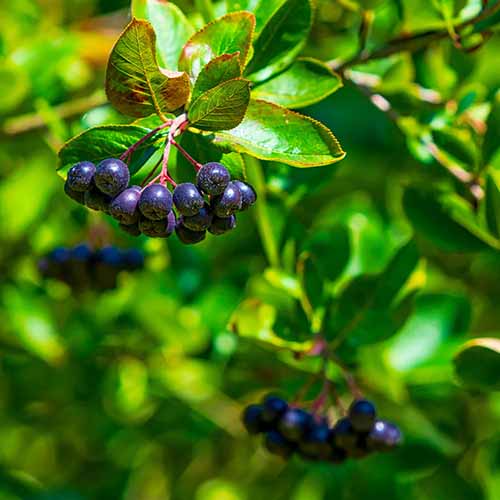
If you are planting for production and have no particular reason to choose otherwise, ‘Viking’ is the sensible starting point.
You can find ‘Viking’ available in one-gallon containers at Fast Growing Trees.
Maintenance
Aronia blooms on old wood, which means the timing of any pruning determines whether you have a crop the following year. The maintenance routine itself is light and infrequent.
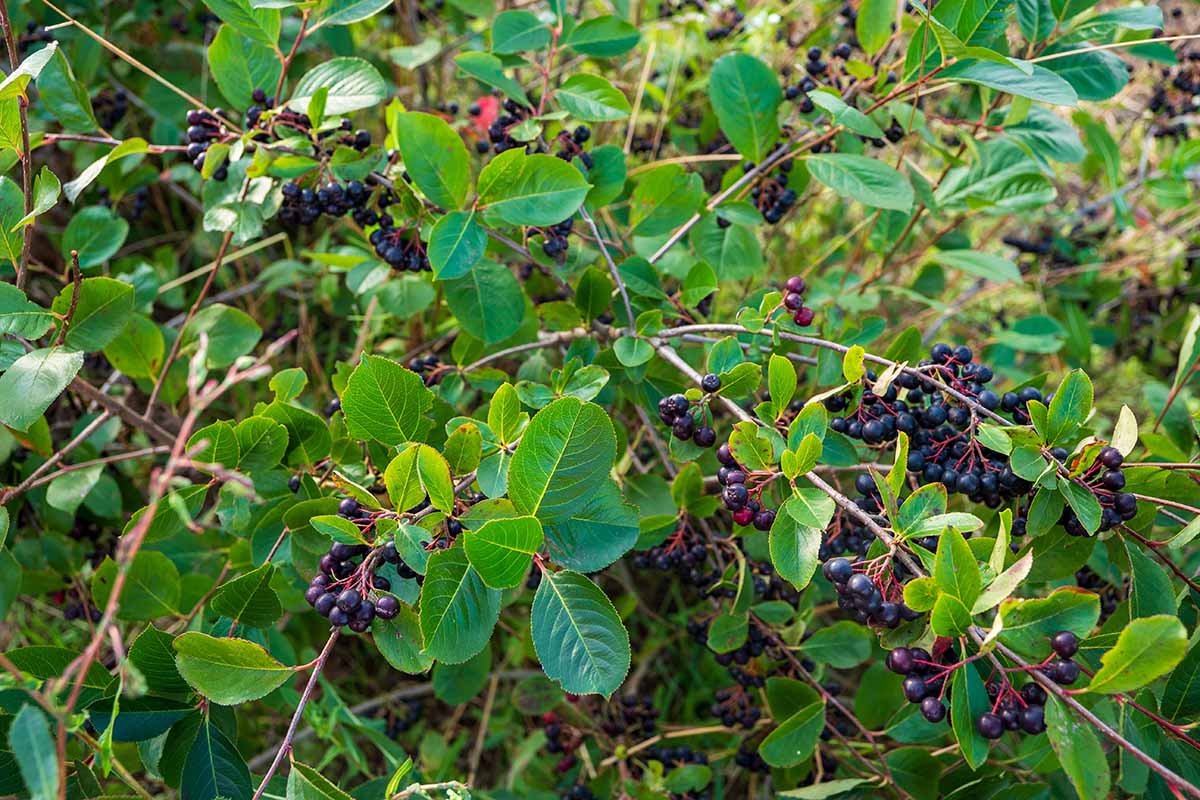
Prune in late winter or immediately after flowering, and never hard-prune in summer, as that removes the flower buds forming for next year.
Each year, simply remove dead, diseased, or crossing branches and lightly shape as needed.
