


You may need to rotate your fungicides to avoid potential resistance.
Harvesting and Preserving
Especially if you’re used to grocery store or farmers market produce presented to you in an ideally-ripened state, it can be tricky to know exactly when to harvest pears.
First of all, you want to pick them before they turn soft. Honest!
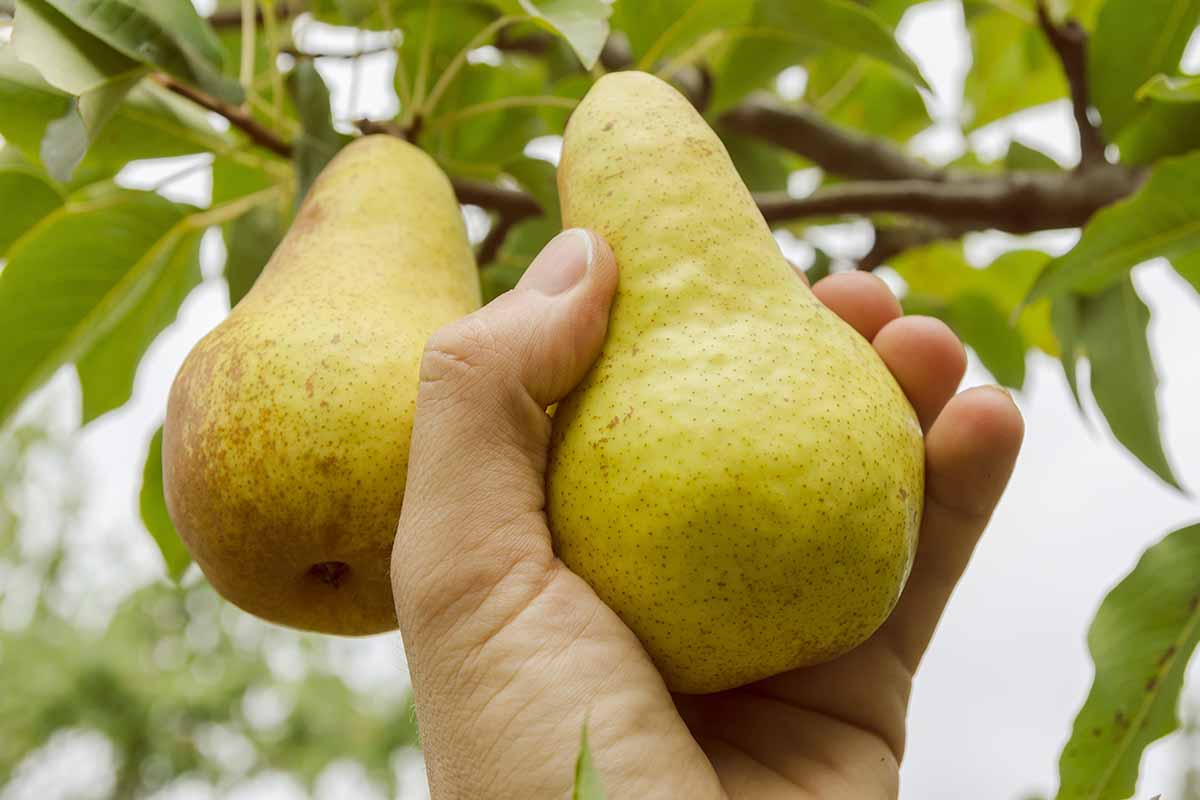
Note when they are the shape and size of mature pears you’ve purchased in the past, or when they look like the photos in cultivar descriptions – that’s when they’re ready to pick.
They may have begun to be a tad more colorful, yellow or red depending on the variety, but they should be firm.
If they are soft on the tree, you can be certain that they’re rotten at the core. And if you pick them too soon, they’ll shrivel in storage.
For more extensive info on when pears are ripe and how to know when to harvest them, see our guide.
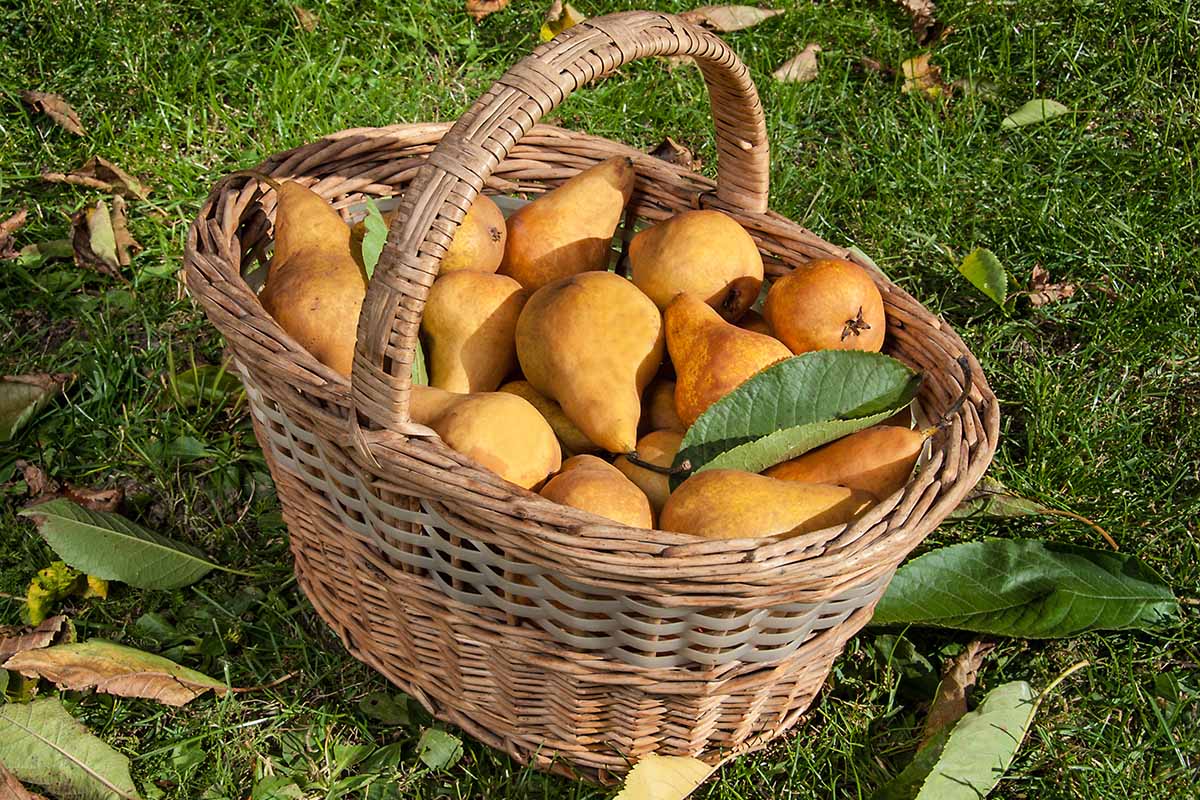
Once you’ve picked them, they’ll ripen at room temperature. This usually takes about four or five days, but check them once a day.
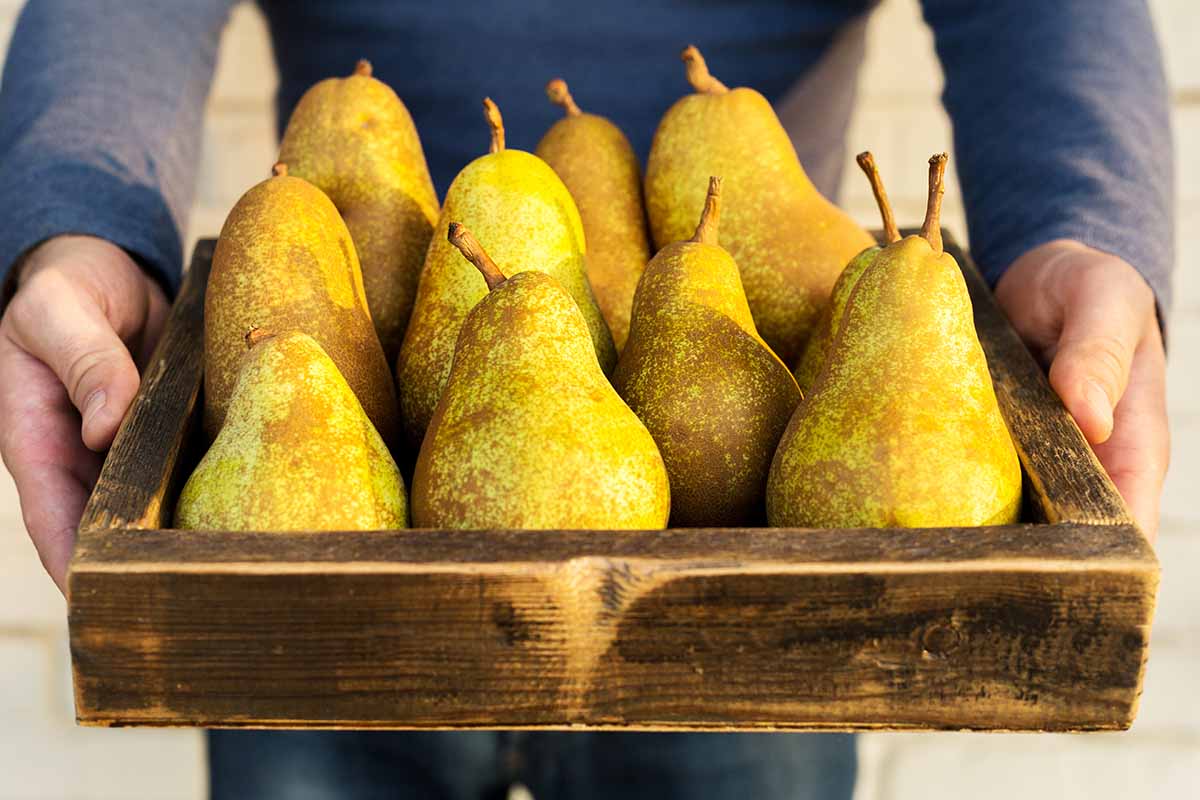
Some winter pearsincluding ‘Anjou’ and ‘Bosc,’ need to be stored at 35 to 40°F for a week or two before coming out to the kitchen counter to ripen at room temperature.
Others can move straight from branch to bushel basket to a space in a room that’s consistently between 65 and 75°F.
You can learn more about how to store pears here.
You can experiment with the many canning, jam, conserve, chutney, and sauce possibilities, but don’t try to freeze raw pears as when defrosted they turn to a tasteless mush.
They do freeze just fine inside baked muffins, though!
You can dry part of the harvest for snacks, too.
Dehydrated pears that have been reconstituted by soaking in water for a few minutes can also make a tasty, nutritious addition to your favorite granola, cookie, or chutney recipe.
Be sure the ones you dry are ripe but not mushy, and peel what you plan to dehydratesince the skins get tough during drying.
You can also use overripe pears to make fruit leather.
Cooking Ideas
Fruit desserts may be the ultimate option to cook with this fruit.
Consider treating yourself with an indulgent batch of citrus caramel roasted apples and pears, using this recipe from our sister site, Foodal.

They’re also good in pies, tarts, muffins, shortcakes, crisps, crumbles, buckles, clafoutis (am I starting to sound like Bubba Blue from “Forrest Gump”?)
Don’t forget to enjoy the ripe fruits as an everyday treat as well. They can pump up a salad, for example, like they do in this recipe for baby greens with roquefort and pear, also on Foodal.
You can also use them to rev up the flavor in your favorite homemade applesauce recipesubstituting them for up to half of the apples.
Just don’t try a 100 percent swap, or the sauce may be a little too watery or mealy for your liking.
For more recipe inspiration for your pear harvest, head to our sister site, Foodal.
Prolific Fruit Trees, Partridges Optional
These days, when so many of us are trying to grow more of our own food and create a sustainable haven for wildlife and pollinators, planting fruiting pear trees seems like a good idea.
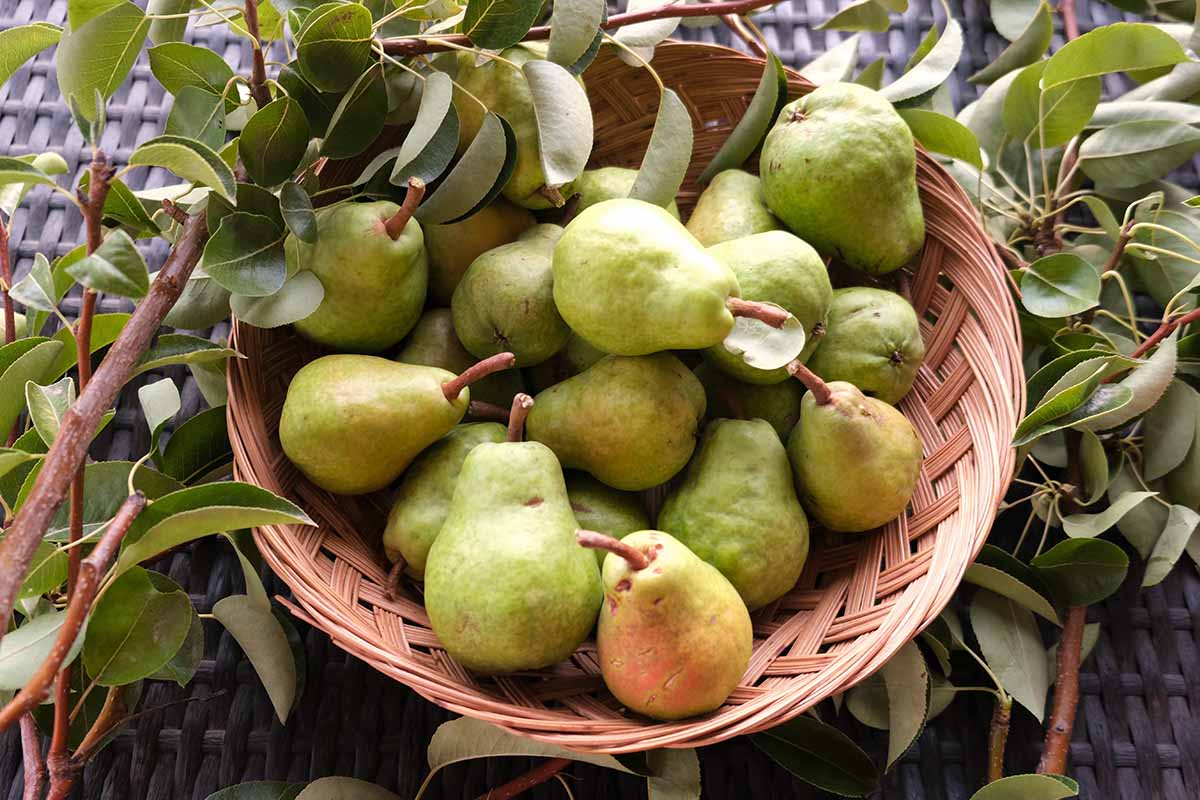
What about you? Have you grown these delicious fruits? Tell us about your experience to the comments section below! And if you’ve got a question, we’re here to help.
And for more information about cultivating pear trees in your orchardcheck out these guides next:
