


While eggs may be the delight of many home cooks, eggshells can be the bane of many home composters.
I remember my reaction when I dug in to harvest my very first batch of finished compost.
I was thrilled that all of my food waste and garden trimmings had magically transformed into a beautiful, brown, humus-like substance!
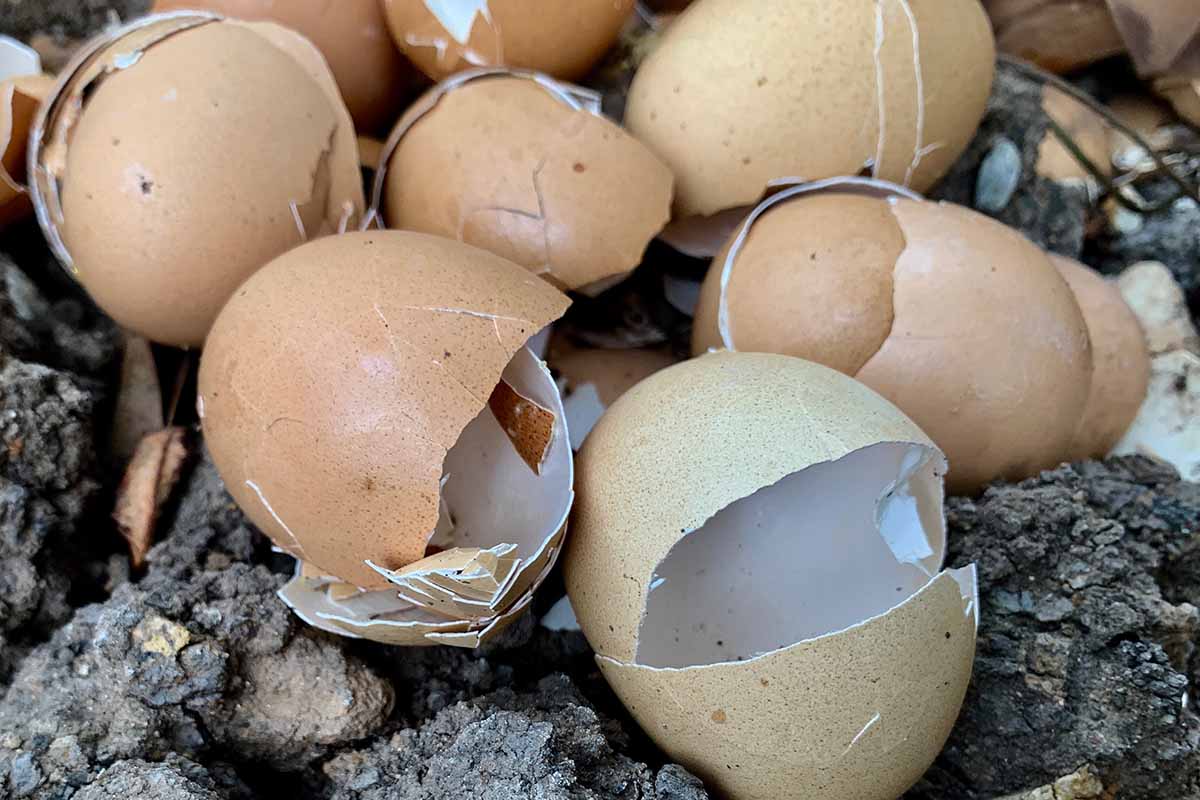
All except the eggshells. Lots and lots of them, all still very recognizable.
We link to vendors to help you find relevant products. If you buy from one of our links, we may earn a commission.
But I made some changes and I don’t find those big pieces of shell in my compost anymore. You don’t have to either.
In addition to discussing the best way to add them to your compost, I’m also going to cover other uses, like as a soil amendment, and discuss whether they work as a pest deterrent.
Here’s a quick overview of what’s ahead:
Eggshells as Food Waste
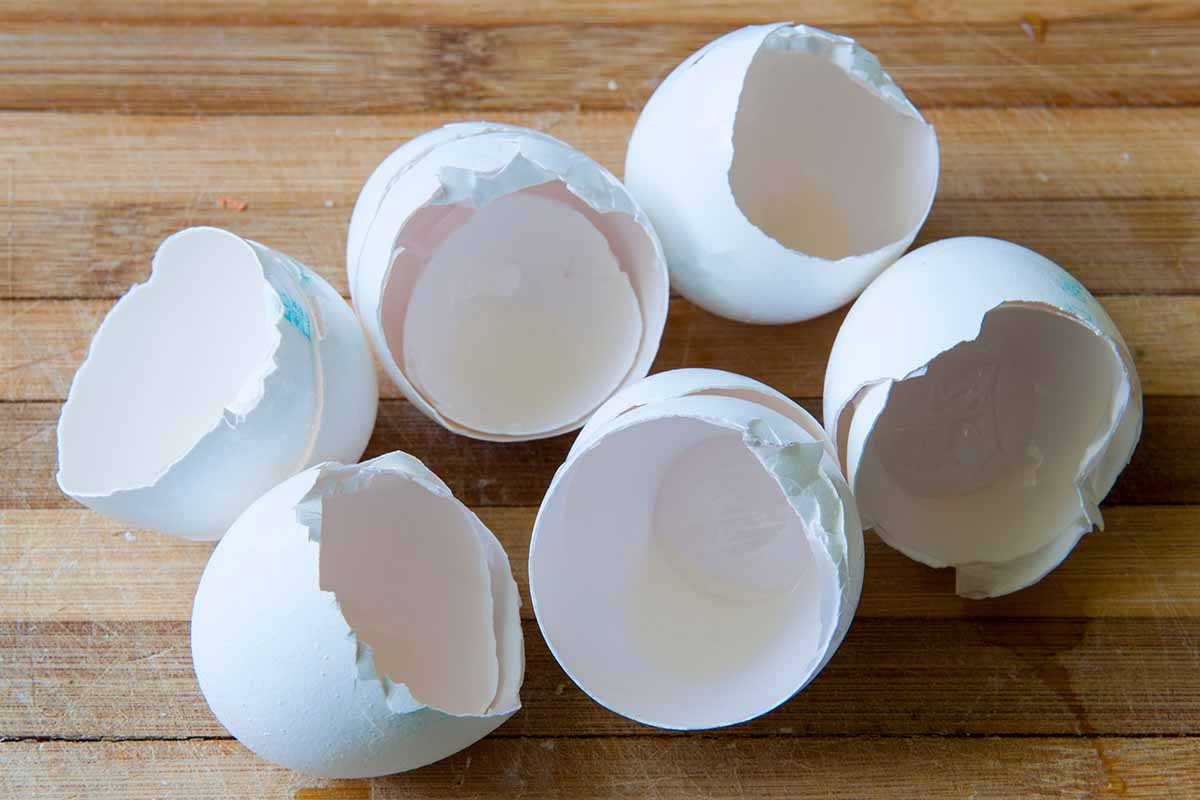
Eggshells take up a whole lot of room when you don’t break them up – whether that’s in your compost or your trash can.
Their beautiful oval shapes don’t flatten down well in the trash, unless you take the time to crush them.
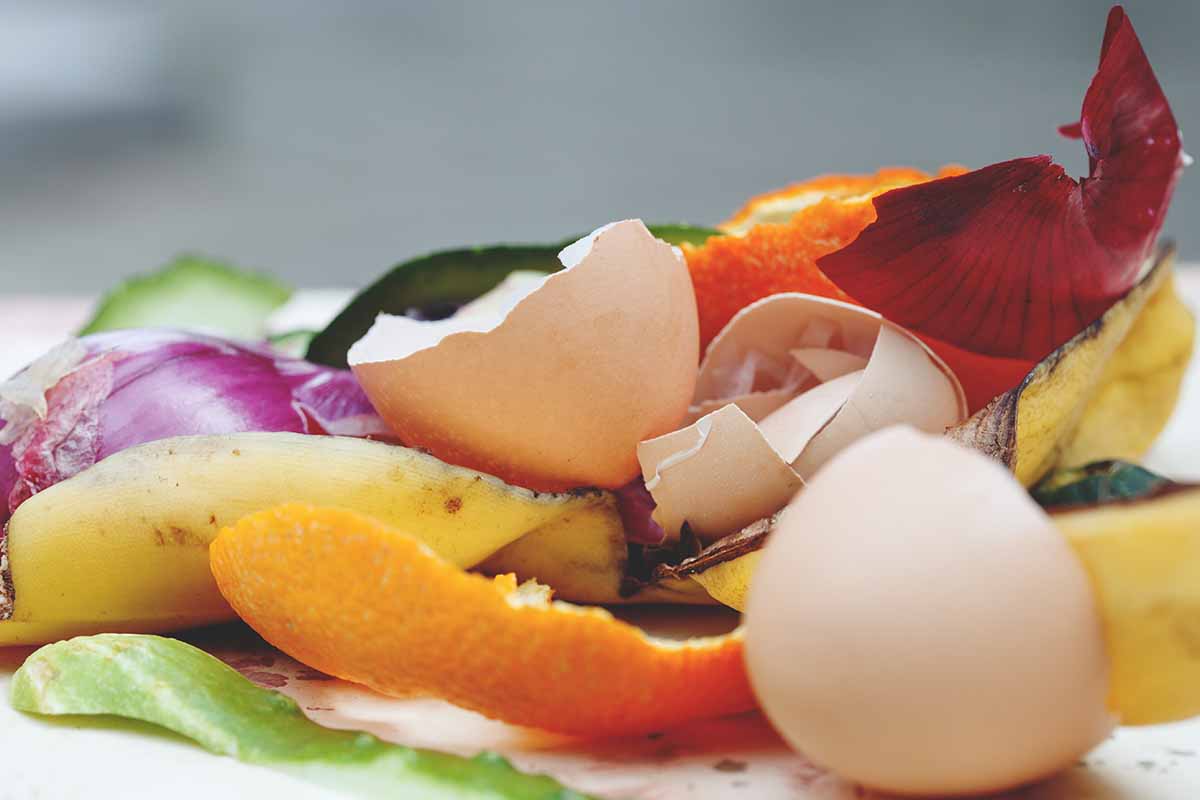
And many people put them in the garbage without a second thought. According to Paula Felps at Earth911, the US alone sends 150,000 tons of eggshells to landfills every year.
If you do the math, that’s nearly a million pounds of these oval wonders taking up space in landfills, not per year, but per day. Yikes!
It makes a lot of sense to try to find alternate uses for these empty former packages of eggy goodness. And that’s where home gardeners can get involved.
Eggshell Nutrients
Before we get into the details of how to reuse this abundant variety of food waste in the garden, I think it would be helpful to examine just what is being thrown away at a rate of nearly a million pounds a day.
Here’s what the average eggshell is comprised of:
- 95% calcium carbonate
- 0.3% phosphorus
- 0.3% magnesium
- Traces of sodium, potassium, zinc, manganese, iron, and copper
It seems like such a shame to just throw all those nutrients away, doesn’t it?
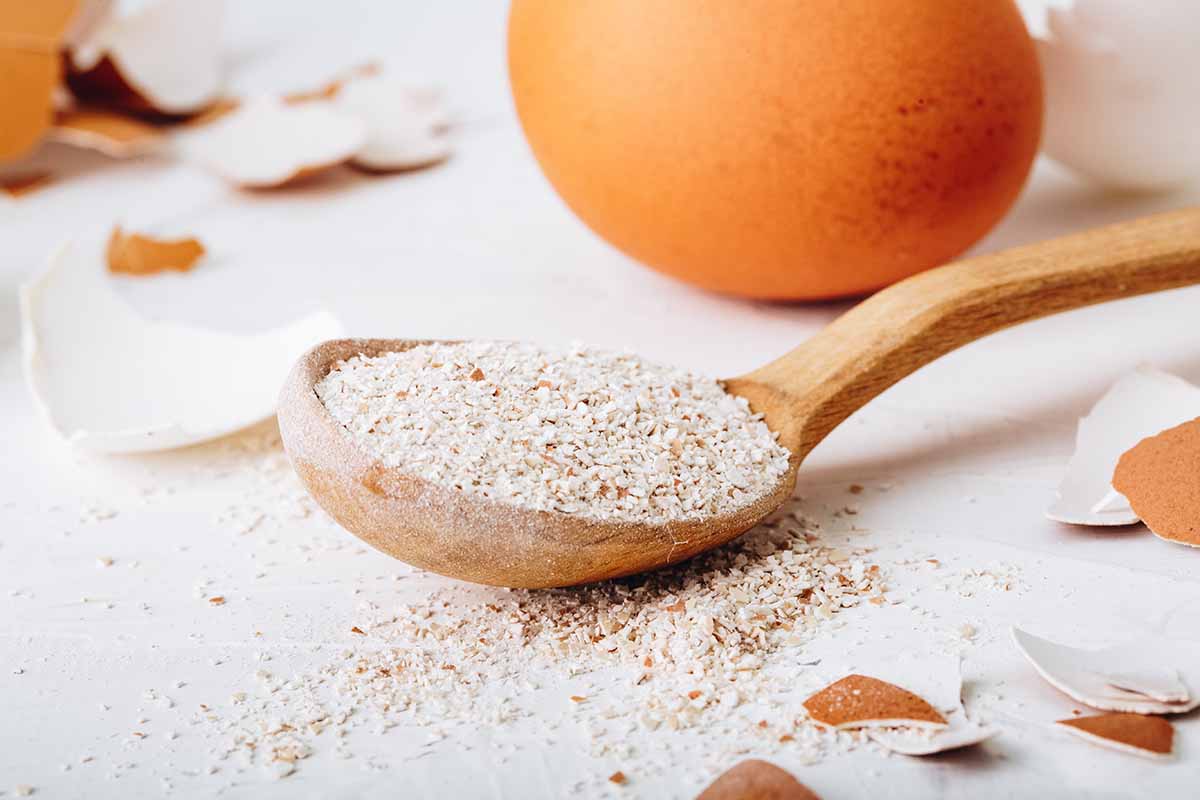
Especially if they could replace a garden product that you might have to purchase otherwise – like agricultural lime.
A study presented at the 2006 Iowa State University Integrated Crop Management Conference by extension field specialists John Holmes and Paul Kassel found eggshells to be an effective means of reducing soil acidity, on par with agricultural lime, which is mined from limestone.
And in case you’re wondering, repurposing this type of food waste isn’t just a DIY amendment used by home gardeners.
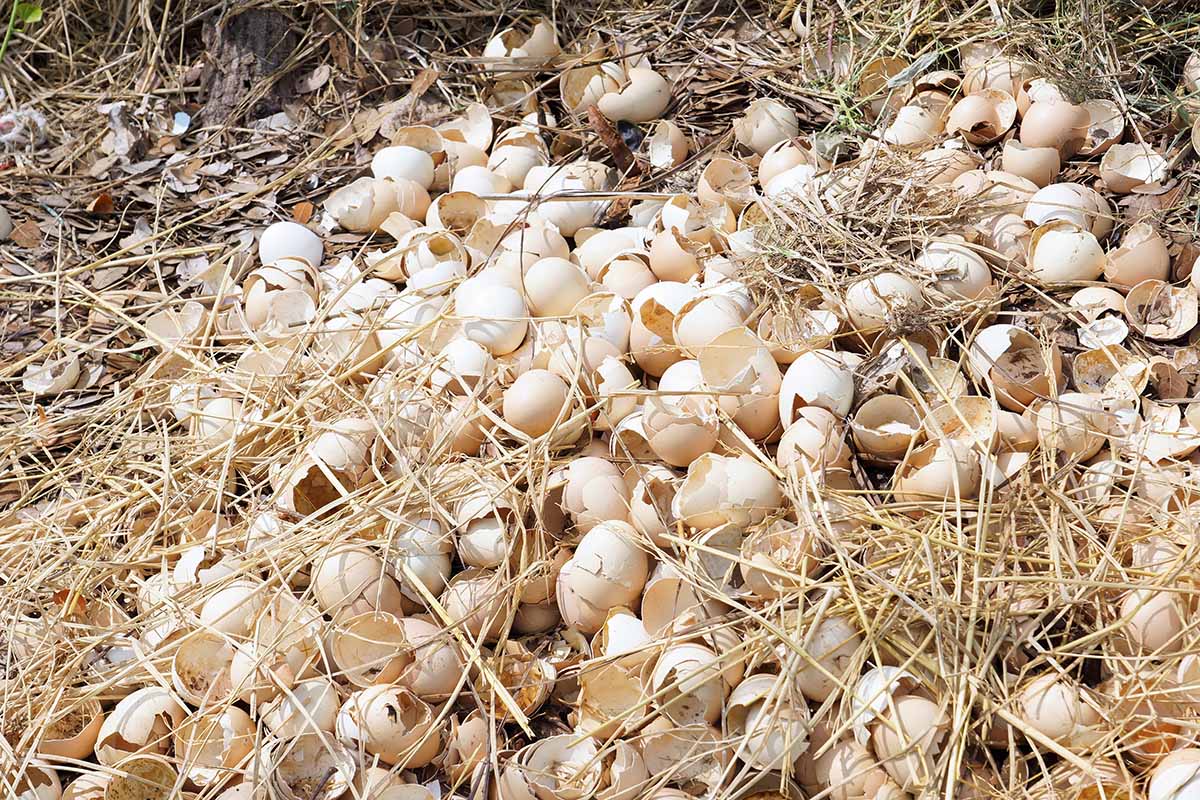
Ground eggshell meal is listed as an organic fertilizer “generally acceptable under the (rules of the USDA National Organic Program (NOP)) for commercial organic farmers,” as described in the North Carolina Extension Gardener Handbook, with an average analysis of 1.2-0.4-0.1 (NPK).
Though nitrogen, phosphorus, and potassium levels offered by eggshells are relatively low, they can be an incredible source of calcium, with value as an amendment used to feed plants and to neutralize acidic soil.
Use as a Soil Amendment
How can you tell whether your garden will benefit from added calcium?
It’s important to understand what type of soil you’re starting with – so make sure you read our enlightening article on this subject.
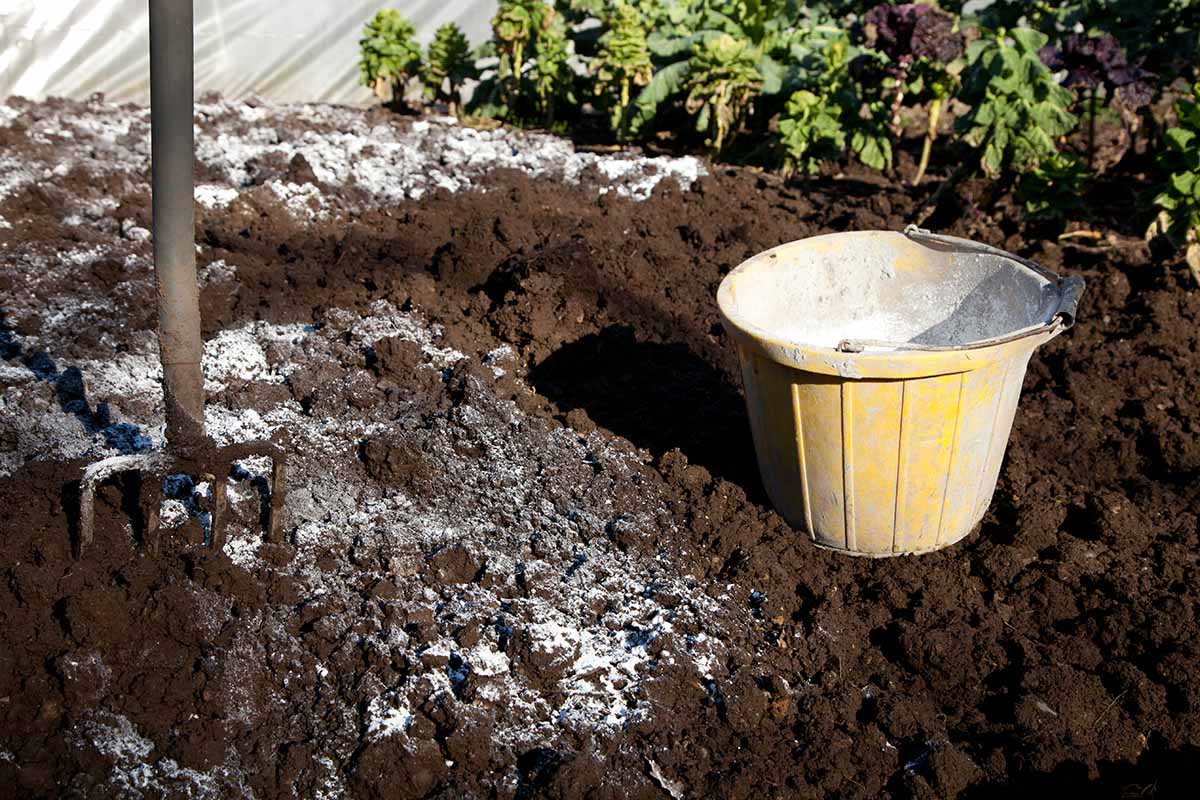
You may want to do a soil test to see how much calcium your soil already contains.
If your soil is acidic, amending with a source of calcium may be helpful, depending on what you want to grow.
But there are cases when acidic soil is preferable, such as for growing blueberries and other ericaceous plants.
