


Maintain even moisture, watering before the soil dries out completely, and supplying approximately one inch per week.
Species and Cultivars
The types you are most likely to find for sale at nurseries and garden centers are:
Densiflorus
There are two common cultivars of the species A. densiflorus‘Myeri’ and ‘Sprengeri.’
When shopping for these types, you are likely to come upon variations of their standard species and cultivar names, like A. densiflorus ‘Myers,’ ‘Myersii,’ A. densiflorus ‘Explosion,’ and even A.sprengeri.
Unfortunately, corruptions of the proper botanical names abound, but don’t let them confuse you.
Please keep in mind that vigorously growing asparagus ferns planted outdoors may become invasive in certain climates. Also, most won’t perform well in temperatures below freezing.
Again, we never know if we’re getting a male or female plant, and while both may produce nondescript blossoms under optimal conditions, only females set fruit.
Myeri
Also known as foxtail fern, A. densiflorus ‘Myeri’ has a characteristic conical plume shape.
Each stem is densely packed with leaves resembling pine needles and stands distinctly away from the others like the fluffy tail of a fox, hence the name.
White flowers may appear in the summer, followed by red berries in the fall.
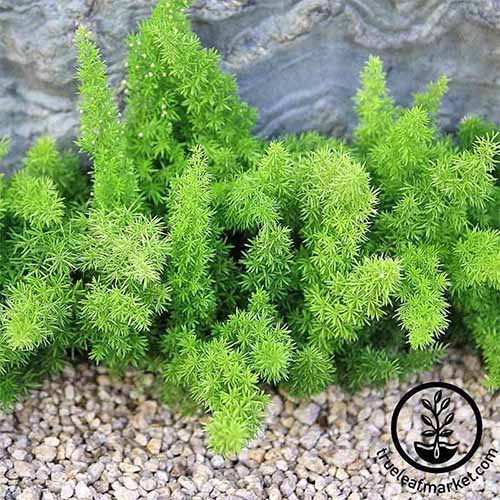
Texturally-rich foxtails top out at two feet tall, with a spread of three to four feet.
Packets of 100 A. densiflorus ‘Myerii’ seeds are available from True Leaf Market.
Blasting
Often called emerald fern, A. densiflorus ‘Sprengeri’ has a mounding habit, and airy foliage that resembles small pine needles on gracefully arching stems.
Mature specimens become almost woody.
They may bear white blossoms followed by red berries, depending upon gender, a characteristic that’s seldom known in advance by the purchasing consumer.
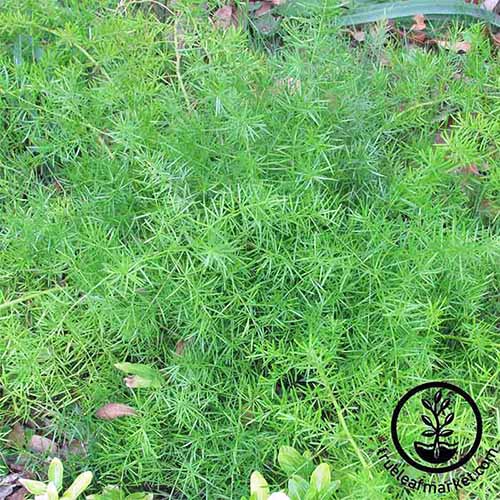
Delicately arching stems may produce white or pink blossoms, and berries that turn from green to red in winter.
This variety has a mature height of one to two feet tall, and a spread of three to four feet.
A. sprengeri seeds are available from True Leaf Market.
Retrofractus
Also known as A. myriocladus, A. ethiopicus ‘Myriocladus,’ or A. macowaniaithis is a lacy kind frequently used in cut floral arrangements.
A. retrofractus is sometimes called pom-pom asparagus fern because needle-like leaves appear sporadically in clusters along slender stems.
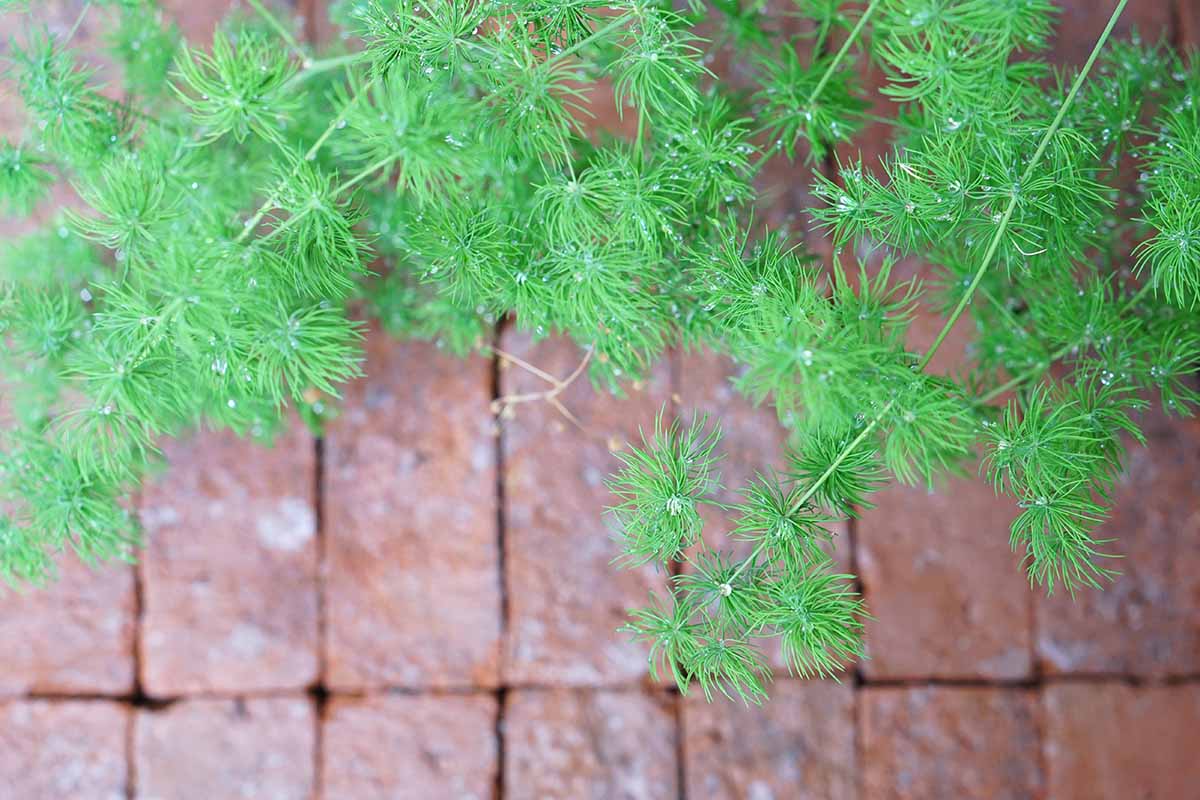
It’s also referred to as zig-zag fern, because of the interesting back-and-forth arrangement of its branches. White blossoms leading to orange berries that mature to black may appear.
This type typically achieves a mature height of two feet.
Setaceus
Also known as Protasparagus setaceus or A. plumosus, A. setaceus is a twisty climber that bears the closest resemblance to a typical fern, in my opinion.
Cladodes like the finest pine needles adorn stems in a triangular pattern.
This species has a more compact growth habit that makes an eye-catching ground cover.
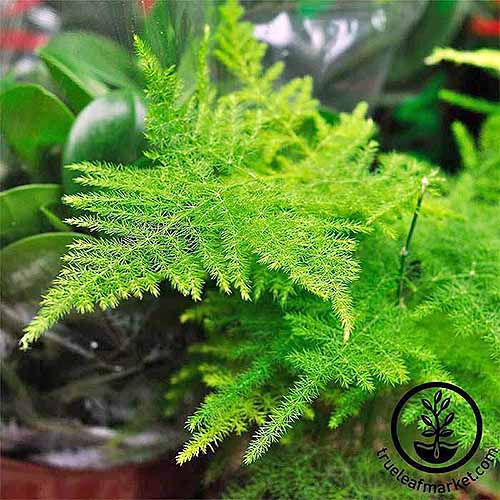
It grows to a mature height of one and a half to two feet, with a spread of two to three feet.
A. plumosa ‘Dwarf’ seeds are available from True Leaf Market.
Maintenance
Early spring is the best time for evaluating the needs of your plants, both indoors and out.
If you find you need to trim away some yellow or brown cladodes, or a stem that is throwing everything off balance, prune at the base of a stem, not at the tip or mid-section.
Periodic pruning of “old wood” keeps stems youthful and fresh.
It’s not uncommon for indoor plants to drop some cladodes during the winter, so keep this in mind when choosing a location for them, as some cleanup may be required.
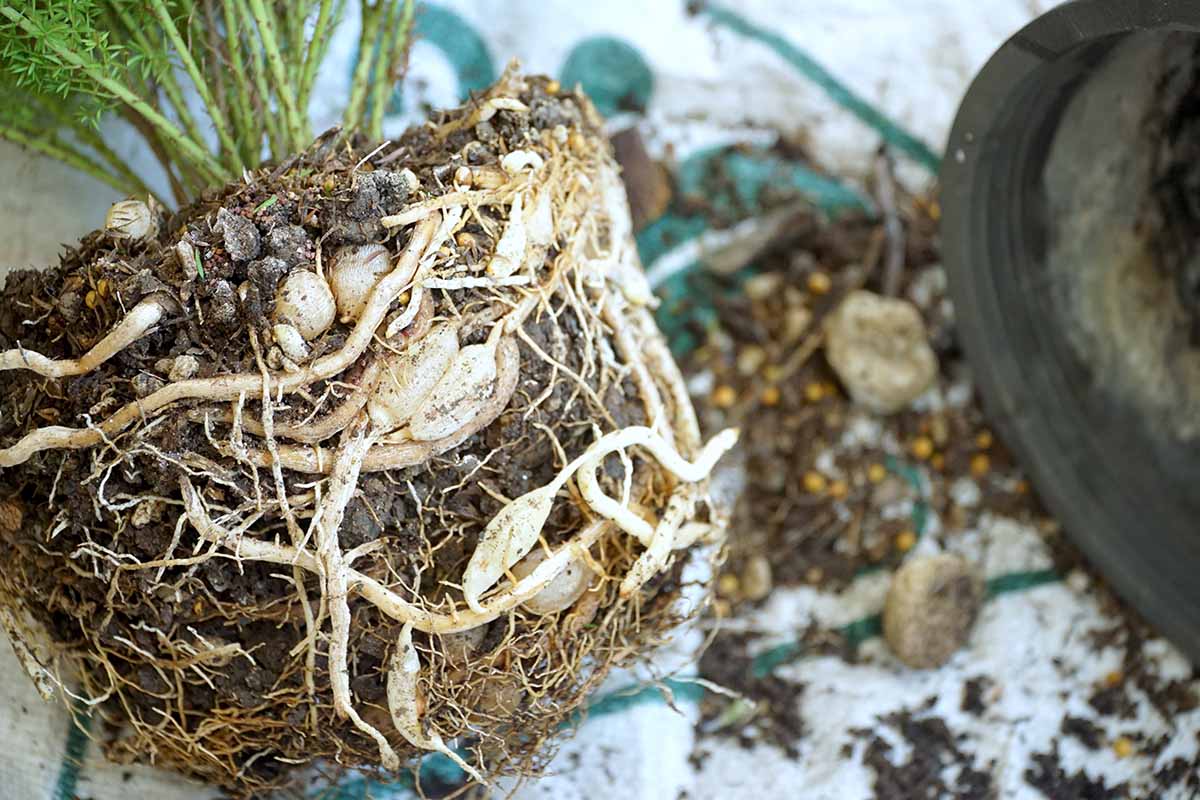
Now’s the time to decide if you need to repot.
While some argue that asparagus fern likes to be pot-bound, I recommend repotting when it becomes so rootbound it begins to burst through the drainage holes.
Choose a container that is a few inches wider and taller than the diameter of the rootstock to allow for room to grow.
