

All week, we’re revisiting the most popular stories of 2025, including this one from July.
A shade garden is a green and contemplative refuge. It can also be a botanical calendar, with flowers signaling the change of seasons. Well-chosen perennials for shade provide texture and pattern, flowers, and sometimes even fruit. They offer an indispensable layer of interest alongside the architecture of shrubs and trees, and the seasonal excitement of shade-loving annuals. Perennials are plants that return every year after a dormant period and they usually bloom for a few weeks. Choosing perennials whose bloom-time is staggered over the growing season gives us that gift that gardeners, in particular, enjoy: anticipation. Our favorite perennials for shade work harder, though, and are about more than flowers—their foliage or form is interesting even when the plant is not flowering. Here are 13 of our favorites.
Foamflower, Tiarella cordifolia
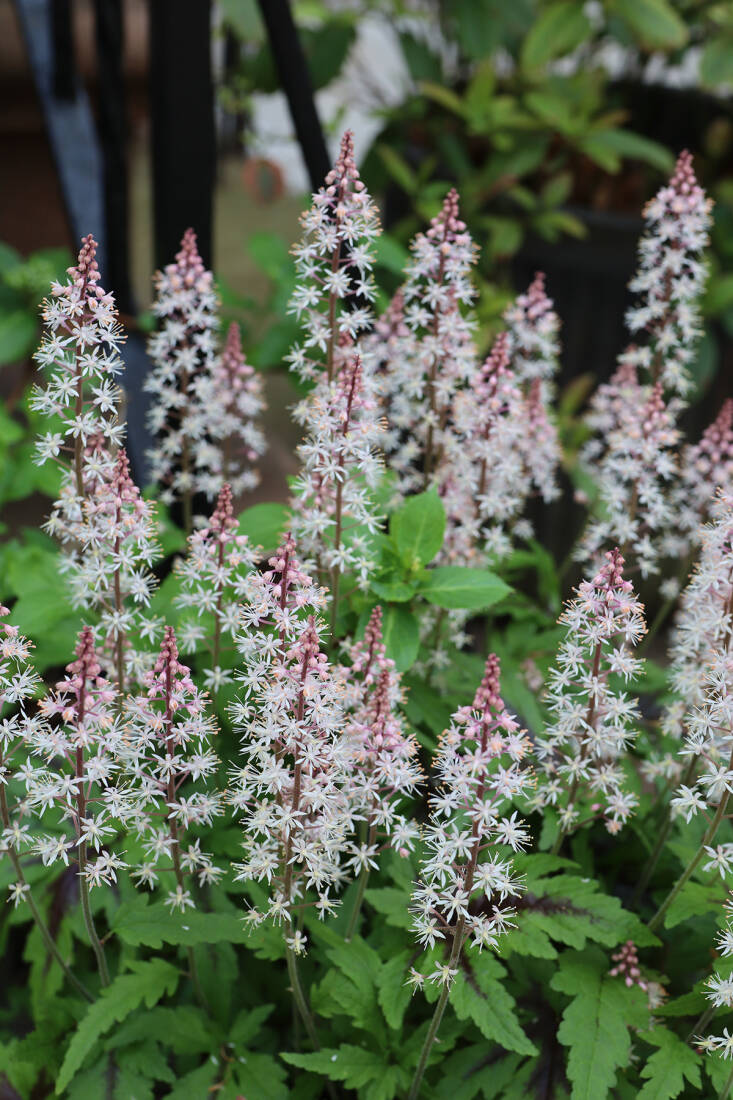
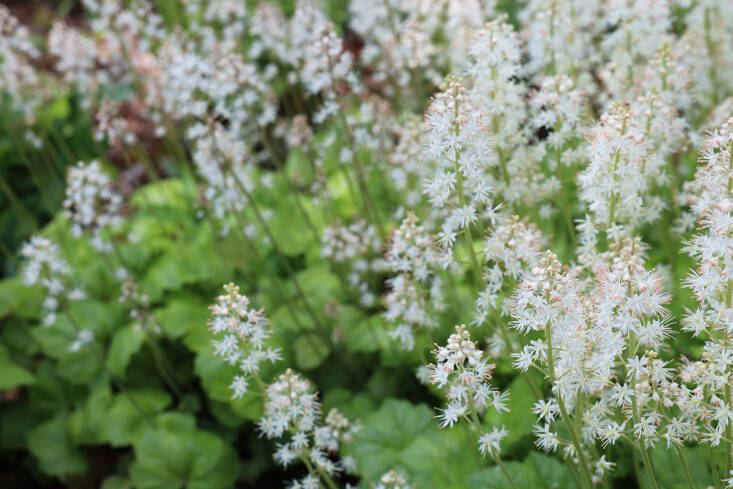
Foamflower blooms in early spring, creating frothy pockets of brightness in the garden. This species of Tiarella propagates itself, establishing new plants from skinny surface-runners, making it a perfect naturalizer for shady path edges and woodland floors. When not in bloom, its maple-shaped leaves create a softly textured quilt. This Eastern native is hardy from USDA zones 4 (and possibly 3) to 9.
Doll’s eyes, Actaea pachypoda
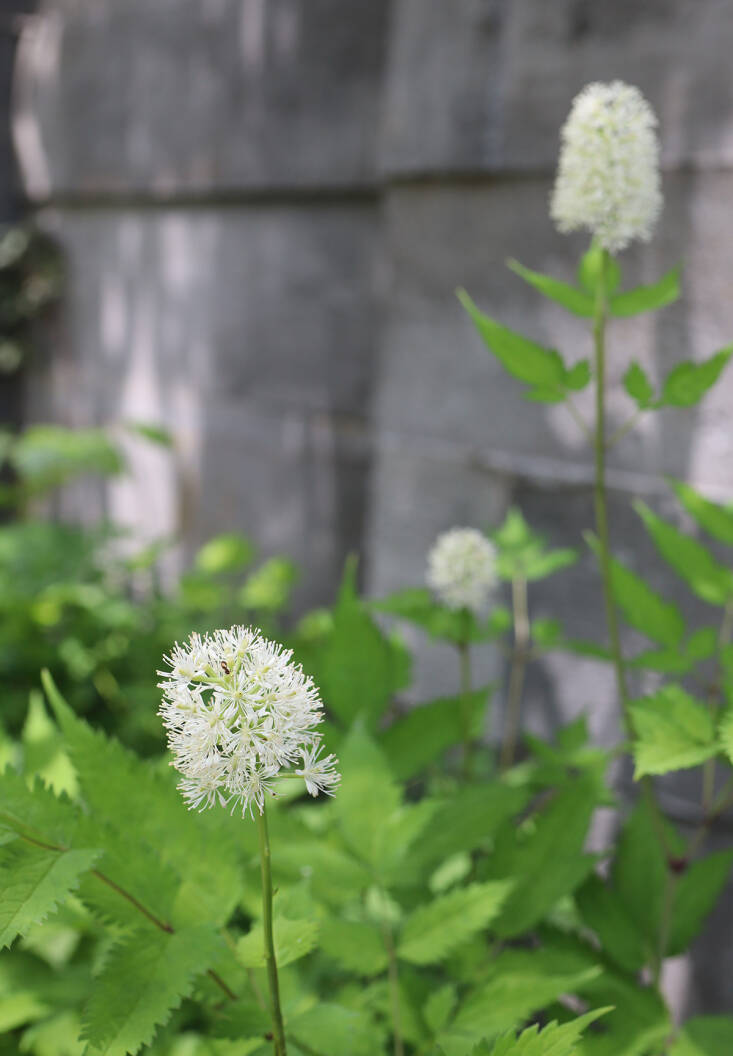
Perhaps one of the best-scented perennials for shade, doll’s eyes are also known as white baneberry, thanks to the plants’ Halloween-ready, toxic white fruit on blood-red stalks in late fall. But in spring, they are all sweetness, with lemon-scented white flowers. This woodland native relishes full shade and blooms in mid-spring above prettily toothed leaves. Doll’s eyes are hardy from zones 3 to 8.
Wake robin, Trillium species
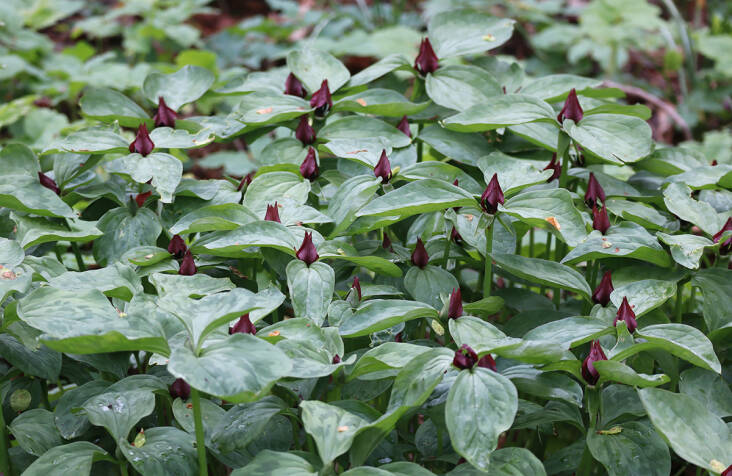
The understated elegance of native Trilliums belongs to a woodland spring. Planted under deciduous trees in soil rich in leaf humus or compost, they bask in spring sunshine and shelter in early summer shade. They are especially effective planted in groups with companion plants that fill out when the Trilliums are dormant, from summer onwards. Different species have blooms that may be white, yellow, or red, with erect or nodding flowers, and most are hardy within zones 4 to 7.
Meadow rue, Thalictrum species